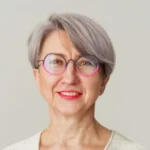
Very little can be learned about you from the media. Supposedly you were supposed to be a double bass player, but you became a designer.
I even finished music school. But I noticed that manual work came more easily to me than playing. I started with leather accessories: studded belts and wristbands, which I made for myself and my friends. I even made my then-fiancée some shoes out of my father's leather aviator coat (it's time he found out where it disappeared to...) so that we would have matching ones. I made the final decision to change when a friend offered me a job in his workshop in Warsaw's Praga district – that was where I realised that „tinkering” with metal brought me more pleasure after all. That was 1989 – a good year for a new beginning.
Your collections are so very different that sometimes it's hard to guess that both belt-bracelets and gold rings came from the same hand.
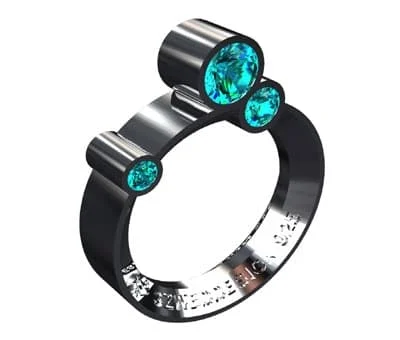
My jewellery can generally be divided into two main streams: a purely jewellery-making one and a modernist one. Both share a modern design based on simple geometric forms. In the jewellery stream, the pieces are more exclusive, representing a combination of gold and precious stones; in the modernist one, they are characterised by a somewhat raw and technical feel of details crafted from silver or steel sheet metal. I feel comfortable with both and probably couldn't say which one is closer to my heart. For me, the good final result is the most important thing, even at the cost of great effort. I like to overcome barriers whose existence I am often not even aware of when I start work. Or maybe I am, and that's precisely what makes it so fascinating...? I love the creative process itself, when I see something new being born.
Which collection are you most attached to?
Definitely bracelets that combine several straps. Probably because for quite a long time I struggled and racked my brains over how to shape silver or steel bands so that they would permanently retain their shape. I focused on designing a device for „restraining” them, which took me a lot of time, but in the end it paid off immensely. Also for practical reasons: the lack of a clasp makes them exceptionally easy to use. From experience, I know that sometimes ladies cannot manage even a simple clasp on their own. (laughter), which is why I try to make life easier for them – not only in this collection, but in others too, by using magnetic fasteners, for example. Or perhaps ease of use is precisely the key to this collection's success? Because even though I created it quite a long time ago, it still has many customers in various countries.
Your jewellery can be bought in galleries all over the world, although it perhaps appeals most to German tastes. Besides, it gives the impression of having been designed specifically with them in mind.
There is certainly something in that. I realised quite quickly that despite a heavy dose of modern design, various things sell differently in individual markets. I admit, I feel very much at home in those „German environments”. But, as if in defiance of this, my latest collection, designed specifically for this year's Inhorgenta trade fair in Munich, is surprisingly colourful – too colourful. Although it caught the eye and tempted people at the fair, classic combinations were still ordered. Such vibrant colours easily find buyers in southern Europe: in Spain or Italy.
How is it on the Polish market?
While in Western European countries taste is more refined, conscious and open, in Poland there are no rules at all. It is also difficult to single out any specific trend here – very different, often random items sell. I think that the financial aspect usually overrides the desire to own cool, designer jewellery. What the media promote and what female celebrities wear generally clashes with my sense of aesthetics. All the more reason, then, that I am glad I still manage to realise my vision of beauty in jewellery.