It has been almost four months since the opening of the MoJa Jewelry Museum. What reactions do you encounter from visitors?
With an unwavering interest, especially during guided tours. Visitors not only want to see, but also to hear stories about contemporary Polish jewelry. The same is true of the goldworking workshops, where there is always a maximum number of participants. Among them are both seniors and children. Groups of friends get together; they like to do things together.
I have to be honest and say that we did not expect such a high level of interest. And we are more than happy about it. It seems that we have managed to create a new and attractive meeting place on the map of Poznań. Our advantage is also the opening on Monday – this is our response to the need for contact with art on a day when many other museum institutions are closed.
What is most surprising for people who are encountering contemporary Polish jewelry for the first time?
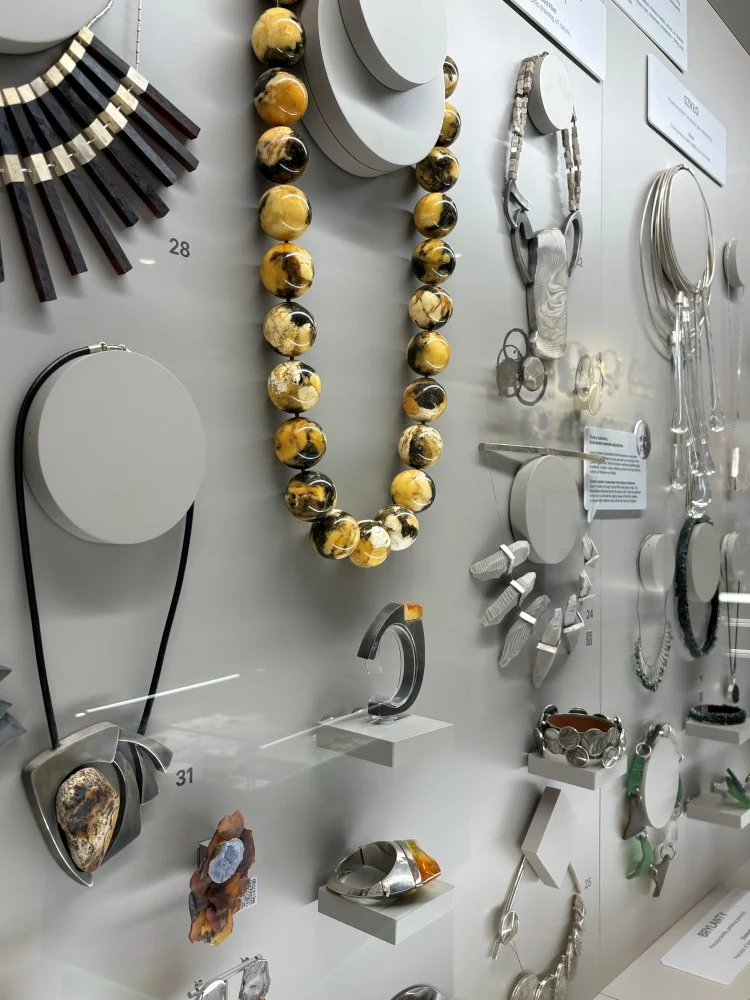
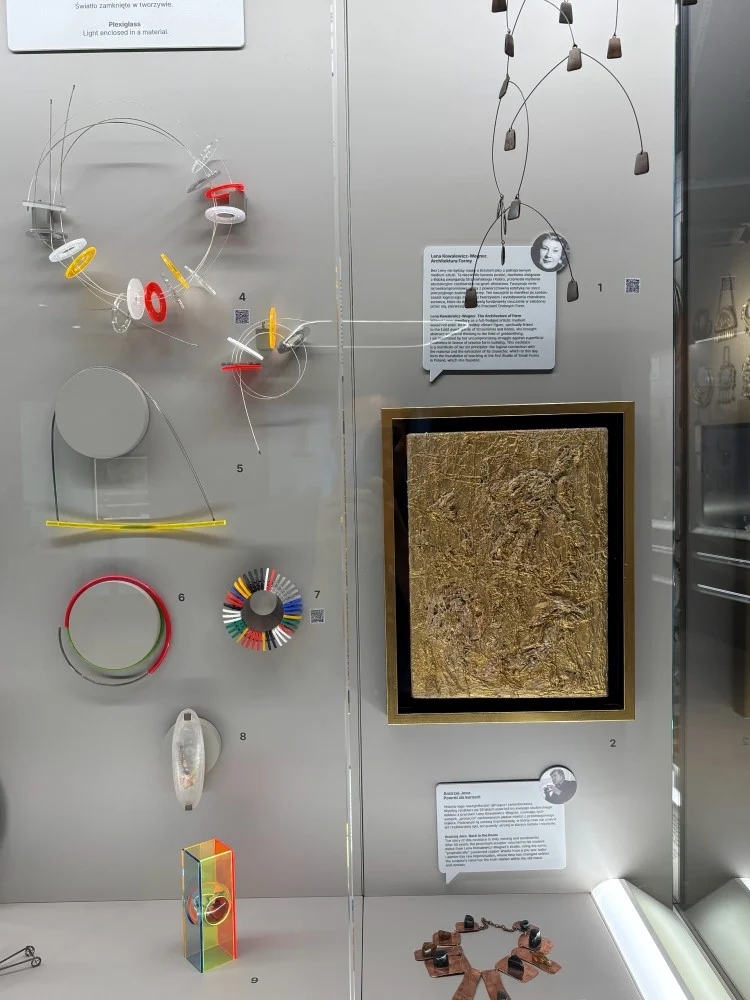
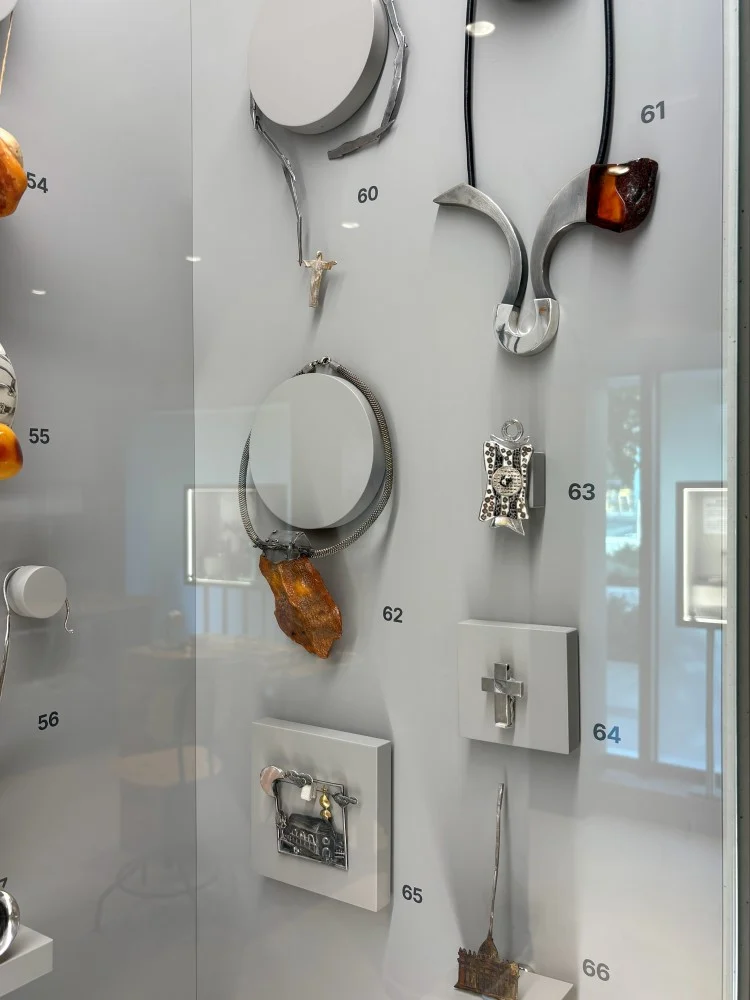
Perhaps the most common reaction is surprise. Visitors often discover something they have never seen before. Before visiting our museum, they usually had no awareness of the existence of a phenomenon like contemporary jewelry. What is more surprising is its diversity – both in terms of aesthetics and material. And also the fact that jewelry can be a form of communication. Until now, they have primarily viewed it as an ornament, but now they are learning that it can also be a vehicle for certain messages that the creator conveys to the recipient.
So sometimes we have the feeling that we are discovering this world of jewelry before them. And that is really very pleasant. We are pleased to watch our story about jewelry draw them in and fascinate them. And we are very happy when they return to us – and often they return accompanied by someone they want to show their „discovery” to. And that is probably the best recommendation for us.
JOne of the reasons for the creation of the museum was your disagreement with placing jewelry outside the categories of art. Do you still encounter the belief that it is not a full-fledged field of art?
Unfortunately, yes. And that is why I am so keen to make my voice heard in the ongoing debate over the recognition of jewelry as an art form. Currently, that voice is being amplified thanks to my collection, which is now gathered in one place – its scale shows that jewelry is an important part of our culture and art. Why should we treat it differently than painting or sculpture?
However, I have the impression that something is changing. Various factors are influencing this, including our efforts over the years to interest academics and art critics in the topic of contemporary jewelry. Our collection is also starting to attract interest from academic and artistic institutions. The first results are already visible – these include a promising collaboration between the Museum and the University of Art in Poznań and the Department of Art History at Adam Mickiewicz University in Poznań.
So the museum also has the ambition to not only show jewelry, but to preserve the knowledge about it for the future?
This is very important to me. Collecting, developing in cooperation with experts, and sharing information related to contemporary Polish goldwork art is an important part of our activities. We want to preserve as many goldwork objects as possible, but also information, memories, prints, and items related to their creation, such as the goldworking workshop with tools that can be seen here.
I want the collection to be as comprehensive as possible. With an eye towards the present, but above all with a concern for the future – to preserve as many materials as possible for future generations. That is why we are already working with art historians and other experts today to organize and scientifically develop the accumulated heritage.
All of these materials can be used today. We are open to collaboration and are happy to share our resources. If anyone would like to write a master’s thesis on Polish jewelry, I warmly invite them to do so.
So you collect not only jewelry, but also the stories behind it.
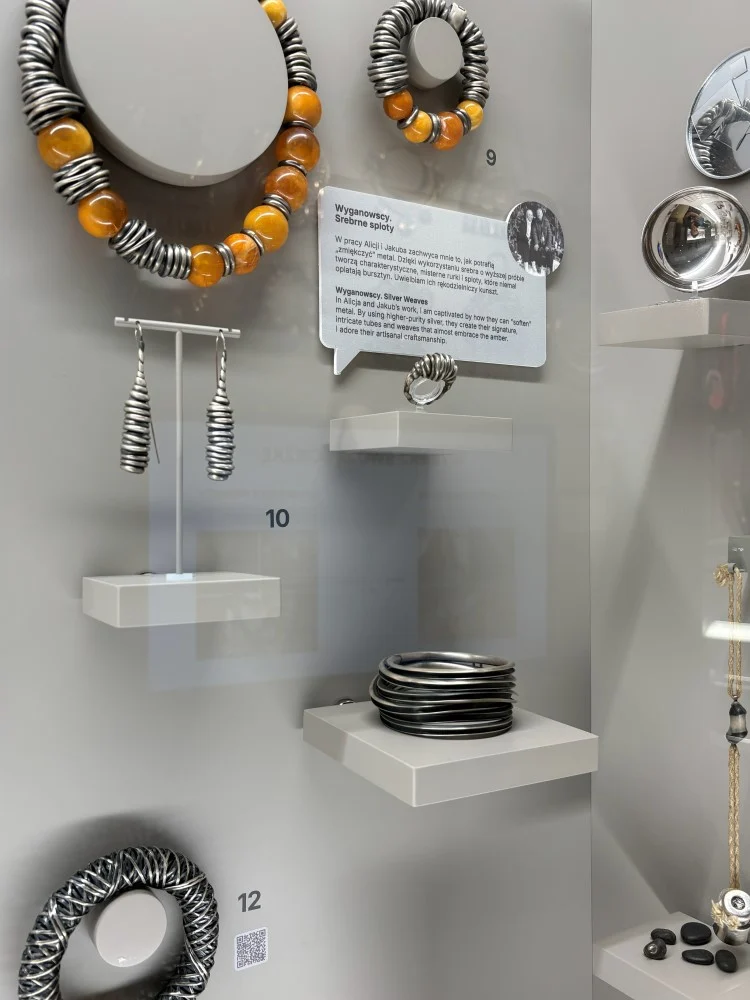
When buying additional items for our collections, we try to learn as much about them and their creators as possible. This information makes the work even more interesting, but also brings the author to the forefront. Because behind every item stands a person – with their thoughts, motivations, successes, but also failures. And these, too, strongly shape a person.
Some of these stories can be found, among others, in the interviews published in the book „Artisans of Goldsmiths: Conversations about Polish Jewelry”. As the Galeria YES, we have already published two volumes containing 22 interviews, and we are currently preparing the next edition.
You could say that you are extracting something from the non-existence of contemporary art jewelry.
It is indeed part of our culture or art – even if it is niche, it is very important. And perhaps because it is niche, there is a great risk that the testimonies of its achievements will disappear along with the creators. For no one will feel the need to care for this legacy. And without it, no one will remember the achievements of Polish artists who stood out for their incredible diligence and creativity, especially during times of limited access to raw materials. And later, in the 80s, and especially in the 90s, when they delighted the whole world with their ideas. Today, despite the rampant commercialization and homogenization, they fortunately manage to maintain this course. That is why the Museum has set itself the ambitious goal of assembling the richest collection of contemporary Polish jewelry and related objects.
How can I help you with this?
The most important thing is not to let this jewelry disappear. The next generations have a different value system and taste, so grandma’s or grandpa’s jewelry may be worthless to them. And then it may simply be thrown away.
Therefore, before someone decides to melt down the jewelry or throw away sketches, photos, notes, and even the artist’s personal belongings, please contact the museum first. We will save this jewelry.
I also encourage artists to donate – for a fee or for free – their works, so that as many names, styles, techniques, and materials as possible are represented in the museum, today and in the future.
When I think about what you just said, I imagine that the MoJa Museum is like a „jewel-like national library”.
But that is exactly how it should be! As in the National Library, all the items will be catalogued and kept for those who want to use these collections in one way or another, whether they come to the exhibition or are looking for sources to write a scientific paper. The most important thing is that it will be known where to look for these items and information. And I am always happy to make them available.
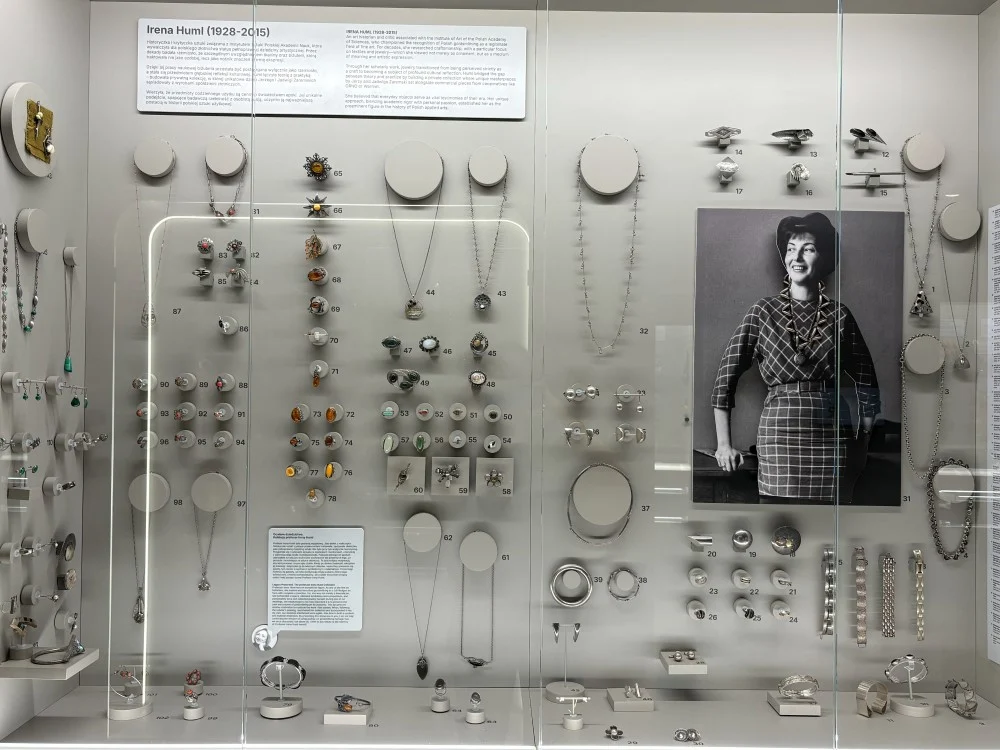
These will also be the subject of exhibitions. This was the case with the exhibition „Irena Huml. Forms of Presence”, where the addition to the collection of jewelry gathered by the professor, who is currently in my possession, was several of her personal items: glasses, a card with notes, and a pencil. And it is precisely these little details that move me very much. Through them, the presence of a person becomes more complete.
The same is true of jewelry – behind every object there is a specific person.
Of course! And probably that is why jewelry is so fascinating to me, because I can also see it through the lens of the creator – with his passions, joys, and problems. Sometimes, when looking at a piece of work, we forget about that. And yet, the jewelry itself stems from the individual character of the creator.
I have the pleasure of personally knowing most of the artists represented in the Museum. I have visited their studios and homes with many of them. This definitely broadens the perspective. When you get to know an artist, their studio, their passions, their way of thinking, and sometimes even their sense of humor or various interesting stories, the jewelry becomes even more fascinating. And we convey this knowledge, emotions, and experiences in the Museum.
When you started collecting 30 years ago, did you have any idea where it would lead you?
Of course not! At first I bought jewelry that I wanted to wear. Or have – because not every piece of jewelry is wearable, but it’s so beautiful that you just want to have it. And then, once I had quite a sizable collection, I realized that I still lacked a certain creator whom I know and appreciate. And a few others… And that’s how my collecting became more conscious. I started to dig deeper into the past, also looking for creators who are no longer alive, but are important for Polish post-war goldsmithing art.
The more I got to know the works of the artists, the more I wanted to own specific objects – characteristic of their work, including those awarded in prestigious competitions. If they were not available for purchase, I asked the artists to make copies especially for me.
Today, it is important for me that the collection be as representative as possible. That is why we are exploring all available sources and contacting the authors or their heirs.
Do you ever buy something that isn’t exactly your style, but you know it should be in your collection?
Of course. For a long time now, I collect not only the items that I like, but above all those that I consider interesting, important, or characteristic of the creator or a particular period. I have a sizable collection of jewelry from the PRL period in my collection, including that from the art cooperative. At one time I absolutely did not like it, but today I see its historical value. I also don’t „disdain” commercial jewelry, especially if it was created by a renowned artist. Often, after all, artists create in two ways: unique pieces and commercial jewelry.
What limits you the most in your passion for collecting jewelry today?
To maintain the quality and consistency of the collection, I had to set some time limits for myself – this is the period from 1945 onwards. Of course, the funds to purchase additional objects are also a significant limitation. And time. Searching for items, reaching out to owners, negotiating, finalizing purchase agreements – all of this can take a very long time.
Do you have any special collector's items – items that you would very much like to acquire?
There are really many such items, especially when it comes to jewelry by artists who are no longer alive. I have seen them in catalogs, but I often don’t know if they still exist and who the potential heir may be. And that’s why I’m appealing to the heirs, but also to all those who could support me in building a representative collection of contemporary Polish artistic jewelry: if someone has an interesting gold item in their home, please – before throwing it away or melting it – contact us. We will review every offer and, if it meets our criteria, we will try to purchase it as soon as possible. Of course, I also invite artists and other people involved in jewelry to contact me: if you see that your name or another important name or work is missing from my collection, I would be very happy to talk about it.
What would you most like to see for the MoJa Museum? Not just as a collector, but simply as the person who created this place?
I would like the collection to continue growing, while at the same time maintaining its representative character. I would also very much like for the people who visit the Museum to leave with a greater sensitivity towards artistic jewelry – its beauty, artistry, and individual character.
As I think about the future, I have another, quite personal dream. I would like the Museum to be important also for my children and grandchildren. That in the future they would want to take care of it and constantly expand the collection. I hope that the love for jewelry is passed down. And that future generations in my family will nurture this passion and that it will bring them as much pleasure as it brings me.
Maria Magdalena Kwiatkiewicz – co-founder of YES Jewelry, collector, traveler, and photographer. For over 25 years she has been building a collection of Polish goldwork art, which now numbers over 1600 objects. She is the founder of the YES Gallery in Poznań, which has been operating under the name of the Museum of Contemporary Jewelry MoJa since April 2026 and promotes contemporary Polish goldwork art. Her second great passion is traveling, from which she brings back photographs and ethnic jewelry – also presented at the MoJa Museum.
Recommended:
Discovering the world through jewellery - interview with Maria Magdalena Kwiatkiewicz
Photo: Museum of Contemporary Jewelry MoJa