Is jewellery necessary or unnecessary?
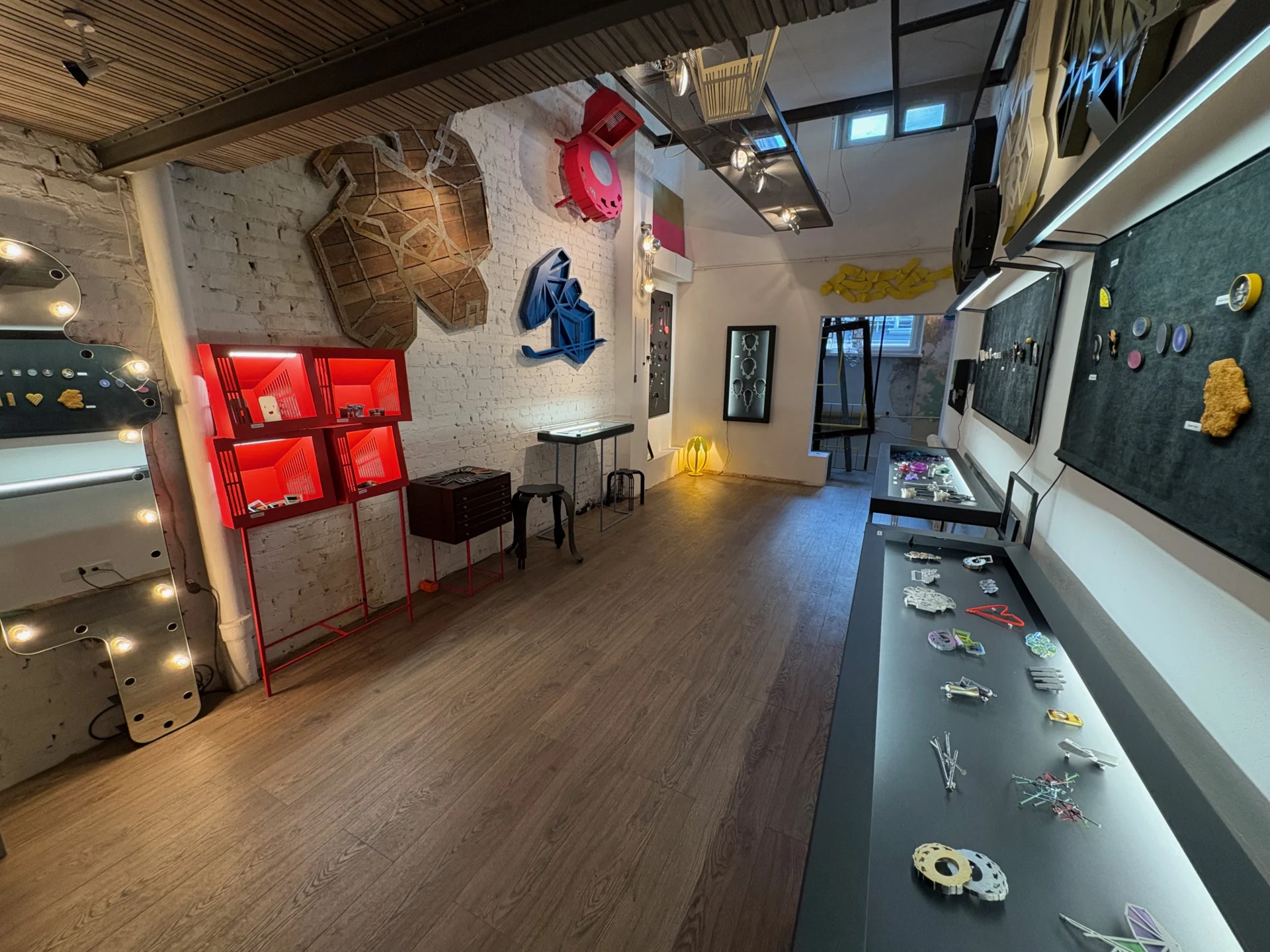
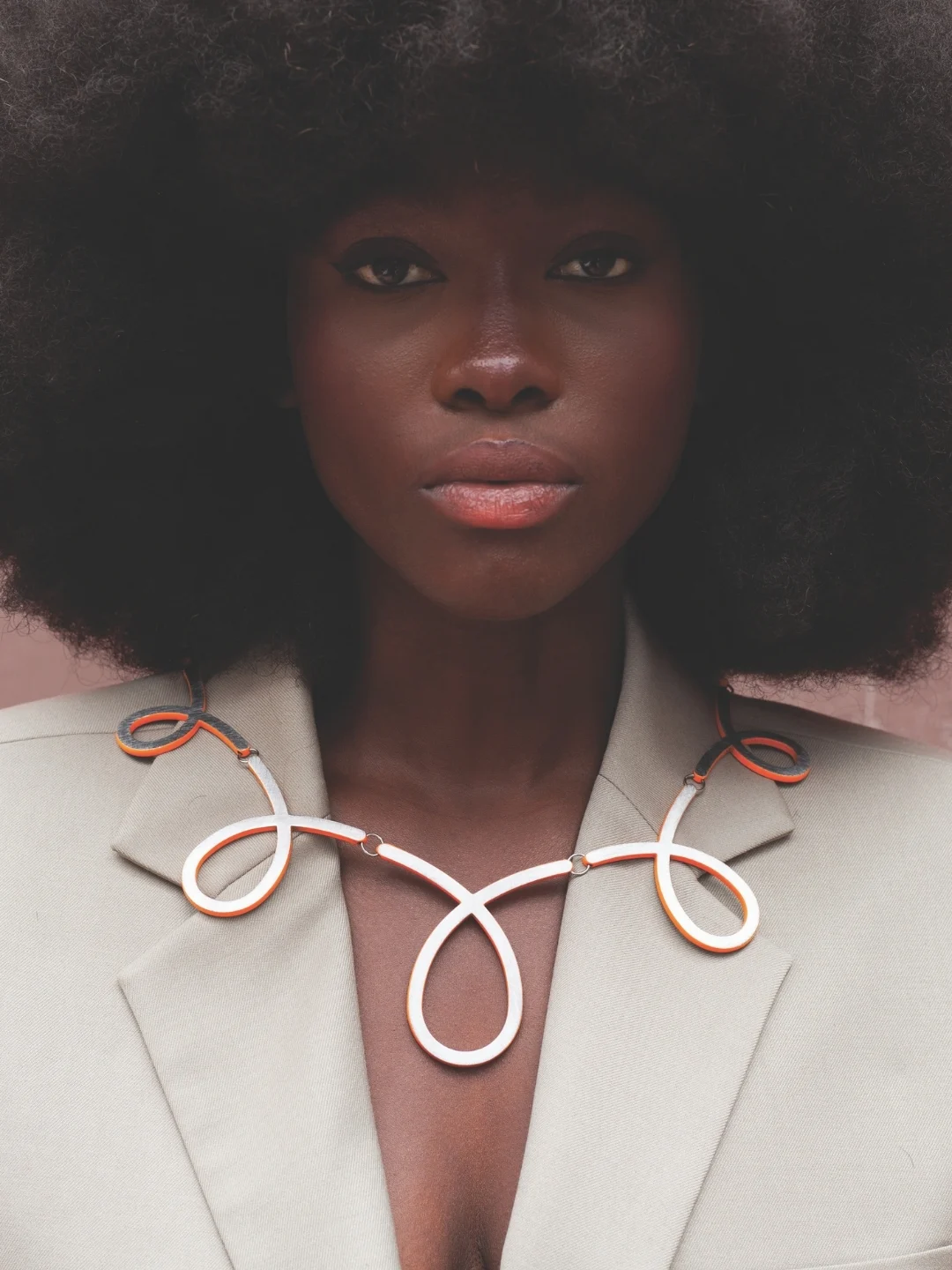
Yes. But which kind? Humans have always worn jewellery. It’s worth asking ourselves what they wear and for what purpose. What are their expectations of it? Is it meant to adorn an outfit? Or to manifest our status? It’s also worth considering what information jewellery conveys to us. It not only beautifies us but also says a lot about contemporary customs and our personalities. And that’s exactly what the exhibition „Unnecessary Jewellery” is about. About modern jewellery, which has many faces. About items distinguished by surprising forms, the best craftsmanship, but also manifesting the personal thoughts of their creators, later passed on by the people who wear them.
Artistic jewellery is, especially in Poland, an unknown subject. So where did the idea for the exhibition „Unnecessary Jewellery” come from?
We have been active in the field of artistic jewellery for several decades; it's our element. A significant impetus, certainly, is our disagreement with the status quo. With a lack of a well-functioning model in which art universities, galleries, museums, critics, and the art market cooperate. In Poland, this model practically doesn't exist. Private galleries haven't withstood the offensive of shopping centres, and public institutions aren't interested in this field. Every year, universities train promising artists who, after graduation, have nowhere to show their work and remain unknown in their own country, as does the entire current of national artistic output, let alone international. Warsaw remains the only European capital without a permanent collection of artistic jewellery. What's more, the last museum exhibition of works in this field was organised here almost 60 years ago – in 1970 at Zachęta, presenting the work of Jadwiga and Jerzy Zaremscy.
Fortunately, the first changes have appeared. Last year, a cross-cutting exhibition was inaugurated „Project: Artistic Jewellery” at the Centre for Contemporary Art in Toruń, the curator was Dr Anna Wiszniewska. In April this year, a private [establishment] opened in Poznań MoJa Jewellery Museum, where the collections of Maria Magdalena Kwiatkiewicz, co-owner of the Yes company, are presented. This is an impressive collection of contemporary Polish goldsmithing art, numbering over 1600 objects, plus over 1000 examples of ethnic jewellery.
There is also the Art Gallery in Legnica, which has been organising a goldsmithing art competition since the 1970s. The Goldsmithing Art Festival attracts artists and jewellery enthusiasts from all over the world.
Yes, every year submissions for the main competition arrive from virtually all continents; the competition has an enormous reputation, and yet in Poland, very few people have heard of it. The gallery has amassed an impressive collection of works by artists from around the world – the problem is that there is nowhere to exhibit them permanently. This completes the sad picture: there are virtually no galleries offering artistic jewellery, museums are not interested in it, or they cannot find space to exhibit it. Talented artists therefore have nowhere to show their work in Poland, and people interested in art have no opportunity to get to know it. It's easier to gain recognition abroad – we are much better known and valued there. I hope that gradually, in cooperation with those who notice this void, we will manage to change this unique situation on the map of Europe.
Is that why you launched the „Unnecessary Jewellery” project in Munich?
There were several reasons. The main factor influencing our decision was that from the very first edition, the exhibition has showcased creators from various countries around the world whose names are unknown in Poland. Therefore, it seemed quite natural for us to launch the project in Munich, which has been the global capital of artistic jewellery for decades. It's there that a prestigious review has been held since the 1950s. Jewellery – the largest event dedicated to contemporary jewellery. That is precisely why we launched our project in Munich. Munich Jewellery Week, the largest and most important event of its kind in the world, has developed around this exhibition. Interestingly, it is a completely grassroots initiative – this year, artists organised over 100 exhibitions in various urban spaces. This demonstrates the scale of the art jewellery phenomenon worldwide. Its existence is based on the presence of jewellery collectors and gallerists from all over the world – enthusiasts who already have very extensive collections and for whom it takes considerable effort to pique their interest. The bar is therefore set very high. And this is another important reason for organising this exhibition: to provide artists with a good pretext for creating new works – so that they do not abandon their passion, which unfortunately is happening more and more often.
The works on display at the exhibition need to reach an interested audience – so we are showing them in various venues across Poland and around the world. The first edition of the exhibition was also shown at the highly regarded Romanian Jewellery Week in Bucharest and at Milano Jewellery Week, and in Poland at the „Pokój Śniadań” Gallery in Warsaw and Techne Gallery„ in Poznań. We launched the second edition at Inhorgenta, Europe's largest jewellery trade fair in Munich, and also presented it at SCHMUCK, in the prestigious Frame section, where leading goldsmith galleries from around the world exhibit.
What reactions have you encountered so far?
Abroad, the exhibition was met with great interest, with several pieces finding their way into international collections, which we take as a testament to the appreciation of our curation. In Poland, however, audiences reacted with considerable surprise, which only confirmed that jewellery is generally associated with the display window of a jeweller's shop. That's why it is so important for us to showcase artistic jewellery in public spaces, to spark curiosity about this little-known yet incredibly fascinating area of art. And to encourage people to wear it – the pieces presented at the exhibition are for sale. I believe this is possible – the interest must appear, because it's simply not conceivable that Poland would be an anomaly on the world map in this field.
The current edition of the exhibition presents works by 20 artists – mainly from Poland, but also from Mexico, Finland, South Korea, Germany, and Austria. What guidelines did you follow when selecting the works?
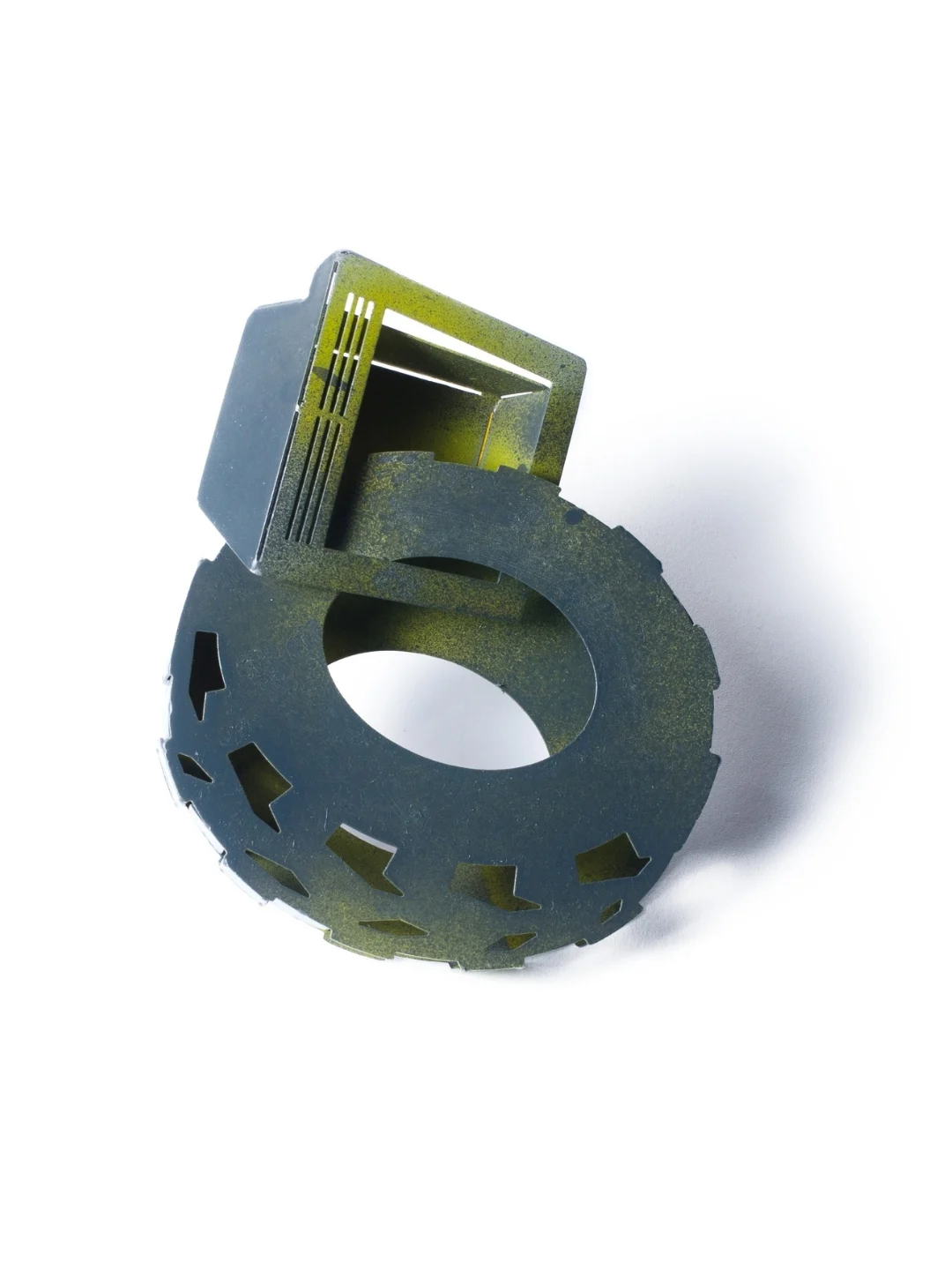
We have invited artists whose work we respect to participate in the exhibition, especially those who create their own artistic worlds. Perhaps I should mention the works of the international guests. South Korean artist Youjin Um, winner of the Grand Prix at the Legnica competition, showcases the Far Eastern tradition of respect for craftsmanship and the pursuit of perfection in her work. The technique she uses could easily be replaced with a laser, but it's not just about the final effect for her. Her path is the masterful command of craftsmanship, and the perfect objects, made entirely by hand, lead the viewer to question why we create in the first place.
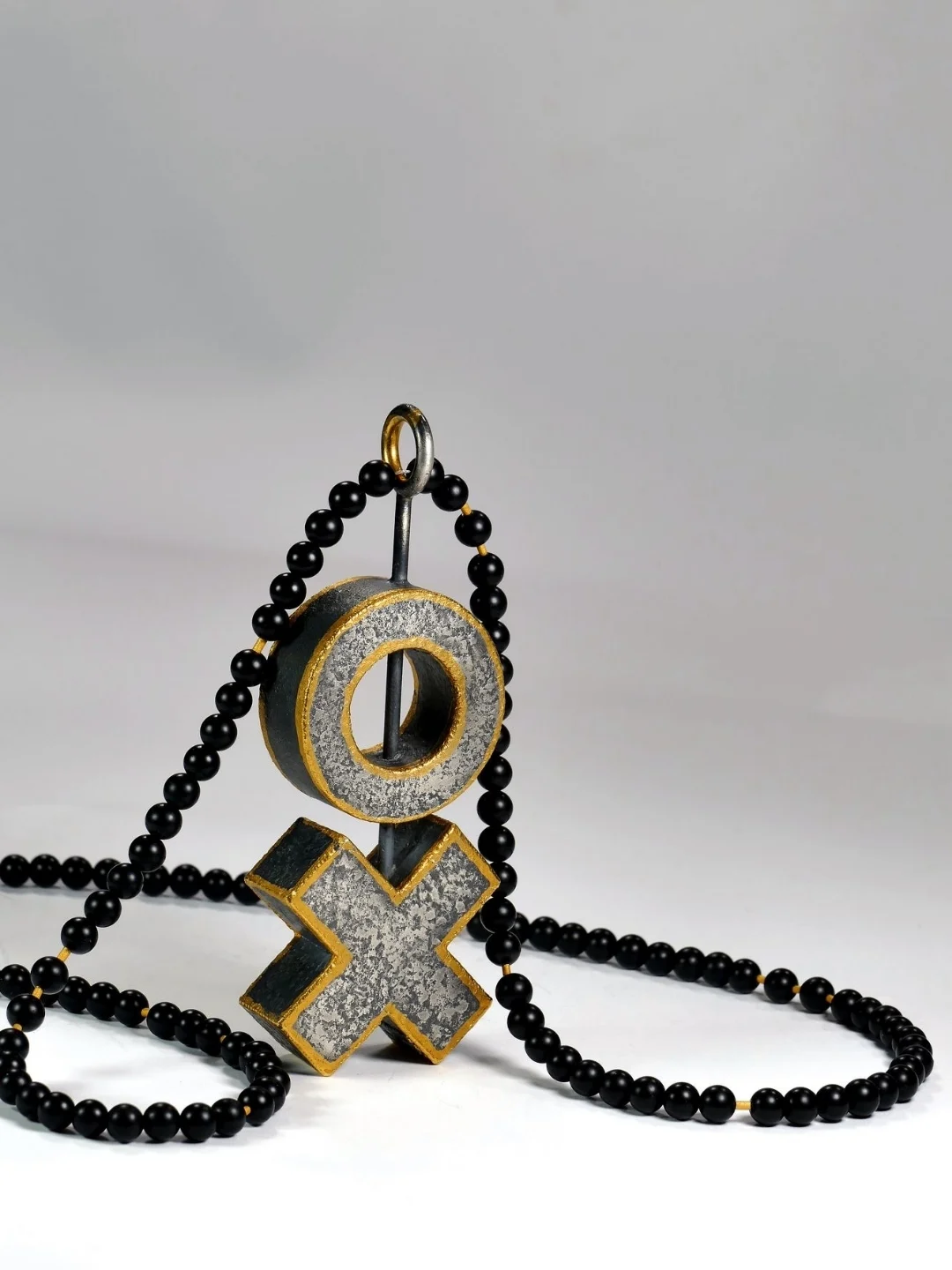
Finnish artist Eero Hintsanen draws on ancient traditions of using bone in jewellery. His sculptural silver pieces stir up deep memories; for some, they may even be unsettling, whilst an object that is contemporary in form and technique takes on a prehistoric feel. Meanwhile, the Mexican artist Alberto Davila uses a silver-cast fence mesh to depict pop-culture symbols, which, in a very simple form, evokes highly universal associations.
Not all international creators were able to accept our invitation due to restrictions arising from agreements with the galleries they collaborate with. This, in turn, inspired us with the idea of inviting young, talented creators who are taking their first, promising steps on the goldsmithing scene. But that's for future editions.
In this edition, we also present outstanding Polish artists, distinguished by their unique style and often unusual combinations of materials. They are the authors of works that are daring, personal, and frequently defy the traditional understanding of jewellery. Their creations show that the Polish scene has enormous potential – it just needs greater visibility and space for presentation.
Can we speak of a Polish school of artistic jewellery today? What distinguishes our creators on the world stage?
Absolutely yes. Polish artists are valued for their creative courage and very high level of craftsmanship. They don't copy global trends, but rather build their own language of expression. They often experiment with materials, balancing on the borders of jewellery, sculpture, and object. Many of them win awards at international competitions and regularly showcase their work abroad. The problem therefore doesn't lie in the quality of their work, but in the lack of an appropriate system for promotion and presentation in Poland.
Wystawa oferuje fascynującą podróż przez historię [temat wystawy], prezentując rzadko widziane eksponaty i wciągające historie, które poruszą wyobraźnię. To jedyna okazja, by zobaczyć [kluczowy eksponat lub atrakcja], która z pewnością zrobi na Tobie wrażenie. Niezależnie od tego, czy jesteś wielkim fanem [temat wystawy], czy po prostu szukasz inspirującego popołudnia, ta wystawa z pewnością zapewni niezapomniane wrażenia. Przyjdź i odkryj niezwykłe w naszym [nazwa galerii/muzeum lub przestrzeni wystawienniczej] od [data rozpoczęcia] do [data zakończenia].
If you are interested in jewellery and know what artistic jewellery is, then I don't need to encourage you further. However, if you only know jewellery from shop windows, I assure you that you will be very pleasantly surprised. You will see jewellery you have probably never seen before.
Art jewellery exhibition „Unnecessary Jewellery”
Gallery Breakfast Room, Warsaw
21 May – 15 July 2026
Curators: Prof. Sławomir Fijałkowski, Arek Wolski, Anna Wójcik-Korbas
We also recommend: