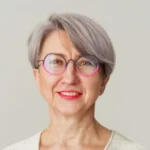
I've known you and your work since you appeared at the Amberif trade fair as an exhibitor. But your adventure with amber is much longer, and wood and amber are only seemingly your hallmark.
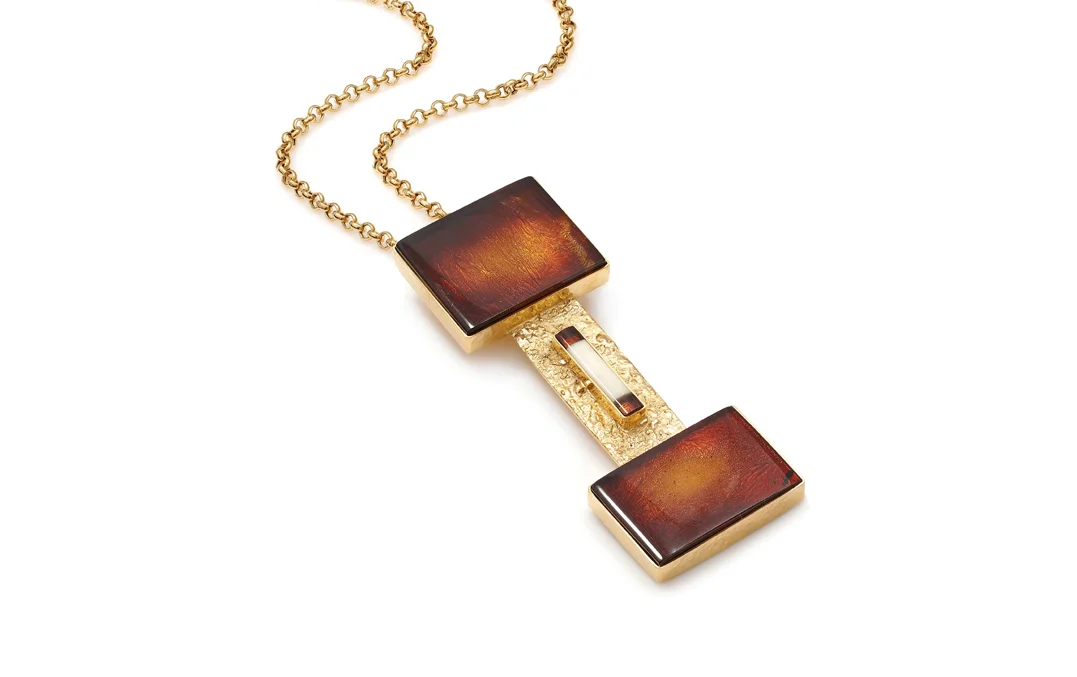
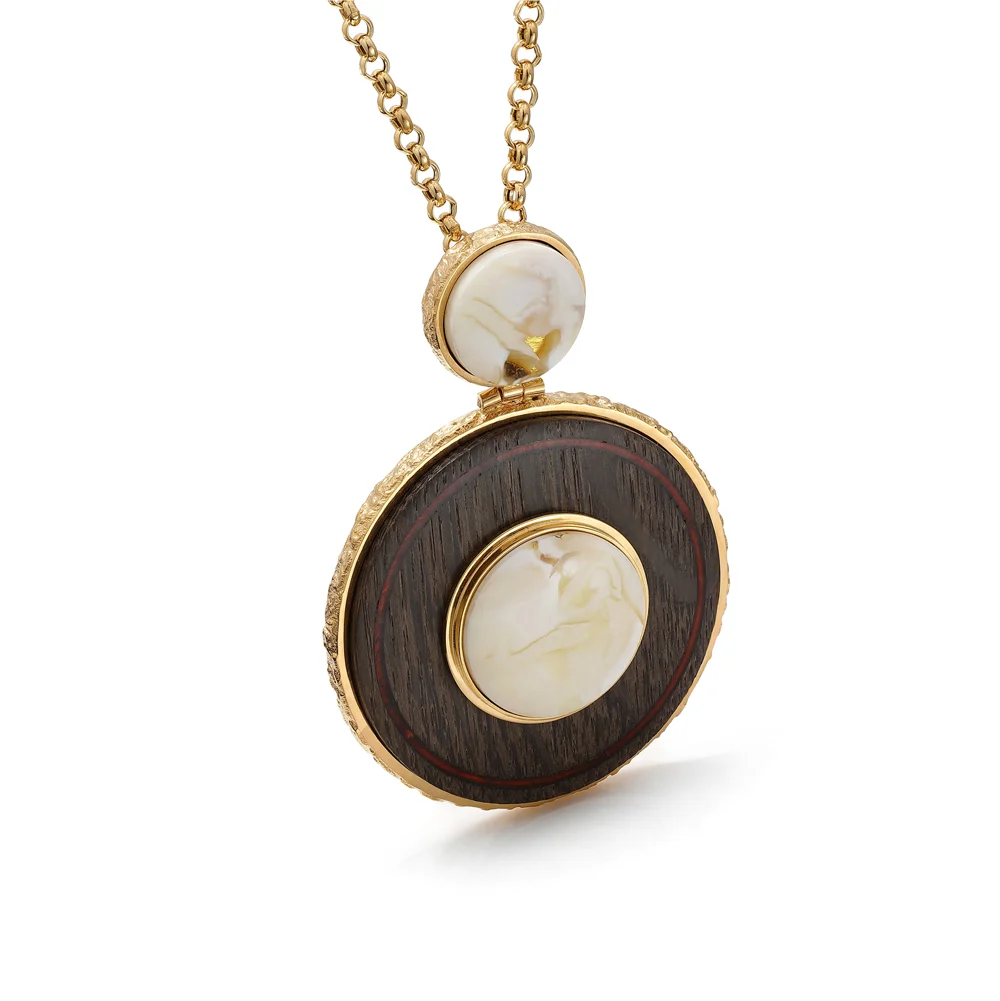
Amber, combined with wood – specifically black oak – and highlighted with the brilliance of 24-carat gold leaf, appeared in my studio later.
This is one of those workshop and aesthetic solutions that I return to and reinterpret. It's characteristic of my studio. It's my new take on old techniques.
What were the milestones over these three decades that led you to what you do now: jewellery that sublimely highlights the beauty and uniqueness of amber and is classic in form?
You know... the classic form for amber is unfortunately still often cognac cabochons in silver settings with leaves, which were popular in the 80s and 90s. From the very beginning, I was fascinated by natural amber, but at a time when „cognac” and all that was popular,
What became clear was that this fascination didn't translate into commercial success. So, part of my offering was amber – as you call it – classic, although even then I preferred simpler forms. The other half was natural amber, the beauty of which I tried to highlight.
You've long noticed that nature and simplicity are the most beautiful.
Yes, except my path to these simple forms was a long one. It started at the art school in Gdynia Orłowo, then an internship in my mother's jewellery workshop at the end of the 80s. Although, in reality, contact with amber has been my daily life since childhood – in my parents' workshop, who had been working with amber since 1970. I remember m.in. The smell of amber polished in tumblers and being picked from wooden blocks. 20-30 kilograms per week… It was almost a ritual, accompanied by the smell of turpentine, resin, or burnt amber… Amber was in the workshop and at home. Actually, everywhere…
When you think about it today, do you feel your childhood was special?
I was certainly privileged in a way when it came to amber. But I was also somewhat tainted – that’s why, after graduating from secondary school in 1990, I made jewellery out of anything but amber. The problem, however, was that my simple silver forms were very refined, and therefore very time-consuming and… not commercially viable. And, as often happens in life, what you run away from eventually catches up with you, so amber naturally reappeared. Specifically, Mrs Helena Podżorska, who was looking for a brave soul to create large amber sculptures. I had sculpture classes at school, but I hadn’t practised. So, I decided to give it a go… The first was a sizeable turtle, on which I honed my technique – it turned out so well that I received further commissions. And it continued like that for several years.
You created amber sculptures for renowned Gdańsk workshops, which are famous for their sculptures. Your amber sculptures also went to distinguished recipients.
It was a really interesting professional period, involving many great adventures and interesting acquaintances. One of my sculptures ended up in the hands of Pope John Paul II, presented directly by Archbishop Gocłowski. Here, as often in my life, chance played a role. The parish priest of my parish commissioned a sculpture of Our Lady of Fatima from me. One day, Archbishop Gocłowski visited him, and when he saw the sculpture, he said: "Give it to me, I'm going to see the Pope, I need something as a gift." And so my sculpture found its way to John Paul II. Another went to the President of Portugal, and another to the Prime Minister of Kuwait. Also crafted by me are amber gifts for renowned musicians: Carlos Santana and Robert Plant, who played at the Rock Legends Festival in Dolina Charlotty. And another for the Spanish national football team, which during Euro 2012 was stationed at the sports centre in Gniewino. The town had previously commissioned marshal's batons from me, and now they asked for gifts for the footballers. Spain won the Euros, and so I made gifts for the European champions. For example, Anita Werner, a TVN journalist, saw my carved amber perfume bottles on my website and invited me – and Bogdan Mirowski – onto her show. And then Mariusz Walter, the founder of TVN television, commissioned such bottles as a gift for his wife. I've completed many such interesting commissions, dozens of names. Most of the clients came to me through recommendations.
Your workshop also created an amber egg for the famous Fabergé Millennium Amber Egg – a gift for the 1000th anniversary of Gdańsk made by Victor Mayer.
Mrs Helena Podżorska asked me if I knew how to turn. I didn't, but I evasively replied that I had a lathe. It was still there after the Gdynia craftsman Włodzimierz Medyński – in the premises of his workshop, where my parents first had their workshop, and now I do. And this amber egg was the first thing I turned. That's how I touched legend…
Do you still carve amber, or are you primarily focusing on jewellery now?
I rarely sculpt, as it's incredibly time-consuming. It was difficult for me to support my family with this work, especially with the prices of finished sculptures being calculated by the gram, which is a difficult, if not impossible, custom to eradicate in the amber industry. Currently, I focus more on jewellery and derive a great deal of satisfaction from it. I participate in trade fairs, but also in markets and craft fairs; last year I opened my latest gallery in the Riviera Centre in Gdynia. I gladly appear at all these stalls in person because then I have direct contact with the customer, which I greatly value. Often, people start a conversation with “I don't like amber” and end with “I'll buy from you, because I like it.” This is the greatest reward for me, because it means that at that moment, it's no longer about the material, but about the perspective.
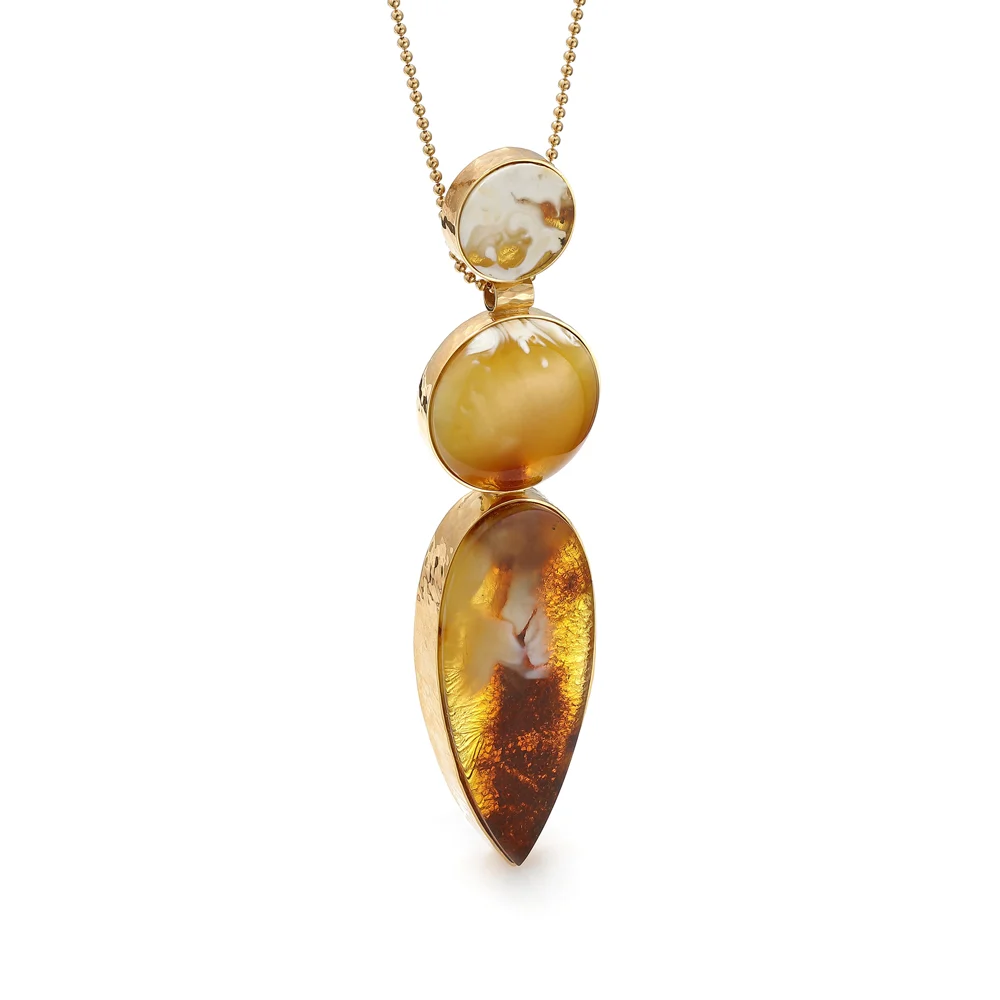
When I look at your jewellery, I wonder if you find such uniquely beautiful stones, or if you have an exceptional talent for highlighting their beauty.
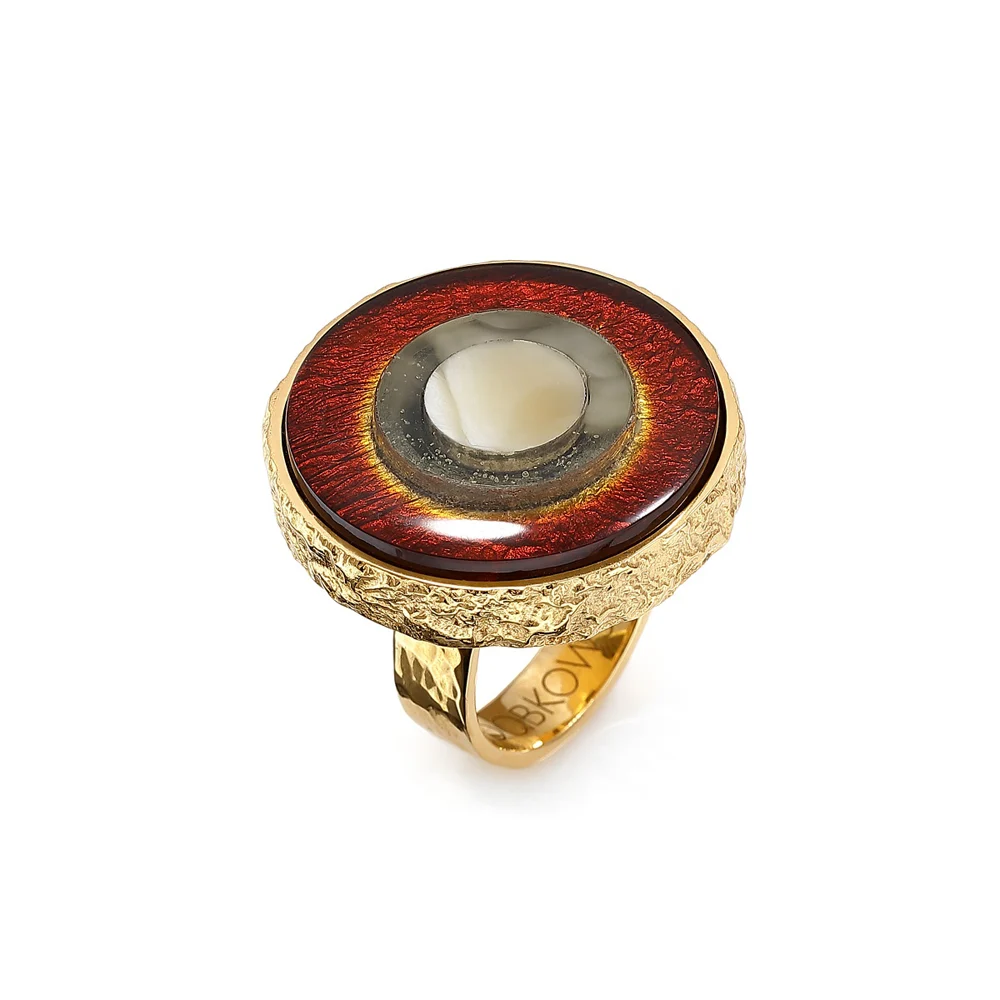
I love amber in its natural form. I hope that as an industry, we have reached a turning point in how we think about amber – after many years of constantly improving it, clarifying it, pressing it, and dyeing it, we are returning to the beginnings, which is to showcase its natural beauty. I've been working with amber for well over 30 years, and tons of nuggets have passed through my hands during that time. When I pick them up, I know what to expect inside. What I like most is discovering something ultra-rare in amber – natural blues, striking landscapes, mesmerizing nebulae, images that I can display in an interesting way.
While grinding or carving, I discovered dozens of well-preserved inclusions – spiders, termites, beetles, ants, pseudoscorpions, and fascinating plant inclusions… You don't even know what joy this brings me. Consistently, every single day, for over 30 years.
Tadeusz Dobkowski He is a valued artist and jewellery designer with many years of experience in the creative use of Baltic amber. Continuing a family tradition of amber processing spanning over 50 years, he has developed his own recognisable style, in which he combines classic jewellery craftsmanship with modern design and a sculptural approach to form. In his works, he pairs natural amber with materials such as silver, gold, or approximately 1400-year-old black oak, creating unique compositions with a distinct character.
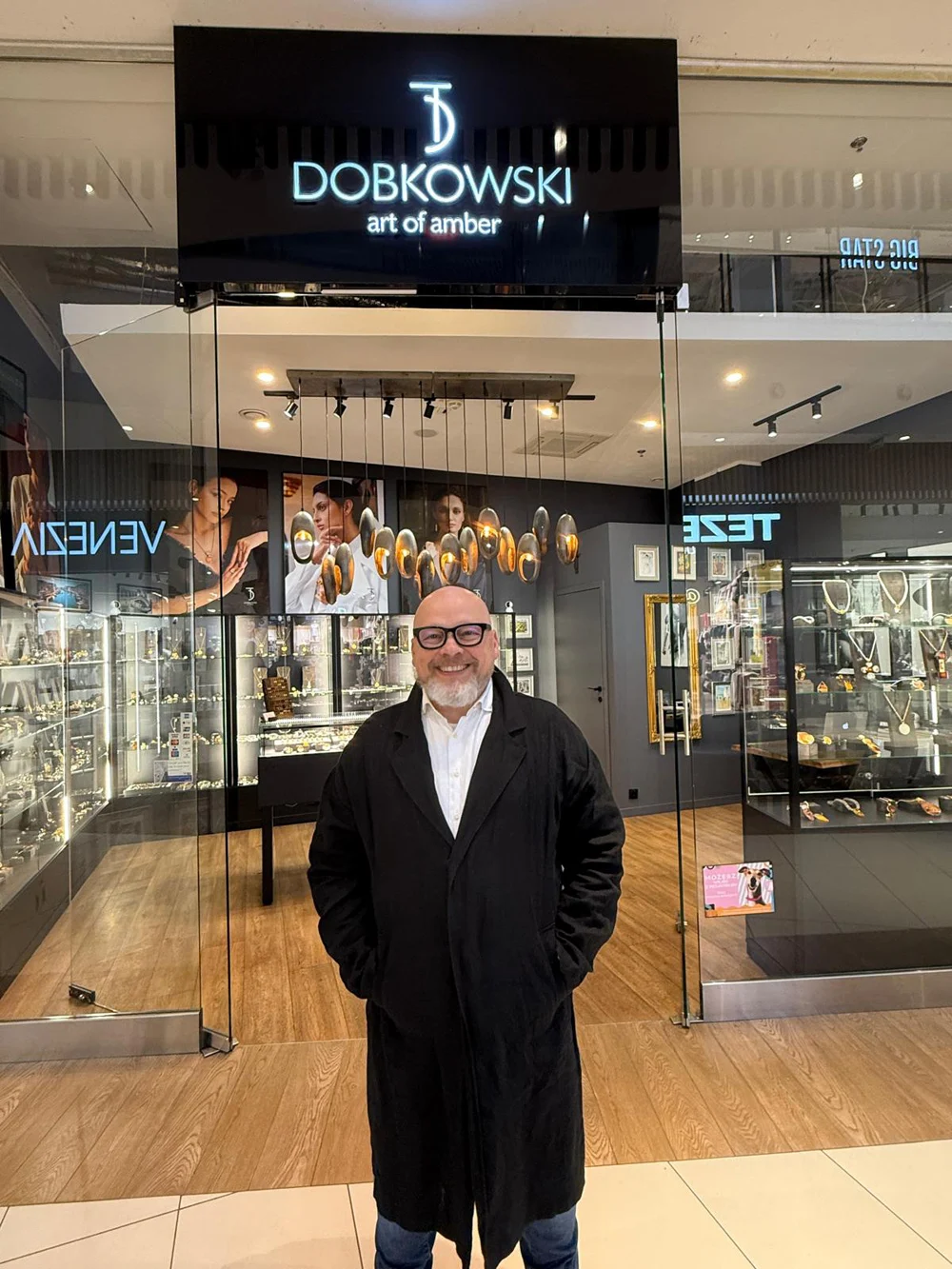
Dobkowski's work encompasses not only original jewellery but also sculptures, bas-reliefs, and artistic functional objects. His creations have been presented at prestigious exhibitions and jewellery fairs in Poland and abroad, with some pieces forming part of museum collections, including the Amber Museum in Gdańsk. The artist's designs appeal to clients seeking jewellery treated as a form of applied art – timeless, individual, and inextricably linked to the beauty of natural Baltic amber.
An interview with Tadeusz Dobkowski, published with the kind permission of the International Amber Association. Source: Amber-land No. 50