
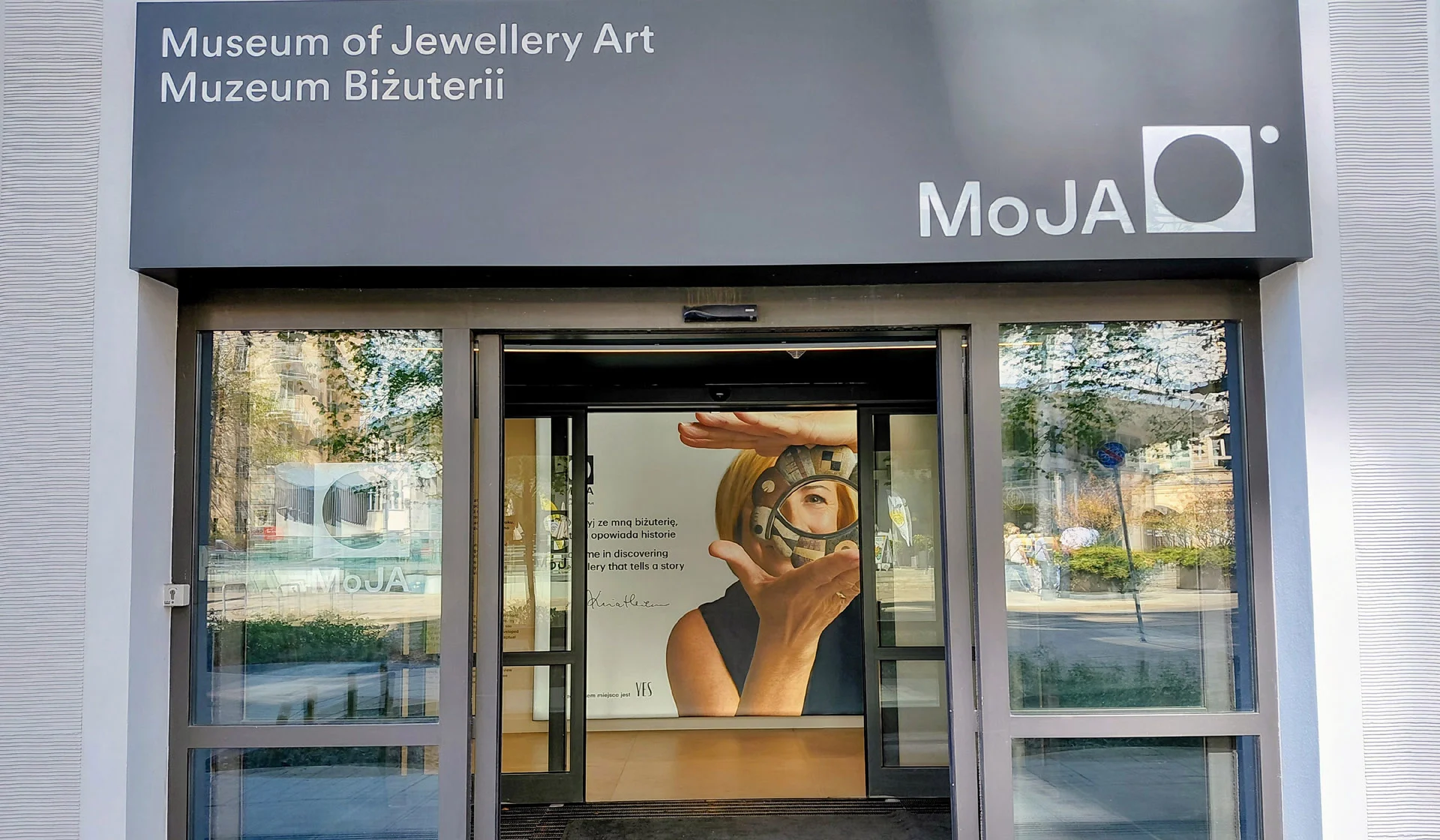
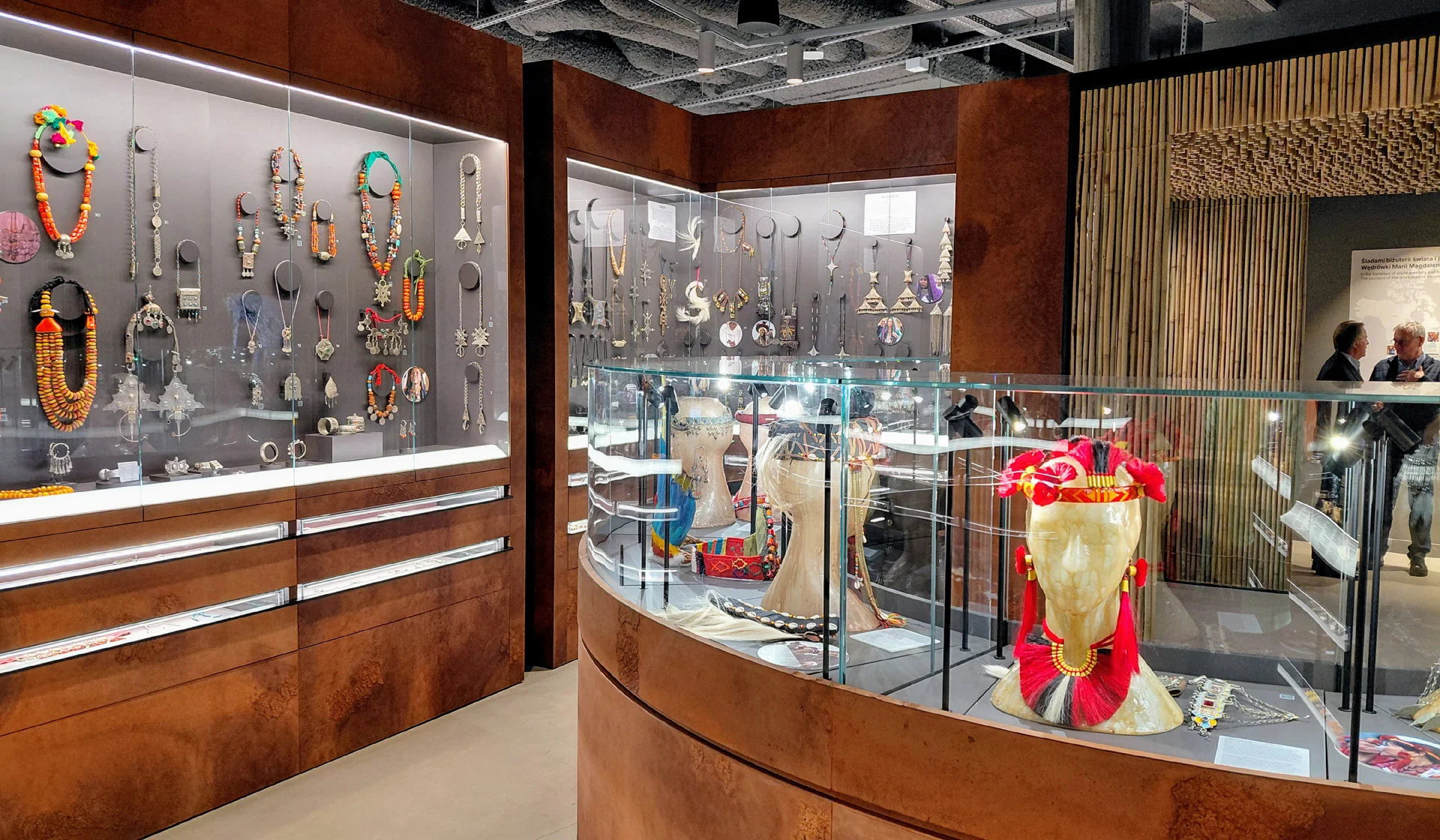
This is the result of Magdalena Kwiatkiewicz’s collecting passion – co-founder of the YES Jewellery brand, traveller and photographer – consistently developed for almost three decades. Her collection currently boasts over 3000 objects, including approx. 1600 pieces of artistic jewellery accumulated since 1998. The remaining part consists of ethnic jewellery, personally brought back from her numerous expeditions. This collection, impressive in both quantity and quality, has become the foundation of a place that can now be viewed in an entirely new context: as a cohesive, personal narrative about jewellery.
Jewellery as art – finally in the spotlight
The establishment of the museum is also a response to the problem of the marginalisation of goldsmithing, a field often underestimated, overlooked, and not always even recognised as a fully-fledged art form.
„At one point it became clear that the potential lying dormant within the collection had nowhere to be realised. Not only because the previous location of the YES Gallery made it impossible to display even a part of it, but also as a result of fruitless discussions with various museum institutions, which saw no space even for temporary exhibitions,” explained Ilona Rosiak, director of the MoJA Museum.
This is why it is so important – both for the collector and for the entire goldsmithing community, which grapples with the underappreciation of jewellery as a fully-fledged art form – that a place be established where it can be presented comprehensively, showcasing the complexity of this phenomenon and the achievements of its creators. The MoJA Museum is a space where jewellery is not an accessory, but the main star – analysed, interpreted, and presented on par with other fields of art. It is also a place where the story of jewellery and its creators is told in clear, understandable language.
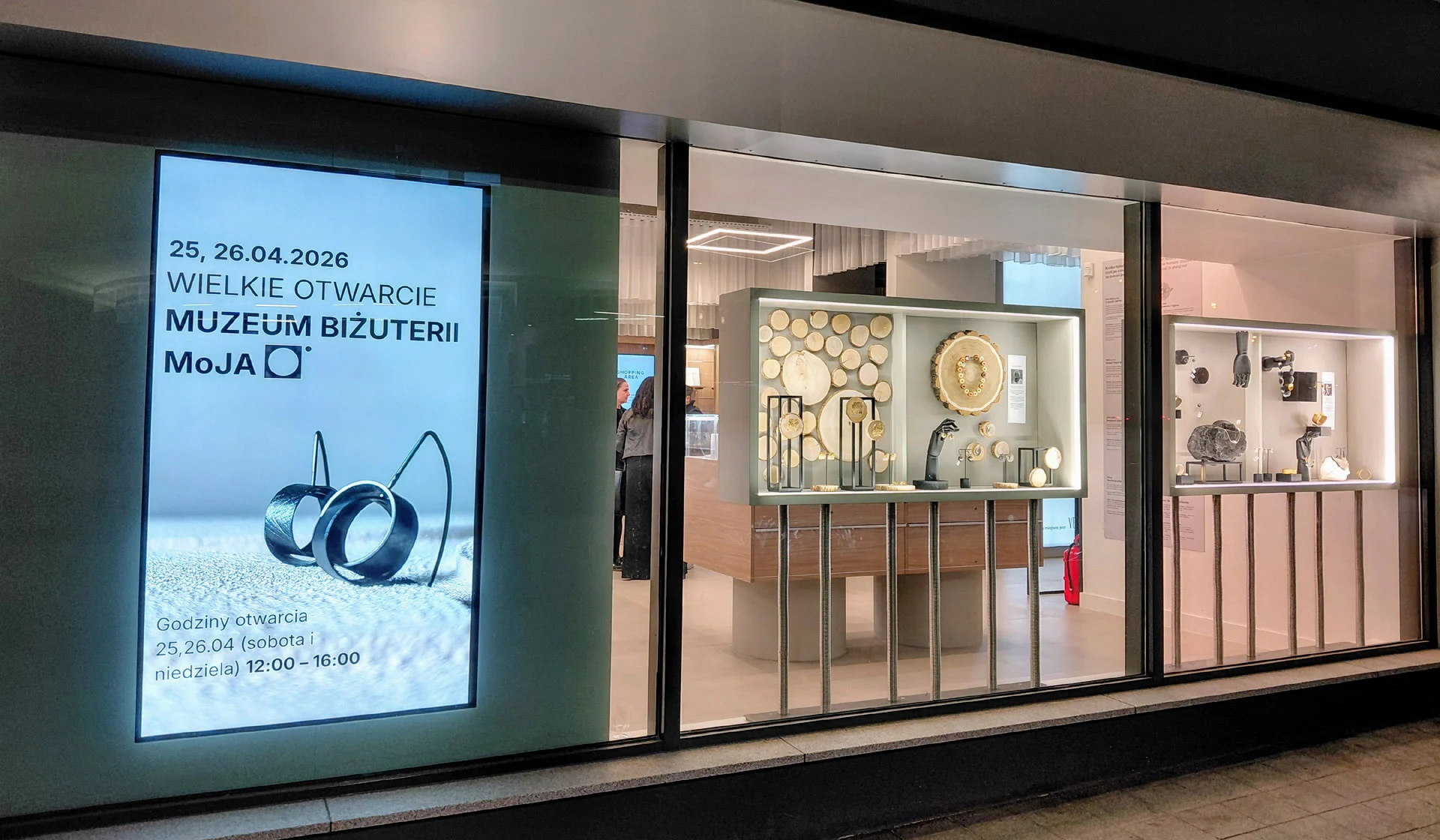
A rich collection of contemporary and ethnic jewellery
In the My MUSEUM, my jewellery is displayed across an area of approximately 400 m², divided into three zones: a permanent exhibition, a space for temporary exhibitions, and a sales area for designer jewellery. It features works by selected contemporary artists, representing various styles and materials.
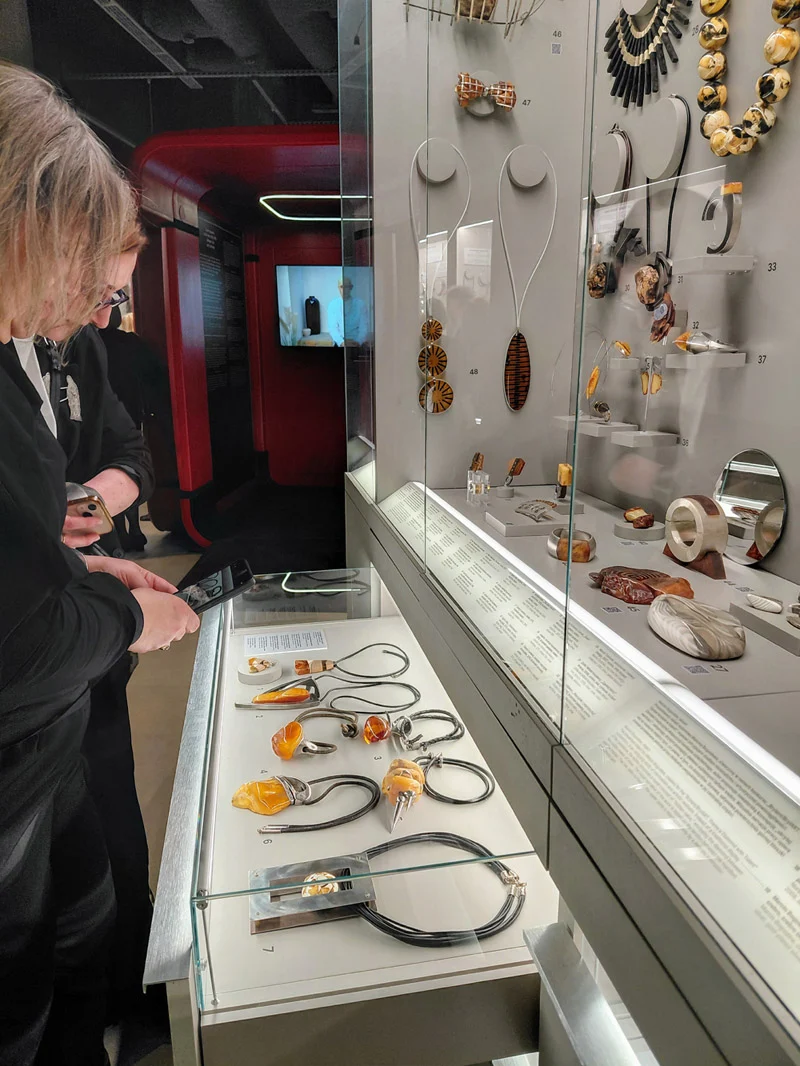
However, the focal point remains the collection of post-war and contemporary Polish jewellery, which constitutes the museum's greatest asset:
„This is the only museum in Poland where you can see such a rich cross-section of artistic jewellery created from 1945 to the present day – over 1600 objects. There is no other place that analyses it in a similar way and presents it in such an accessible form. You can discover extremely interesting stories connected with this jewellery here – it's a comprehensive account of the evolution of form, material, and ideas in goldsmithing. Jewellery from around the world is very important to us, but it plays a more supplementary role – it's a record of memories from travels, expressed in the language of jewellery, showing how indigenous cultures perceived it and what communicative functions it served,” explained the Director of the MoJA Museum.
A museum that translates jewellery
One of MOYA’s most important assumptions is accessibility – both in a physical and intellectual sense. The exhibition has been designed to be understood by audiences outside of the field. This is particularly important in the case of conceptual jewellery, which often defies intuitive reception. The museum therefore takes on the role of a translator – explaining, contextualising, and building a bridge between the creator and the viewer. The aim is to achieve more than just an aesthetic experience – a genuine understanding of this field.
Living heart of the environment
MoJA is not a closed project – quite the opposite. It aims to become an active centre for artistic and scientific life. Plans include temporary exhibitions, cooperation with academic institutions, publications and archival activities, as well as the development of the Goldsmithing Art Forum, which was initiated in 2022. Documenting the history of contemporary jewellery through interviews, studies, and cooperation with knowledge bases will also be an important element of its activities.
Personal narrative
What sets the MoJA Jewellery Museum apart is its personal character. The name itself is no accident – it refers both to the English „Museum of Jewellery Art” and to Magdalena Kwiatkiewicz's "my" collection. This subjectivity is the project's strength – the museum's narrative is told from the collector's perspective, who doesn't hide her emotions, fascinations, or the stories behind individual objects.
A new chapter for Polish jewellery
The opening of the MOJA Jewellery Museum is an event of significance that extends beyond Poznań. It is an important step towards recognising artistic jewellery as a fully-fledged art form – both in the awareness of audiences and institutions. For the community of goldsmiths, designers, and collectors, it is a long-awaited space for representation. For the public – an opportunity to discover a world that has hitherto remained on the periphery.
Perhaps the greatest value of this place lies precisely here: showing that jewellery is not just a form, but also an idea, a message, and a story.