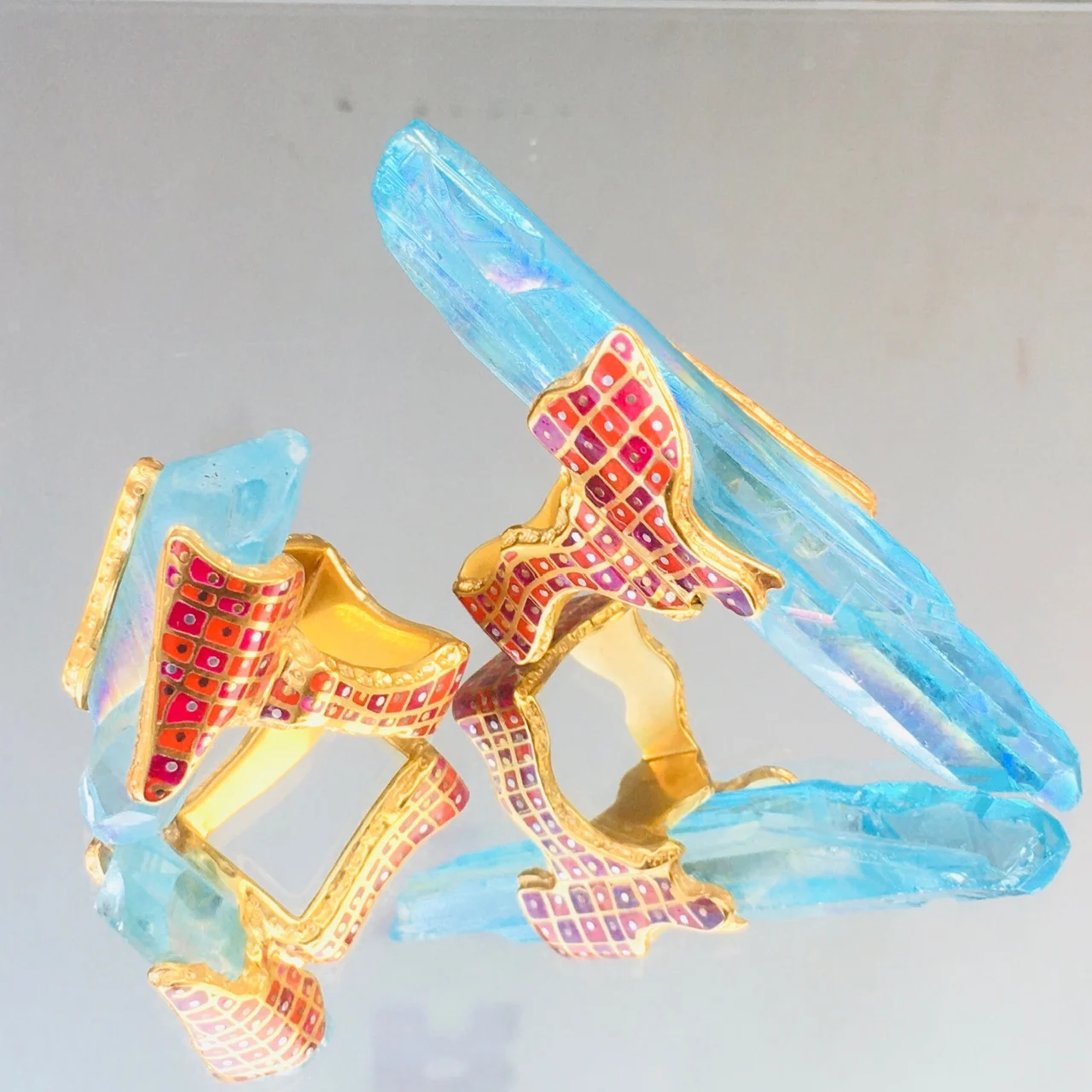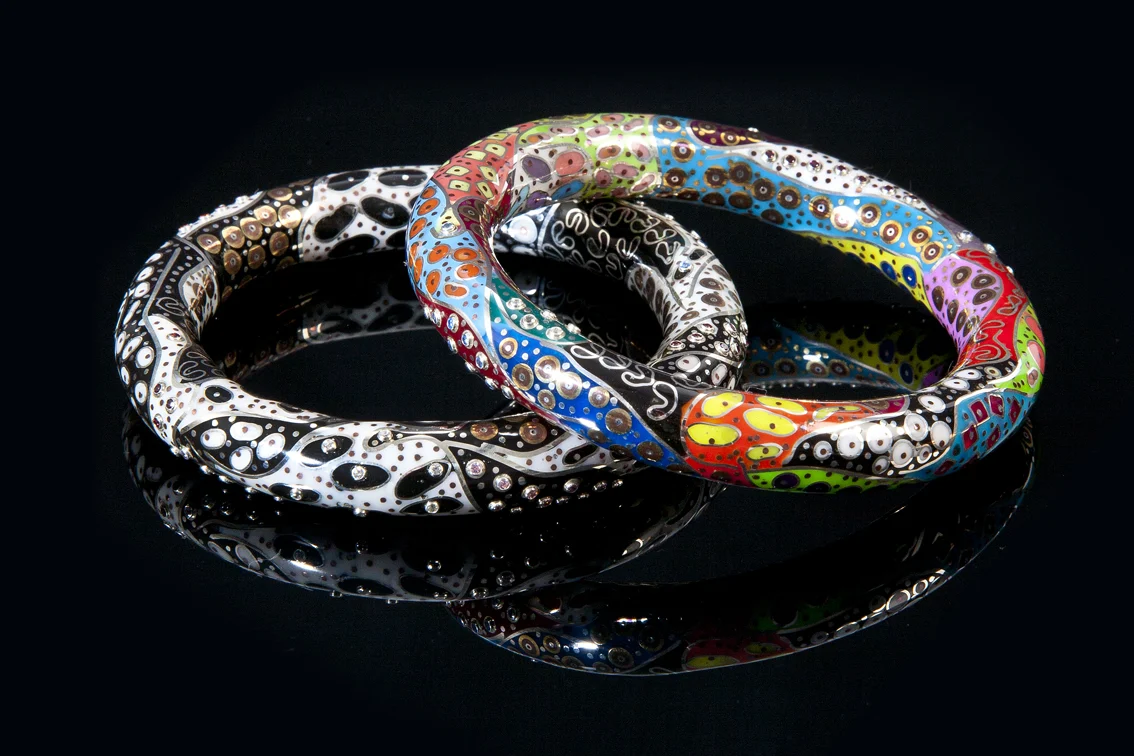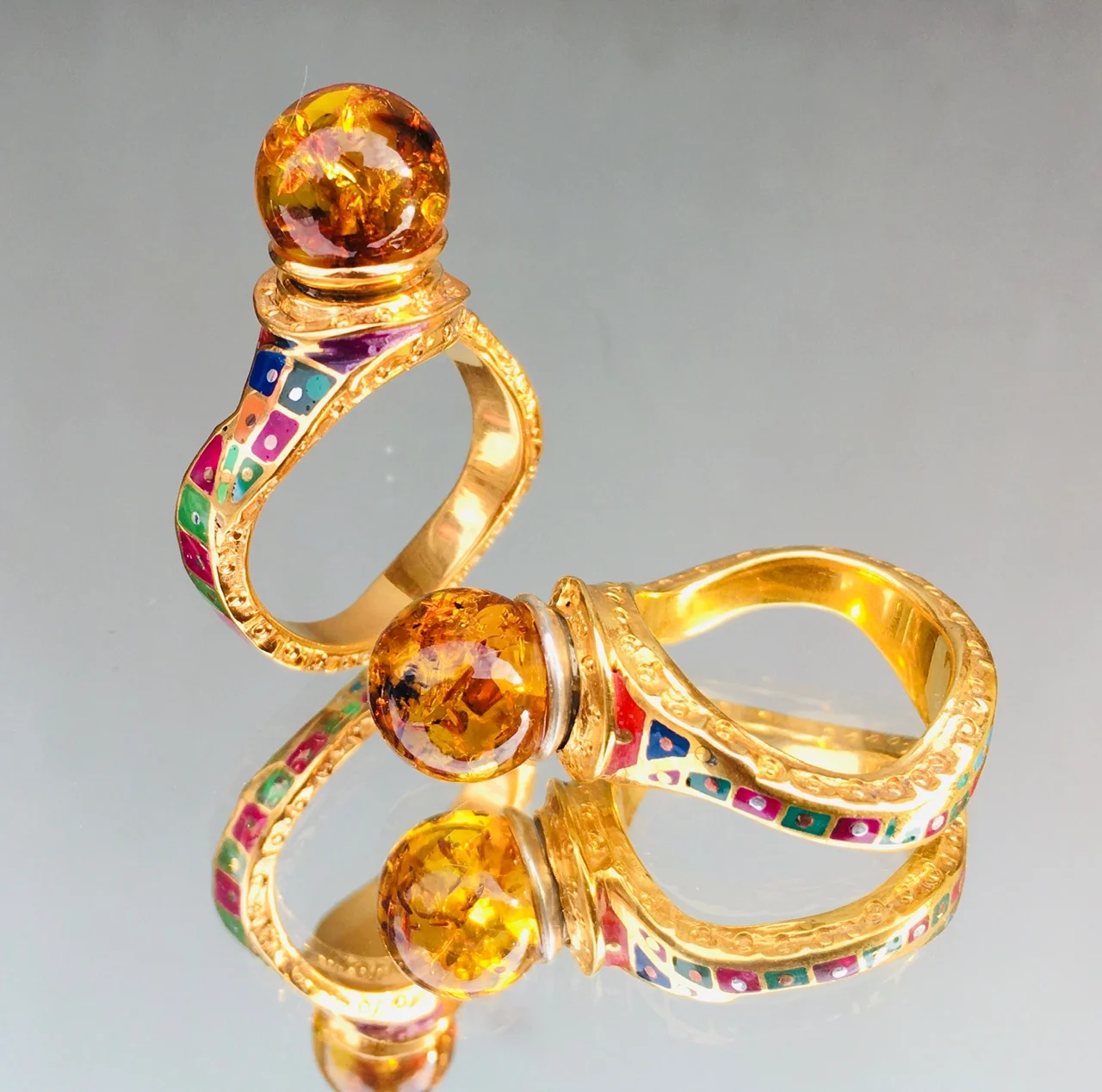
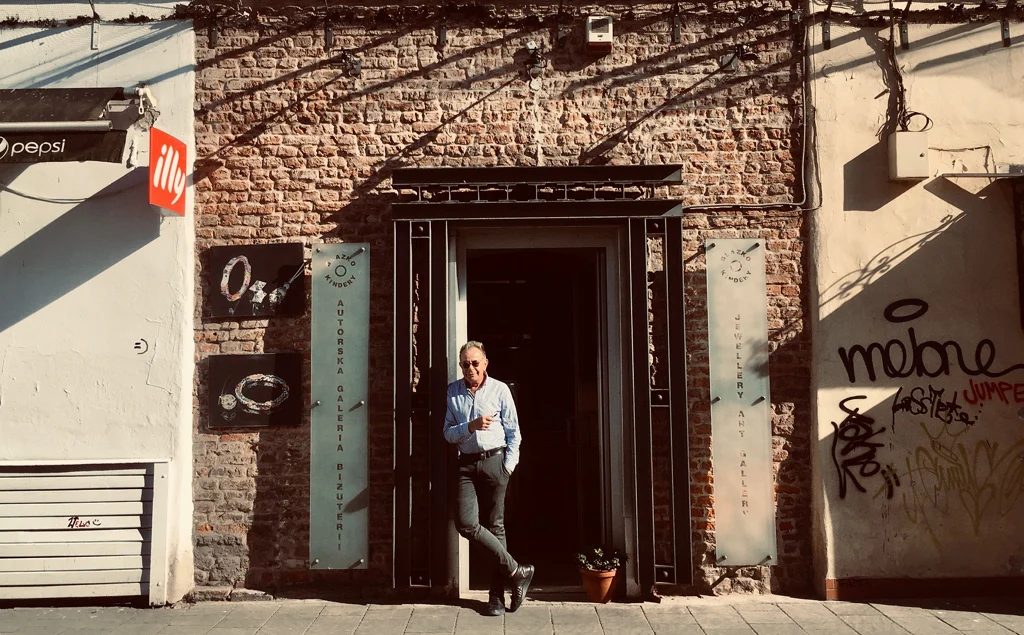
To mark the 21st anniversary of your existing studio and gallery in Kraków's Kazimierz district, you have opened a new one – right next door to the old one.
I had been planning this for several years, wanting to ensure a soft landing in the face of the impending necessity to leave my existing gallery and studio, which were combined into one. Meanwhile, the company that was supposed to renovate it abandoned the project during the pandemic, leaving me with two premises 150 metres apart. And this is by no means a sign of crazy demand for jewellery... I wondered for a long time what to do with this excess, until I finally figured out that this would be the best „open-cast mine” I've ever had. I decided that the gallery and studio would stay where they are, and I would move part of the exhibition to the new premises. I also found a patron for this new gallery – Jan Saudek's photograph „Deep devotion Weronika”, which shows a girl kneeling in a prayer position just before kissing an outstretched male hand. I admit, its undertone is quite controversial – now that I've revisited Saudek, I don't love him as much as I used to (laughs). But the photograph stays.
For the opening came squids, cushions, mandarins, peelings, apple cores, saffron milk caps, tuberous folks, no-names… – in a word, the entire Błażko family.
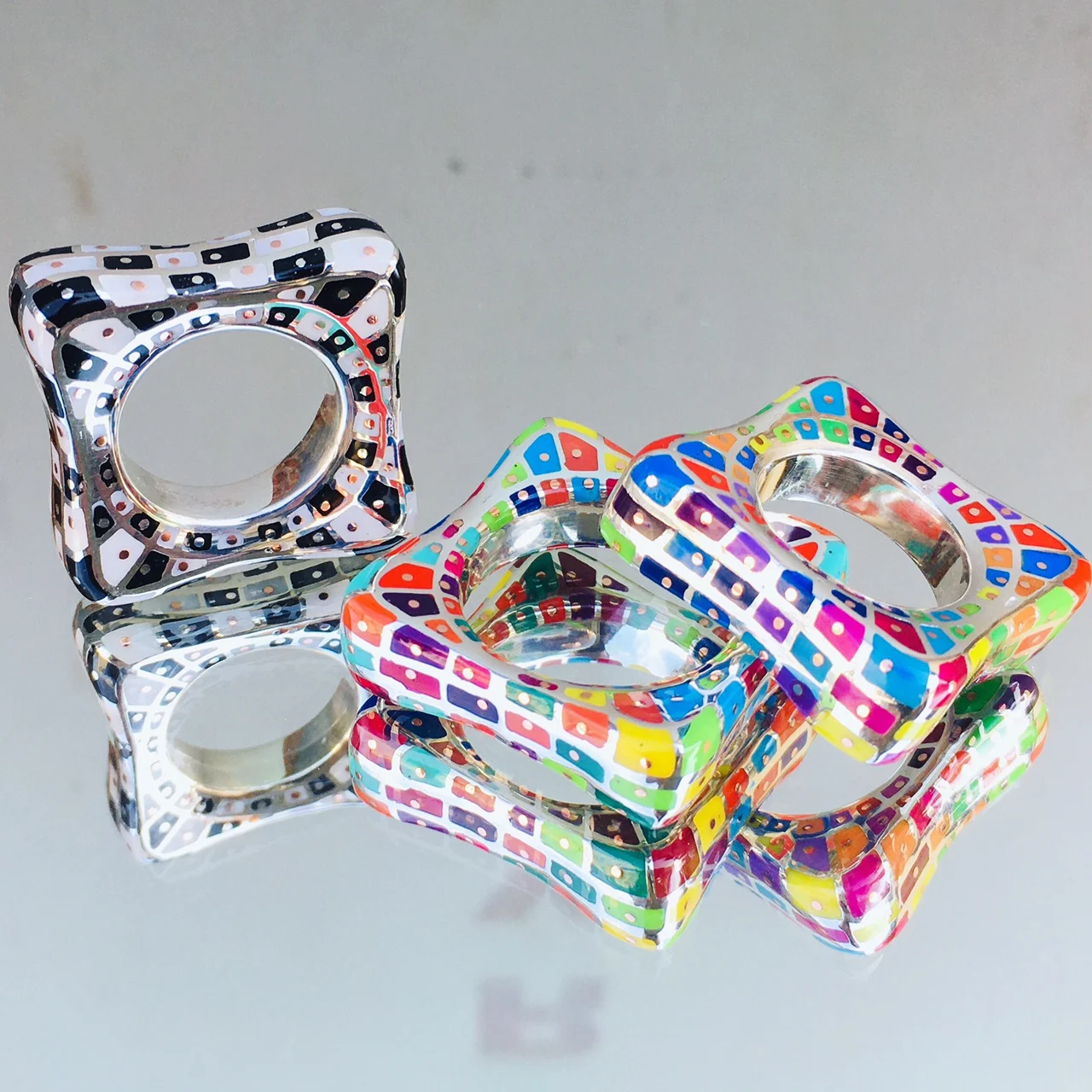
When it comes to names, there is a whole culinary trend in my jewellery, a white goods trend, and there is also waste (laughs). The club bracelet, which is the kind that I also wear, was represented by probably seven pieces. The wearers of my jewellery mobilised wonderfully and positively surprised me with their attendance.
„Carriers”, as you call them, seem to be addicted to your jewellery, supposedly completing entire collections of it and never having enough.
This is a strange matter… But I sort of understand them, especially since I've only ever encountered one piece of jewellery that I'd actually want to wear myself – it's a bracelet I made for myself (laughs). So I'm not surprised that once someone enters this pattern-filled world, one that's a bit like it's for little girls, it's hard for them to leave it behind.
Probably all the more difficult, because you create whole stories for your jewellery...
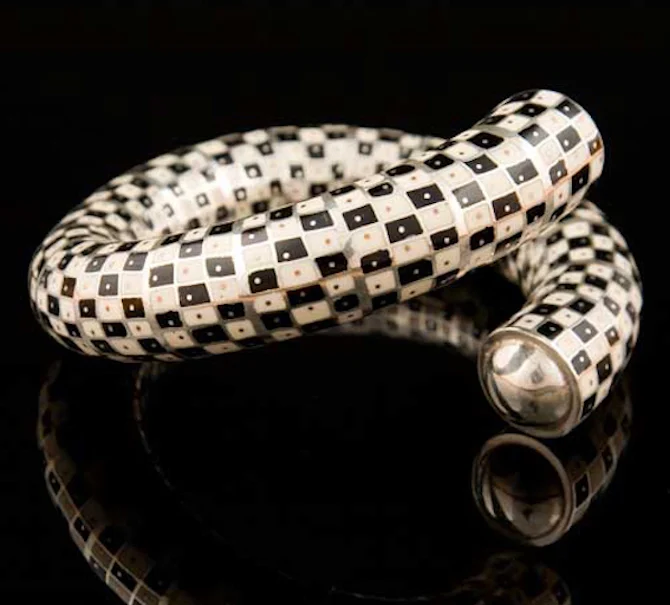
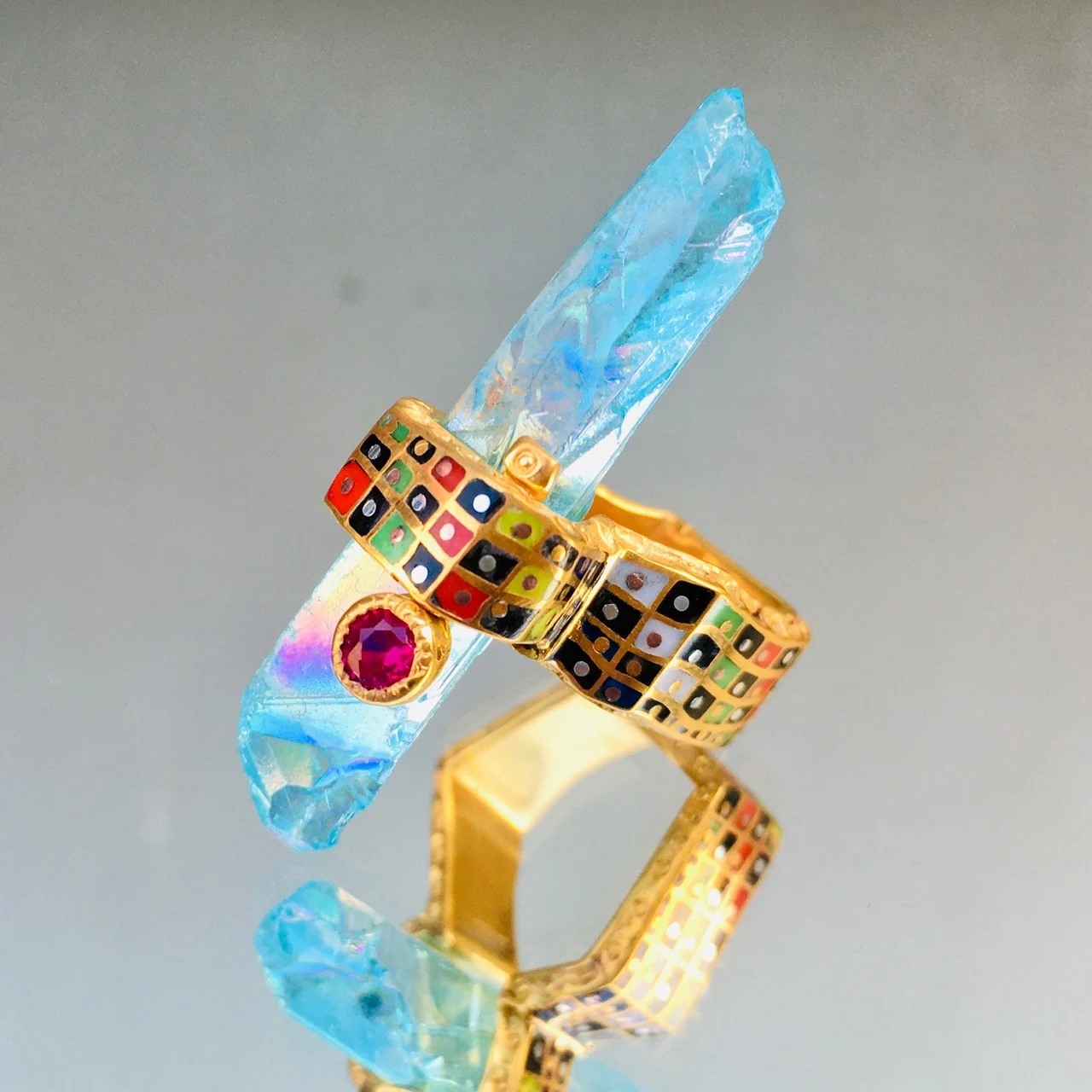
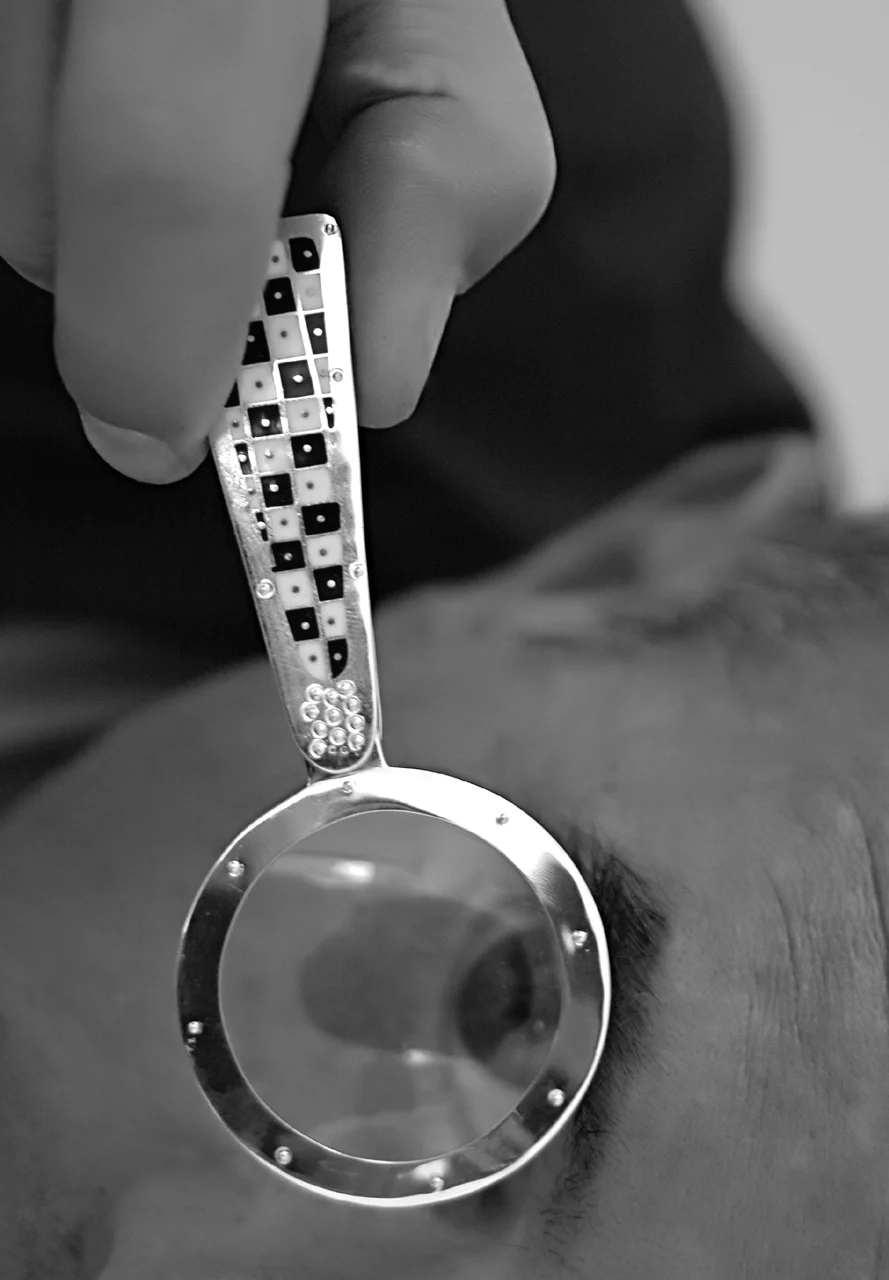
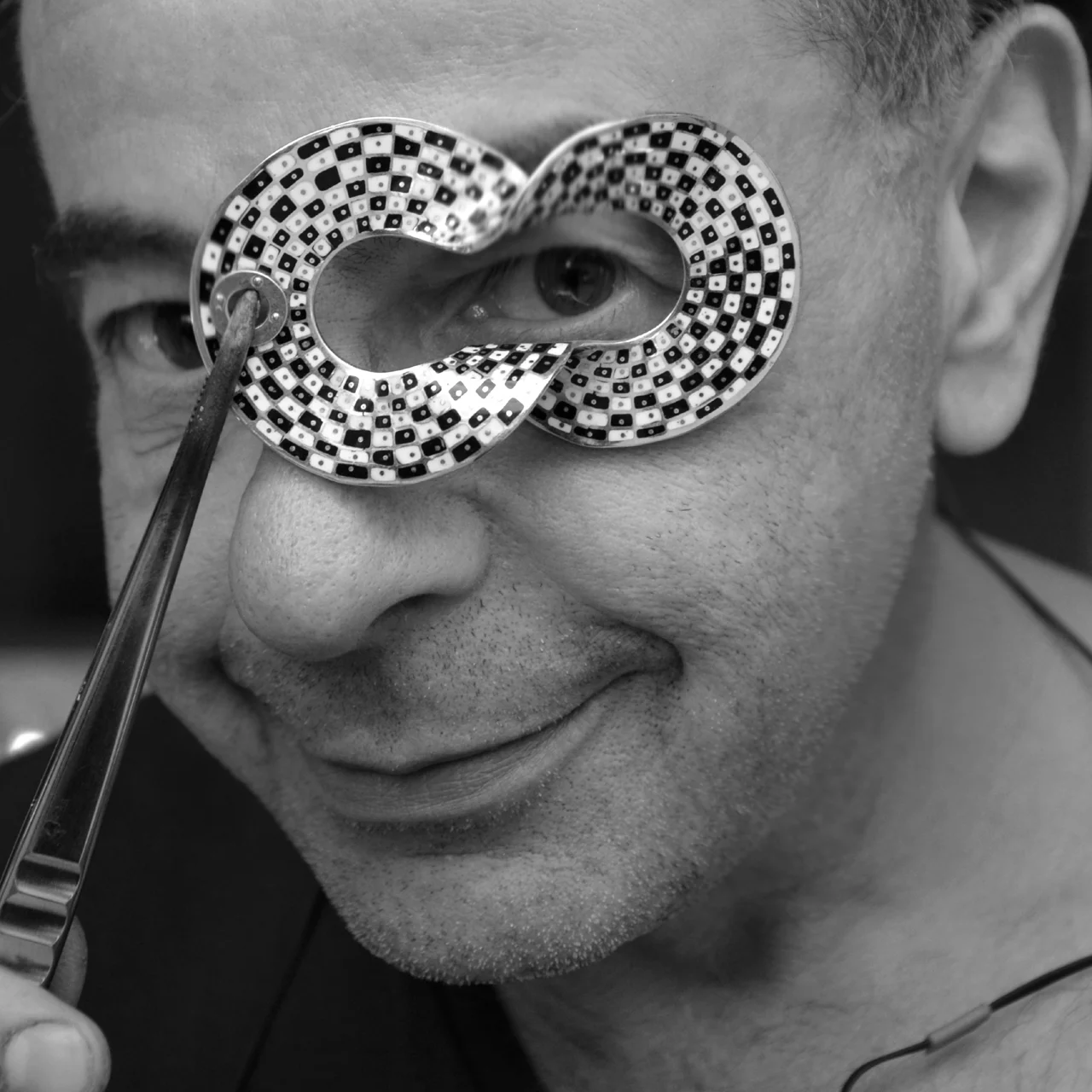
I'm just naturally inclined to create an ideology around whatever I do. Literature is always the source. I come from a middle-class, intellectual home where the women are strong and the men have intense passions. Throughout my youth I was convinced I would write, but to this day I limit myself to telling stories and creating new realities. When I read The Twelve Chairs by Ilf and Petrov, I founded my first club under that very name. I also read heaps of books by Gabriel García Márquez because I felt right at home in his stories. I started spinning some fiction while making jewellery at the same time. Sometimes I even fancied myself a representative of magical realism in jewellery – though that is almost certainly not true (laugh). What is certainly true is that my fondness for reading began to spill over into my jewellery-making life. So once the checkerboard motif was pretty well established, I joked that I was the self-proclaimed president of the Black-and-White Checkerboard with a Rusty Dot in the Middle of Every White Square Lovers Club. Later, my presidency expanded to cover all my collections (laugh). For many years, I organised Club meetings to mark my birthday on the 5th of July. And every time I would tell the members to bring photos next time because their membership cards were already ready (laugh). Nowadays the format has run its course – well, it's run its course a few times already, actually, but then for various reasons I'd go back to organising these gatherings. Oh, and I'll just add that the slogan I used to invite people to the opening of my second gallery also comes from literature – from Alexander Pushkin's The Undertaker, where it went „Truncheon-makers, assemble”.
The chessboard motif in jewellery is your signature look. How did you come up with the idea?
It was a process that lasted several years. It began in 1992, when Kasia Marszalec and Marek Milanowski organised an exhibition for me at their Gdańsk gallery, which they entitled „The Last Abortion in the Most Serene [Republic]”, because it took place during heated discussions about tightening the abortion laws. I showed jewellery made of synthetic coral, ebony and turquoise, all large pieces – probably because back then I still didn't know how to make small ones (laugh). Huge dimensions, enormous weight – meaning unwearable. So what if they were quite original? A while ago, a set from those times came my way – it quickly found a new buyer for a pretty decent sum, so I suppose that jewellery had some value after all (laugh). And by the way: the bracelet from that set was entitled „Kisiel in Knickers”. No, I didn't come up with it myself (laugh). During the opening exhibition, that catchphrase was shouted out by some female medical students and unfortunately it stuck (laugh).
Getting back to the exhibition: it caused quite a stir, the newspapers carried positive reviews, but I, for one, was rather dissatisfied. In my opinion, the items on display were rather unprofessional, which – as if to prove the point – meant they rarely sold. I couldn’t afford coffee or cigarettes, or even food – I remember being terribly thin back then. I was growing increasingly fed up with being penniless – especially in an industry associated with wealth. So I had to urgently come up with some other plan for myself. I decided that the best solution would be to create jewellery that people would buy frequently and willingly. I thought about it intensely, until finally, in some attic in Kraków – where I had my studio at the time – my mind finally clicked into gear; ideas came flooding in from all directions to give birth to a new design. As I’ve always thought in terms of series rather than individual pieces, it was important to establish a concept that would allow me to create such a series. I was looking for a design that would appeal to as wide an audience as possible. I took a cue from the invaluable Zdzisław Maklakiewicz from *Rejs* and searched my mind intensively for motifs that the audience would recognise well – after all, those are the ones they like best. And so I came up with the idea of a chessboard – everyone knows that! I declared war on the ladies – they were my adversaries, and the jewellery was my trap. When they bought it, they fell into the trap. Of course, there was no real danger to them – apart from the fact that there was a high risk they’d want more and more until they became addicted. And that was exactly what I was aiming for! I was meant to be like a plague in their lives – that’s exactly what I wanted (laughter). Delighted, I put the design into production straight away, but it was… lifeless. I needed a moment longer to come up with the idea of adding a rusty dot to every white square – and then it clicked! I was thrilled – the idea caught on, ladies were buying and wearing it, and I was over the moon seeing them out and about in my jewellery. Nothing was the same as before – the whole world had become a chessboard to me. Even when looking at the moon, I’d wonder how to give it a chequered pattern. I’d chat to people whilst mentally cutting them up into an anatomical grid. I’d be floating about 20 cm above the ground – a marvellous feeling (laughs). These days I can no longer „drift off” like that, living solely for design… Back then, I simply jumped into the river and went with the flow. At the same time, I was becoming increasingly of a solitary nature, because I began to find the company of people from the goldsmithing community a nuisance. The more people there are where an ideology is being formed – even if it’s flawed, though that doesn’t really matter, because it’s an original ideology – the harder it is to distil the essence. Everyone wants to add their own touch, and suddenly it turns out that it is no longer your ideology; there are more and more foreign elements in it. So I had no choice but to choose solitude.
The chessboard was for a long time black and white with a rusty dot until colour appeared...
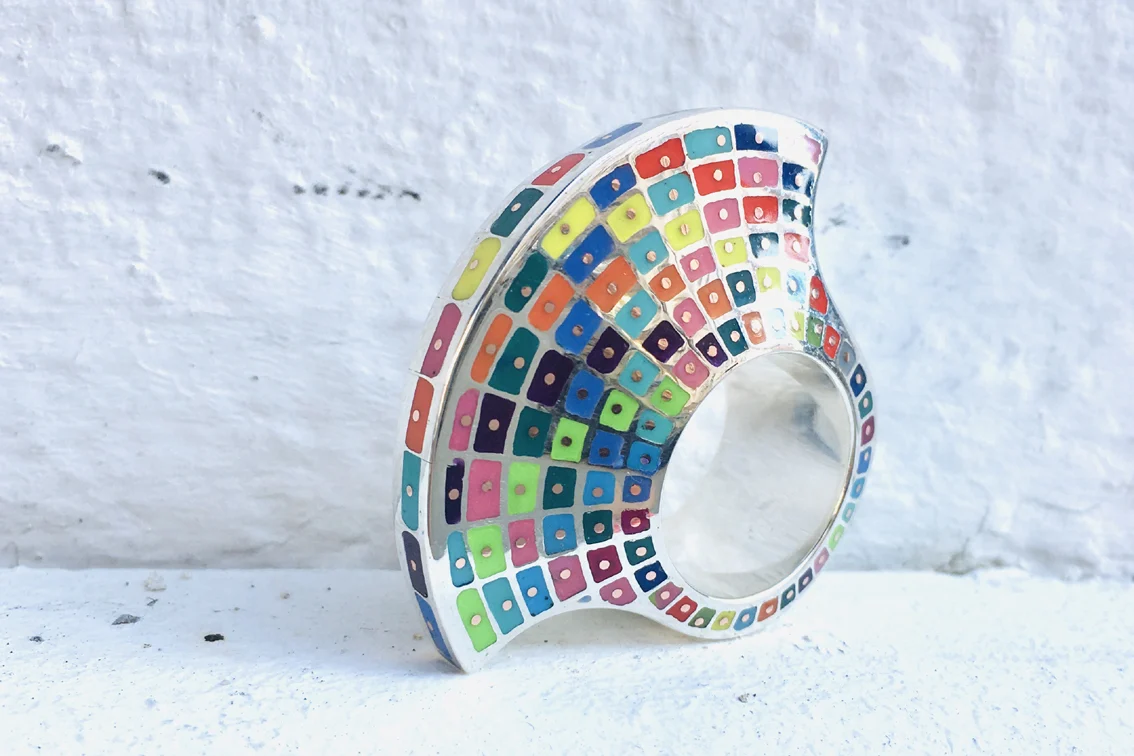
He appeared right at the beginning, but it turned out that out of 10 items sold, 9 were black and white and 1 was colourful, so everything was clear. Customers decided what they wanted to buy, and that is precisely what I did – after all, I wanted to go with the flow of the river that was carrying me. I was clearly defined as to the chessboard itself. Placing dots in the middle of each square was the result of a flash of brilliance. For me, a flash of brilliance is the moment when the long-awaited answer appears to the questions I ask myself when I feel the time for change has come. A bit like reaching the next river weir, knowing that things will be different beyond it and waiting for that change. A flash of brilliance is an incredibly euphoric moment – like falling in love.
Do you still have those moments of brilliance?
During the creation process I always feel euphoric, but by no means because of a brilliant final result, rather just because I am participating in it. Moments of brilliance still happen, but less often now, unfortunately. When a person is young and starts their adventure with art, everything excites them. As time goes by, they become more and more fussy, just any old cake won't thrill them any more… So it gets harder and harder… Now, I get immense pleasure from watching the people working with me get hooked on this jewellery and start reacting in a similar way – it seems you don't have to be a creator at all for it to work. For some time now I've been thinking „Błażko” is us, not me. I am invariably the leaven, the ideas come from me, but my crew co-creates this story. It's quite nice to be called Błażko, and Grzesiek Błażko even more so (laughter). I'm not saying it's easy to live with, but sometimes it's nice (laughter).
For 21 years in Krakow's Kazimierz – what is so fascinating here?
I turned up because I liked Kazimierz terribly much. Scratched, ruined, with bullet holes, it was fascinating, downright hypnotising. Now it's different, the picture is much more sugary, more geared towards tourists – holes in the ground have been patched up, tenement houses renovated... It's possible that has some charm, but my sentiment for the 1990s picture has remained. Kazimierz is so small that when you turn up there, you immediately become its face. And the faces of Kazimierz are winos and restaurant owners. And me – somewhere between them (laughs).
For Kraków you left Gdańsk.
Gdańsk didn't give me the opportunities that Kraków did. I loved the people from the Tri-City, but I didn't feel like one of them. So when my girlfriend at the time got a job offer near Kraków, I didn't hesitate for a second. I packed my belongings into the car – following the rule that my personal things had to fit on the back seat, and my workshop in the boot. I always made sure to have as few things as possible, because then it's easier to move. And I've moved over 60 times in my life... I changed flats sometimes for trivial reasons, and sometimes for such serious ones as, for example, a windowsill. Back then, I used to mount my rolling mill on the windowsill – many a time the windowsill would stay in my hand together with the rolling mill (laughs). In the meantime, I even went back to Gdańsk for a moment, but I increasingly felt that it wasn't my place. I never regretted choosing Kraków. It was freer in Kraków – back then I used to listen to the then little-known Maciej Maleńczuk playing on Floriańska Street, I had a good time, I lived the life of the Kraków underground. And I was creating the chessboard pattern, spending an unbelievable amount of time in the studio creating jewellery that lifted me a few centimetres off the ground... My jewellery was very distinctive and so sought-after that girls who couldn't afford to buy it made copies of it out of plasticine. What I experienced in Kraków was a substitute for the flower power era – and I really liked it.
And now here in Kazimierz I am entangled in two interiors… Fortunately, I still love creating jewellery, spinning the story I have to tell. I dream of a studio somewhere in a seaside town, a few metres from the beach, where the temperature doesn't drop below 16 degrees Celsius. So if I have dreams like that, then I suppose Kraków's Kazimierz isn't entirely my place after all…