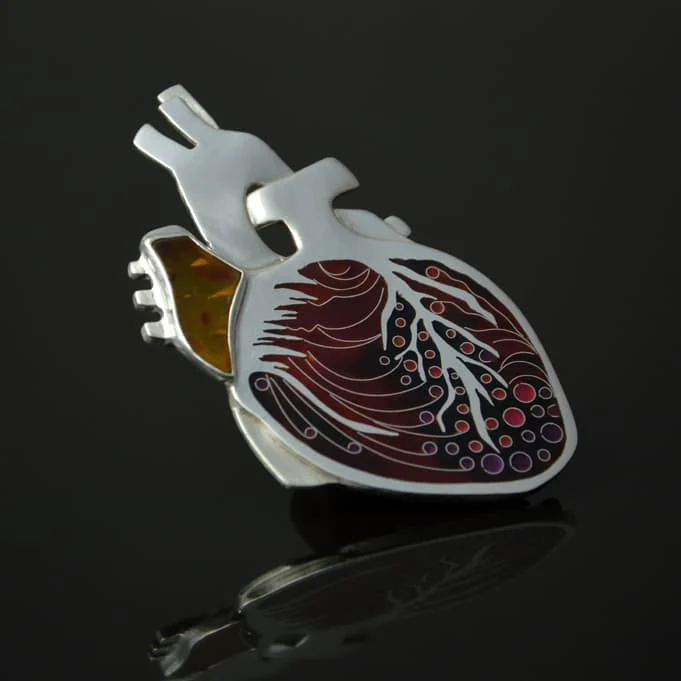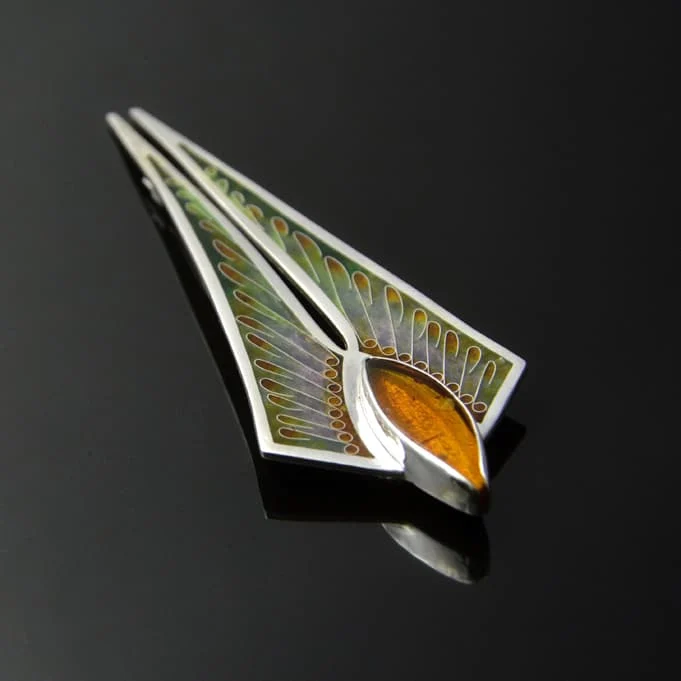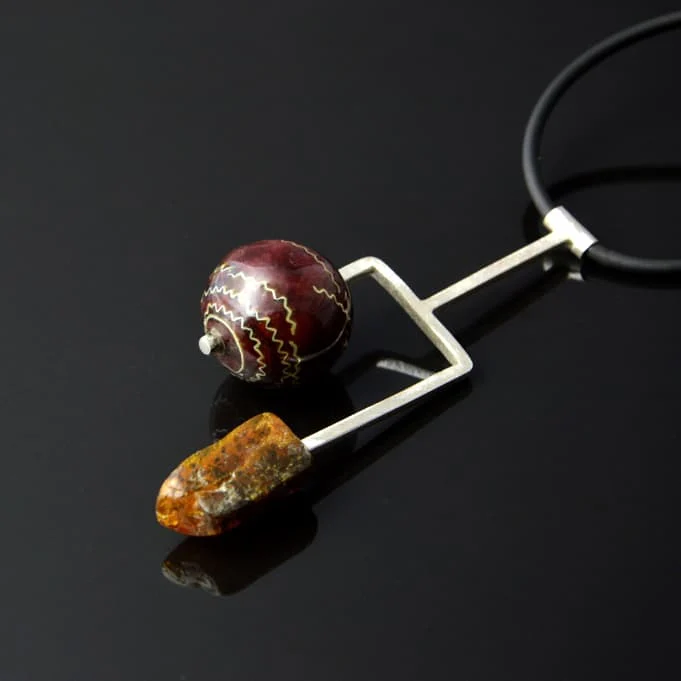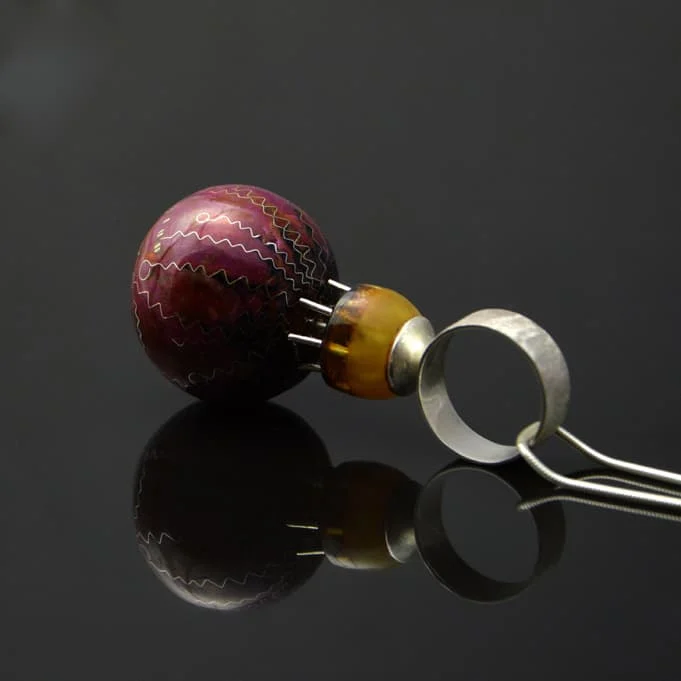
On your website I read a beautiful sentence: „My jewellery is the result of my fascinations, my admirations and my world”.
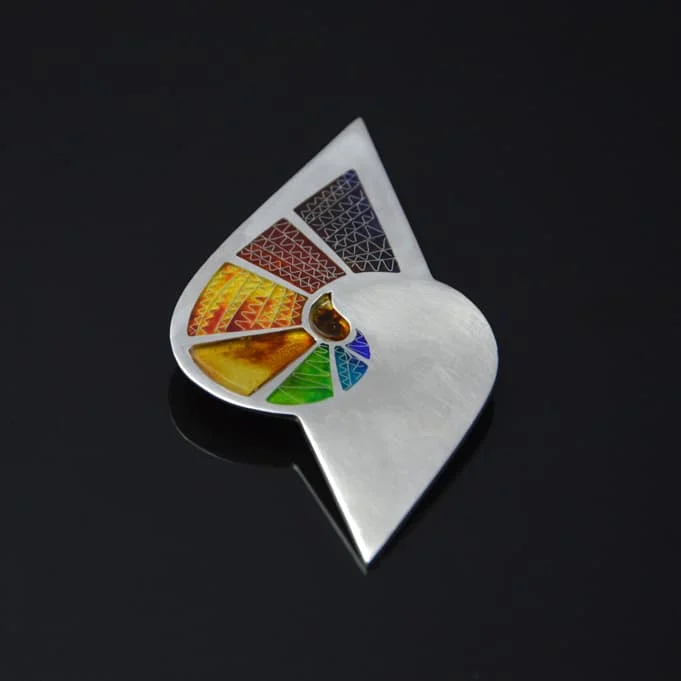
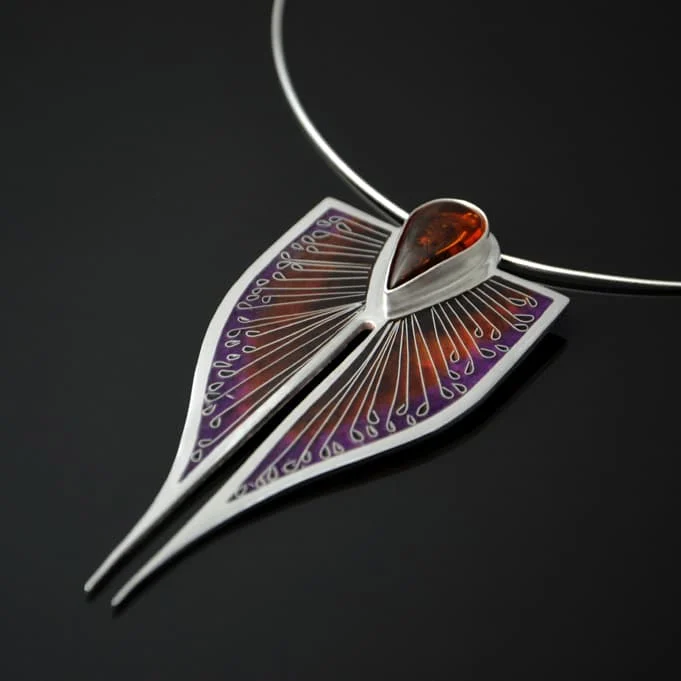
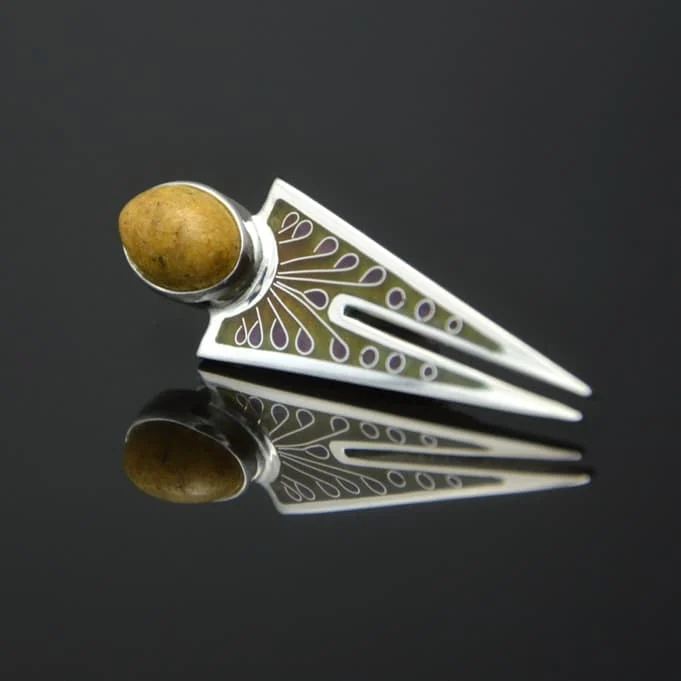
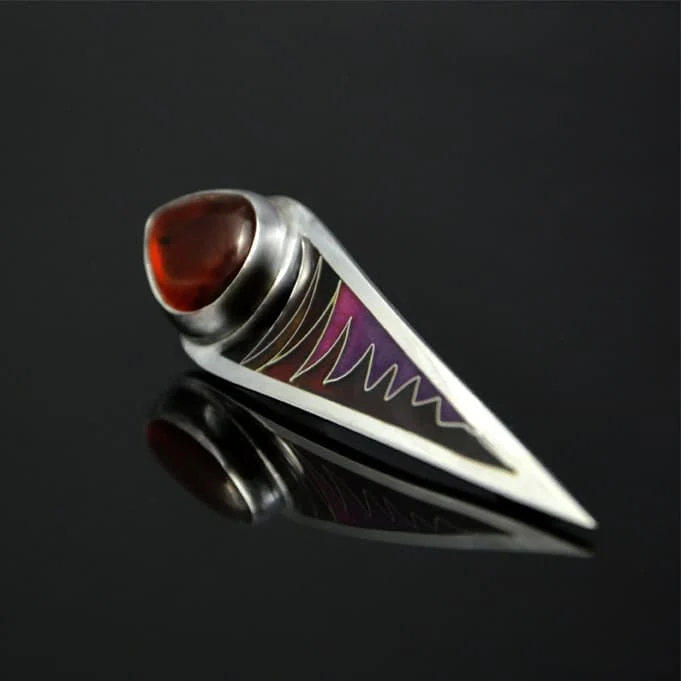
This is a fragment of a poem by the folk poetess from Kozienice, Zofia Kucharska, which enchanted me because it speaks about how the simplest things can bring us happiness. My fascination is culture and art, with a special fondness for Georgia, where I learned the minankari technique, as well as for ancient mosaics and frescoes; I am also enchanted by music, as I translate rhythm into patterns and melody into colours. I am filled with admiration for nature, from which I draw inspiration – observations and the reflections and feelings that accompany them are reflected in the glossy surface of the enamel. And finally, my world, which is a world of ornaments – I am invariably fascinated by the infinity of their rhythms and motifs. All of this is reflected in my jewellery.
Does making jewellery make you happy?
By training I am a painter, and I have also worked as a monument conservation technician. I never thought about making jewellery, but my very first encounter with the technique of minankari – or, less nicely in Polish, cloisonné enamel – changed everything. I went to Georgia to write my master's thesis on a Georgian church and to paint pictures for an exhibition. I ended up in the studio of a friend who not only painted, but also wrote icons and worked with enamel. To this day, I remember my fascination very well – the jewellery made using this technique was not only fascinatingly beautiful, but also captured the atmosphere of the country and the nature of Georgians brilliantly.
Did it take you a long time to master the ins and outs of this technique?
I am always learning, constantly experimenting. I arrived at most solutions on my own, because my teacher only gave me the basics. I also had to master goldsmithing techniques independently. I put a lot of effort into ensuring my enamel was not like the one in the studio I came from. It was important to me to create something of my own. And I think I've succeeded – I have already heard from many people that I have developed my own style.
What captivated you most about this technique?
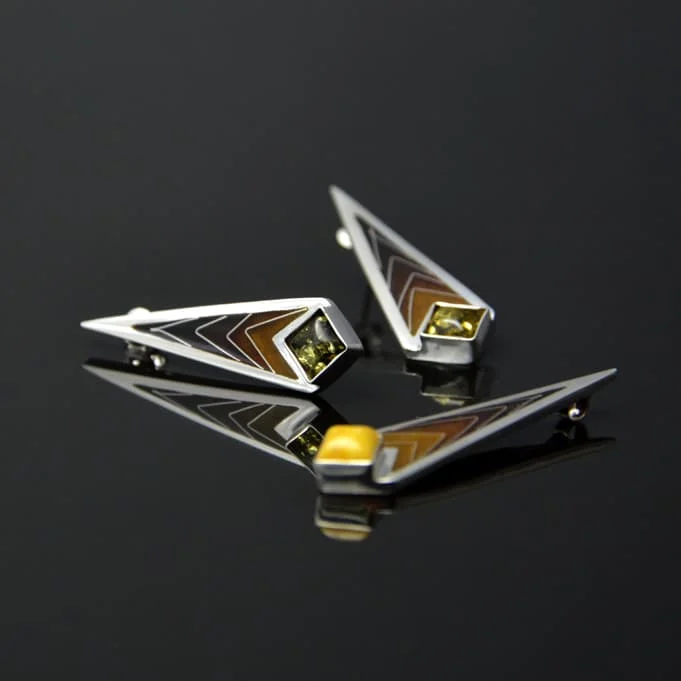
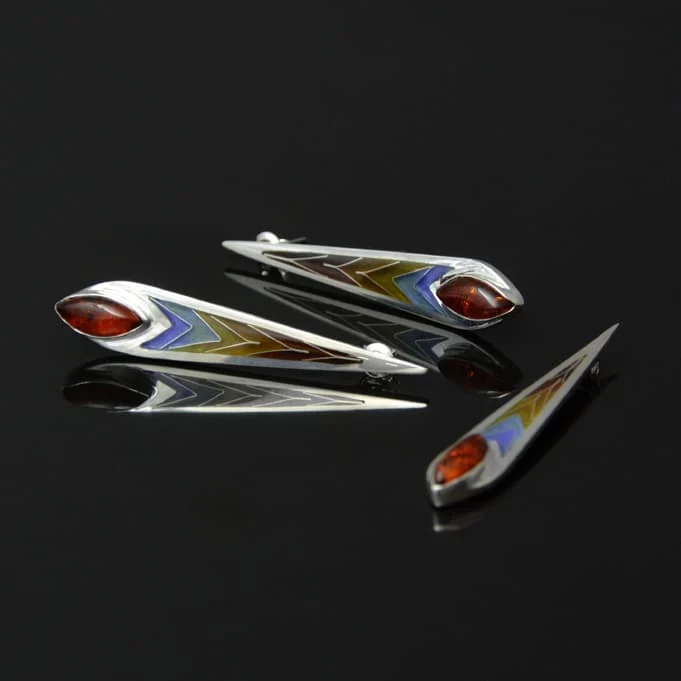
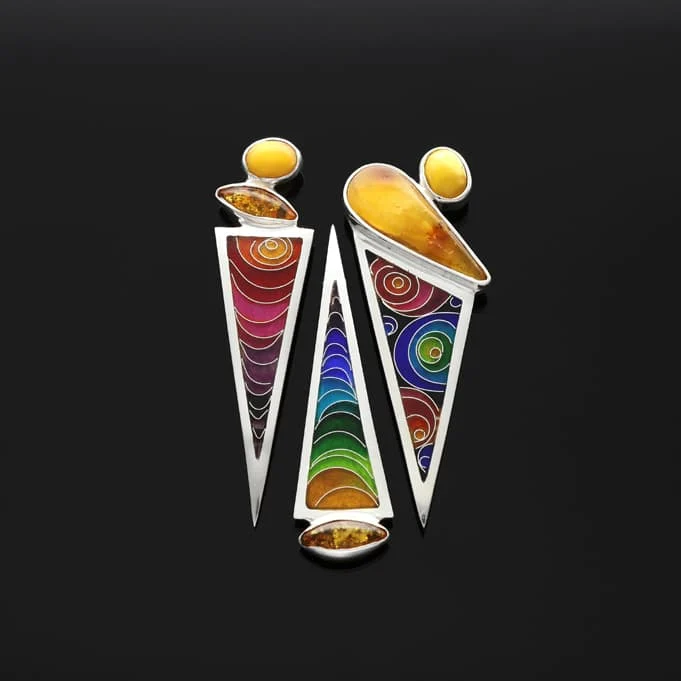
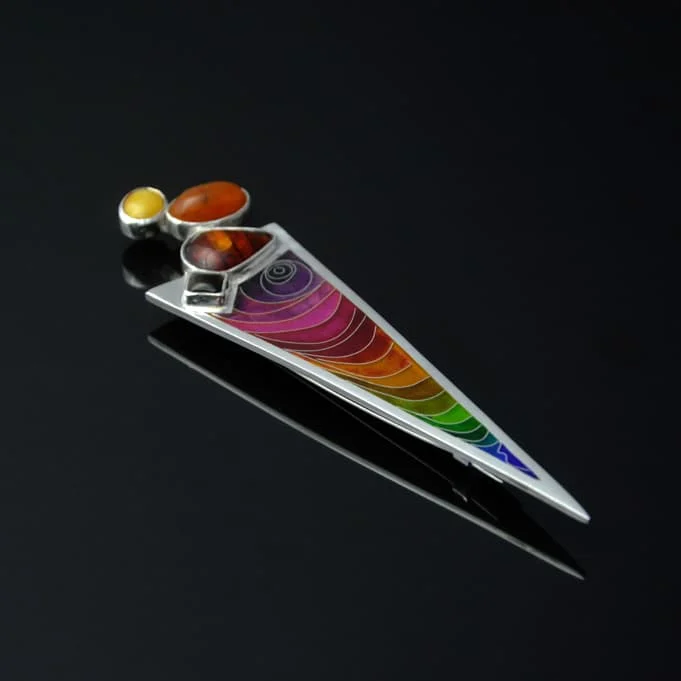
Above all, colour. What captivated me about transparent enamels is that you work with them like paints, and you can also create a glaze. There is an incredible depth in enamel, magic, a fairy tale… Especially when you apply a few glazes. But everything comes at a price – cloisonné enamel requires a great deal of patience and a huge amount of time. I remain unfailingly fascinated by it, so I not infrequently lose myself in this work and often a whole day passes imperceptibly… However, I have the luxury of not working to piece rates and I am in no hurry with anything… Besides, I wouldn't know how to do it any other way…
Recently amber has also appeared in your work.
Amber also has many colour shades; it can be transparent, matte, milky or yellow. When it is well matched with enamel, you can achieve a surprising effect. I have experimented with it many times, and also used it in my diploma work prepared at the Strzemiński Academy of Art in Łódź and inspired by the paintings of Paul Klee, where it creates the effect of enamel – you really have to look closely to notice that it is not enamel after all. I had never thought about it before – especially since I work intuitively, without the need to verbalise various phenomena – but it seems to me that the combination of amber and enamel in my works is an attempt to connect two countries that coexist within me: Georgia, where the sun and energy are locked in enamel, and Poland, where their quintessence is precisely amber. Perhaps that is why amber and enamel complement each other so well…?
Do you also play with colour in painting?
Probably not. The paintings that have come from my brush so far have been rather monochromatic; I tended to use a narrow palette of colours. I haven't painted for a long time, perhaps something has changed… (laughs) For me, colour intensity depends on my mood – the better my mood, the more intense they are. I intuitively reach for dark, somewhat sad colours when I'm having a bad time. Generally, I'm a bit introverted – my personality clearly lends itself to sitting in the studio, calmly arranging wires for *minankari* and giving myself over to contemplation (laughs).
It must be so colourful in there if jewellery like that is the result!
Perhaps enamel really is a form of my communication with the world…? I remember that when I first saw it, it was like Cupid's arrow: I knew straight away that I wanted to work with enamel and nothing else. What I liked most about it was the colour itself…
This makes your jewellery authentic and therefore convincing.
There is certainly something to that… I’ve heard many times that my jewellery is not „market-oriented”. I’ve also been persuaded on numerous occasions to perhaps make things more „for the market” instead: I tried, really, but it never worked (laughs). Once, before a trade fair, I tried so hard that I got tired just thinking about what customers wanted, so for a rest I made something of my own, flowing from within me – I posted a photo of the as-yet-unfinished piece on Instagram and it sold immediately (laughs). Anyway, I’m slowly coming around to creating a collection of smaller jewellery pieces that might appeal to the market and be more affordably priced. But of course, they won't be tacky. Though I’ve already heard that my things are infantile – those mandala-like little flowers…
Nikifor was also infantile...
During my stays in Georgia, I moved in the company of painters – I liked it immensely that they work without tension, without much thought, and above all without the fear of being criticised. They are glad that someone wants to express themselves and it doesn't matter at all how well it turns out for them. There are many such naive artists there and no one criticises anyone… In Poland it's a bit harder…
Does the caravan still move on?
Definitely! I dream of creating an enamelling centre – I've just opened a new, spacious studio where, among other things, I plan to run enamelling courses. Recently I've been getting loads of enquiries about training opportunities, even from Nepal (laughs). Maybe I'll manage to lay the foundations for Polish enamelling art...? It would be wonderful if such a thing existed – alongside Georgian or Russian.
A lifetime with enamel (laughs).
I wonder if I'll ever grow out of it (laugh)? I hope never!
More information:
www.samaiajewellery.com