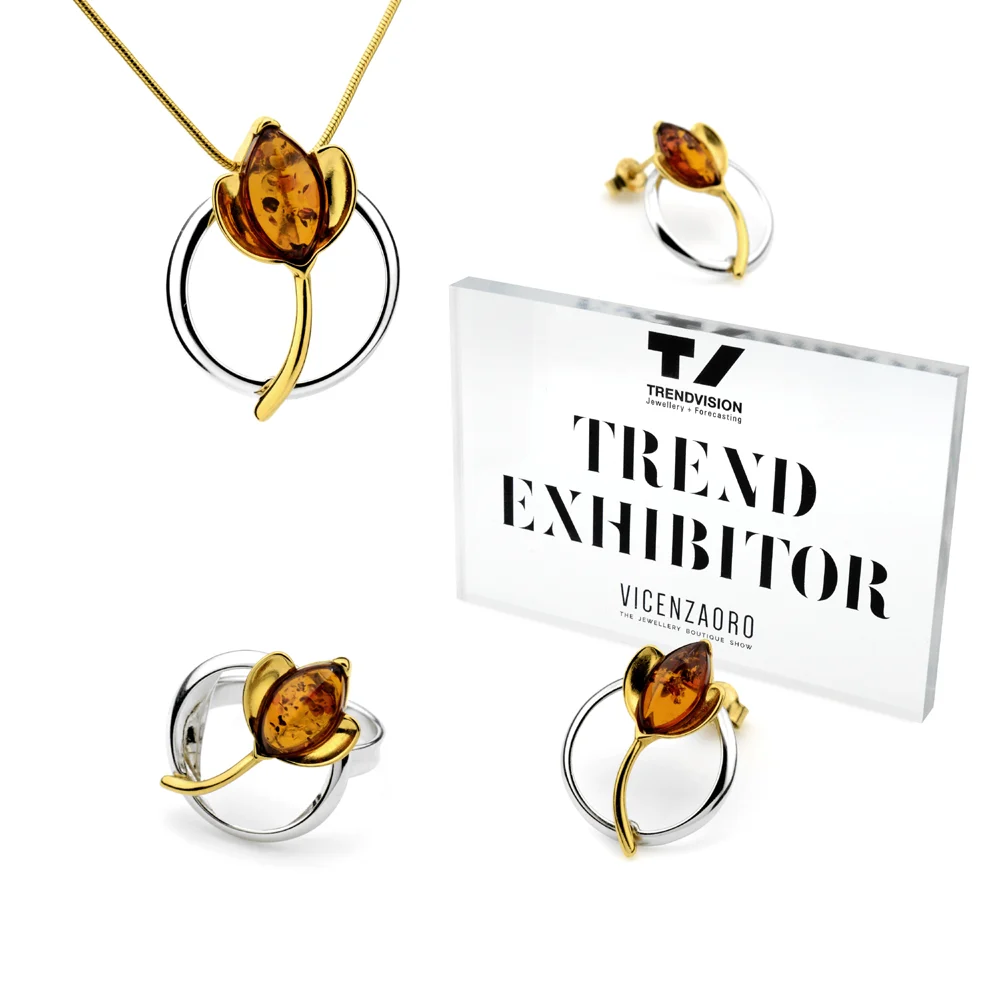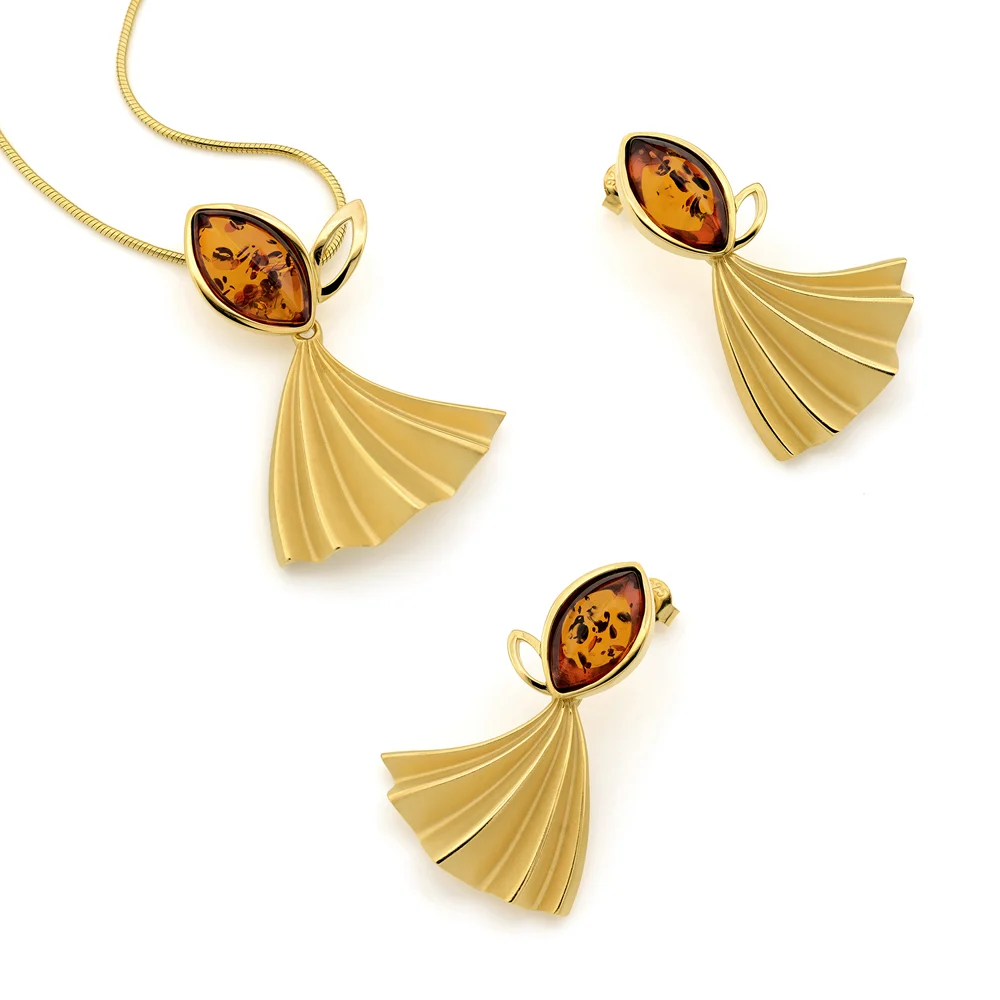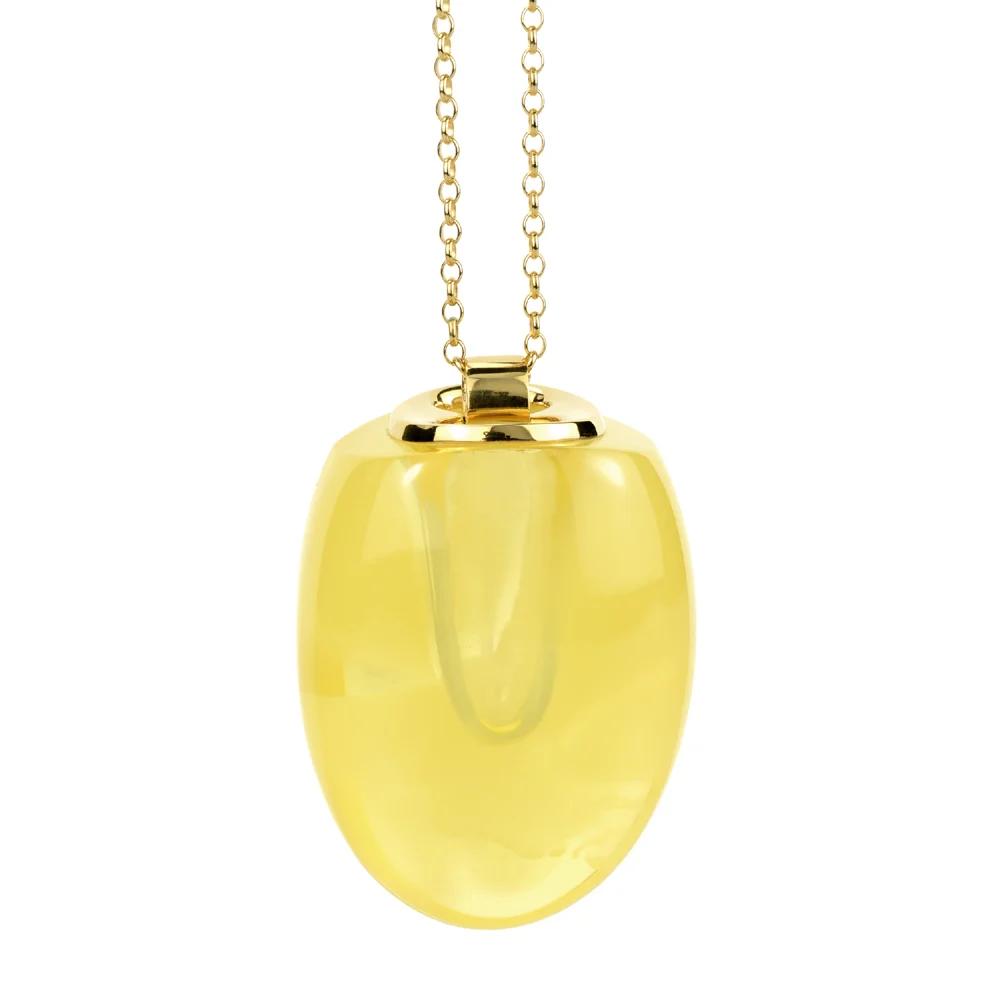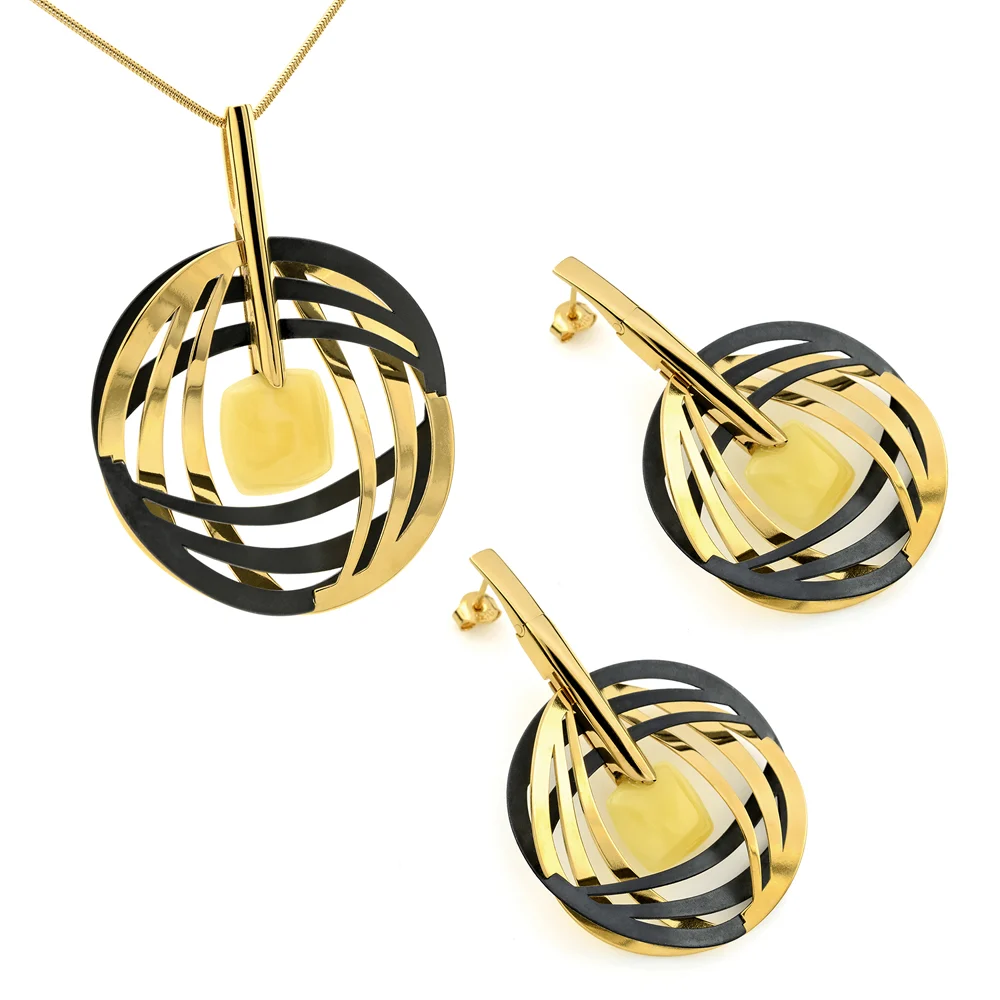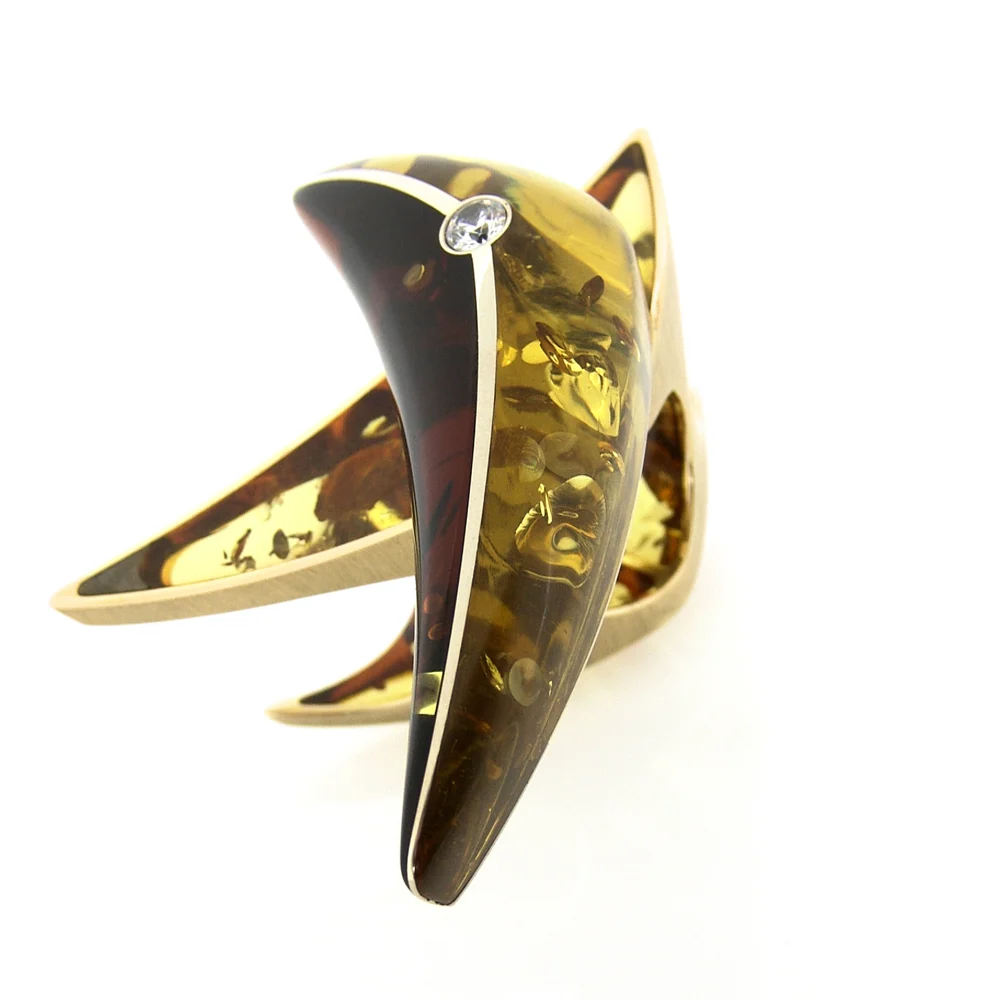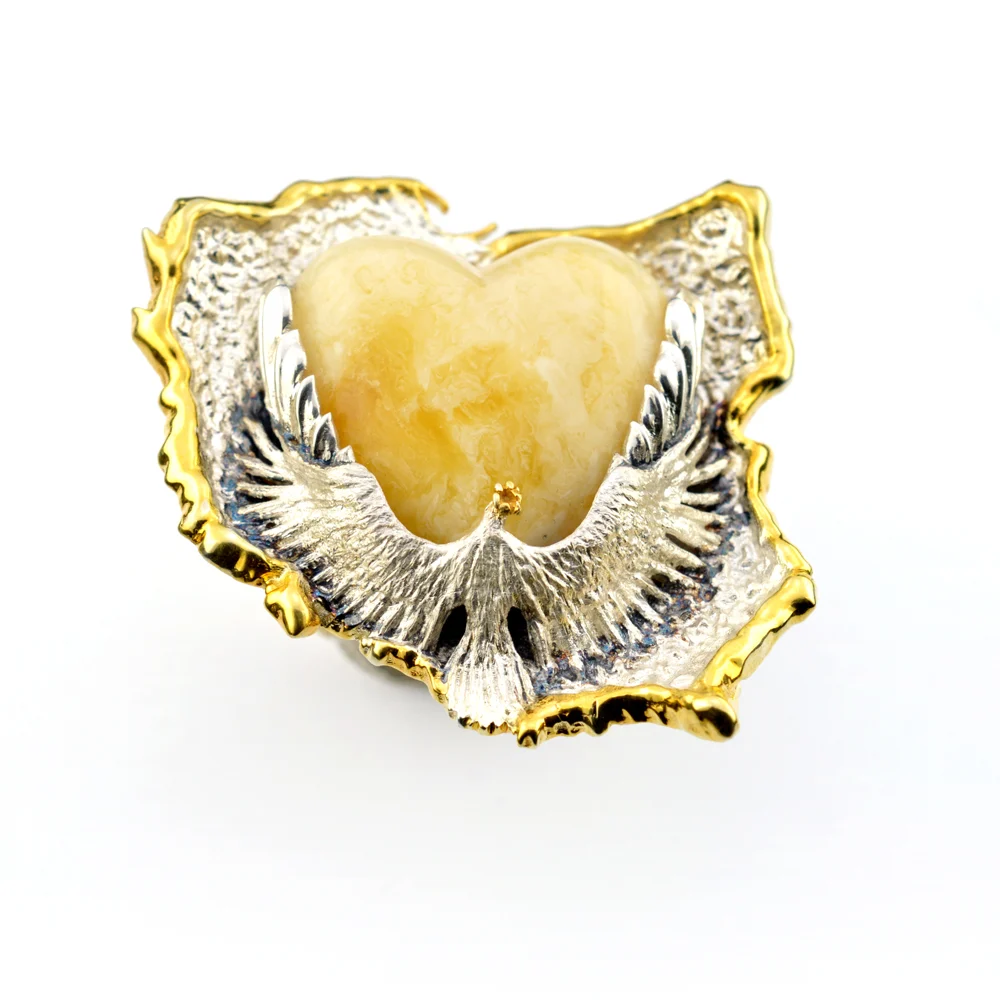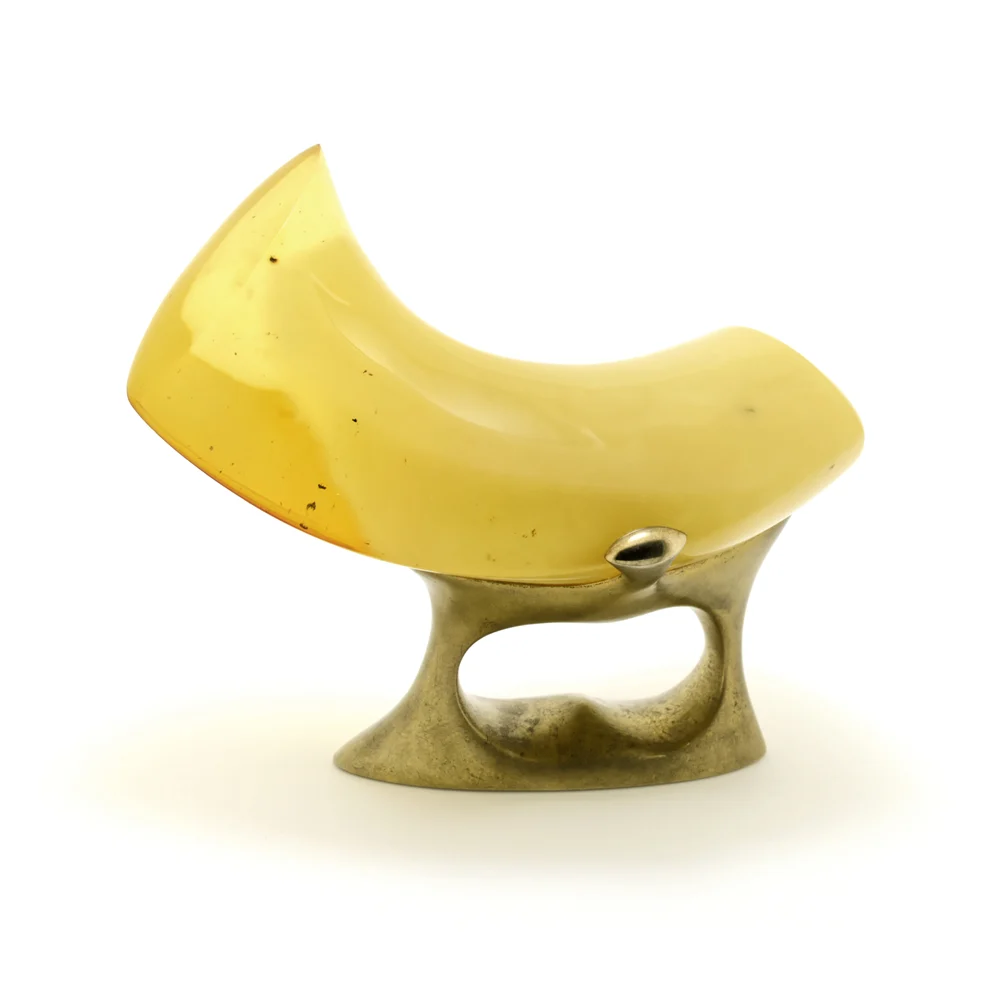
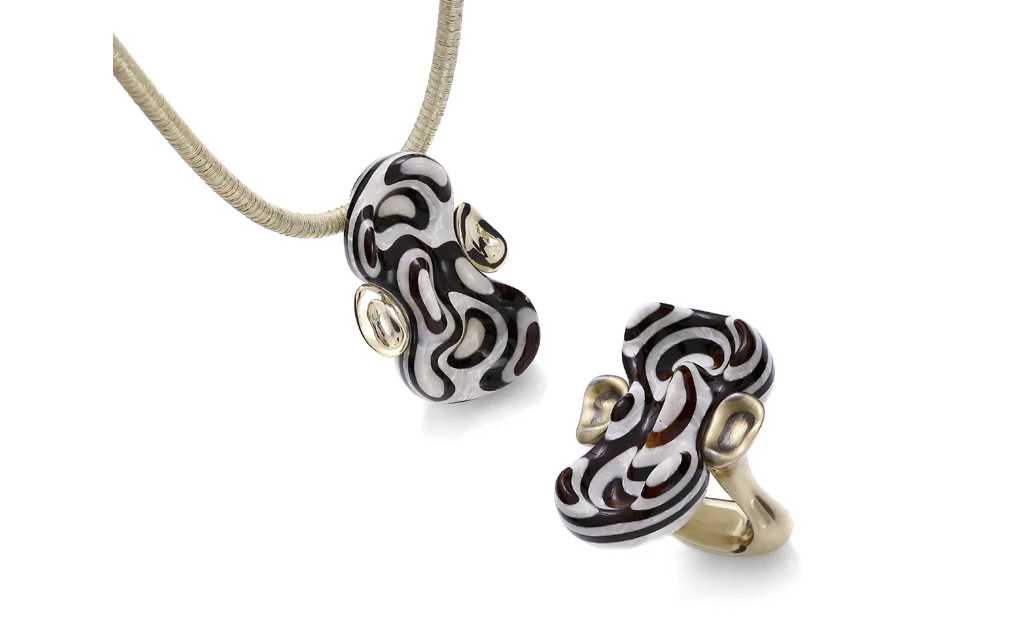
S&A – 32 years ago Amber Jewellery, today Jewellery Design – is one of the first Polish companies specialising in amber jewellery production that consciously focused on design.
When I founded the company in 1992, I knew I wanted to produce jewellery that was unique, different from everyone else, sophisticated, and completely unlike the prevalent designs of the time. Although, at the beginning, I also produced standard pieces myself, in order to gain capital for the development of the company I dreamed of. My business model at the time was based on working with good artisans and jewellers who created jewellery for S&A based on their own ideas. Each of them had their own style of manual work and their own aesthetic, and I would choose what I thought was the best on the market and what was appreciated by customers. In the long run, however, this model had no chance of success, which is why I started intensively searching for designers and experienced jewellers with an artistic flair to work with.
And this has been successful – many talents have passed through your company. Some already discovered, others discovered and polished at the S&A Design Studio.
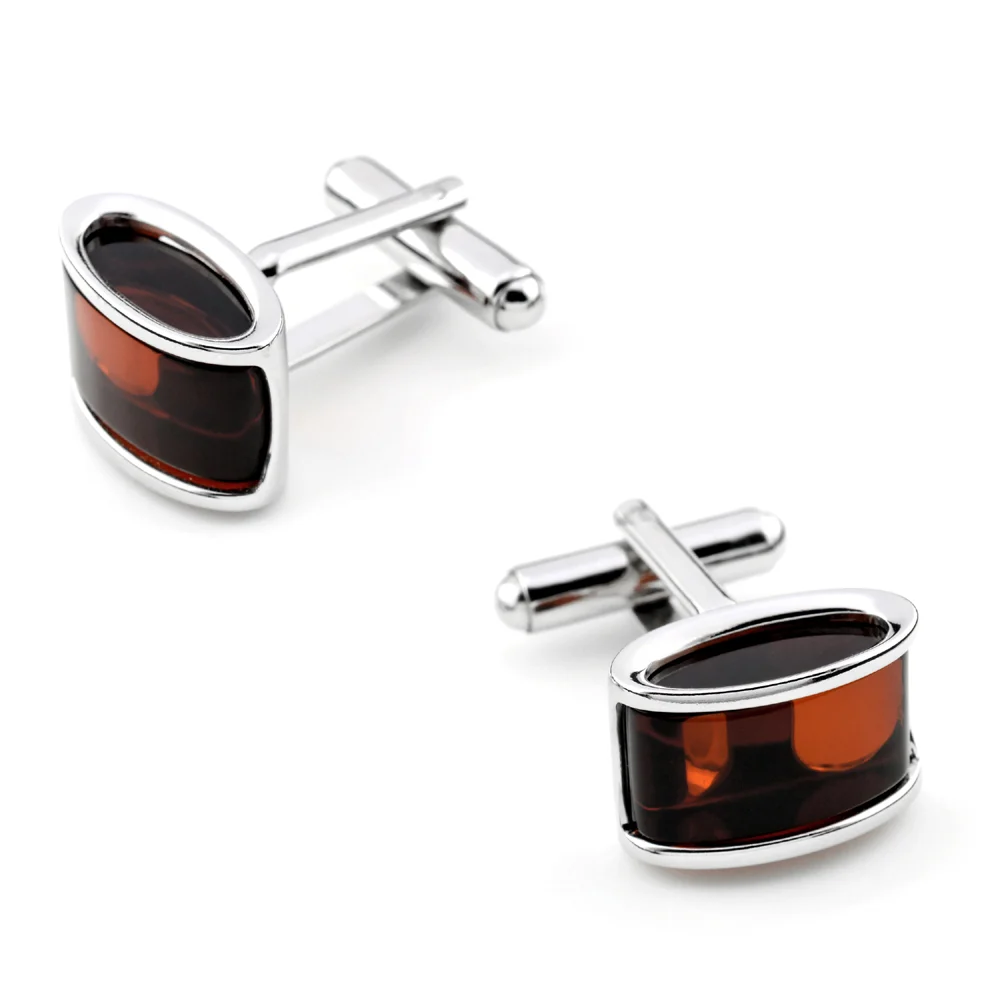
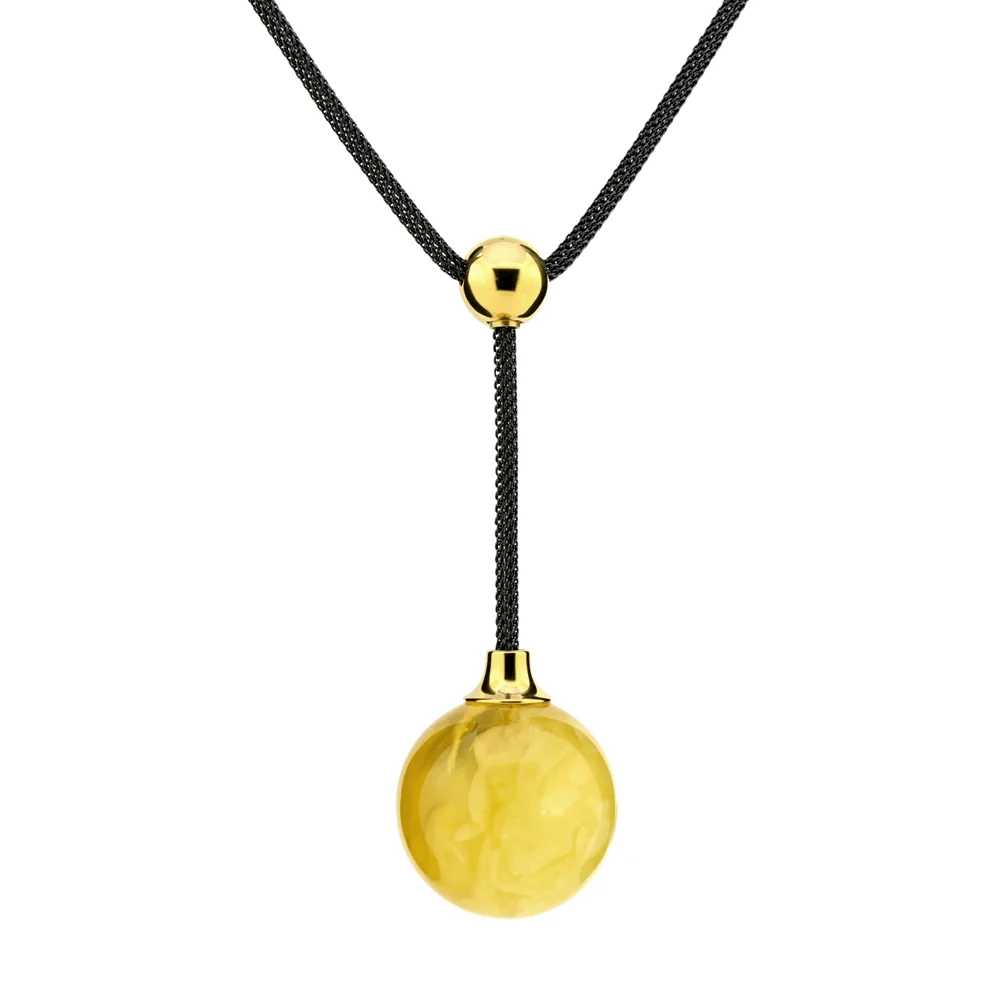
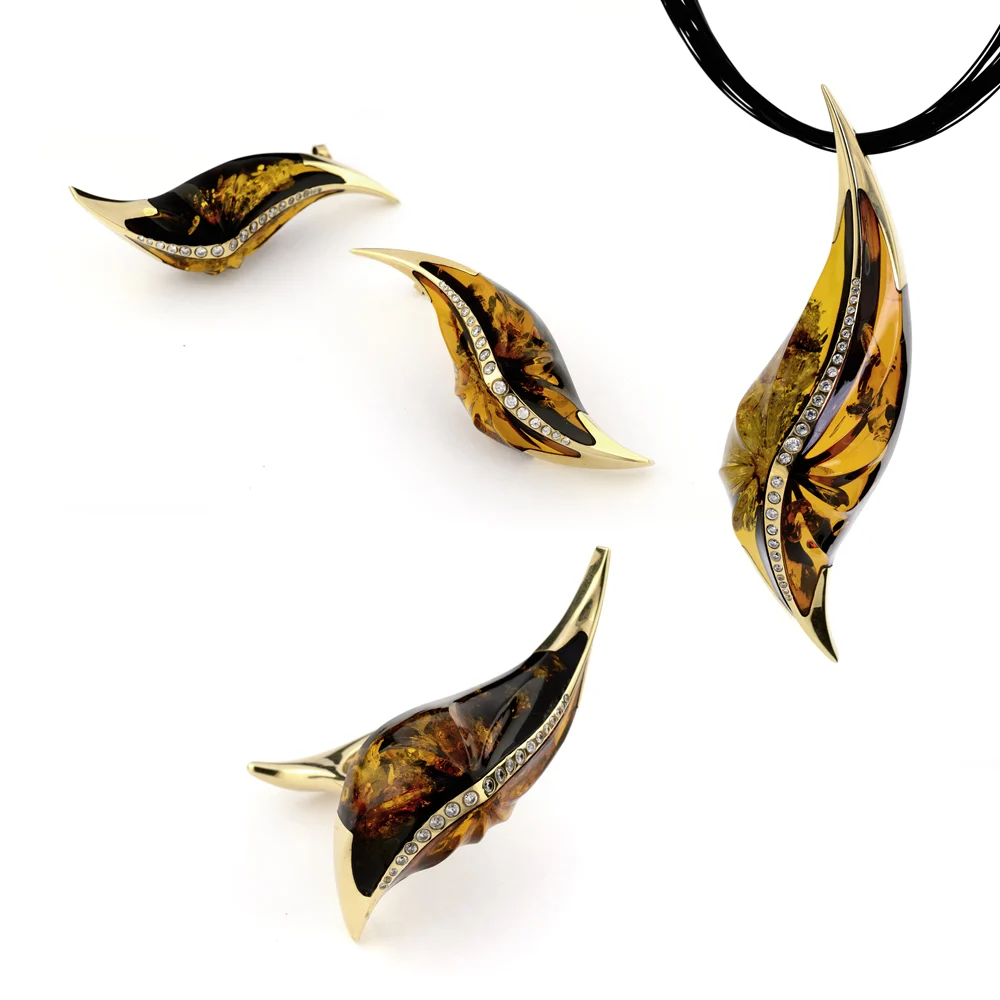
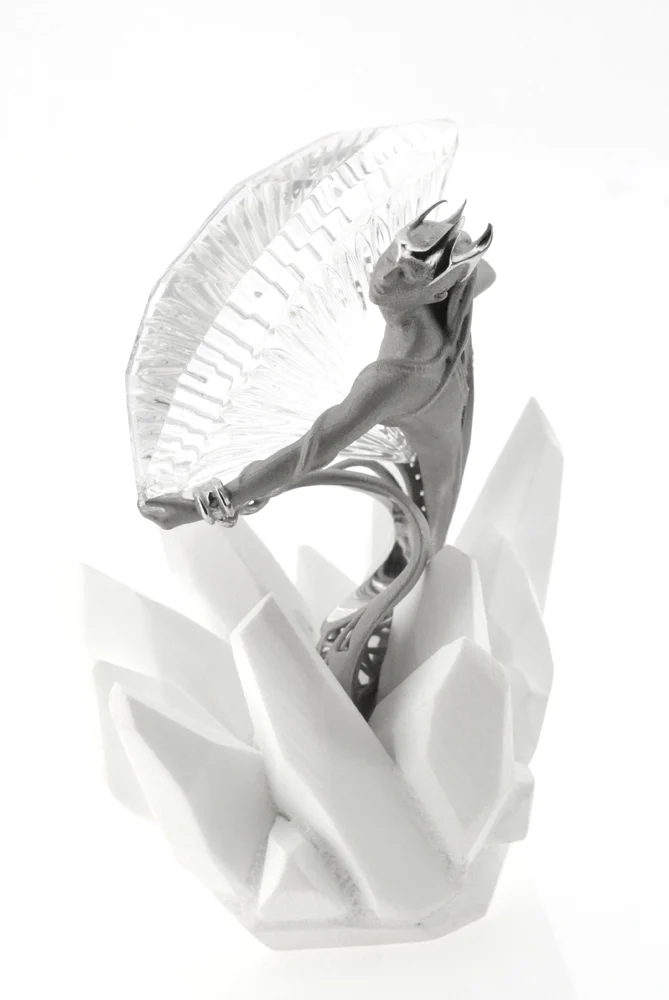
Ola Adamek, Daria Jankowiak, Krzysztof Bondaruk, Iza Gutowska, Irek Glaza – these are exceptional creators with whom I had the pleasure of developing the Design Studio in the early period of its existence. And of course, Sławek Fijałkowski, today a professor at the Academy of Fine Arts in Gdańsk, then still a lecturer at the Academy of Fine Arts in Łódź, the creator of many recognisable projects from the S&A collection, who is still on our team. In the following years, we were also joined by Marta Hryc and Margaret Szewczyk. Currently for S&A, Ivona Haurash is designing, Cyprian Chorociej, . Piotr Frankowski and Stanisław Pietrek. Each of these individuals has contributed immensely to the company, with several of them indeed leaving their mark on the design. Thanks to their creativity, unique projects were born, frequently awarded in national and international competitions, winning prestigious accolades for the high quality of design and execution. Many of these projects can be viewed until 20 May this year at the temporary exhibition. 30th Anniversary of S&A Jewellery Design at the Amber Museum in Gdańsk. They illustrate the development of amber design over the last three decades very well, even if for obvious reasons they do not fully reflect the achievements of those times.
For many years, S&A was the only company to place such a strong emphasis on design and collaboration with designers. It took a long time for professional designers to appear in other companies, and even now, it's not a widespread phenomenon in the amber industry.
There are certainly many reasons for this state of affairs. The most important of these are undoubtedly the company's business model and its owner's ambitions. Standard, classic, and high-quality jewellery always finds buyers in various markets, which hardly encourages investment in design. And these are indeed considerable investments. Companies that create their own recognisable designs, characterised by a specific and recognizable style, are aware of this. At the S&A Design Studio, both commercial and unique limited-edition projects are created. The former are usually a response to market needs, so it is known that most of them are successful, while the latter, often created with competitions in mind, are generally niche. For me, however, this investment is worthwhile because it strengthens the image of S&A Jewellery Design and its market position. Furthermore, I consistently consider it indispensable, even if, since the pandemic, it has become increasingly difficult to find designers willing to collaborate in the jewellery industry.
Harder? Today, hardly any product is created without designer collaboration; there are more and more designers, and they are better and better prepared for the profession.
There are several reasons. First and foremost, jewellery design is not as simple as it might seem, especially to laypeople. Learning jewellery design is demanding and time-consuming. It is easier to design another computer game character than jewellery, which must meet a number of requirements that are not obvious to everyone: it must be aesthetically pleasing, functional, and manufacturable using the technologies available within the company. The mere onboarding of a new designer into the specifics of jewellery production and the capabilities – but also the limitations – of a given jewellery company takes a lot of time. Not everyone is willing to do this; many designers I have encountered so far are convinced that it is enough to draw something on paper, and a design is ready. In my search, I do not limit myself to the Polish market alone – I also carefully observe the markets of other countries with highly developed jewellery industries, such as Italy or Turkey. I am also trying to interest designers from other sectors, such as the furniture industry, in this subject, believing that their spatial imagination can prove very useful in jewellery design. It is important to focus on educating new generations at every stage of production. A multi-trade class has been established at the Wiesław Szajda Vocational School in Gdańsk, and several companies in the Pomeranian Voivodeship are also training students in the goldsmith-jeweller profession. We have a design faculty at the Academy of Fine Arts in Gdańsk, so now all that remains is to encourage young, ambitious people to achieve success in the jewellery industry.
How has the design of amber jewellery changed over the last 30 years?
Generally, it was a good time for amber jewellery design. In the 1990s, when interest in amber, particularly in the American market, grew after the film „Jurassic Park”, and in Poland the raw material price was not high and labour costs were significantly lower than today, mass-produced jewellery sold well at a good price. Profits came easily and quickly, and with them came investments in modern technologies to improve workflow. In such favourable conditions, many excellent creators developed their talent: Jacek Baron, Paulina Binek, Janusz Wosik, Mariusz Drapikowski, Jacek Ostrowski, Jaroslaw Westermark, Marcin Tymiński, Arek Wolski, Dariusz Zarański, Pawel Kaczynski and many others. Many of their creations can be seen today at the permanent exhibition in the Amber Museum – they best show the development of modern amber craftsmanship in Poland. The next stage was the 2000s, when amber became expensive. Jewellery became more „economical”, its shapes more organic. In the years 2010-2020 came the „Chinese craze” – jewellery increased in size and quality of workmanship, with selected milky or yellow high-quality amber dominating in gilded silver settings. Today, this aesthetic is still strongly noticeable on the market, quite slowly giving way to modern trends preferred by European or American customers. The development of technologies, especially computer design programs and 3D printers, has also had a huge impact on amber jewellery, particularly in the last decade. The differences in design will be noticed more by a professional, while the customer will appreciate its functionality and greater pleasure in wearing even large forms.

The next stage will be – or perhaps already is – jewellery created in collaboration with artificial intelligence?
We conducted our first tests of AI's capabilities in this area already 2 years ago – the results weren't impressive. A year ago, we again tasked AI with designing jewellery according to specific parameters – very similar designs were created, as if it lacked intuition. This direction will certainly develop, so we will continue to try, hoping for really good results. Will AI replace a designer? Or perhaps the question should be: is it worthwhile for AI to replace a creator? In my opinion, jewellery, especially unique, artistic pieces, is art, and in the case of a work of art, like a painting or a sculpture, we want to know the creator's name, to know that a specific person is behind this work. AI, on the other hand, can design standards for mass production.
Jak widzisz przyszłość biżuterii?
In my opinion, the future of jewellery lies in outstanding design – which means not only a superb aesthetic but also excellent functionality, underpinned by modern technical solutions. We can already see that customers are placing ever greater emphasis on comfort, and it is this – alongside aesthetic appeal – that will be the deciding factor in their purchasing decisions. As for amber jewellery, it will certainly continue to sell well, particularly as amber is widely recognised as an organic gemstone originating from the Baltic region and is now viewed positively across the globe. However, I would not expect a surge in demand on the scale seen following the release of the film *Jurassic Park* or during the Chinese boom. Today, it is very difficult to find new, equally receptive markets. Many people point to the Arab Emirates as a new direction for expansion, where amber traditions are strong, still evident today in a fondness for amber rosaries and a love of wealth – with which diamonds, not amber, are unequivocally associated. In my view, this direction does not offer much potential for growth, as it is limited to the aforementioned rosaries. Generally speaking, I believe that the amber industry has already reached a certain level of development that will be difficult to surpass. It is therefore better to focus on maintaining this level, i.e. ensuring that amber jewellery accounts for 5–10% of the range in jewellery shops. And that this jewellery stands out for its modern design and excellent craftsmanship. To make this possible, consistent and well-thought-out efforts are needed to promote amber, emphasising its organic origin and the rich tradition and history of its processing, which dates back 2,000 years. It is worth setting goals. For example, the goal that women all over the world should want to own at least one piece of amber jewellery. After so many years of work and daily reflection on what women desire, the amber industry should be able to achieve this.