You kept us waiting a long time for your next exhibition. The last one was held at the now-defunct Bielak Gallery in Krakow in May 2007. Where did the idea for this exhibition come from?
Andrzej Bielak had been persuading me to have an exhibition – titled „XL” because it coincided with my 40th anniversary in the profession – for a year and a half. I probably wouldn't have agreed to this one if my friend Marek Nowaczyk hadn't presented me with a fait accompli. Gathering the exhibits for this exhibition took me a lot of time, especially since I don't usually set my works aside as I create them to build a kind of collection of my own works. I only had a few pieces left, so I had to recreate a large part, some are from private collections and, of course, from the collections of the Vistula Museum in Kazimierz Dolny.
What are you showing at the exhibition?
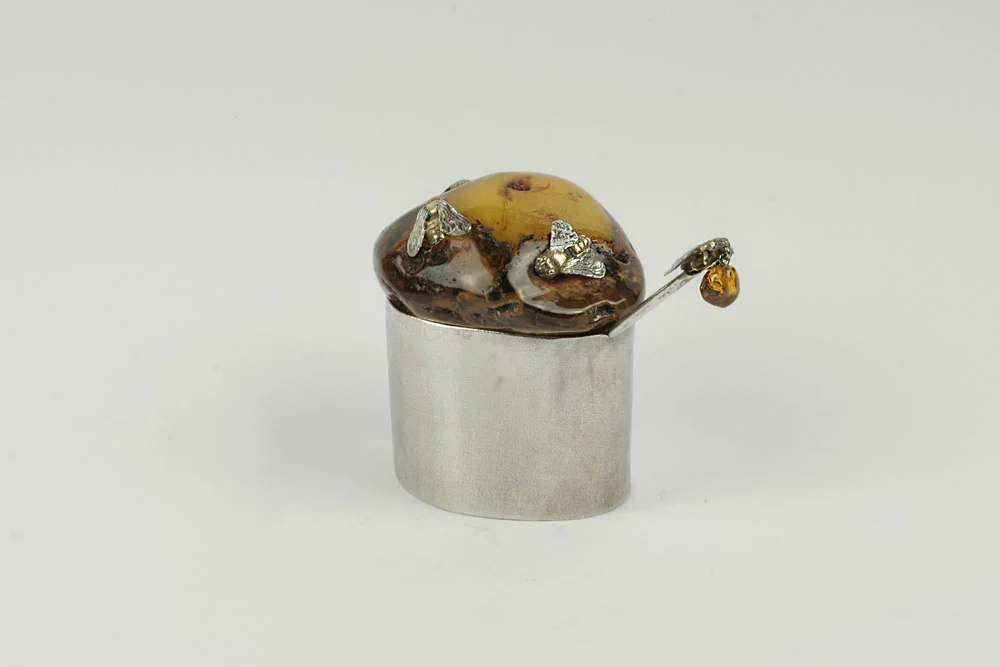
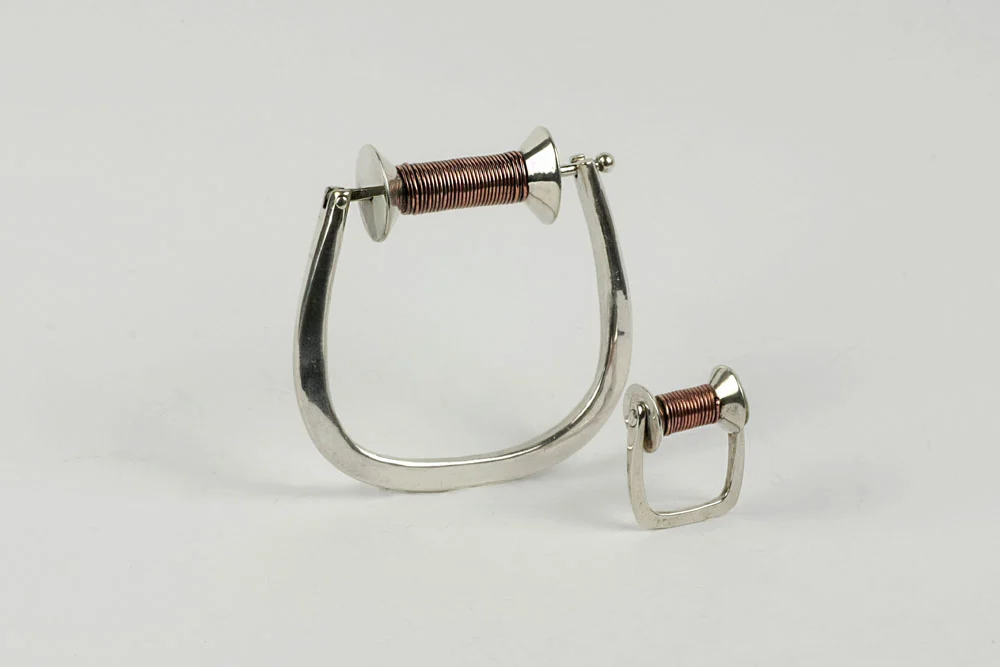
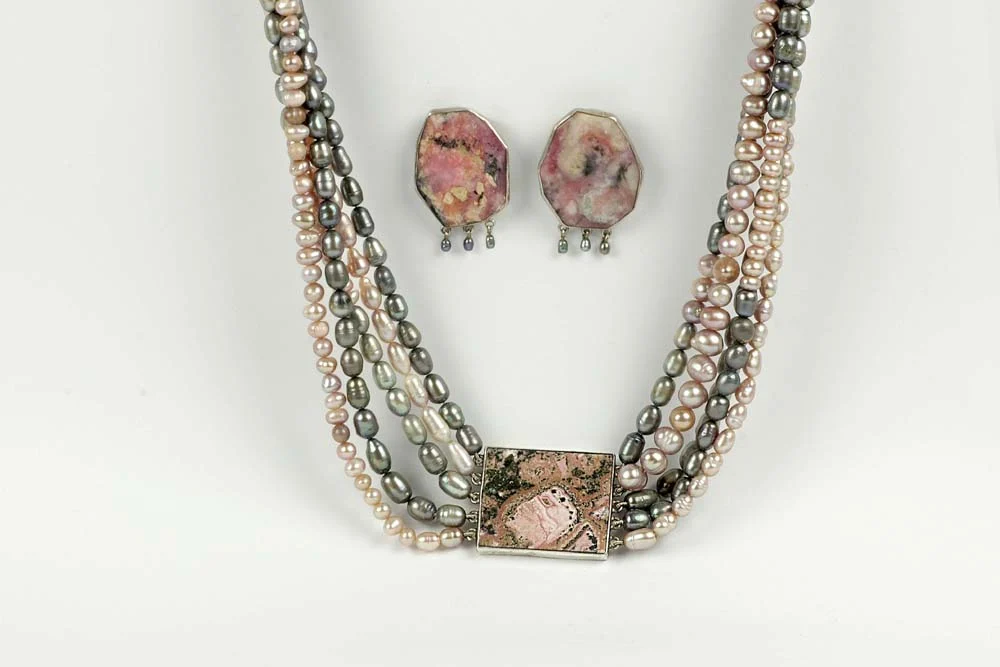
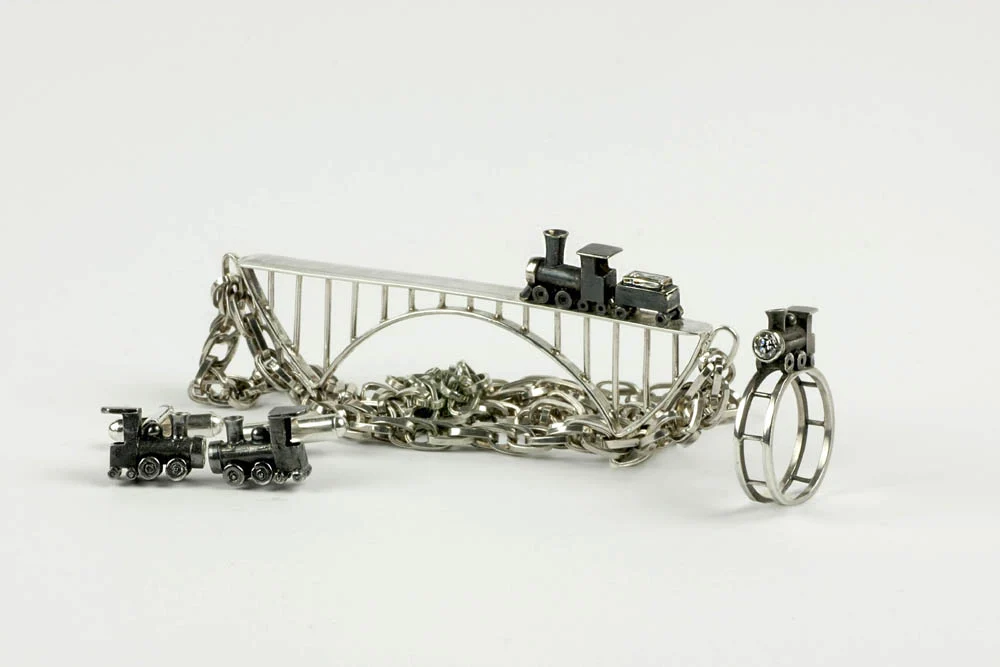
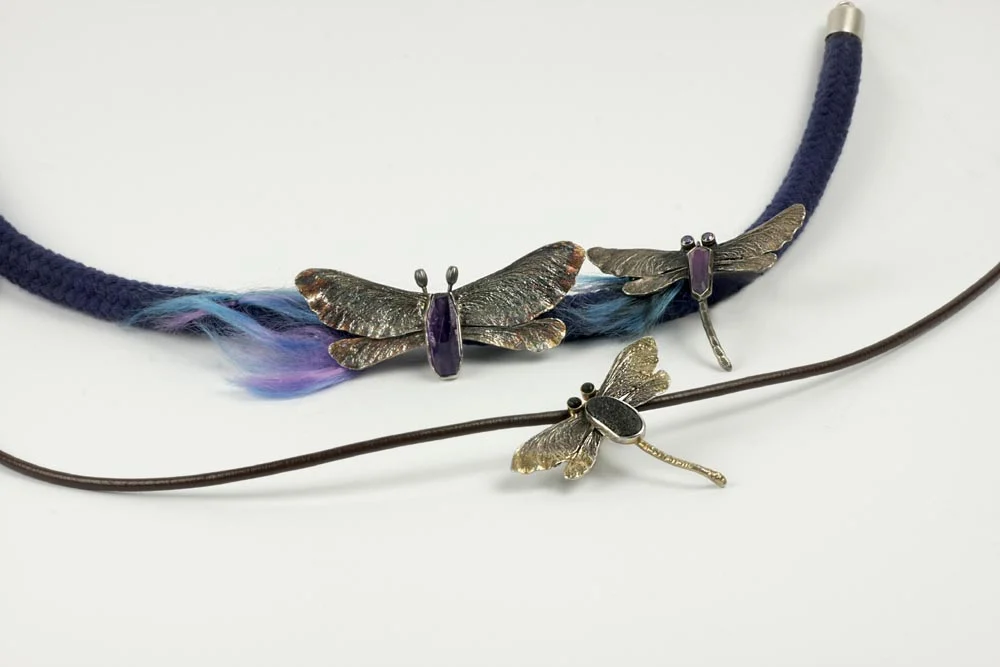
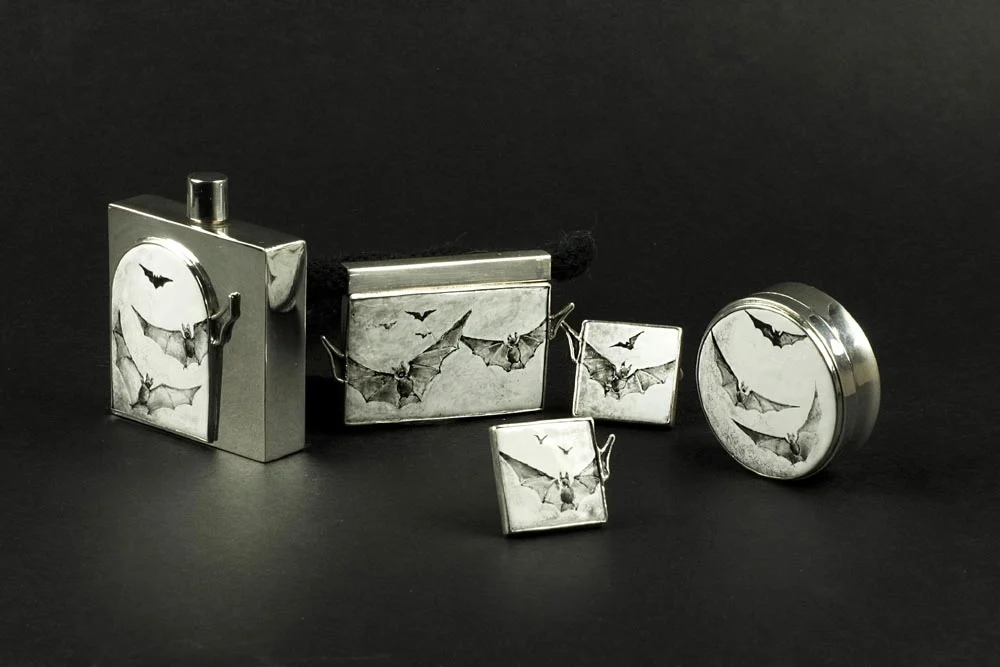
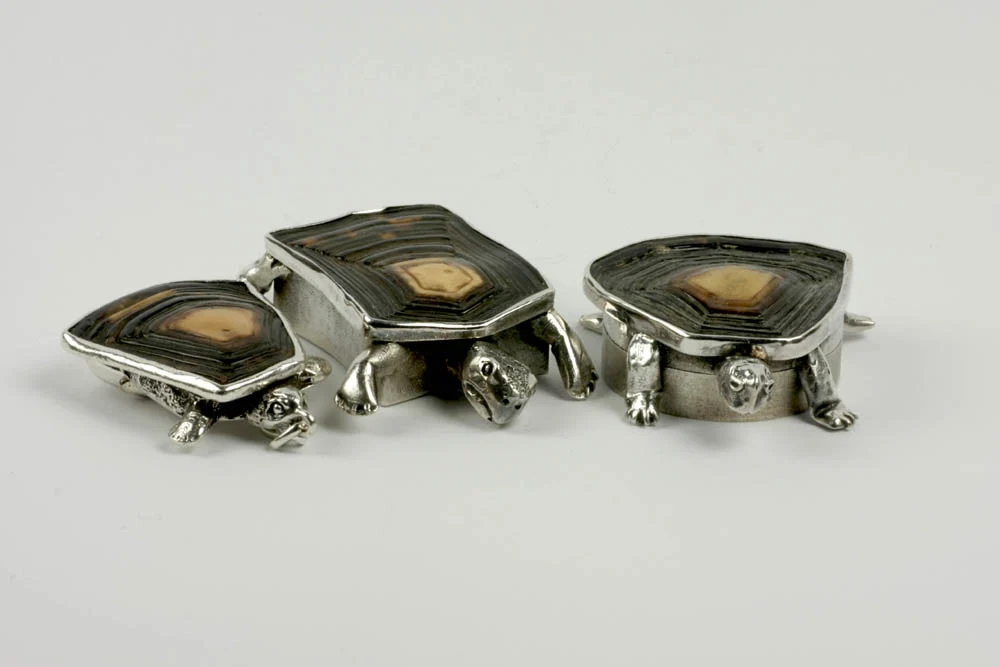
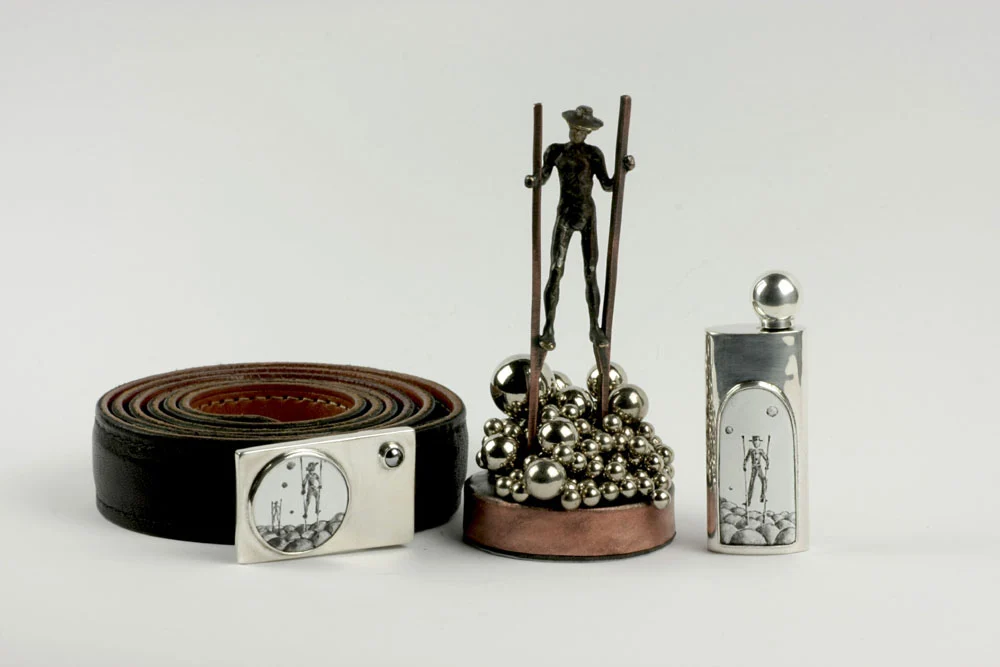
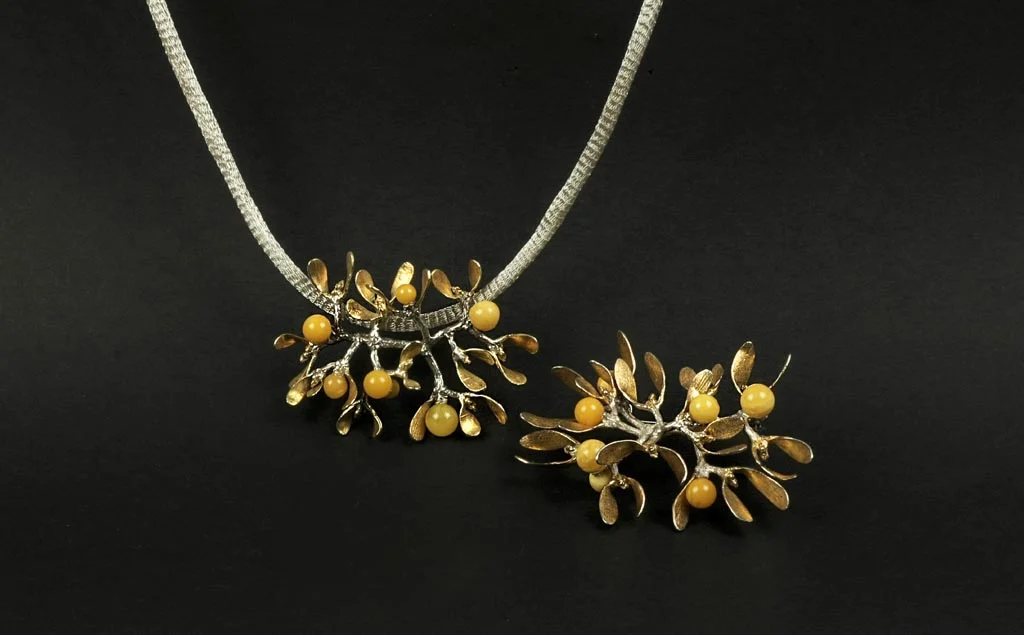
I tried to select the pieces to create a representative collection. So, there are my beloved animals and birds, there are mistletoes, butterflies, and dragonflies. There is also a collection for men, which I am not usually associated with. It consists of a leather belt with a buckle, a lighter, a keychain, and cufflinks – the metal elements have been decorated with enamel by me. It is complemented by silk ties with patterns that I painted by hand. Many exhibits are grouped into sets. These are quite characteristic of my jewellery. All because I often couldn't decide on one version of a necklace or bracelet, so I usually made two or more with the intention of deciding once I saw the finished product. The problem was that I considered all versions good enough, so I kept them all. Besides, I think making just one piece of jewellery is incredibly limiting, especially if the motif is interesting and can be developed in various ways. And it's not at all easy to constantly come up with new, yet good themes in jewellery. For me, one such endless theme is mistletoe – it's over 30 years old now and I still get orders for jewellery with this motif for various occasions, from weddings to holidays.

Besides mistletoe, you are also strongly associated with the characteristic bird and animal motifs in your jewellery.
They have been in my jewellery forever. Because what could be more charming creatures? I prefer them to plants, because plants are always there, whereas birds and animals appear when they want to. I’ve always lived in Saska Kępa, where there used to be lots of birds. It’s quite natural for me that they became my inspiration. Interestingly, a cat motif has never appeared in my jewellery, although cats were always present in my family home and I can’t imagine life without cats. For me, a cat remains a mystery – and perhaps that’s precisely why I can’t portray it in my work. Birds, however, I know and understand. Generally, there’s a lot of nature in my jewellery. And even a division into jewellery dedicated to specific seasons. For example, I only wear jewellery with snowflake motifs in winter, and butterflies only in summer.
Why do birds and animals „escape” from jewellery settings?
The frame is a place where they feel safe. But they are free, and that's what I'm showing.
Has it never tempted you to do something other than jewellery?
Actually, no. I used to be drawn to ceramics, but I never decided to fulfil that dream.
Your parents were post-war goldsmiths, Ludmiła Ślaska-Suchorzewska and Ryszard Rohn. So jewellery accompanied you from childhood. Was making it your profession a conscious choice for you?
To be perfectly honest, I’ve never really thought about whether I wanted to make jewellery or not. Making jewellery was and still is like breathing to me – simply one of the things you do at home, much like cooking dinner every day, for example. Even as a child, I showed a technical and sculptural inclination – I loved sculpting, making little creatures out of plasticine. At our house, everyone had their own desk – my mum had one half a metre wide, my dad’s was 1.20 x 0.5 metres, and mine was even smaller, actually more like a shelf with a hinged lid. In theory, it was a place for doing homework, but in practice, it was more useful for doing various art and craft projects.
Do you remember your first jewellery job?
Of course! It was a copper-silver brooch. I sold it to my neighbour. I was about 10-12 years old at the time, and it was my first earnings. But I didn't think then that jewellery could be a source of income. That awareness only came to me after my wedding, when I had to think about how to make a living. I transitioned quite smoothly from the home of jewellery artists to the home of the visual artist Andrzej Mroziński, a trained painter, and we both worked with jewellery. I don't think I even considered what else I could do. I made jewellery because I enjoyed it, not because I had to or didn't know what else I could do.
How was this managed in those difficult times?
My father assumed that since he had a son-in-law who was a visual artist with a degree in fine arts, this had to be put to good use. I should remind you that in those days, you had to be either an artist or a jeweller to make jewellery. My father did not have the qualifications for this trade at the time, even though he ran goldsmithing courses as a jeweller. He also made goldsmithing tools – back then, you didn't buy them from a specialist shop; you had to make them yourself. Interestingly, „old” jewellers still do this today: when they come up with a more complicated design, they start by making the tools to execute it. For me, it's always been the other way around: when I had to start by making tools, I lost the enthusiasm to make the jewellery itself. In my workshop today, I still use tools made by my father – I have pliers from my mother and father, because they used different ones, drawplates, rollers and casting spoons for melting silver... In total, I only have a few bought tools; I rely on what I have, and only occasionally do I use some essential tools in the workshops of befriended creators.
There was a problem with silver, too. Is that why you turned to other materials?
To receive an allocation, you had to register at the assay office. I have number 640; today there are over 12,000. But there was never enough of that allocated silver. Fortunately, my husband, as a lecturer at the Secondary School of Fine Arts, received allocations from the Association of Polish Visual Artists and the „Plastyka” Cooperative. The procedure was that you proposed designs, they were then approved with a specific price, and agents who travelled around Poland brought back orders, and for the fulfilment of these orders, you received silver. So we made brass and wooden jewellery partly due to the lack of silver, but also because of the prevailing fashion.

Did you learn goldsmithing from your parents?
No, I didn't learn from them. Initially, the solutions I came up with myself were enough for me, and then I came across the workshop of Szczęsny Kobielski, who revealed a completely different world of goldsmithing to me. I loved going there because it was a completely different workshop and different techniques than those I knew from my parents' workshop. I learned a lot there, although in reality, I still did most things my own way, combining elements of different techniques to achieve the desired effect. It was similar with enamel, which I learned by trial and error. I remember that once I had mastered it somehow, a friend brought me a book describing professional techniques used in enamelling – after reading it, I decided it was too complicated, and… I continued with my own solutions. They were sufficient for me. Besides, for a jewellery collection with such small carved birds and leaves made of real green enamel, I received the qualifications of an artist-craftsman from the Minister of Culture and Art in the 1980s. I didn't really get along with coloured enamel, so I focused on mastering white enamel, which I then hand-painted.
Your parents' jewellery can be viewed at an exhibition at the moment. „From idea to industry” at the YES Gallery in Poznań. This is only a part of the exhibits you have donated to Magdalena Kwiatkiewicz's collection of contemporary Polish jewellery.
I think my parents are happy that these works aren't lying around in a drawer wrapped in a rag, but are appearing in exhibitions. The hardest thing was letting go of one brooch made by my parents from copper, because I was very emotionally attached to it, but when I saw it exhibited at the YES Gallery, I thought it was the right decision after all.
You once said that in your world there have always been: jewellery, birds and stones. So we still need to talk about stones. Where does this fascination come from?
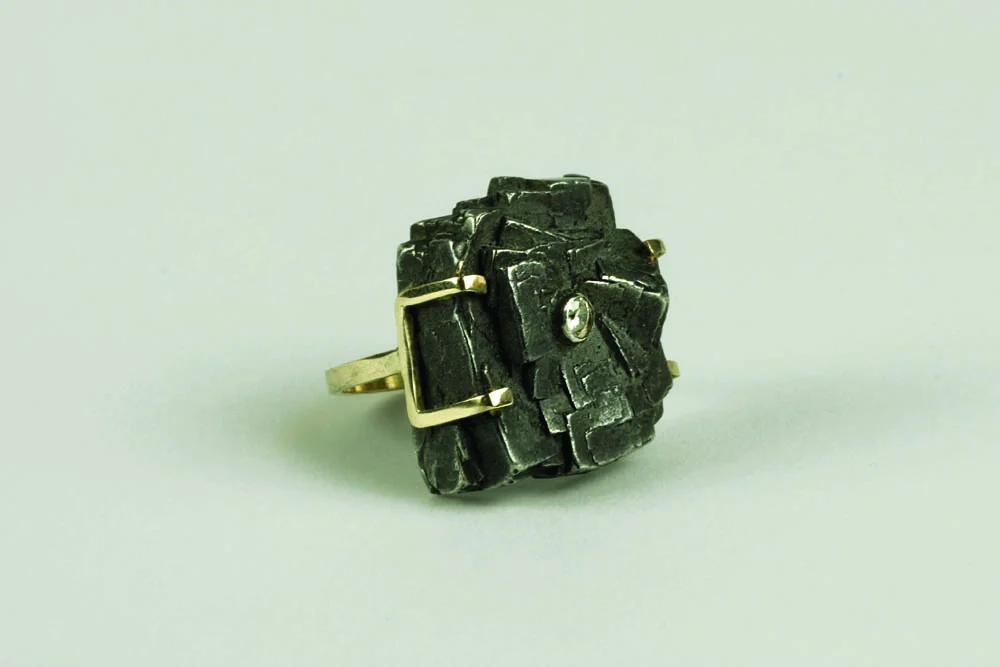
From a childhood spent with goldsmith parents. My father knew a lot about stones. He also had access to wartime maps that marked places where various minerals were mined, so we often went to Silesia to look for stones. I remember the first time I went with them to collect stones was in the late 1950s. We didn't have a car, so we sent the most beautiful stones home by post. Later, my husband and I drove to Silesia, so we often brought back a whole boot full of the most beautiful Silesian stones. I still have some specimens from those years in my cellar... I'm completely mad about stones. My friends know this, and they still call me "Kamyczek" – not from "Kamilla", but from "kamienie" (stones) indeed...
You've been making jewellery for 55 years, and what's interesting is that they are still the same designs. This is quite surprising – and fascinating – especially in times when trends change every few months.
This is by no means a phenomenon. People divide into many interest groups – there are lovers of technical or geometric jewellery, and also fans of jewellery with nature motifs. I have already weathered various trends, various expectations – and I invariably do my own thing. At the beginning of my collaboration with Adam Lei's Galeria 32 in the 90s, I observed with great interest the rich – and very good – selection of jewellery presented there. I noticed that the motif of the sphere and the square recurred most often, which is a completely different style from my own. I remember thinking at the time: how lucky it is that not everyone does the same thing! I am generally associated mainly with birds, animals, and plants, which the current exhibition in Kazimierz Dolny's Museum of Goldsmithing Art may also confirm, but there were many more of these motifs, this jewellery. I created many repeatable designs, which I offered in selected galleries in Poland, but also a lot of works were made for individual commissions. I estimate that about ¾ of the works in the latter group are in private collections abroad. I deeply regret that I have neither documentation nor the possibility to borrow these works for an exhibition.
Your jewellery consistently finds buyers.
I'm still working, although obviously less often now. I'm happy when I see my jewellery being worn. That's the greatest compliment for me.
Kamilla Rohn Exhibition at the Vistula Museum, a branch of the Museum of Goldsmithery in Kazimierz Dolny
14 May – 15 October 2023.
Exhibition opening: 13th May 2023 at 3:00 PM
Photos: Barbara Kańska-Bielak