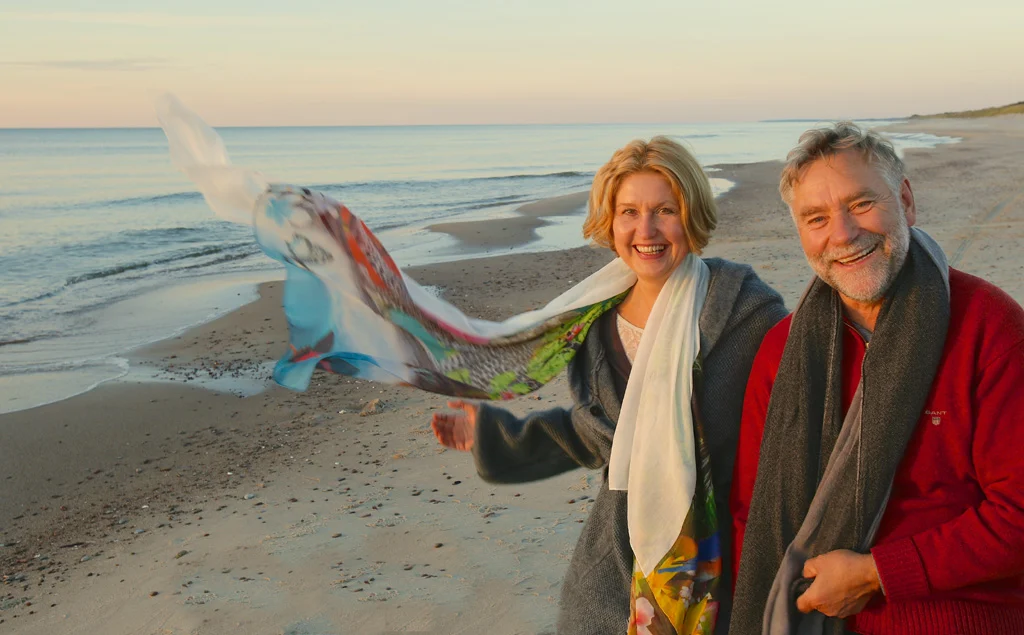
Congratulations on becoming an honorary citizen of Nida. What did you do to deserve it?
Fate brought us to the Curonian Spit – not just to admire its charms, but also, perhaps primarily, to fulfil a specific mission. The Spit is best known for its spectacular sand dunes, which I have photographed for many years. These photographs have been presented numerous times at various exhibitions in many countries, allowing those who didn't have the chance to see it in person to also marvel at the beauty of the Spit. And although I came to the peninsula for the views, I also found amber there – petrified resin, which Lithuanians, like Poles, highly value. The peninsula was therefore the ideal place to promote the beauty of Baltic amber – hence the decision to „settle” in Nida. We opened the Amber Gallery and the Artist's House here – places whose activities complement each other and are intended to promote amber art, mainly through numerous exhibitions featuring Lithuanian and international artists. To increase the geographical reach of this promotion, we prepared the exhibition „Baltic Amber – History and Design,” which has so far visited many countries, including Iceland, Canada, Belgium, the USA (Washington and Chicago). It was also presented during the Contemporary Art Festival in Rome, organised by the European Cultural Foundation at the Vittoriano Museum. Through our artistic activities, we have been telling the story of the Curonian Spit and amber as widely and on as large a scale as possible for over 30 years.
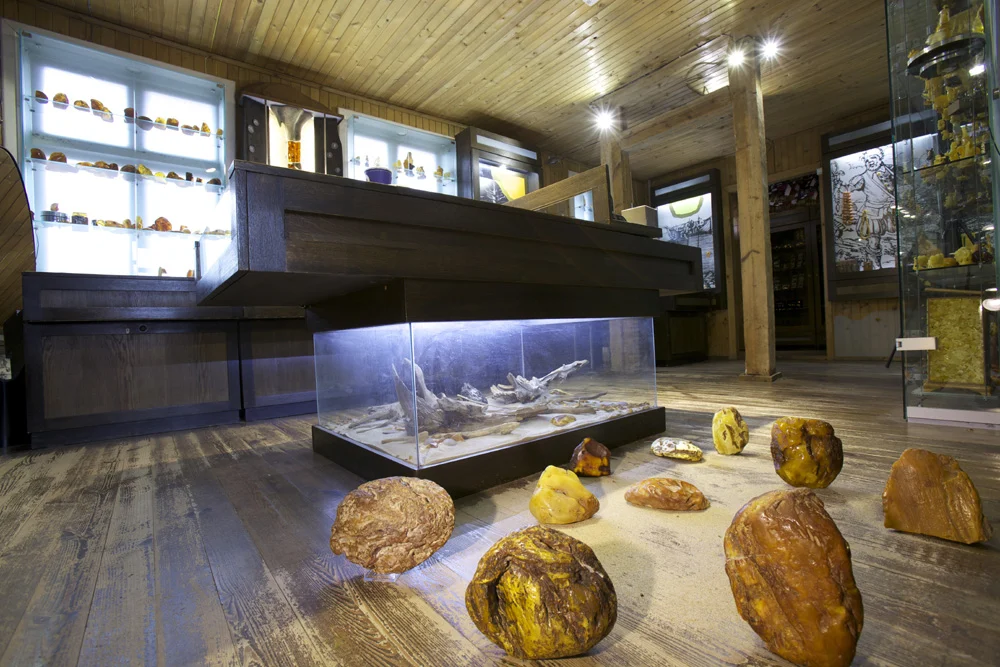
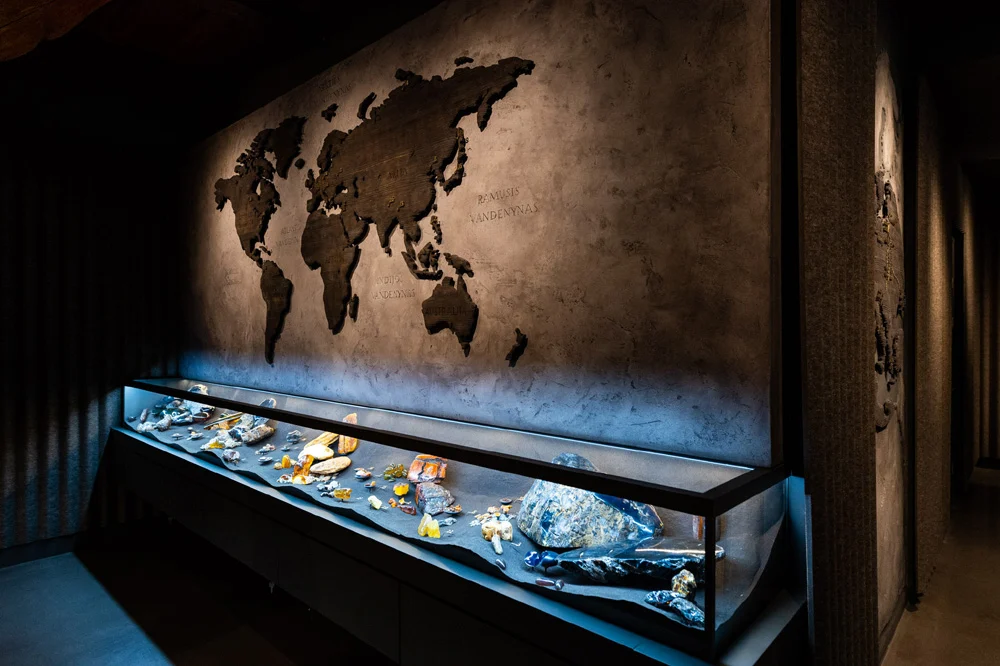
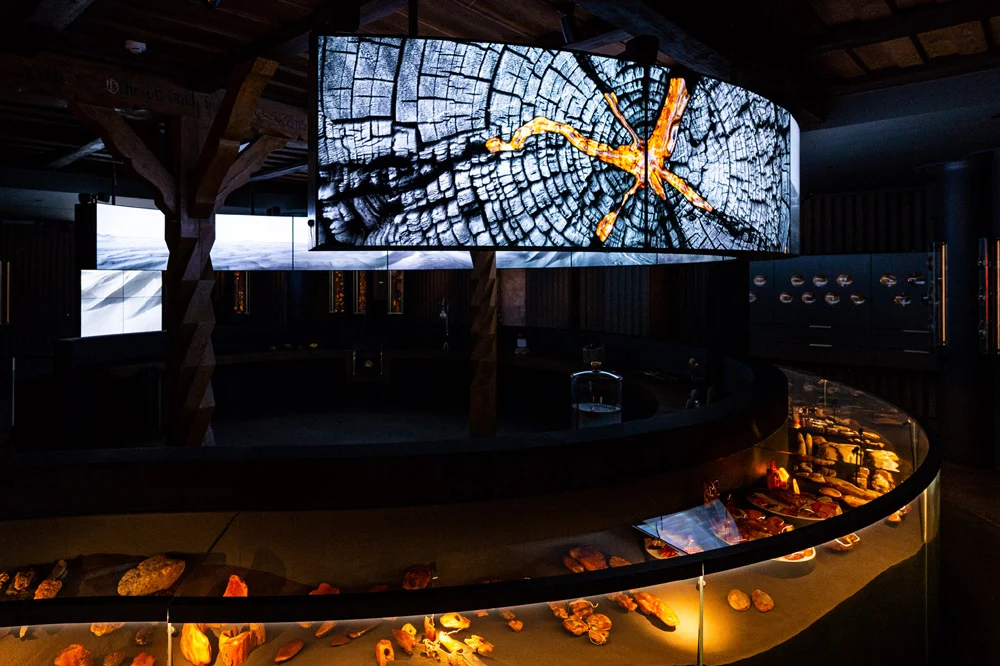
The Mizgiris Amber Museum, which opened in Nida this July, will also be telling a story about it now.
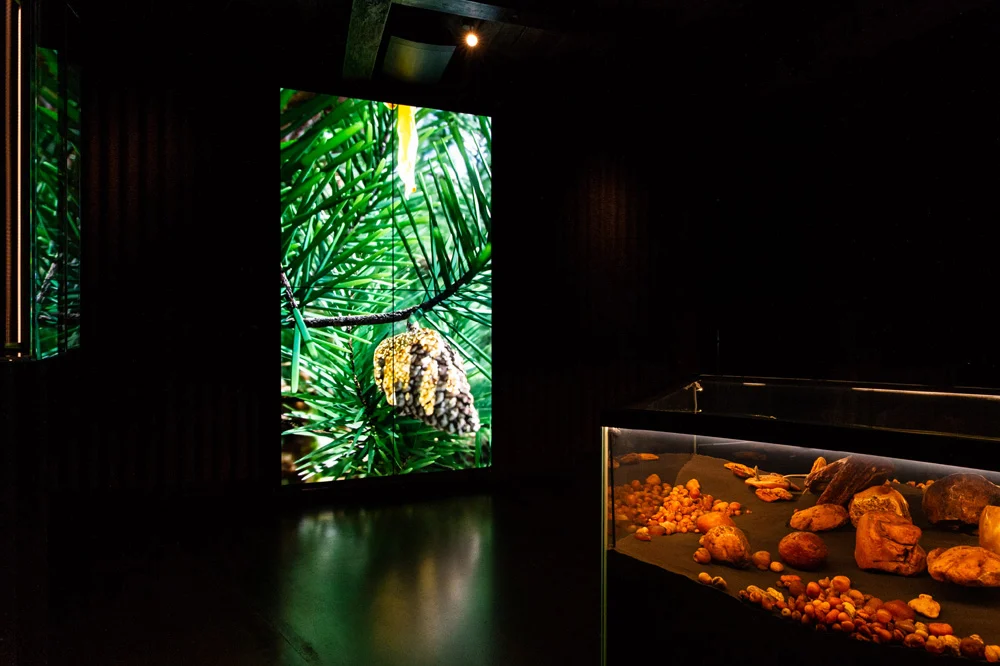
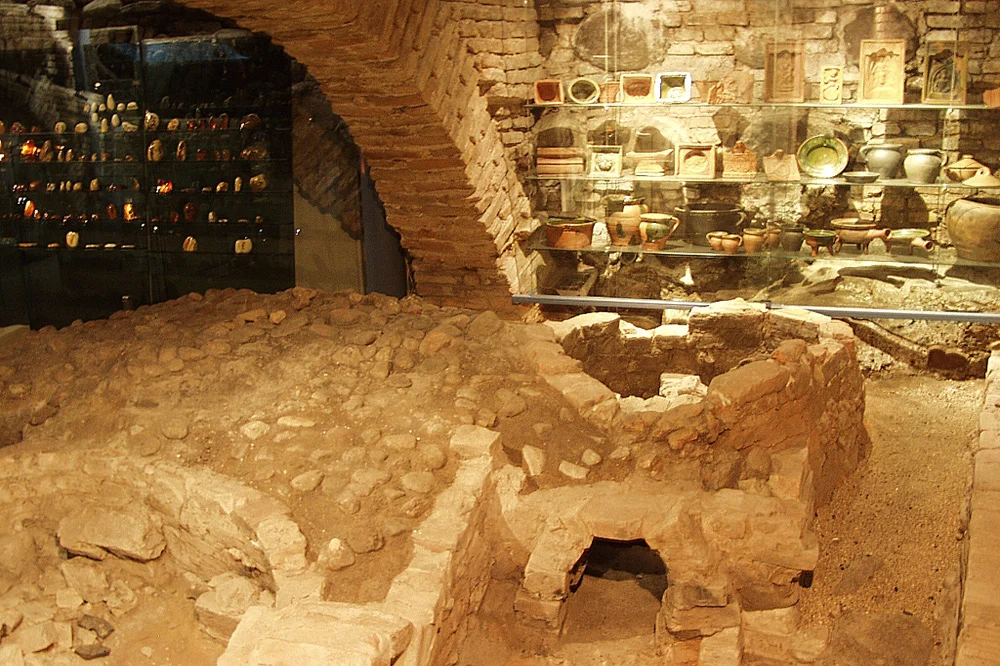
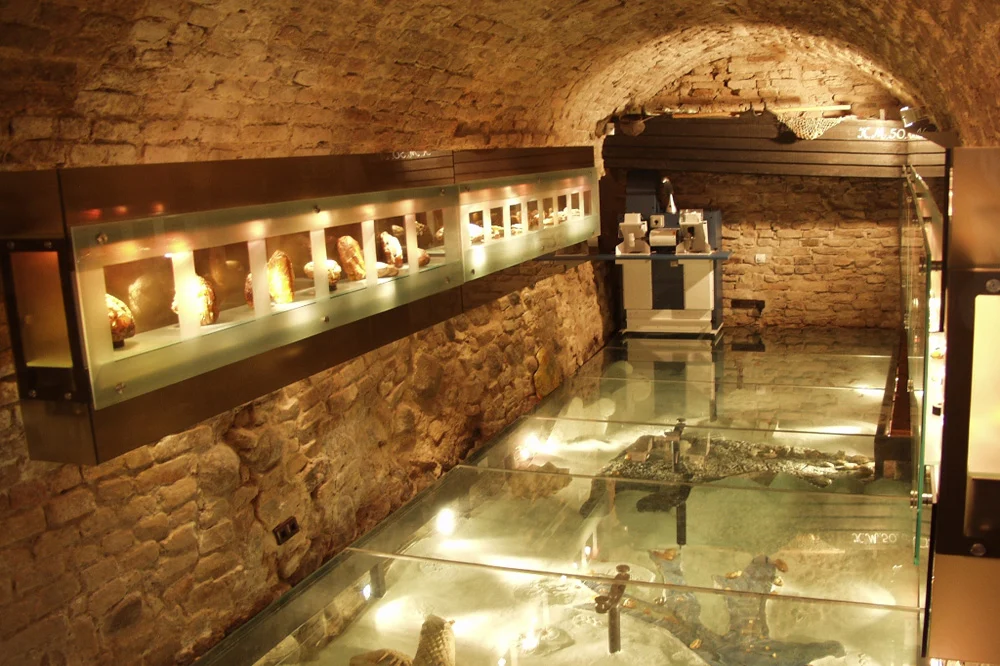
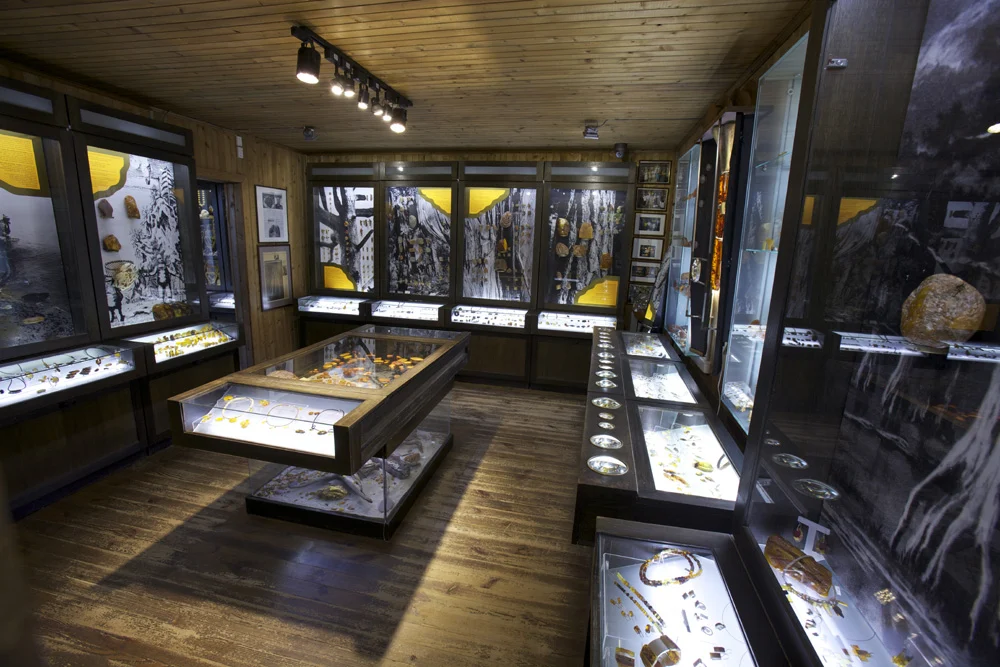
This museum primarily focuses on the artistic presentation of amber. Naturally, there will also be knowledge about the stone itself, conveyed in an interactive manner. The central theme of the museum is the amber forest and the amber river, along whose current the public flows from its source in nature towards its estuary in the world of contemporary culture. The history of amber is told through exceptionally beautiful pieces and amber craftsmanship, enriched with virtual narratives about its formation, the richness of its forms and colours, inclusions, extraction methods, and its role in the region's culture. A film about the amber forest showcases fauna and flora from over 40 million years ago. A short animation recalls the local legend of Queen Jurata, who fell in love with a local fisherman, Kastyčius – an angered god, Perkūnas, destroyed her amber palace, the remains of which the Baltic Sea still washes ashore today. We present information about the key physical characteristics and medicinal properties of Baltic amber in an unconventional way, through artistic means of expression. On touch screens, you can browse an amber encyclopaedia – we particularly recommend the entries that present types of amber from around the world, other than Baltic amber. On the upper floor, works by Lithuanian and international artists are displayed. Here, you can also „visit” the Amber Room.
The Artist's House also operates in Nida, which has welcomed many more or less famous artists over its almost 25 years of existence.
Our dream was for Nida – the most beautiful corner of Lithuania – to be known not only as a centre for amber craftsmanship but also to inspire artists to creative pursuits. We have managed to realise this by implementing the idea of an artistic mecca on the Curonian Spit, initiated in the 19th century by Hermann Blode. The Artist's House was established in a historic half-timbered building adapted for this purpose in 1997. We invite jewellers, goldsmiths, amber artists, sculptors, painters, and graphic designers to two-week workshops, where they create works inspired by the Curonian Spit and amber in a specially arranged studio, and engage in lively discussions. We always ask them to bring their works too, organise exhibitions, tell museum guests about their work, and allow those interested to participate in the creative process. Finally, we also ask artists to leave one of their works with us – in this way, we have managed to build an impressive collection of contemporary amber art, which we present in its entirety and in part at various exhibitions. The history of the Artist's House and its guests is captured in chronicles kept since 1997.
Wojtek Wasielewski, Arek Wolski, Andrew Boss and the students from the Academy of Fine Arts in Łódź are creators from Poland who have visited the Artist's House. However, many artists from all over the world have also passed through its hospitable doors.
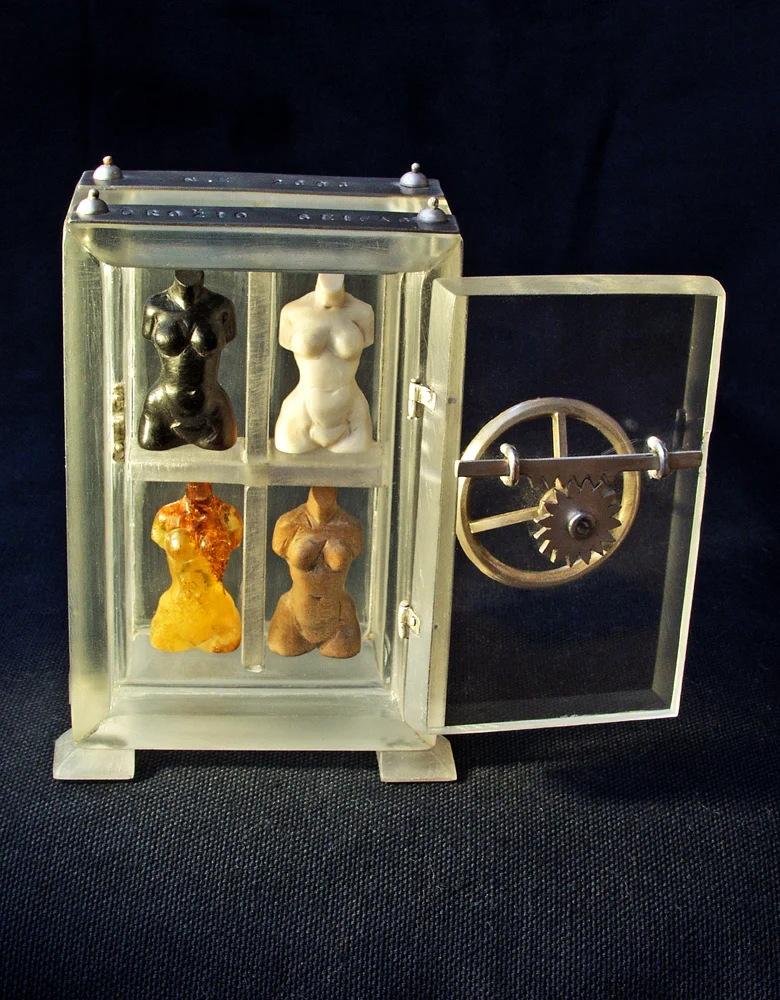
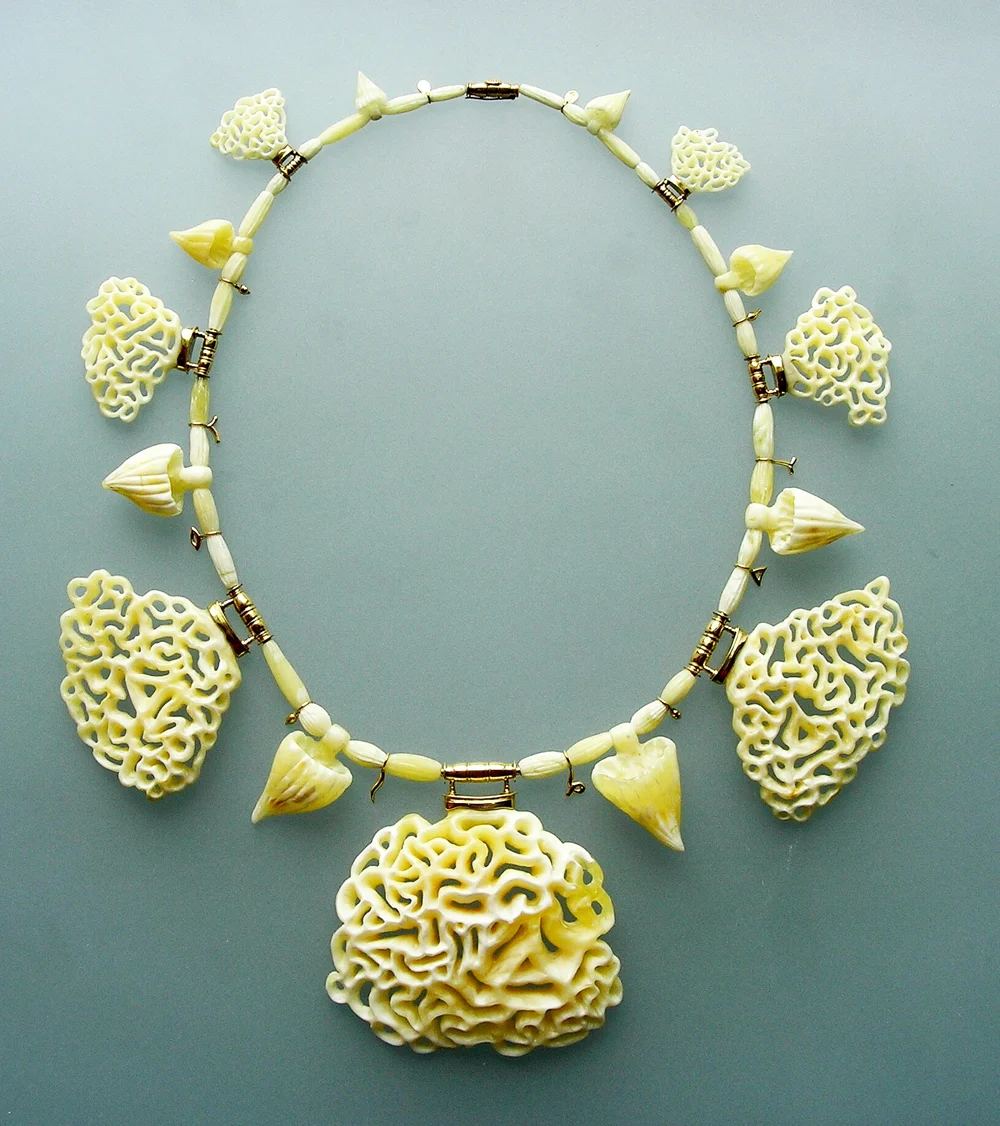
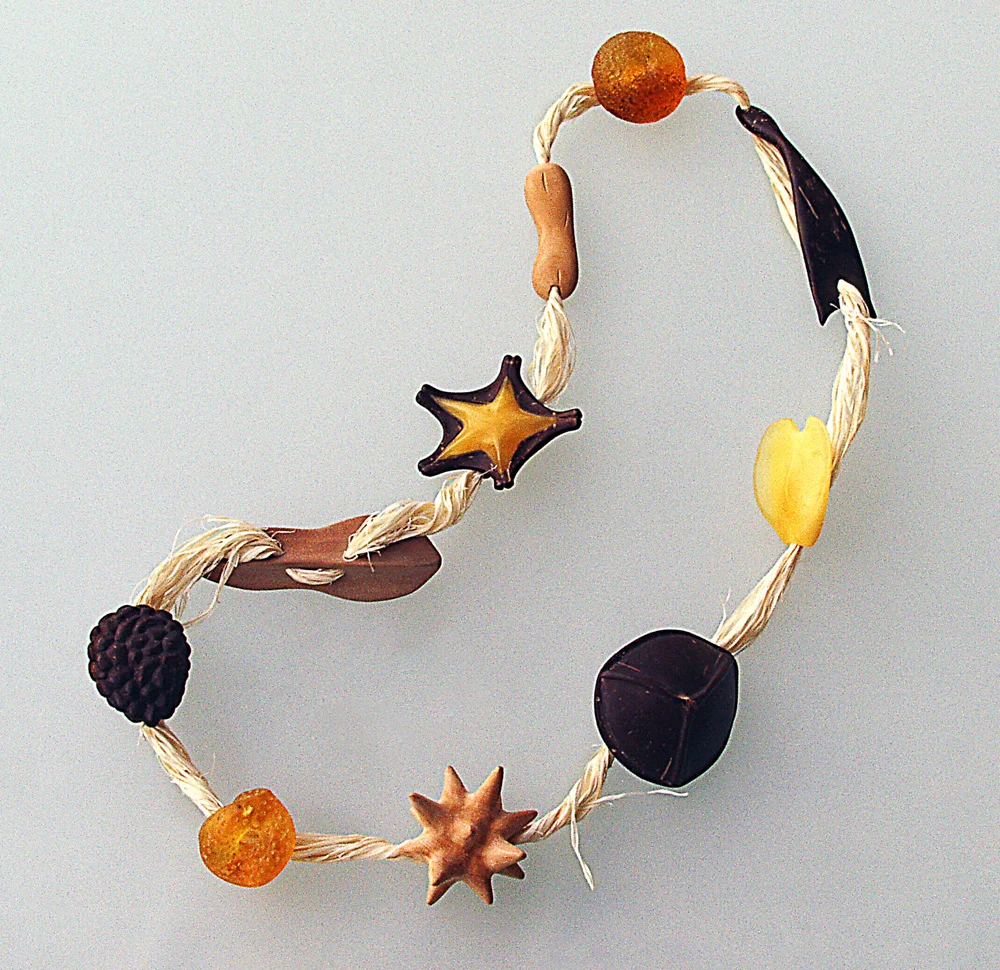
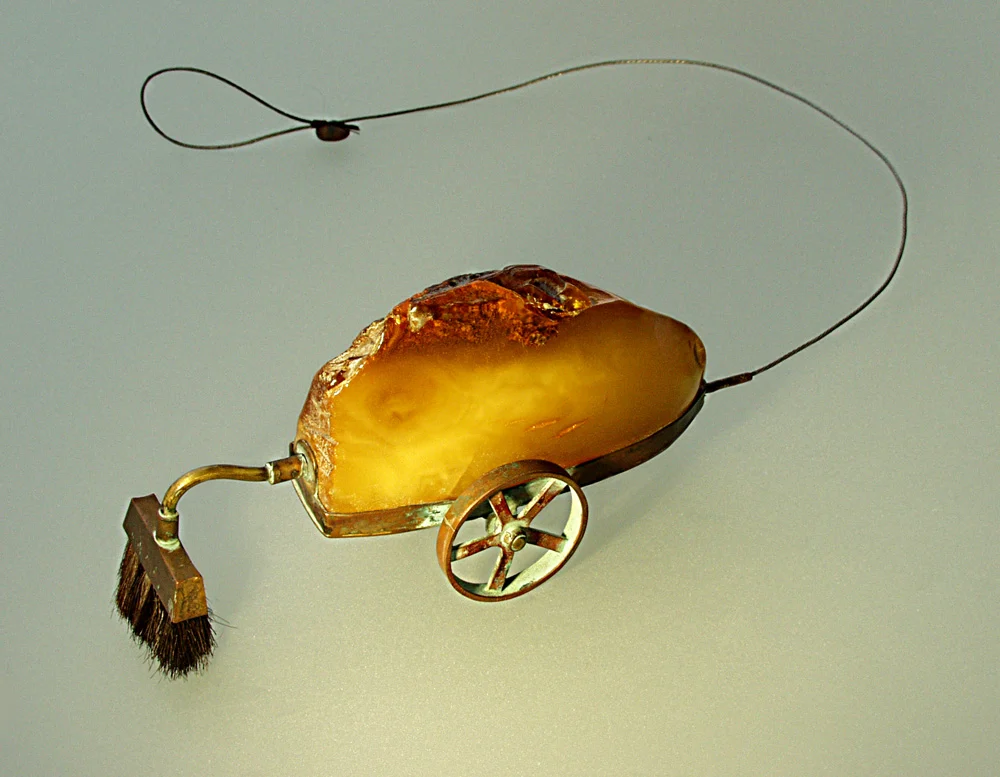
So far, there have been over 100 of them. Mainly artists from Lithuania, Latvia and Estonia, but also from Italy, Japan, the Netherlands, Finland, Iceland, Ukraine, Germany and France. The works they donated have created a very rich collection of contemporary art, showcasing different ways of thinking about jewellery and Baltic amber. A part of it is currently being displayed in the new Mizgiris Amber Museum in Nida, in the Art Gallery. We are also actively trying to influence the change in the image of Baltic amber among creators at an early stage of their artistic journey, i.e. during their studies at the Vilnius Academy of Arts. The results have already exceeded our expectations – students, taking on the challenge of working with amber, quickly fall in love with it and pursue artistic challenges even more ambitiously. However, cooperation with artists is not limited to the Artist's House in Nida; numerous solo and group exhibitions, as well as art competitions, are also organised at the Amber Museum-Gallery in Vilnius. We strive to always be close to artistic events and the artists themselves – we have many years of close and, above all, fruitful cooperation with many of them.
Although our countries are neighbours, very little is known in Poland about the Lithuanian goldsmithing scene. Which artists do you value most and why?
Both Poles and Lithuanians have very rich traditions of working with Baltic amber. Both are known worldwide for their modern and creative approach to this stone, which is clearly visible in numerous examples of contemporary amber art. In Lithuania, it has so many different faces that it's difficult for me to even attempt to find a common denominator for the artists and their works that would define the Lithuanian goldsmithing scene. I value each creator for their individual approach to amber. Among the „older” generation, it's worth highlighting Birutė Stulgaitė – one of the most famous Lithuanian jewellers. Her jewellery is pure minimalism and enormous subtlety in her approach to the material. She values the natural form of amber above all else, intervening in it minimally. Amber, as she says, tells her how it wants to be set – she usually combines it with other organic materials. I also highly value Sigitas Virpilaitis for his postmodern approach to amber and his lack of creative boundaries. This is reflected in surprising combinations where precious and supposedly common materials appear side by side, blurring the lines between the subtle and the vulgar. In Virpilaitis's jewellery, amber is, for example, caramel, from which the creator, like a confectioner, bakes various forms. As for the younger generation of artists, it's worth mentioning Eglė Čėjauskaitė-Gintalė, who creates exclusive jewellery far removed from traditional canons, and Nerijus Erminas, who, through his deconstructed objects modelled on everyday items, forces the viewer to think about their utility and crosses the boundary between reality and fiction.
Over the past 30 years, you and your wife Virginia have built a true amber empire in Lithuania, which currently comprises four museums, one gallery, and the Artist's House. Do you plan further expansion?
Since the museum opened in Nida, we've been focusing primarily on its extensive promotion. In the near future, we plan to create a virtual museum using the latest technologies, so that amber enthusiasts worldwide will have unlimited access to it. And after that? Who knows what other amber ideas we'll come up with...?
We also recommend: We should be more open with each other – a conversation with Jurgita Ludavičienė