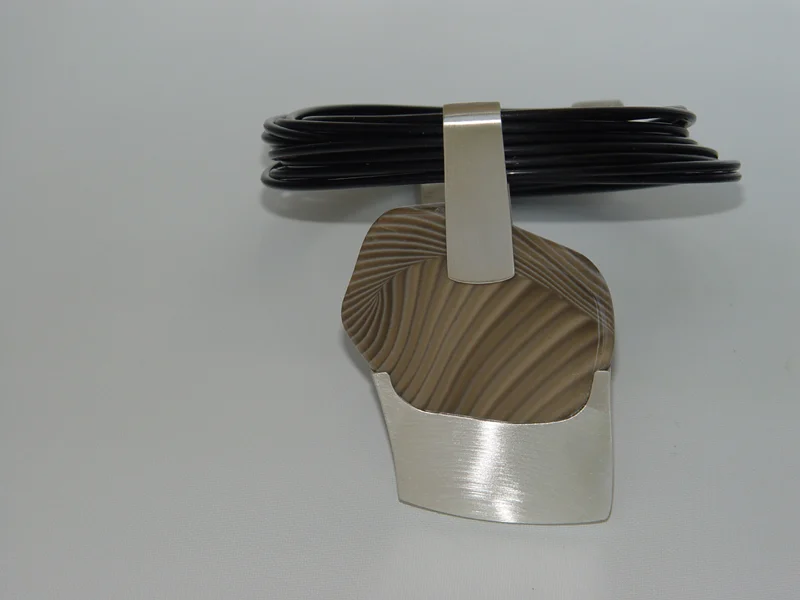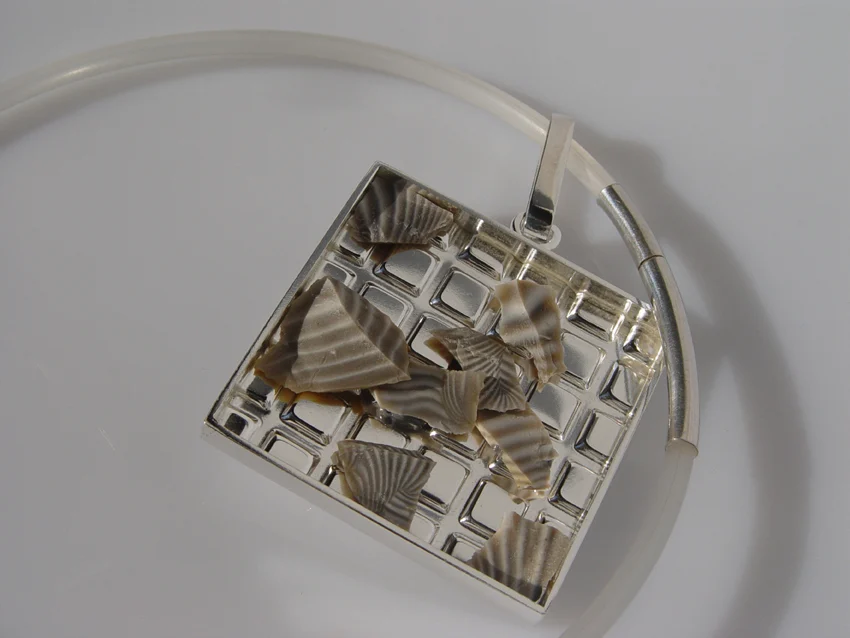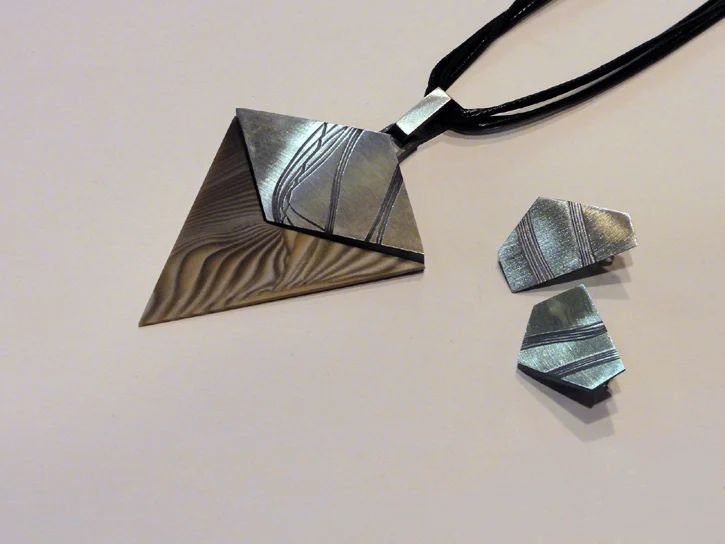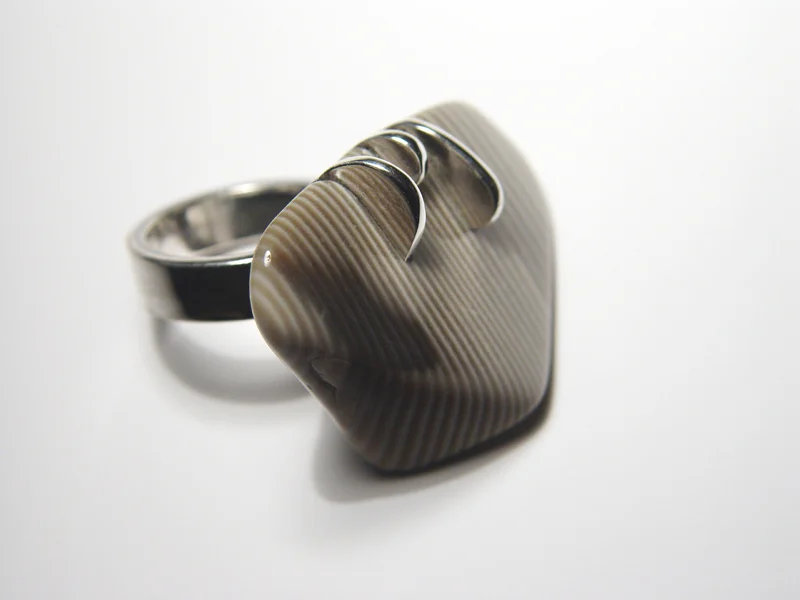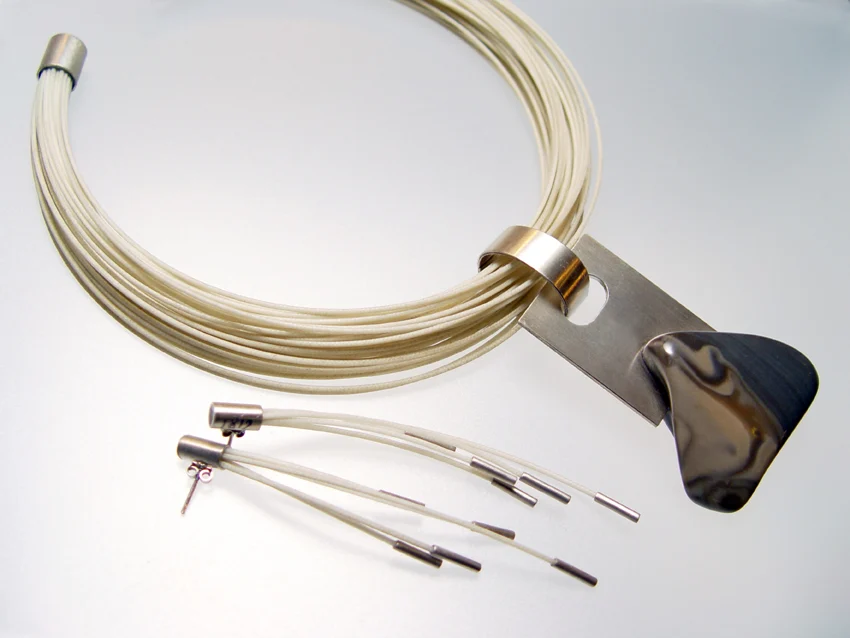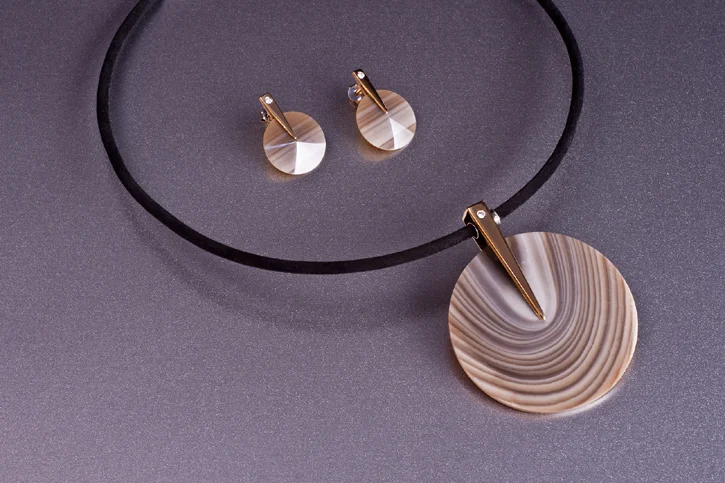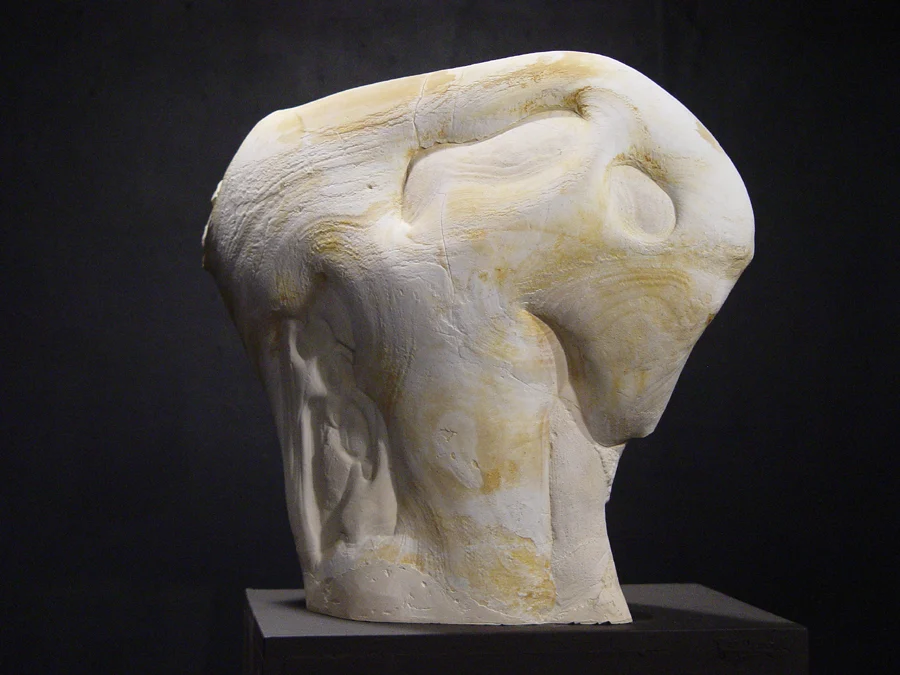
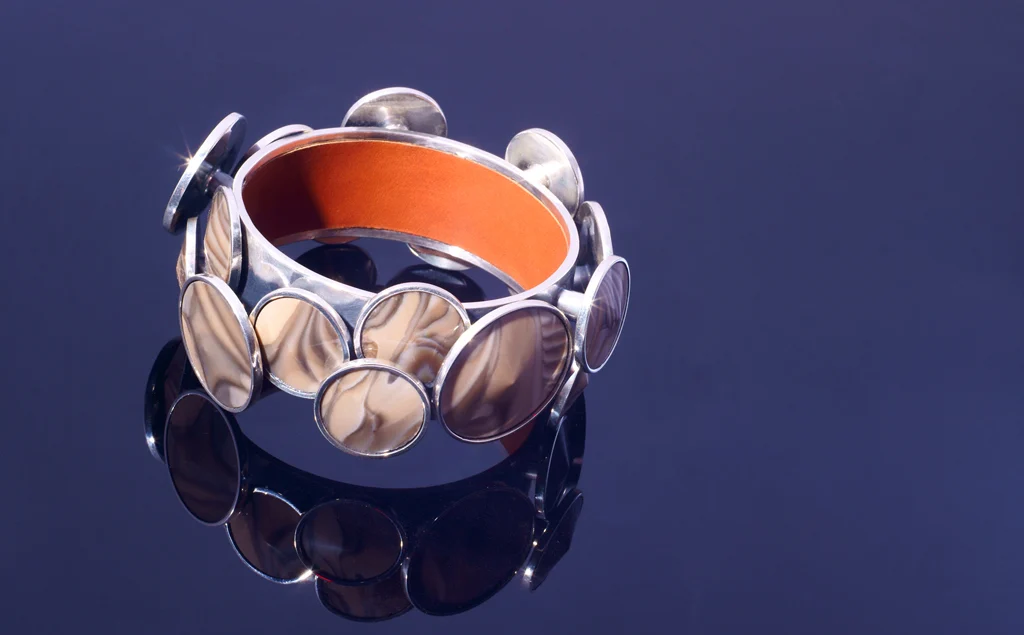
This year marks 50 years of promoting banded flint in jewellery. How do you feel about being the instigator of all this fuss?
I'll be honest with you, over these years, striped flint has become a part of my daily life, so in a way, it's become a bit commonplace for me... For 50 years now, I've been talking to people about it, bringing its existence and value closer to them every day. And I'm still surprised by their surprise that it's only been 50 years...
...and so much has already been done in terms of its promotion...
Most people who ask about flint and want to learn more about it were born when it was already recognisable. So 40-year-olds are surprised because they thought it had always been around. Indeed it had, but not in jewellery.
From your perspective, which events proved to be a milestone in the promotion of striped agate in jewellery?
There were many. But perhaps the most important was building my awareness, including establishing contact or even a close acquaintance with people who introduced me to flint. Even though they, despite often having extensive knowledge about it, not only had no idea how to promote it, but quite often didn't believe it made sense. Although, I must admit honestly, I myself also had moments of doubt as to whether all these efforts were worthwhile and how long I would manage to engage with banded flint day after day… Time has shown that indeed I did, and a lot was achieved despite such limited time, financial, or organisational possibilities.
How did you manage to interest other people in flint and convince them that promoting it as a distinctive feature of Polish jewellery makes sense?
I showed a different side to banded flint and many people simply liked it. They probably also saw an opportunity for the region – the only one in the world where flint occurs. One of them was the then-director of the Goldsmithing Art Museum in Kazimierz Dolny on the Vistula, who visited me in 1985, as he had already heard a lot about me and wanted to see for himself who I was and what banded flint jewellery looked like. The result was an invitation to a year-long exhibition of my jewellery at the museum, which for me was a great honour and, of course, a major milestone. And above all, it validated me and my idea of promoting banded flint in jewellery. Following this, other exhibition proposals appeared, including abroad, as well as media interest – without them, this whole endeavour would have had no chance of success.
Thanks to the media, the world – and you too – found out that Victoria Beckham and Robbie Williams wear your jewellery.
I remember it started with an interview I gave to a correspondent from the Polish Press Agency during the opening of an exhibition of my flint works in Toruń. He had prepared for it so well that he found out that my flint jewellery is worn by, among others, Victoria Beckham and Robin Williams. Following the PAP, many news services reported on flint, its origin, and the celebrities who wear jewellery adorned with it. The next day, eight television crews from all over the world lined up at the door of my gallery. The jewellery was sold out immediately, and many people had to leave disappointed. It was then, for the first time, that I realised the power of the media. And I started to wonder if I could handle the effects of all this commotion… The company W. Kruk, which I had persuaded six months earlier to prepare a collection with banded flint, and which launched it on the market a few months later, benefited greatly from this unexpected promotion. In reality, all of us who cared about flint benefited...
Then you came up with the slogan „banded jasper, the stone of optimism”?
I had to constantly nurture interest in flit, keep it alive, and I knew very little about marketing techniques myself. So I came up with ways to achieve my goals, for example, how to encourage the media to write about it. Hence the slogan „stone of optimism” – a kind of mental anchor. It caught on quickly and worked brilliantly. I remember that after a short while I found an offer online for the sale of jewellery made from banded flint – the stone of optimism. I was enormously pleased that the slogan that came from me had so quickly taken root in people’s minds. When someone asks me about the slogan, I always reply that it came about because ladies call flint that. Especially since I know an incredible number of stories confirming an addiction to the „stone of optimism”.
What were the next milestones?
The Sandomierz Museum’s involvement in promoting flint through the organisation of themed workshops between 2000 and 2014 was of great significance. Artists were invited to take part, on the condition that they would subsequently donate one piece to the collection of striped flint jewellery being built up in this way. Once again, not only did this result in a very interesting exhibition, which can be viewed as part of the permanent display, but it also served to further establish the credibility of flint, which had made its appearance within the museum’s spaces. In 2007, during a scientific session marking the 35th anniversary of the introduction of flint into jewellery, Sandomierz was designated the World Capital of Banded Flint – this came about at my request, so I felt all the more obliged to do everything in my power to ensure that this prestigious title was well-deserved. It was very important to me that, in the region where flint originates, as many workshops as possible dedicated to its artistic processing should be established, so I have tirelessly – and with quite good results – encouraged, and continue to encourage, the locals to open their own galleries and souvenir shops, promoting local produce. It is important that there is plenty of activity centred on flint, so that Sandomierz is its global capital not just in name. Building on this foundation, three editions of the Striped Flint Festival were held between 2011 and 2015, aimed at showcasing this stone in its many facets: from archaeology, history, mineralogy, crafts, goldsmithing and museum collections, to activities inspired by or associated with it, including sightseeing and music. The festival was accompanied, amongst other things, by the ‘Striped Flint’ National Original Jewellery Competition, in which numerous Polish visual artists and jewellery designers took part, as well as numerous exhibitions of jewellery adorned with this stone. And so 50 years have passed… In the meantime, I have often exhibited flint-based works abroad, including at the EXPO in Milan and Astana. These days, our striped flint is frequently used as a diplomatic gift. The Polish Embassy in Brussels asked me to make my exhibition available as a special display – I agreed for two months, but the works were returned after two years because the interest was so great. There is indeed plenty of evidence that flint – just as it was thousands of years ago – is still essential to people today.
When you were starting out, did people often tap their foreheads?
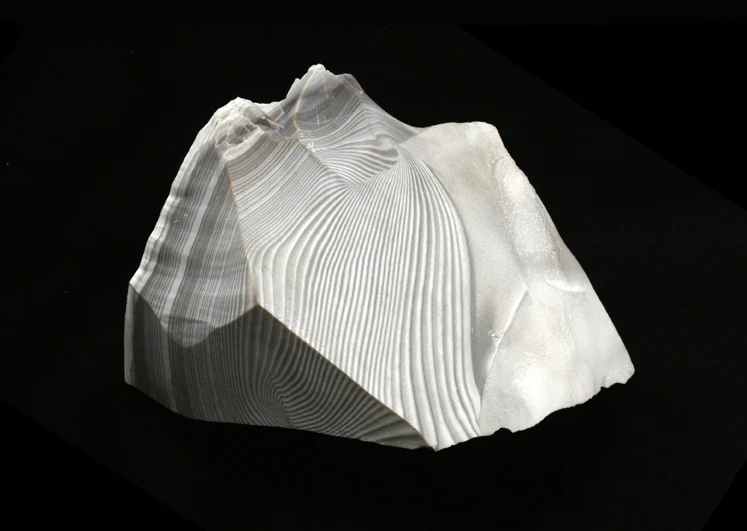
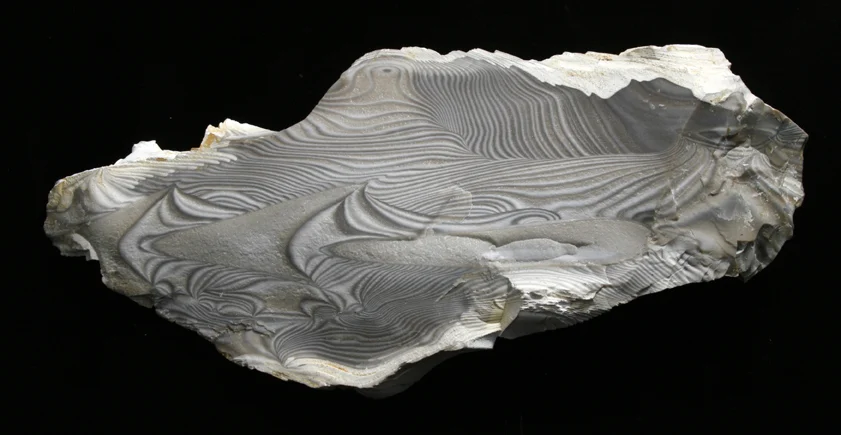
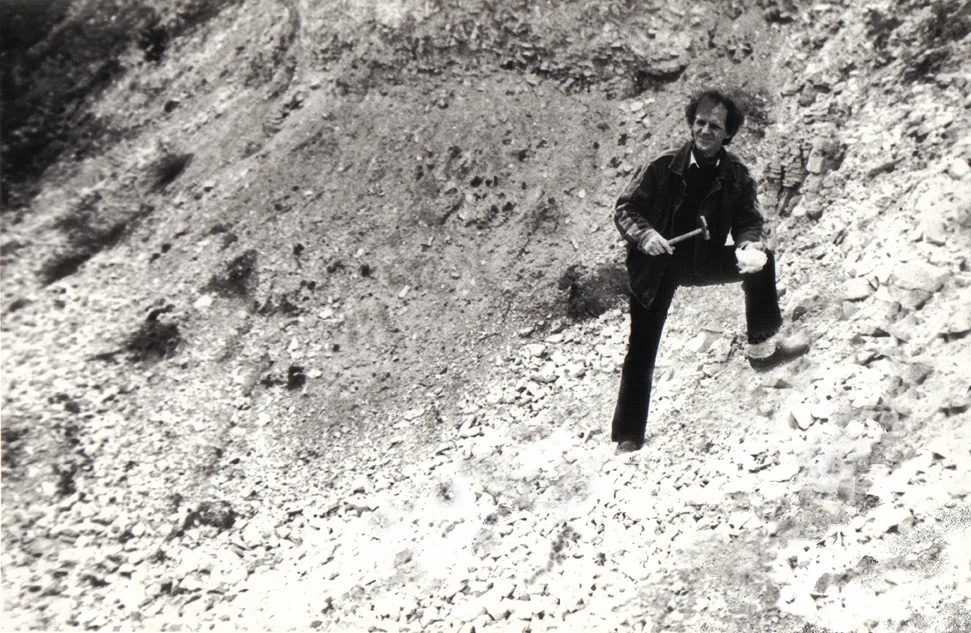
Oh, very often indeed (laughs). But I got used to it quickly (laughs). For 4,000 years, people used this stone for things like hardening roads, and then suddenly a madman appeared who started setting it in jewellery. Flint occurs in limestone just like raisins in cake, so when peasants extracted limestone for building purposes, they would throw the flint into the ruts on the roads. In their opinion, it was useless for anything else. But an outsider always sees things differently, I would say, sometimes even better... I came to Sandomierz from the Coast, and by necessity, I had a different perspective on what was happening here. My first encounter with flint was at the local museum, where I saw „striped” axes. Following this lead, I looked for information, contacted experts on the subject, and above all, I was captivated – and it's remained that way ever since. Flint has the three most important characteristics of a gemstone: rarity, decorative quality, and hardness. So, I „got it into my head” that I would make it a symbol of Polishness in jewellery. And all this was in the 1970s, when ladies wore rings made of so-called Russian gold with a red stone, which were a symbol of aesthetic sensibility. Against this backdrop, I was proposing silver jewellery with banded flint... So there was no other choice but to get used to the tapping on the forehead or the drawing of many significant circles on it (laughs). And the verbal expression of hope that perhaps one day I would recover (laughs).
But you haven't recovered. What's more, you and the flint are doing well.
I'll say more: currently, the function of the quarry has been reversed, and the objective for extraction is no longer limestone, but banded flint. In my paper delivered at the scientific conference „50 Years of Banded Flint in Jewellery,” which took place at the beginning of September this year in Sandomierz, I even ventured the following comment: „In an era when man walks on the Moon, one can still discover stone on Earth.” This story of mine – or rather, the story of flint – shows that anything can change. Stone, which for millennia served to pave roads, is today worn in jewellery by crowned heads, including, among others, the Queen of Belgium. It was so low, and it has travelled so high.