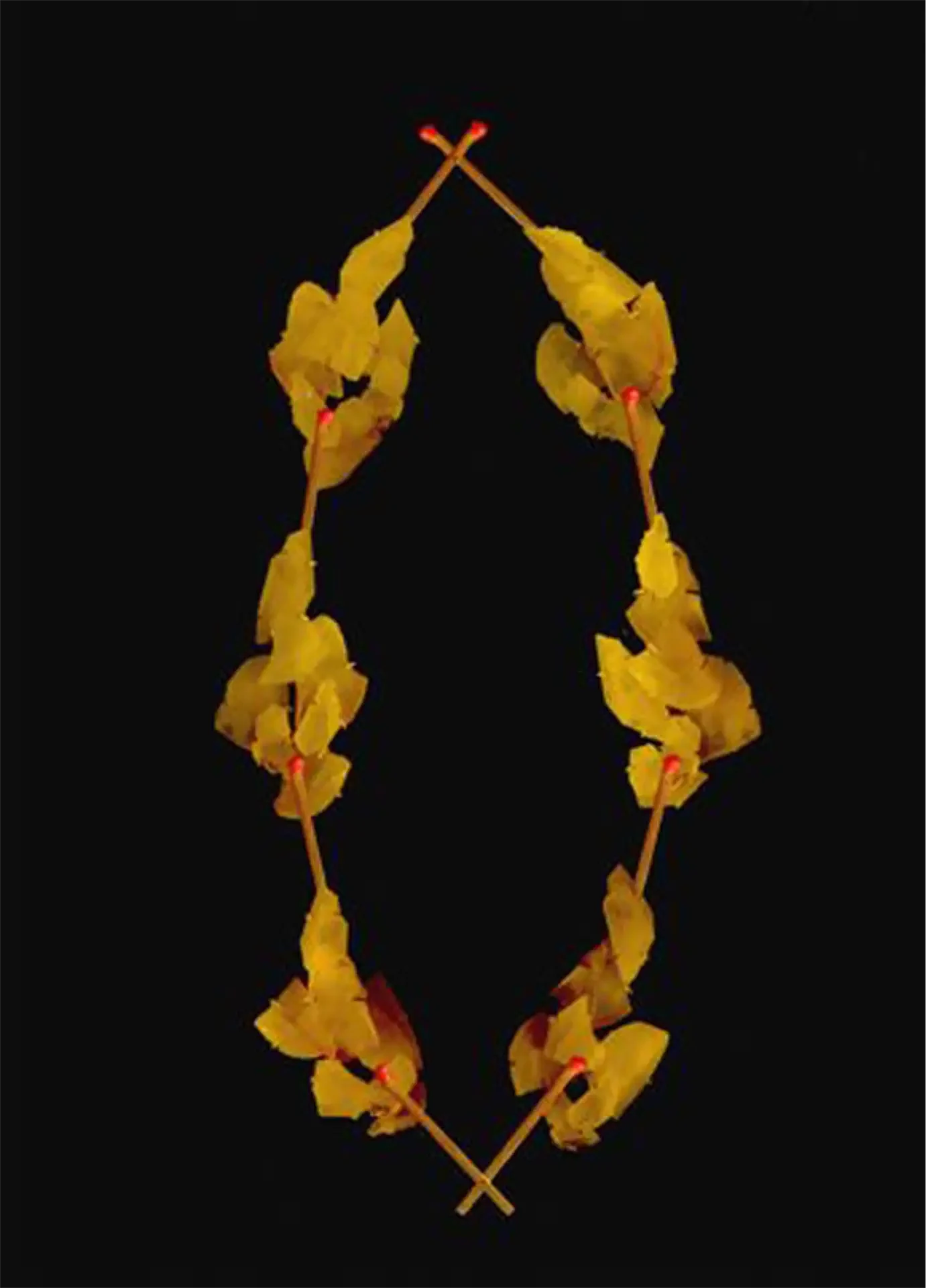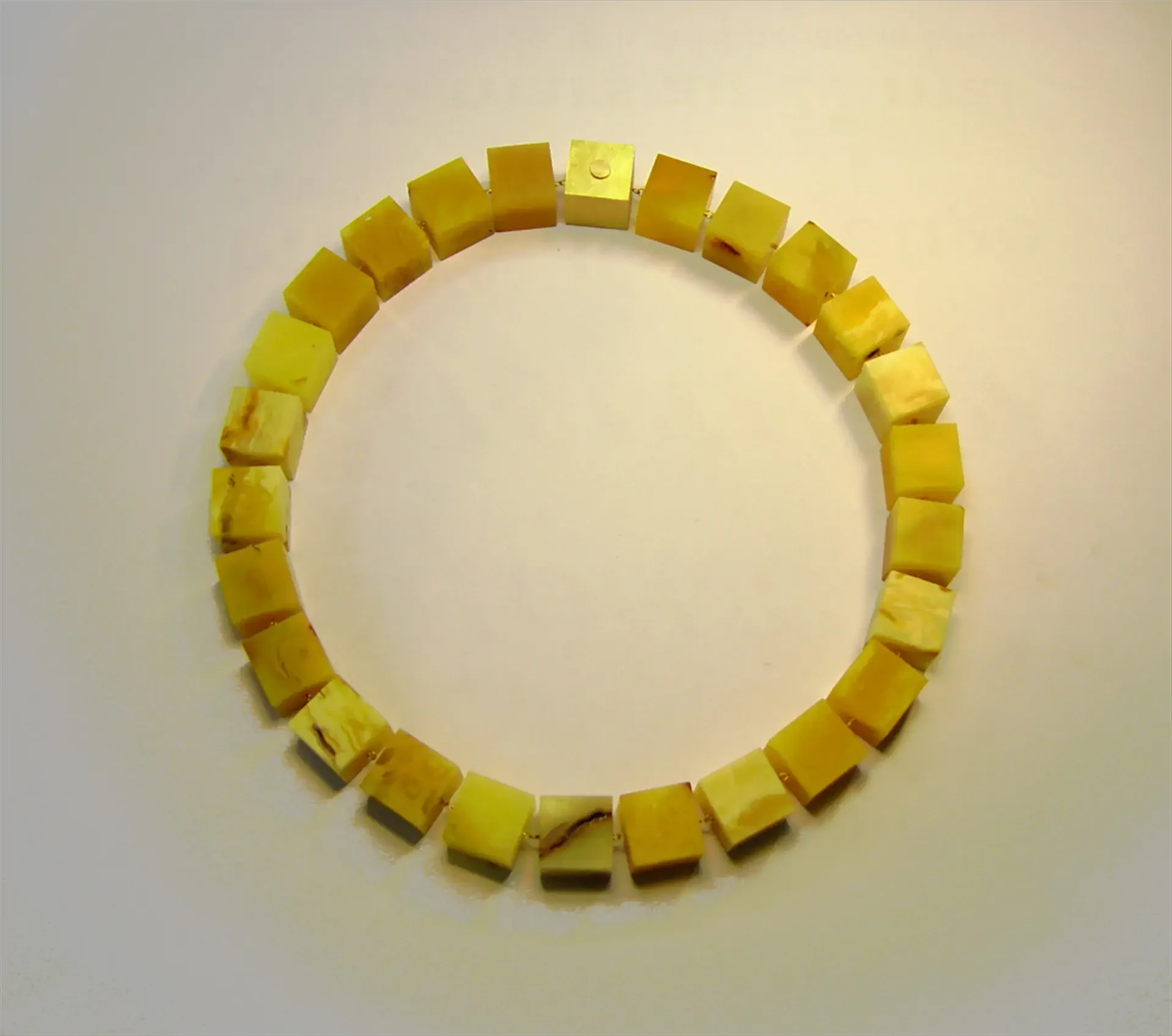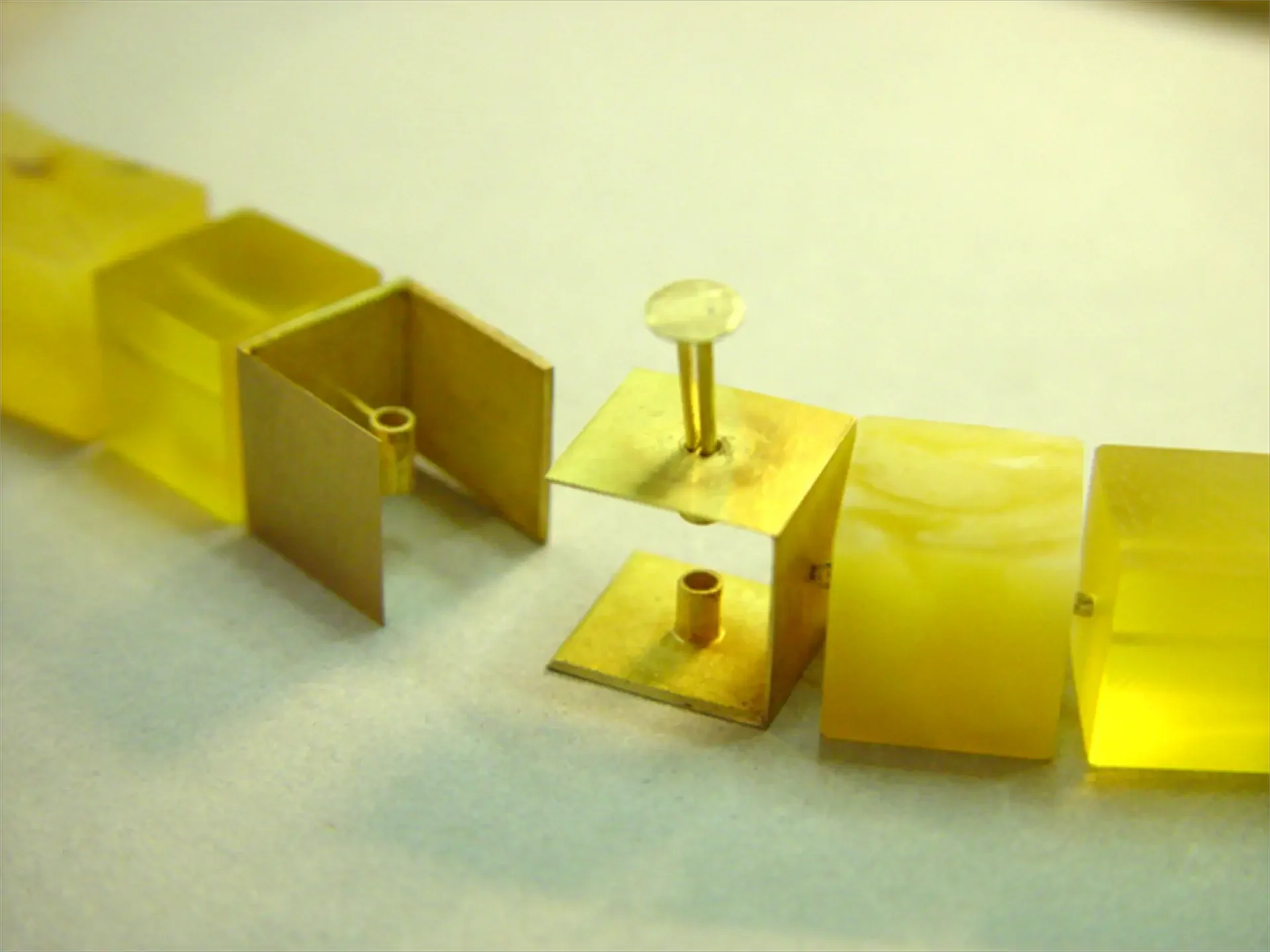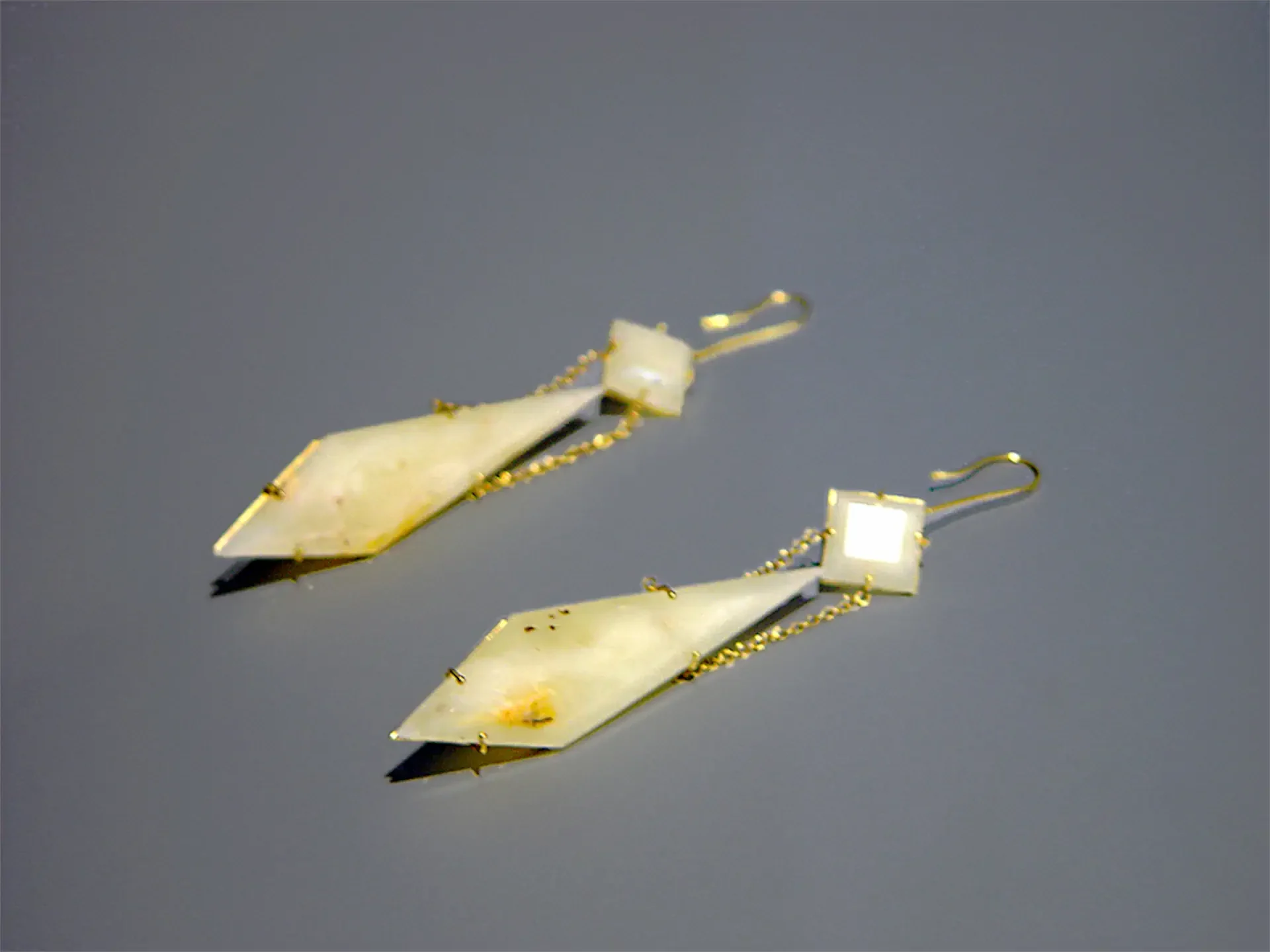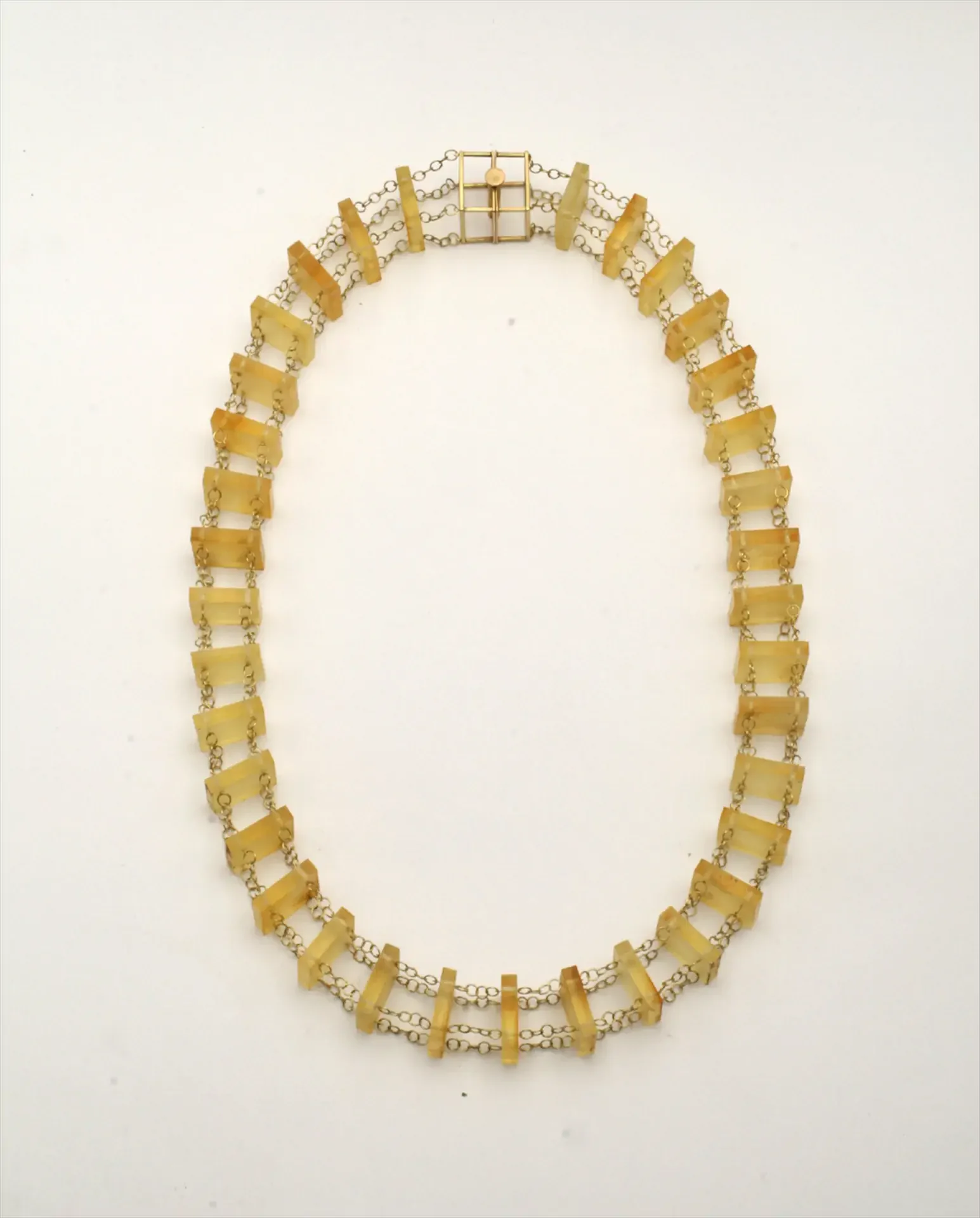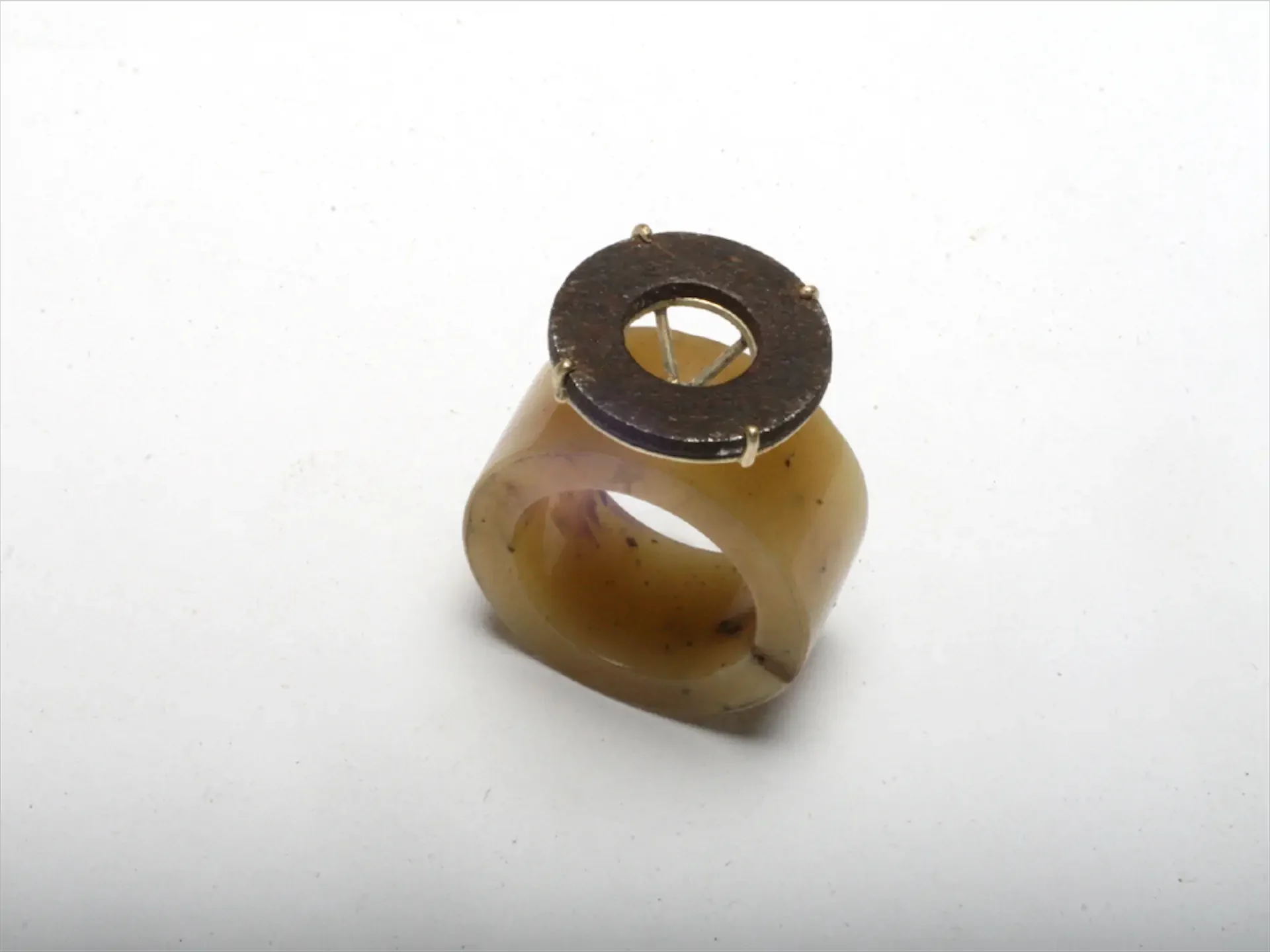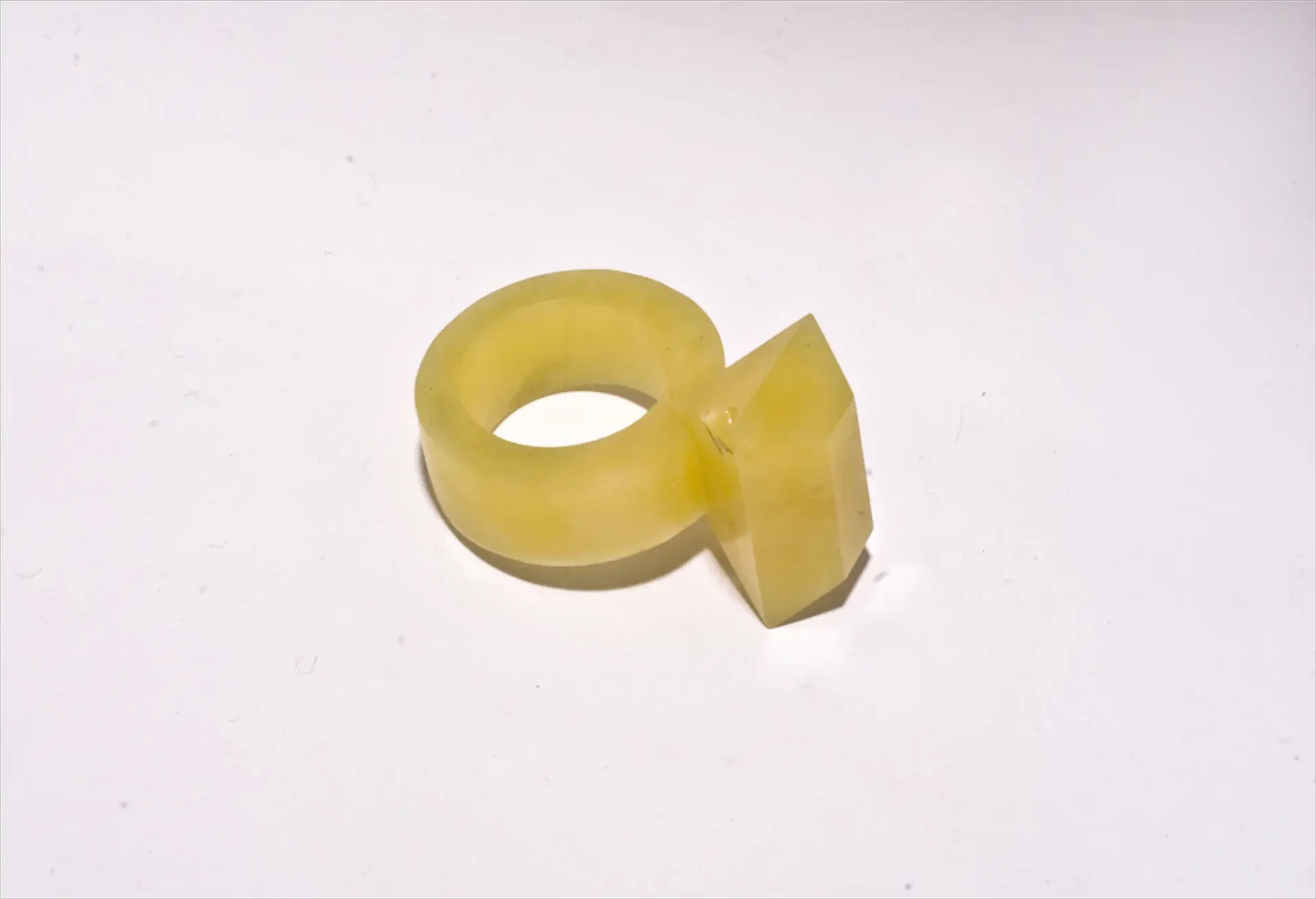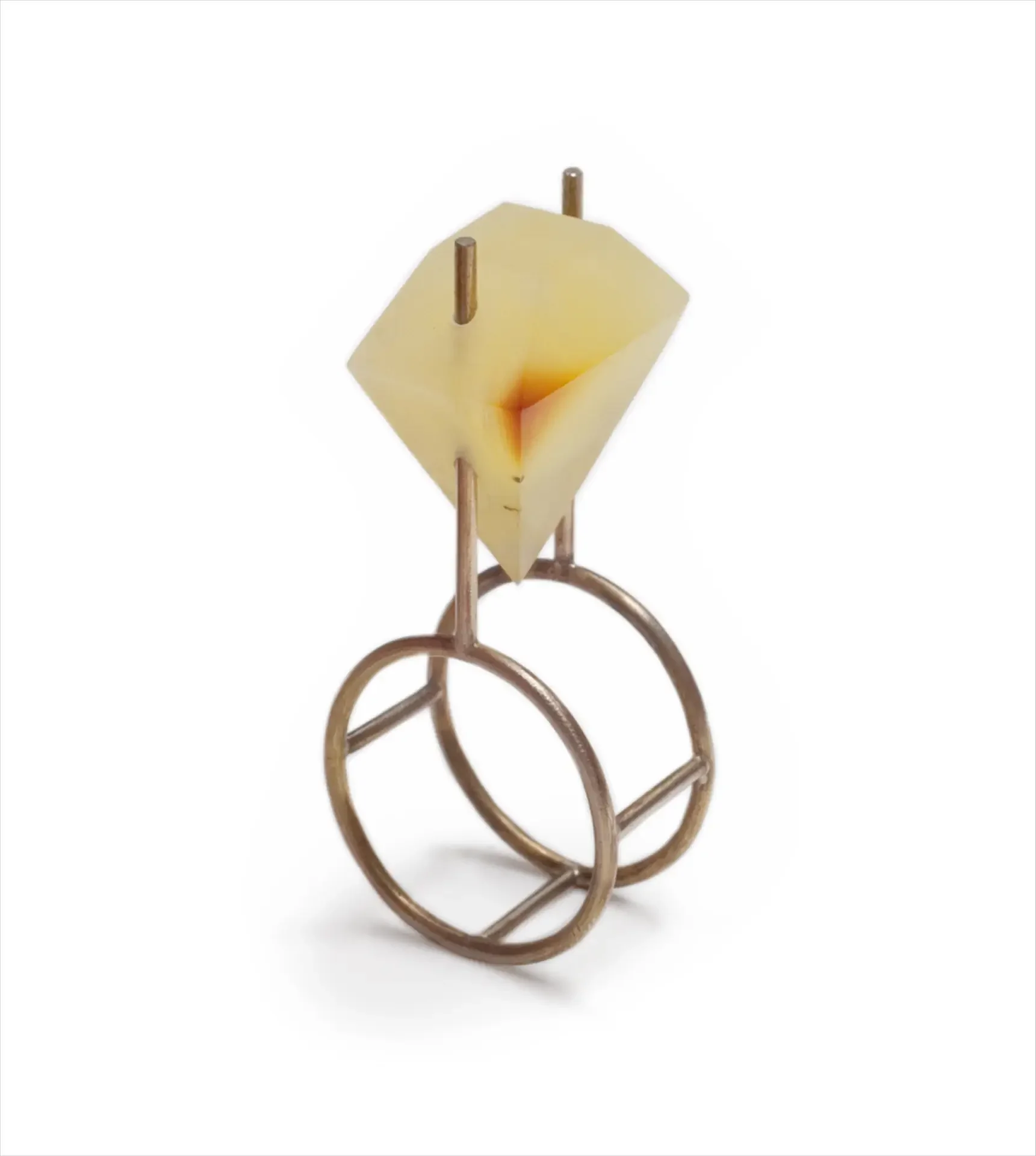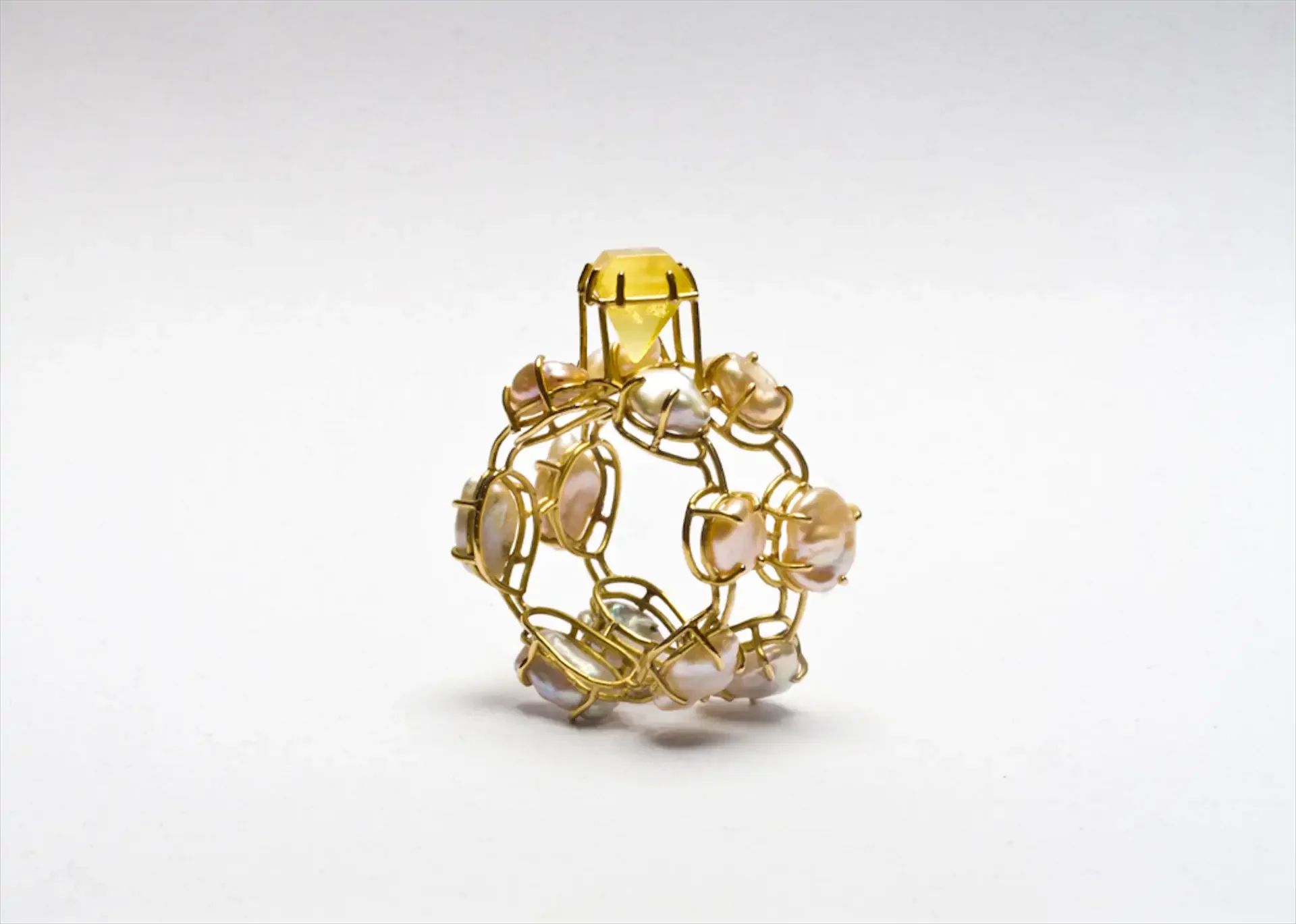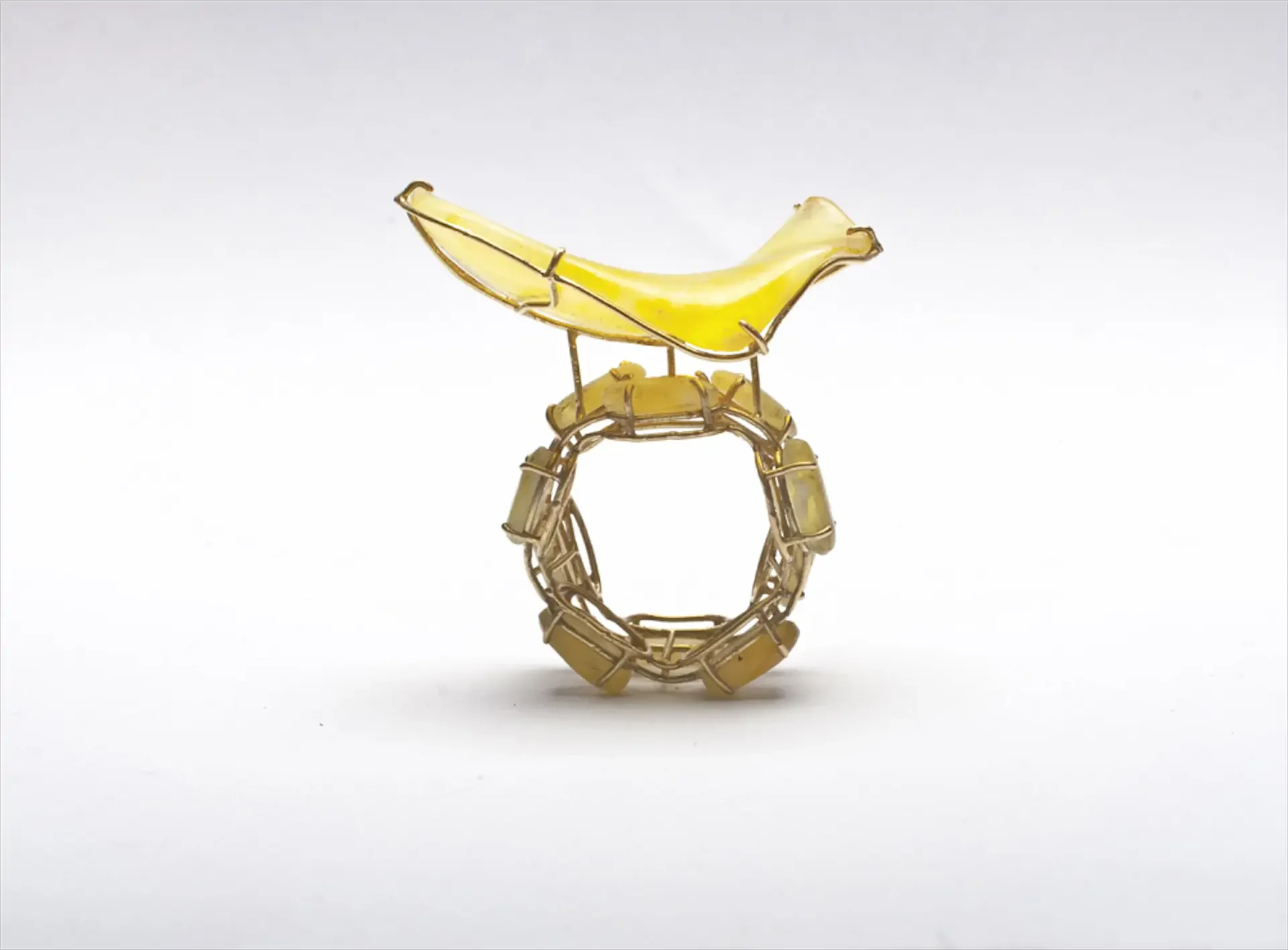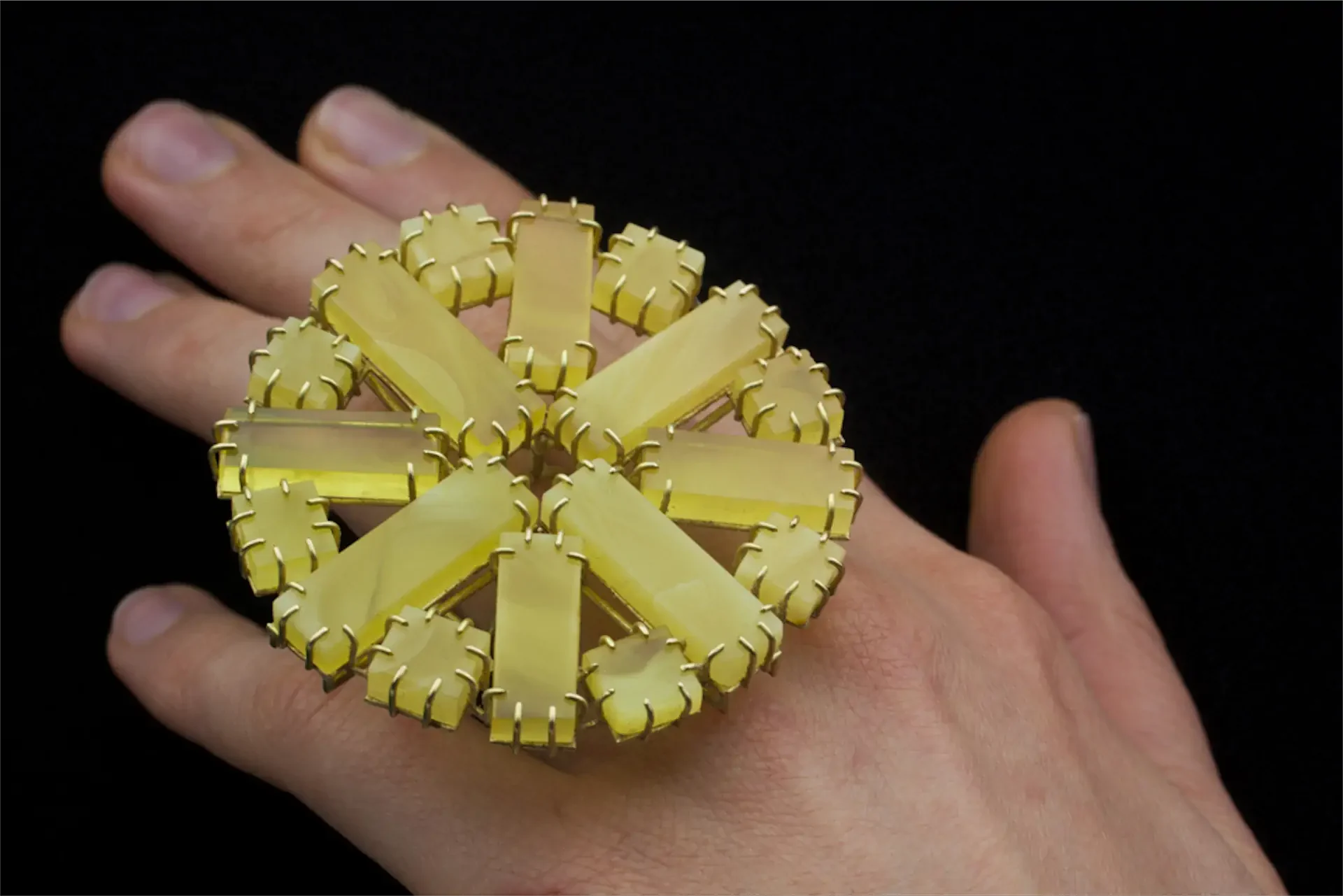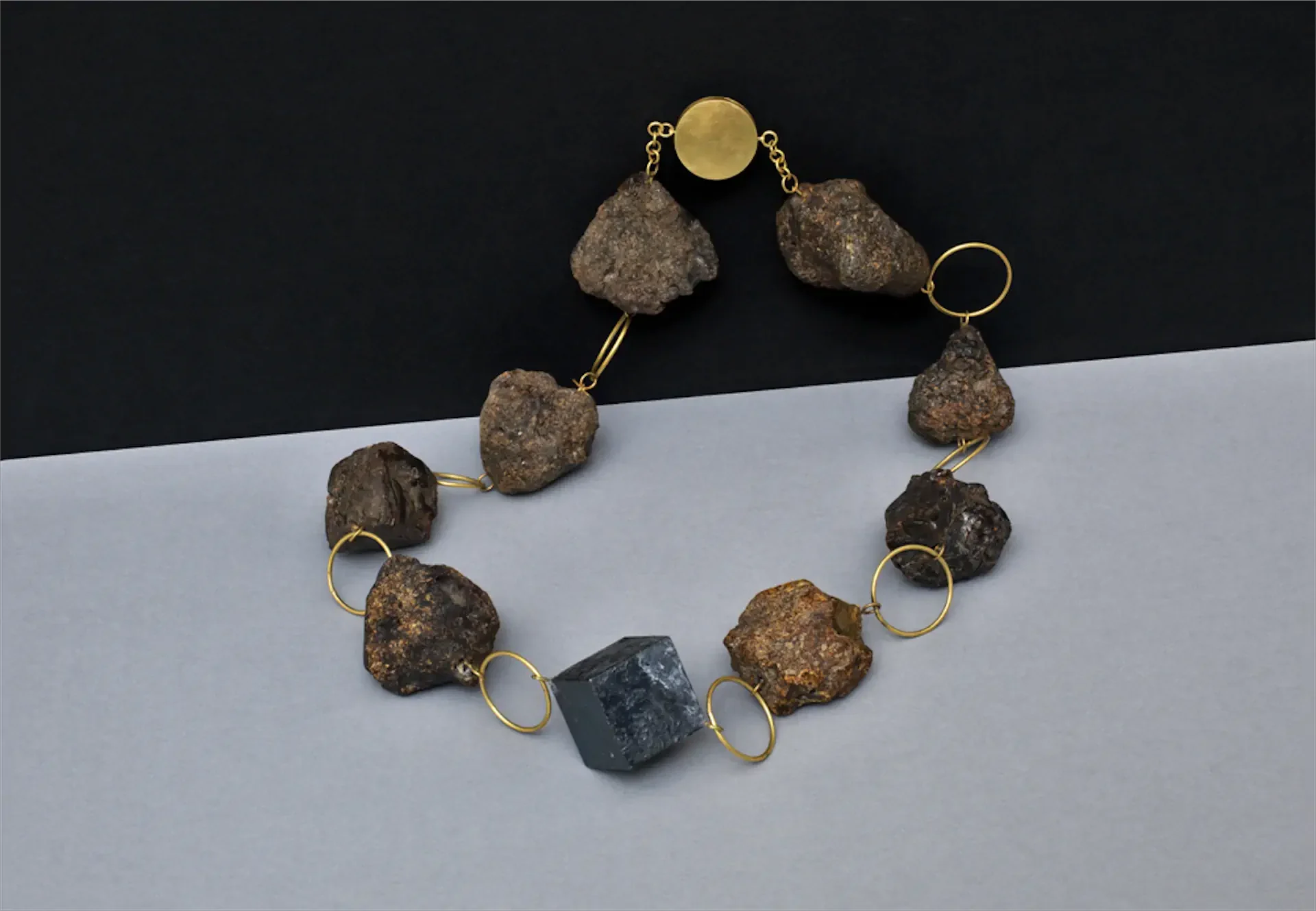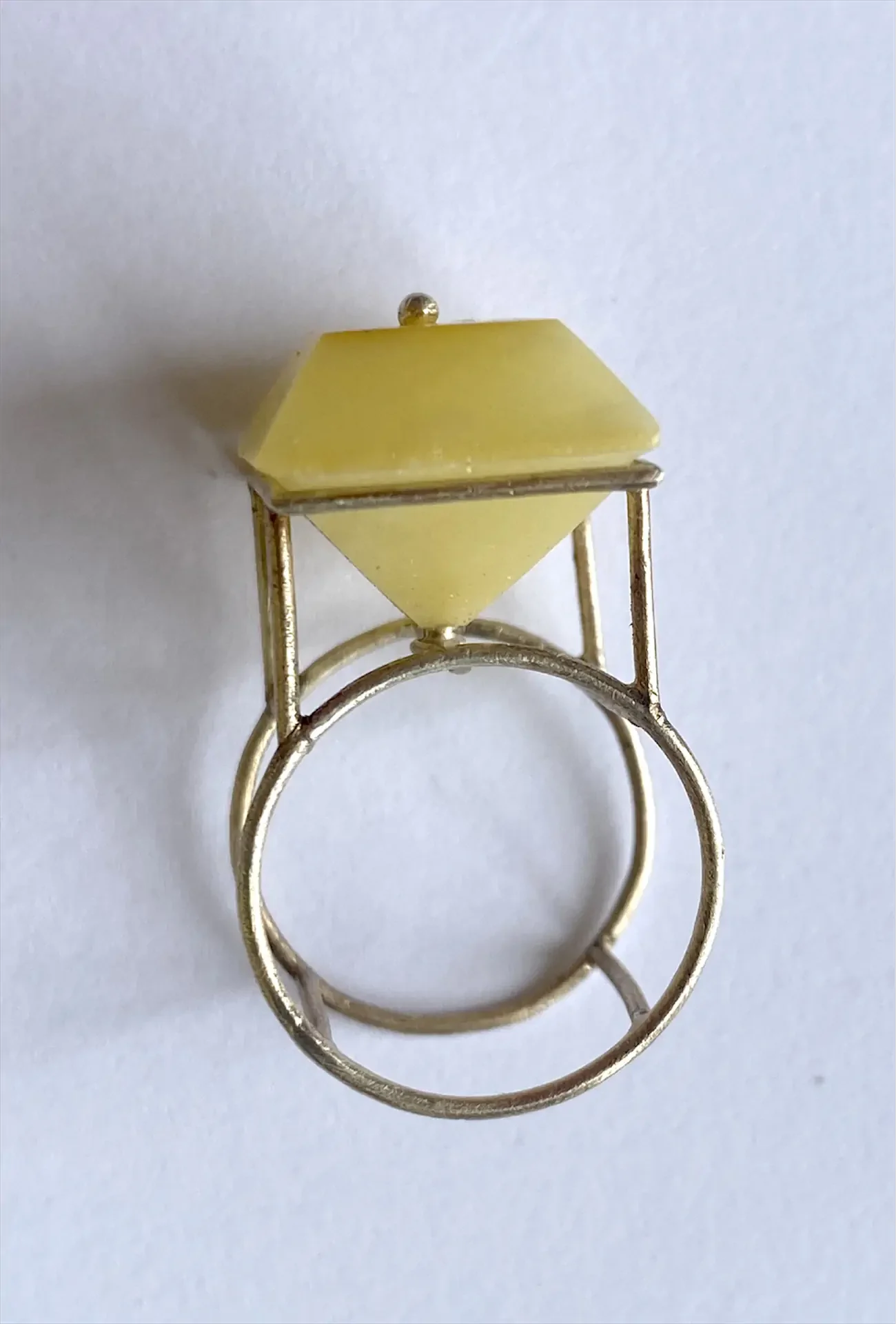
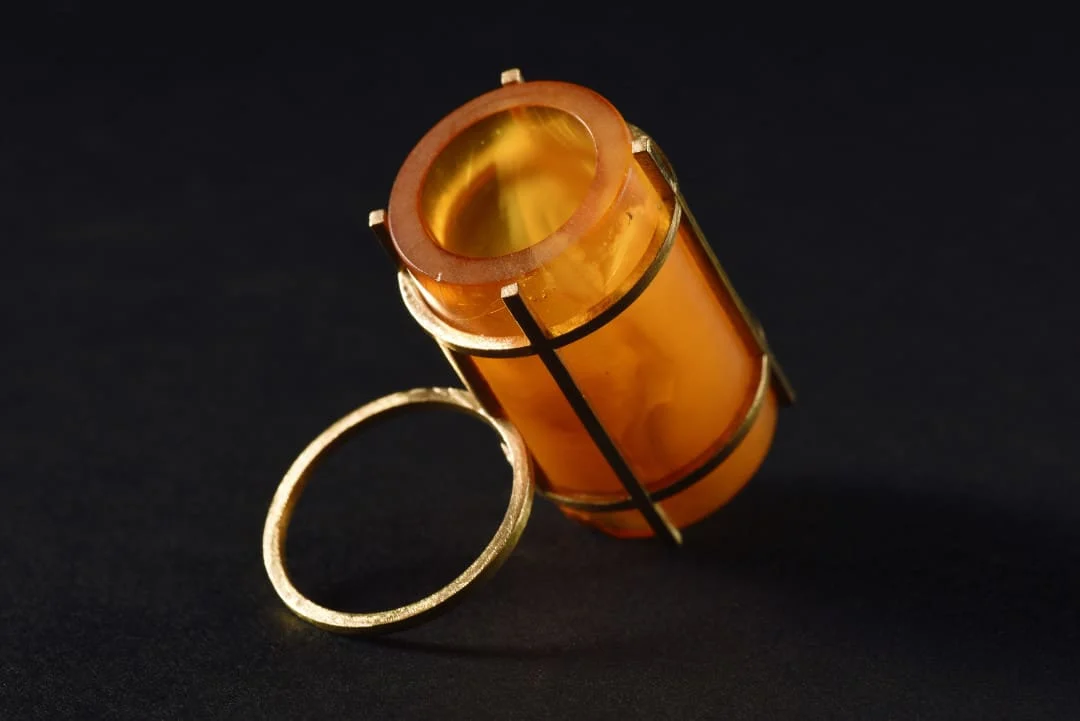
He fell in love with amber classically, that is at first sight. It was in Gdańsk in 2002. For him, the most beautiful amber is the one untouched by human hand, completely natural. Exactly such a piece is the adornment of his small, but – as he himself claims – strong collection of amber.
Amber is fantastic, it's a golden stone. A delicate yet fossilised resin. Its colour is obsessively beautiful. I have worked very little with amber so far, but it has always been of primary importance to me to preserve its character. Of course, it is possible to cut and polish it like other stones, but in my opinion that is tantamount to violating the nature of amber. For me, it is very important to preserve the surface of the stone while allowing a glimpse into its interesting interior. I believe that the unique character of amber must be preserved at all costs and it must absolutely not be ‘uniformised' – he said more than 10 years ago to the Amber Portal amber.com.pl.
Little has changed in his approach today. He cares about preserving the natural quality of the amber, focusing on colour, transparency, and surface texture.
What I appreciate about amber is its age, its lightness and its resemblance to gold, honey and sunshine. Its fragrance. Its delicate character. And that is the challenge of expressing a strong and definitive message through this rich, soft material.
His unique attitude towards amber can be evidenced by a story he told in an interview published on the l'Envers du decor blog. It is his answer to the question: Do you have a favourite piece of jewellery?
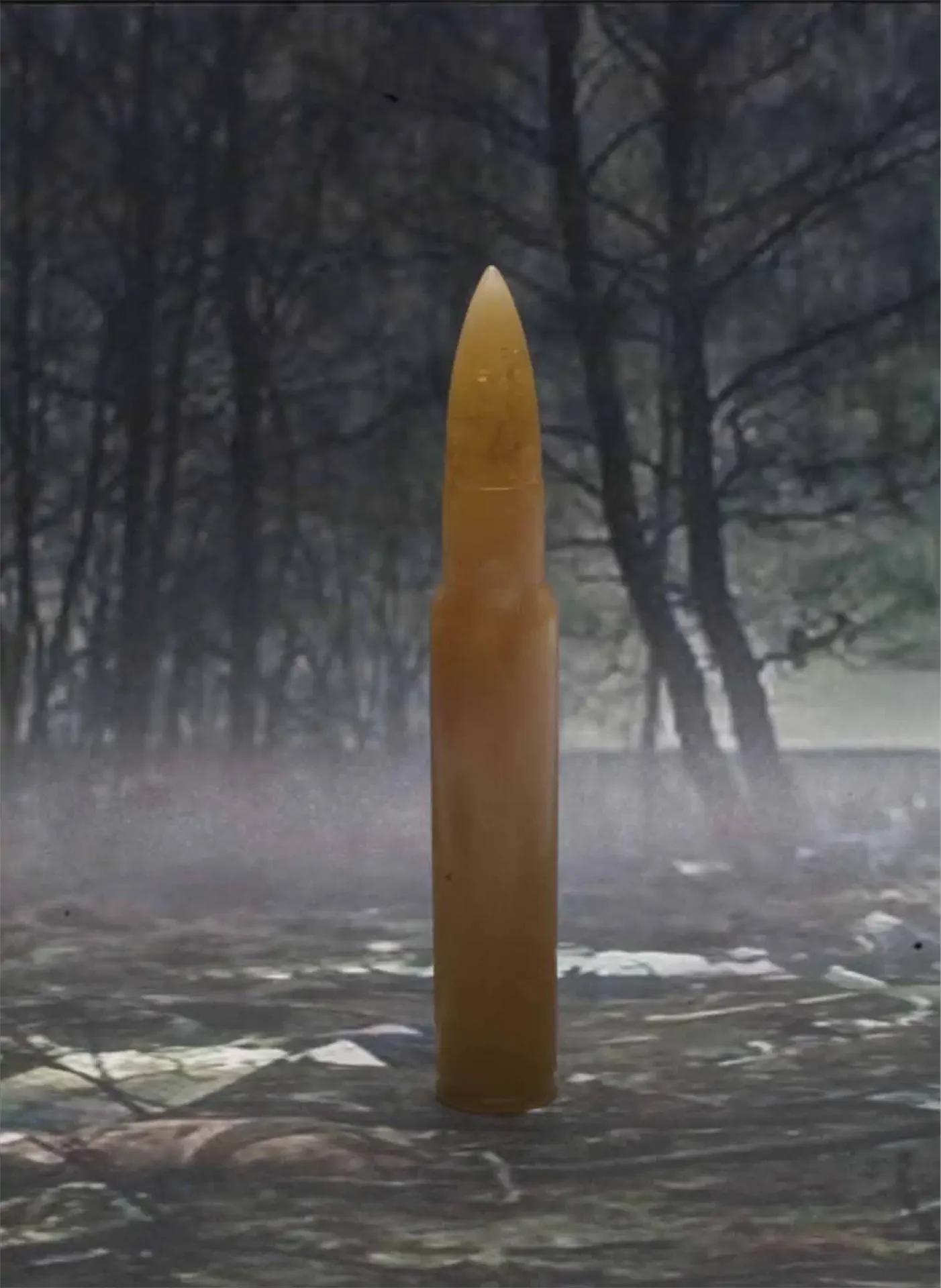
No, but once I made a piece that I liked so much that I slept with it. It was a really long amber bullet turned on a lathe. It's really hard to put amber on a lathe. It breaks easily. It was a very beautiful piece of amber and I kept it for a while. I carried it in my pocket, and at night I put it under my pillow. I sold it later. It was at an exhibition in Poland. The person who bought it wanted to have a pendant, so I made a small hole in it. Generally, I don't wear jewellery.
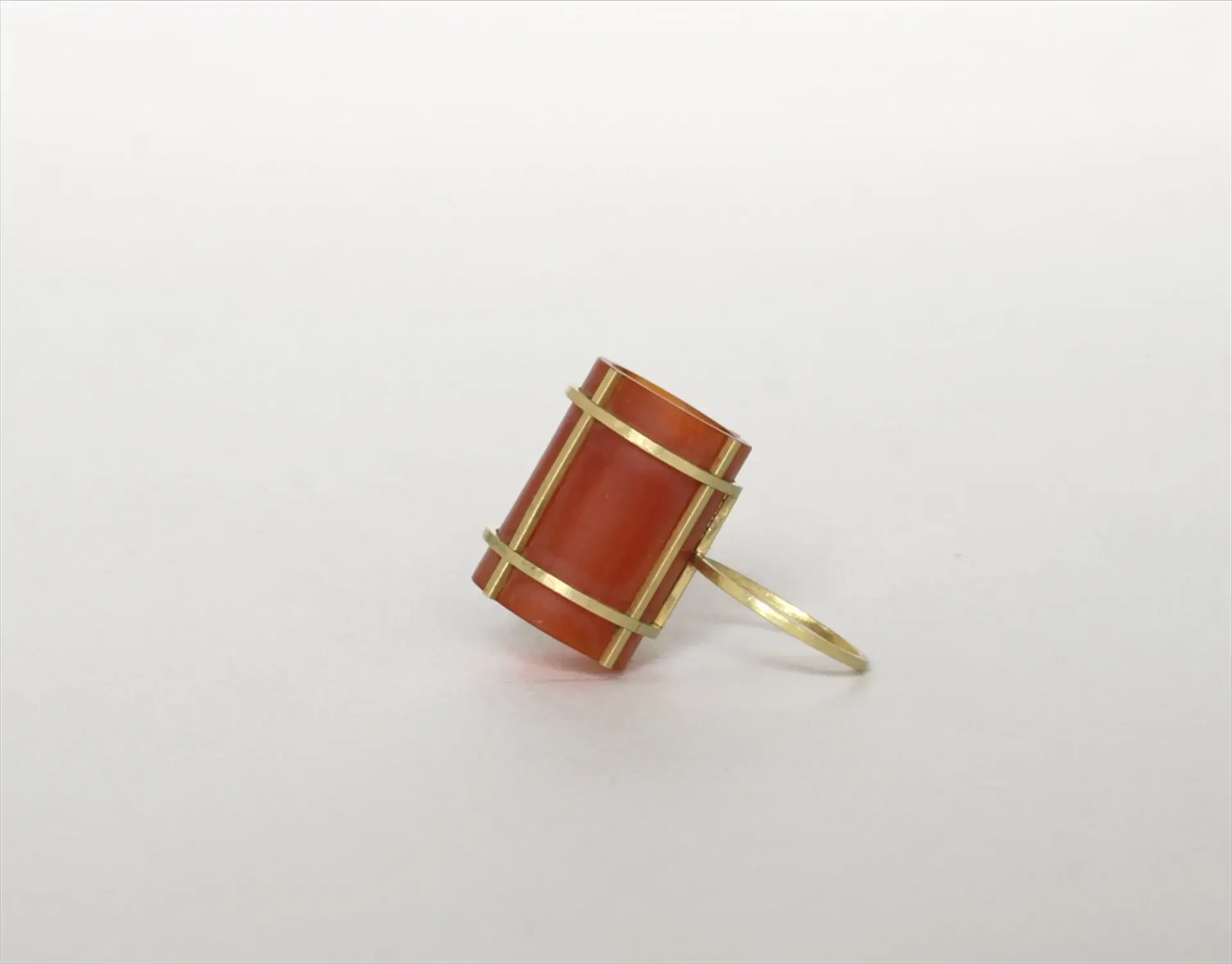
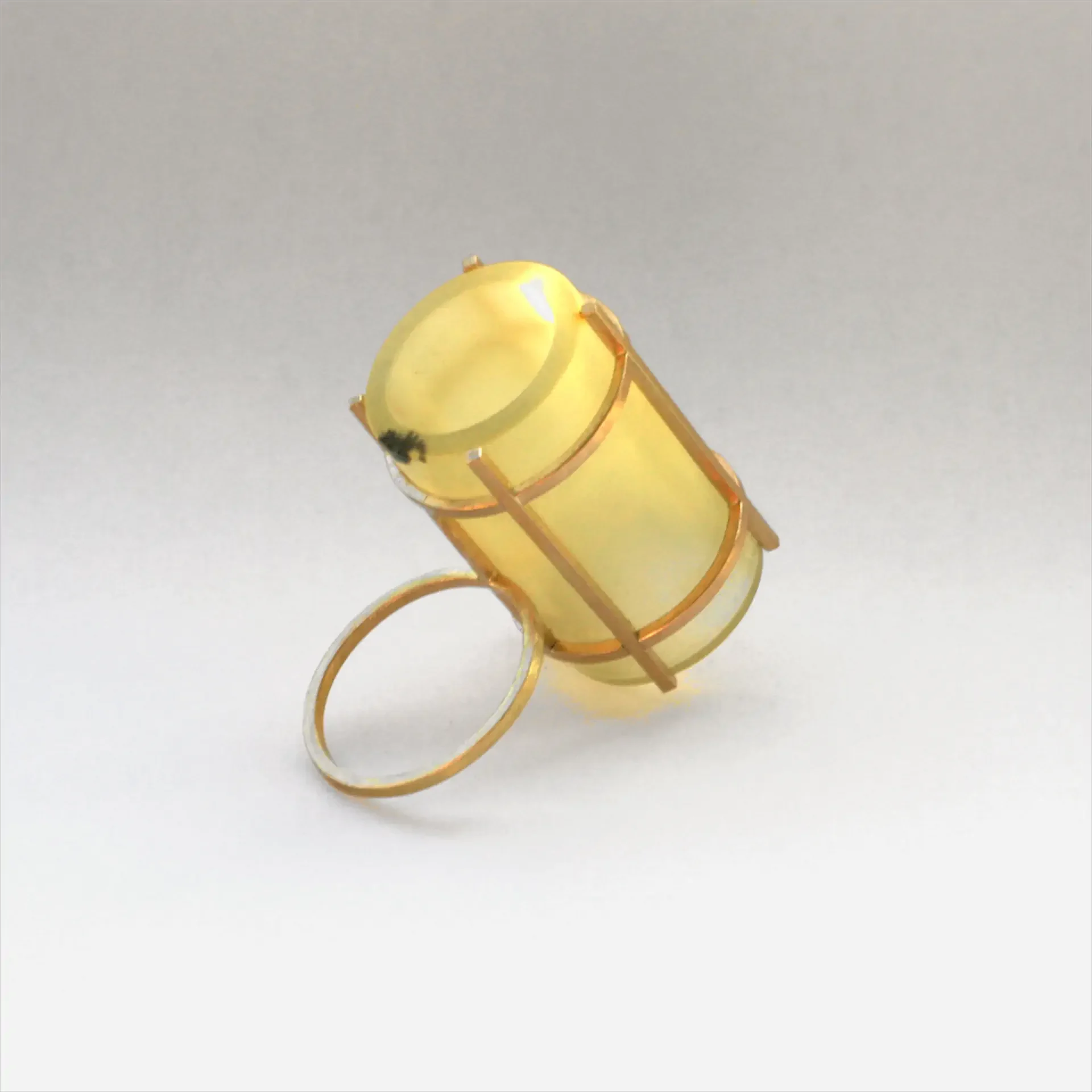
In the Amber Museum in Gdańsk, you can view his 2004 work „Tube Ring”, which was awarded the Grand Prix at the International Amber Biennale in Frombork in July 2007. The jury praised „the synthetic, symbolic reference to the observation of the sky through the use of the archetypal form of a tube, the innovative treatment of amber and the flawless execution”. What did the author himself mean? The artistic intention was to make the invisible visible – to reverse roles, using the form of a tube to emphasise the size of the finger as decoration.
Philip Sajet – a contemporary Dutch jewellery artist known for his innovative and bold designs, which often challenge the traditional approach to jewellery. Born in Amsterdam in 1953, he studied at the Gerrit Rietveld Academy in Amsterdam, where he later taught as a professor. In his work, he uses unconventional materials, eagerly experimenting with form and colour. He often combines metals and gemstones with non-jewellery materials, creating unexpected juxtapositions that highlight the beauty of both the precious and the mundane. His designs are often characterised by geometric shapes and patterns, and he frequently plays with scale and proportion to create oversized pieces.
Philip Sajet's jewellery is known for its boldness, innovation and artistic sensitivity, and his pieces continue to push the boundaries of what is considered traditional jewellery. This makes them highly acclaimed in the world of contemporary jewellery and they are exhibited in galleries and museums worldwide. His work can be found in the collections of major museums, including the Stedelijk Museum in Amsterdam, the Museum of Arts and Design in New York and the Musée des Arts Décoratifs in Paris. For his creative work, he has won many esteemed awards, including the Herbert Hofmann Award and the Françoise van den Bosch Award.
Today Philip Sajet is celebrating his 70th birthday. Happy birthday Philip, many happy returns!