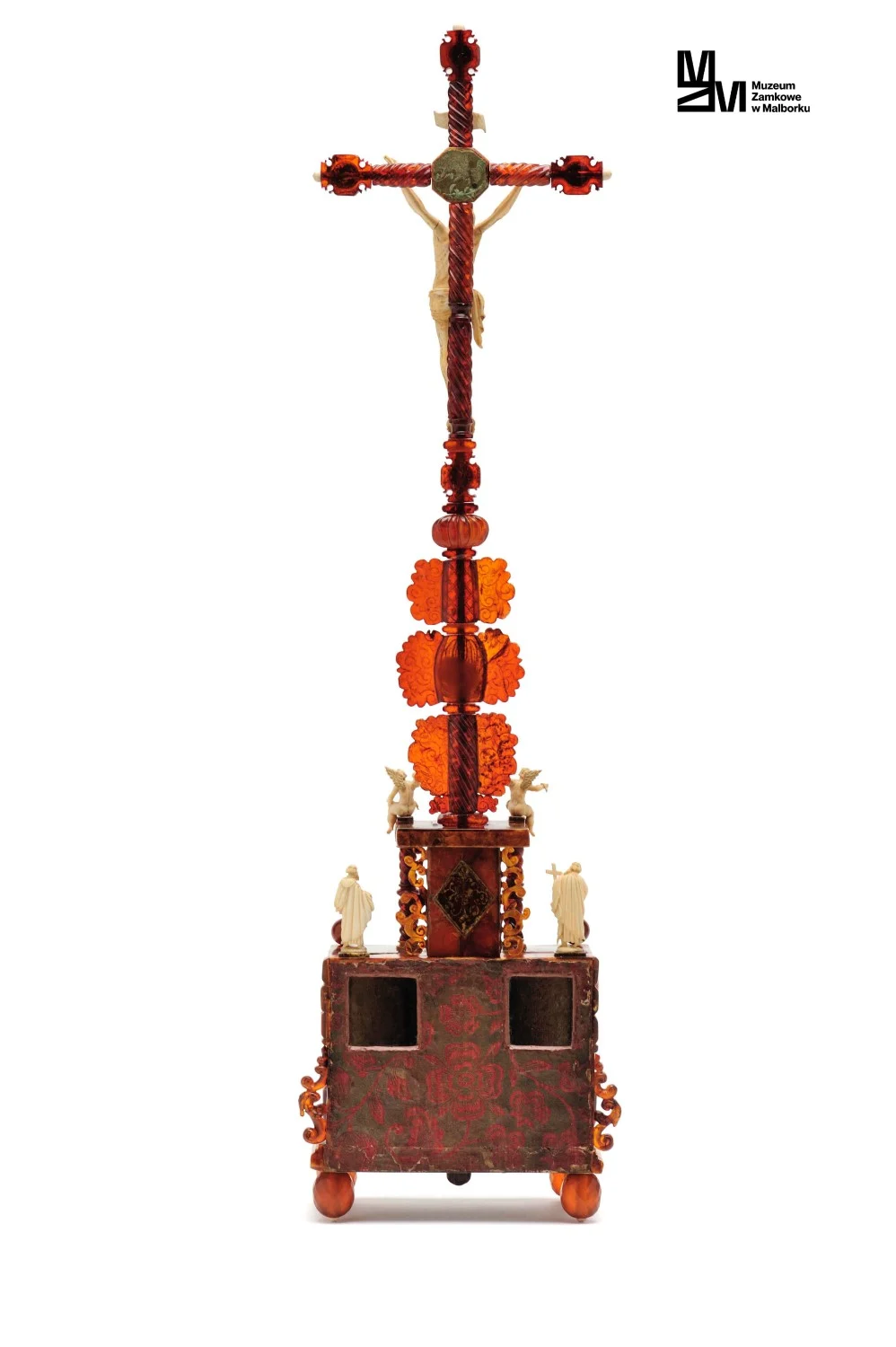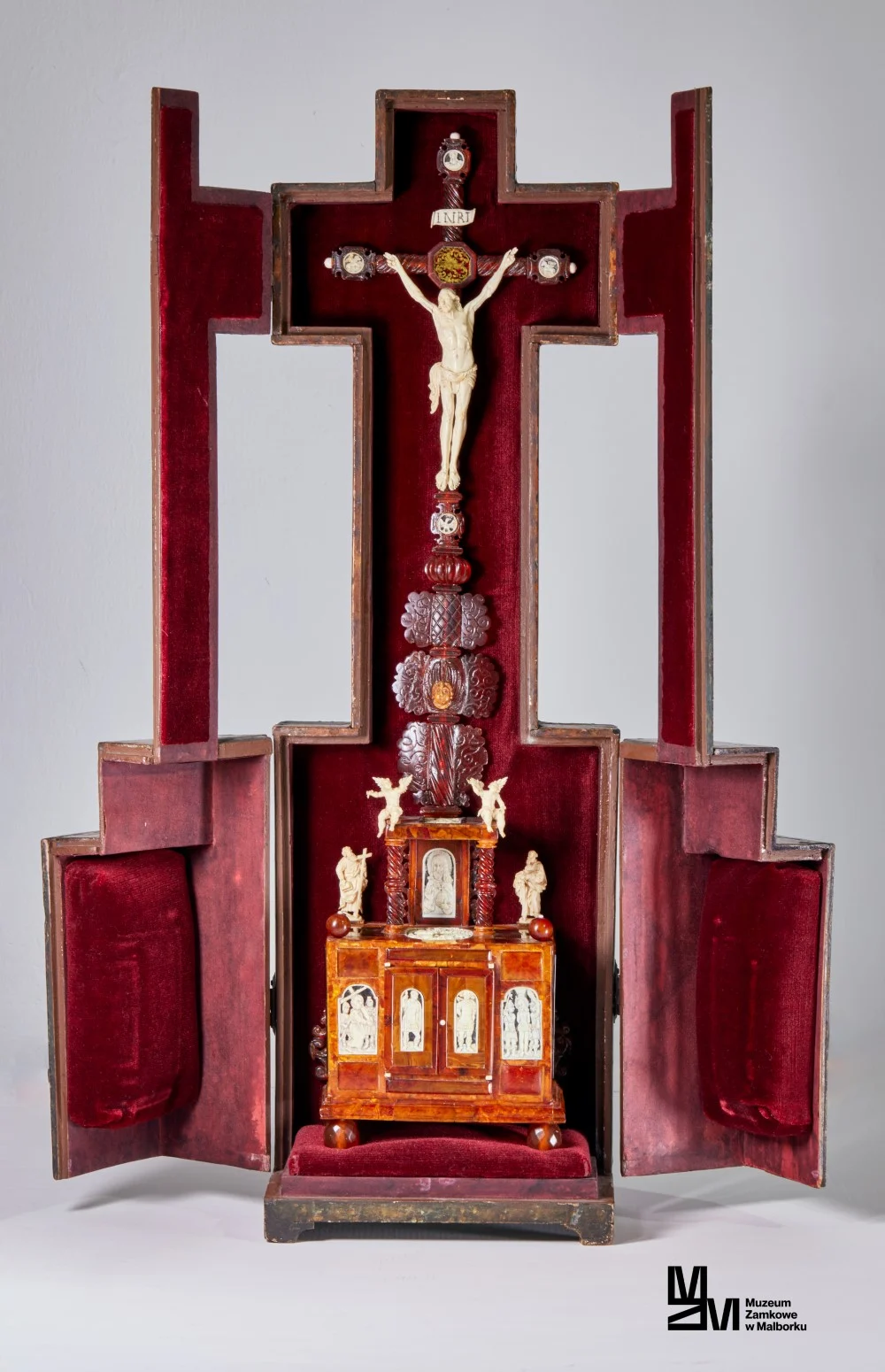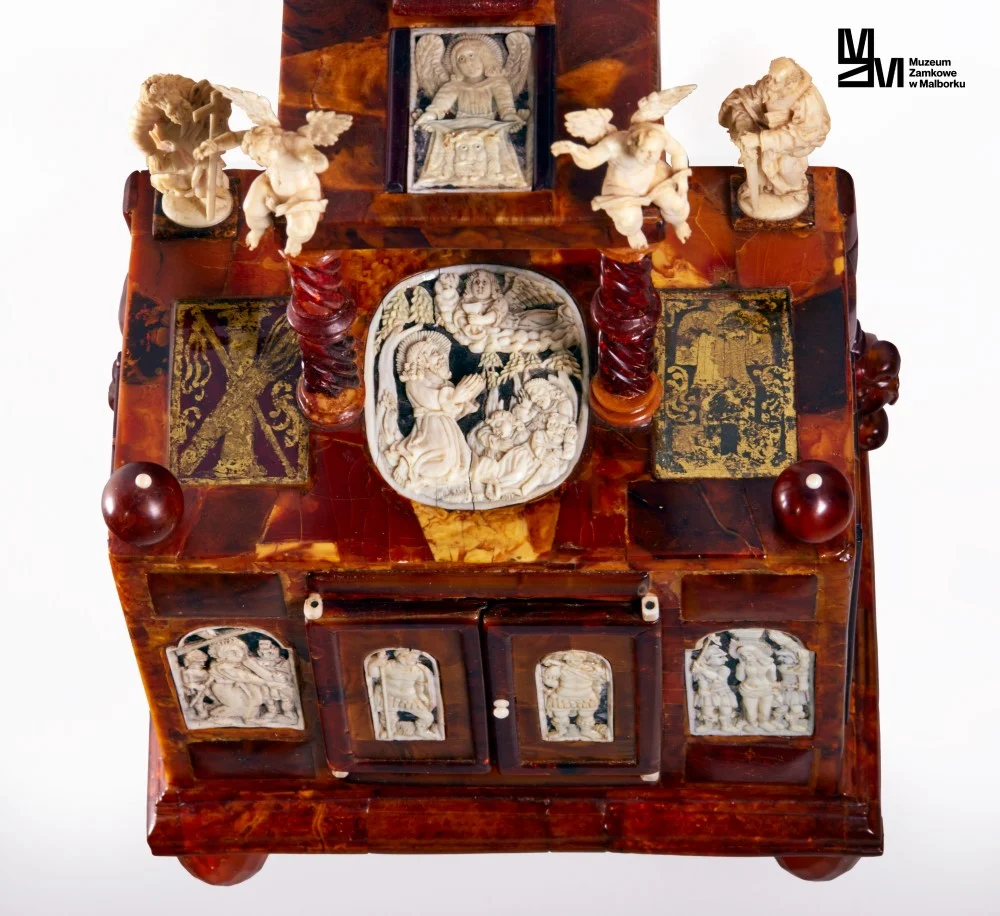
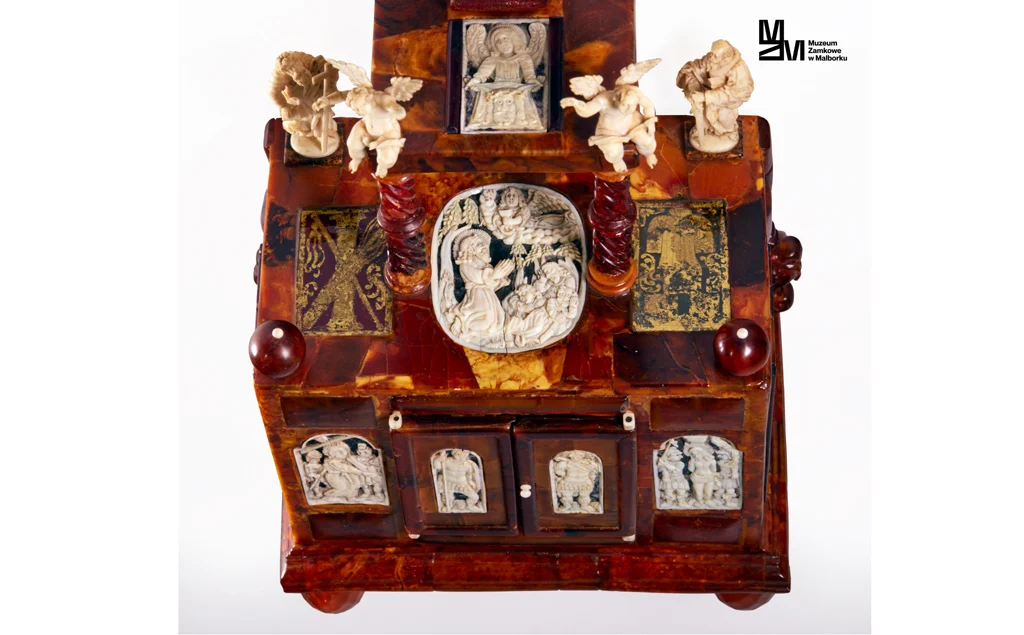
The exceptional nature of this acquisition can be illustrated by the fact that very few amber objects, which are examples of ancient amber craftsmanship, have survived to our times. This is due not only to numerous historical upheavals and wars, during which these items were destroyed, lost or plundered, but also to the fragility of the material and improper storage. Therefore, every appearance on the art market of works from the heyday of amber production – especially in such a good state of preservation and richness of form as the altar purchased for the Malbork collection – is an extraordinary event.
Objects of a similar size – the Malbork altar is approximately 60 cm high – are in the private collection of Count Schönborn at Weißenfels Castle and in the Medici collection at the Museo degli Argenti in Florence. Another example of a preserved reliquary with an altar is known – it is located in the Kunsthalle Würth in Schwäbisch Hall. Thus, our altar is the second of its kind in public collections – informed Katarzyna Kita, curator of the Amber Collection at the Malbork Castle Museum.
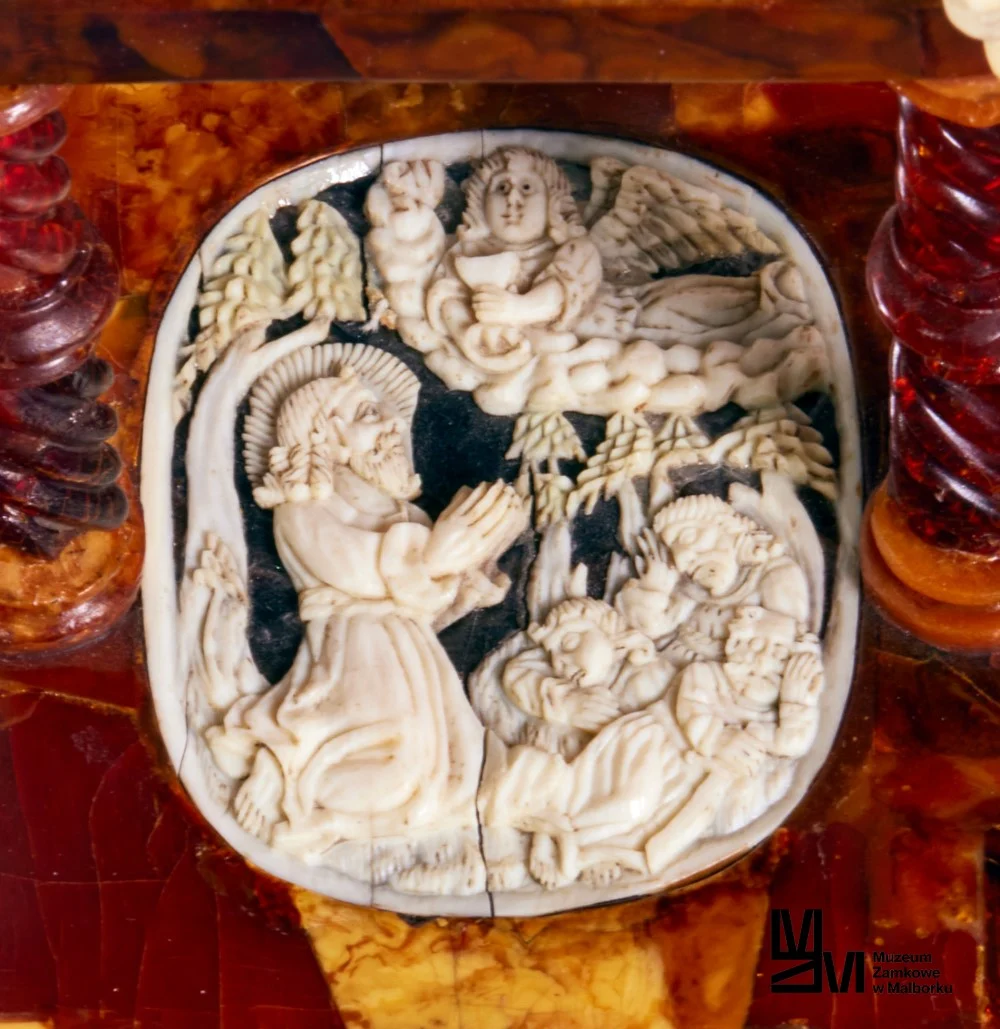
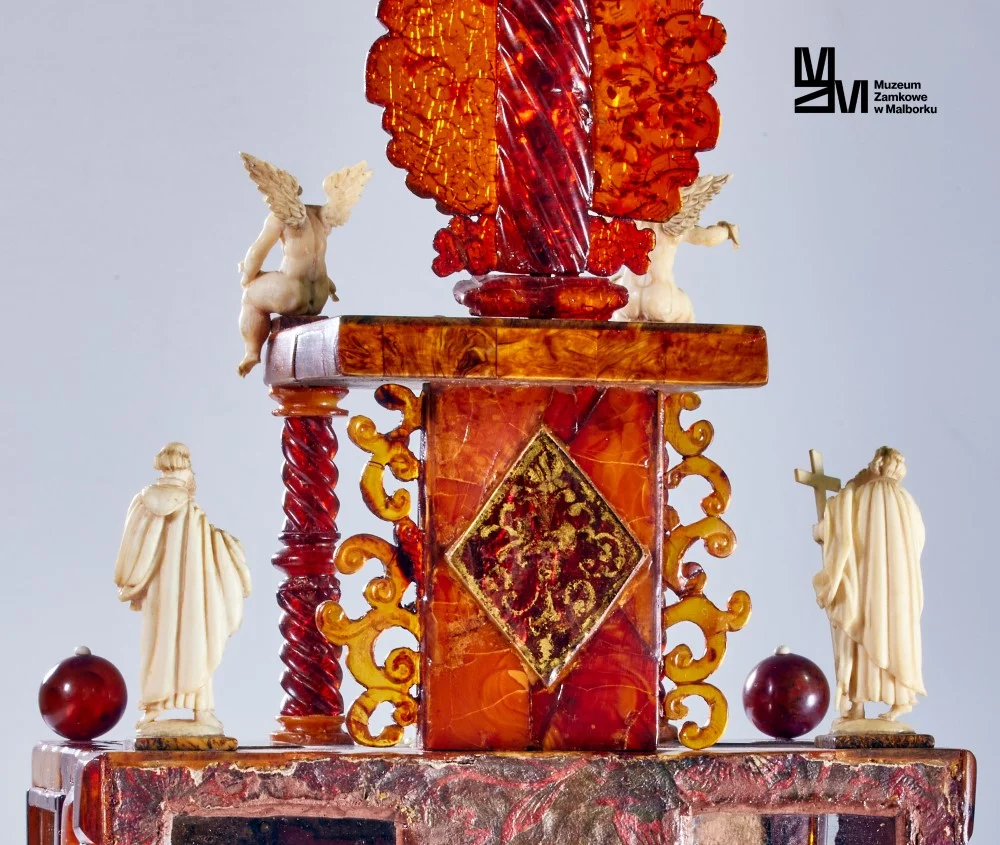
As he emphasises, the altar stands out due to the quality of its craftsmanship, its rich iconographic programme (Passion motifs), its completeness (all sculptural elements and its original case are preserved), and the quality of the materials used and their processing.
High-quality, clear red amber has been used here in the sculptural elements, contrasting with the matte amber cladding. The altar is adorned with elements made of ivory, which was considered a luxury material widely used from the mid-17th century, and reliefs made of this material were characteristic of Gdańsk workshops from the mid-17th century to the 1720s. The construction form with a wooden frame, typical for this period and allowing for much larger objects to be made, has also been employed here. Also interesting is the wooden case from the era in the form of a cabinet replicating the shape of the crucifix, with an ornate casing – externally covered with tanned leather, and internally with burgundy velvet – explained Katarzyna Kita.
The purchase was funded by the Ministry of Culture and National Heritage.
The Amber Collection of Malbork Castle Museum
The Malbork Castle Museum, established in 1961, did not possess pre-war collections, so it began assembling its exhibits from scratch. These included amber, which became a recognisable feature of the castle, and the museum's activities became associated with it. The placement of such collections in Malbork was not accidental; it was a nod to the history of the area. In the Neolithic period, there were amber workshops here, the Amber Road passed through during Roman times, and in the Middle Ages, amber became one of the more important trade items in the Teutonic Knights' state. Amber artefacts were also part of the furnishings within the castle itself.
The Malbork amber collection numbers around 2,000 objects and is considered one of the most valuable in the world, alongside Dresden State Art Collections, Museum of the History of Art in Vienna, at Rosenborg Castle in Copenhagen, Palazzo Pitti in Florence or the Victoria & Albert Museum in London. The collection showcases the diversity of objects made from this material: from small beads and game pieces, through carved figurines of various sizes, caskets, and jewellery, to large constructions: small altars, caskets and reliquaries. The most valuable are considered to be artefacts from the modern period: small altars, reliquaries, figural sculpture, and jewellery, including works by Gdańsk masters Christoph Maucher and Michael Redlin.