Then, the first guide for visitors to the geological exhibition was also produced. The turmoil of war, political changes and financial difficulties contributed to changes in the size of the museum's exhibition and storage spaces, but fortunately, thanks to the dedication and sacrifice of the staff, they did not lead to its closure. (Details regarding the fate of natural history museums in Poland can be found in Jerzy Pawłowski's book entitled “Szkic dziejów muzealnictwa przyrodniczego w Polsce”.)
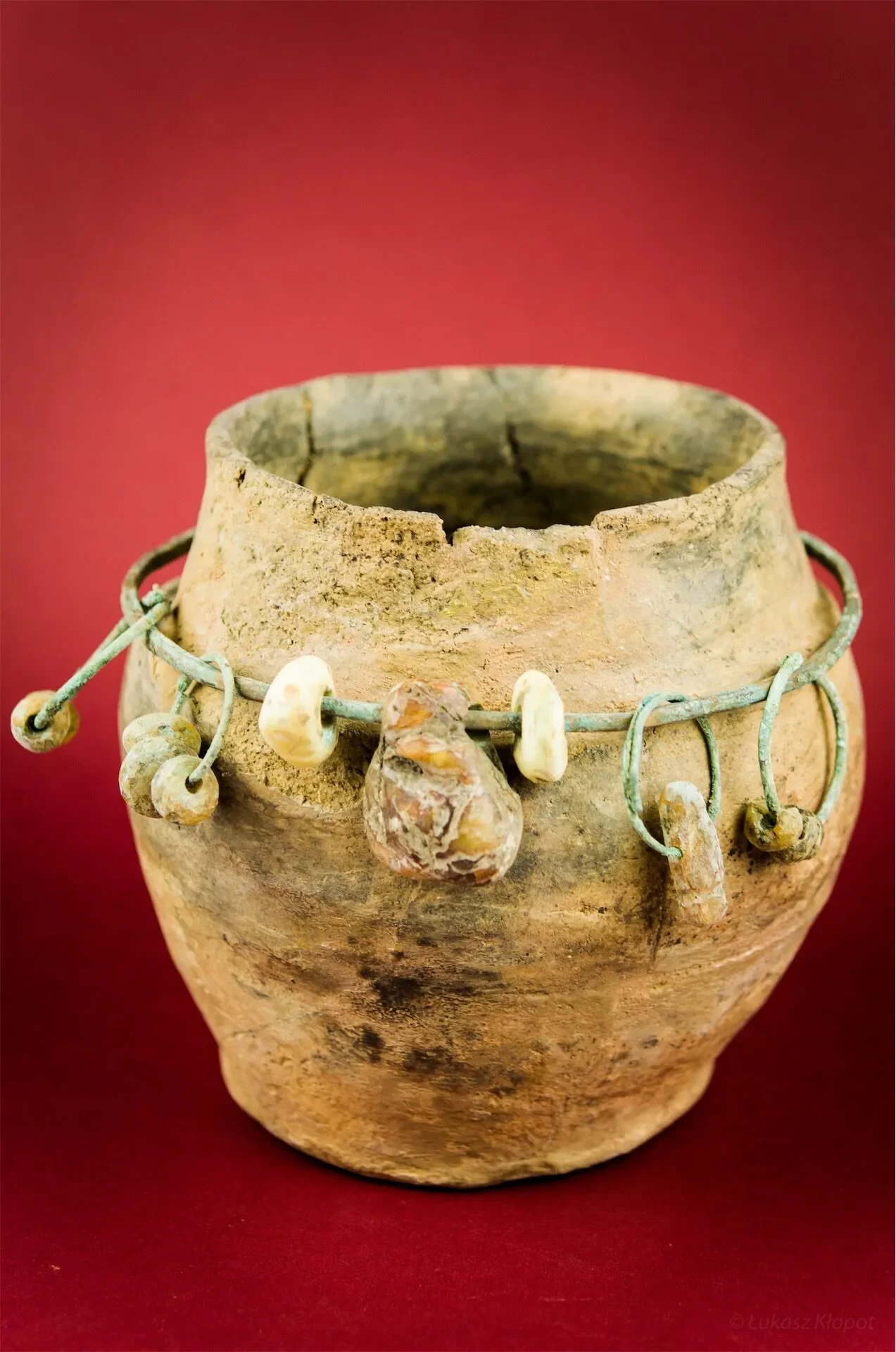
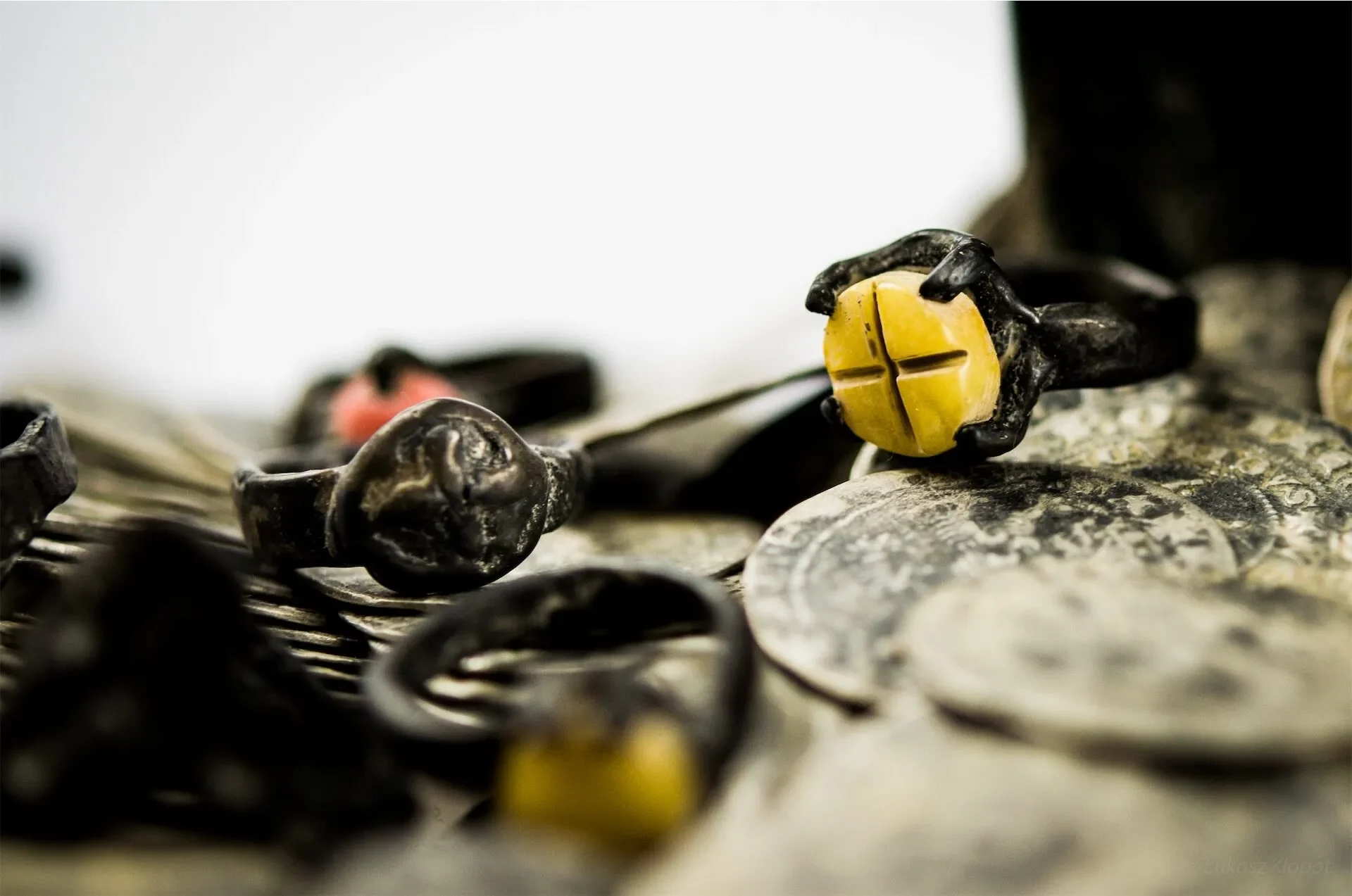
Since 1992, the Museum's seat has been the building at 9 św. Sebastiana Street in Kraków. It was also from this moment that amber collections began to be gathered. The first donor was the museum director Wiesław Krzemiński, who donated his private collection of amber inclusions. Subsequently, specimens donated by private individuals and acquired through purchase were added to the collection. In 2001, by deed of gift, the museum took over a huge amber collection from Jacek Serafin – thanks to this, apart from amber inclusions, it also began to collect colour varieties of amber, its natural forms, and in time also amber products (amulets, carvings, cigarette holders, ornaments, etc.) ranging from the Palaeolithic to modern times.
The first amber exhibition, entitled “In the Amber Trap”, was organised in 1993 at the Natural History Museum in Neuchâtel (Switzerland); the co-authors of the script were Wiesław Krzemiński and his wife Ewa Krzemińska. At the time, the exhibition presented the process of amber formation, its natural forms, colour varieties and, above all, its significance for science, showing the secrets of life hidden within beautiful lumps of fossilised resin. The exhibition was a huge success and went straight from Switzerland to France, where it was presented at the astronomical observatory of the University of Strasbourg. On the occasion of these exhibitions, a book was published, which first appeared in French entitled “Les phantomes de l’ambre” and was later translated into Polish. The Polish version was entitled “W bursztynowej pułapce” and its co-authors are Ewa and Wiesław Krzemiński. In Poland, the exhibition was shown for the first time at the “Kijów” Cinema in Kraków on the occasion of the premiere of Spielberg's film “Jurassic Park”, and was subsequently presented at: the PAS Botanical Garden in Powsin (Warsaw), the Jacek Malczewski Museum in Radom, the Regional Museum in Stalowa Wola, the District Museum in Międzychód, the International House of Culture in Międzyzdroje, the Culture House in Kołobrzeg and the Arboretum in Bolestraszyce. In 2001, the amber exhibition accompanied the International Congress of Fossil Insects, which took place at the museum's headquarters in Kraków at 9 św. Sebastiana Street, and its main organisers were current Prof. Dr Hab. Wiesław Krzemiński and Assoc. Prof. Dr Hab. Ewa Krzemińska with the participation of the Natural History Museum staff.
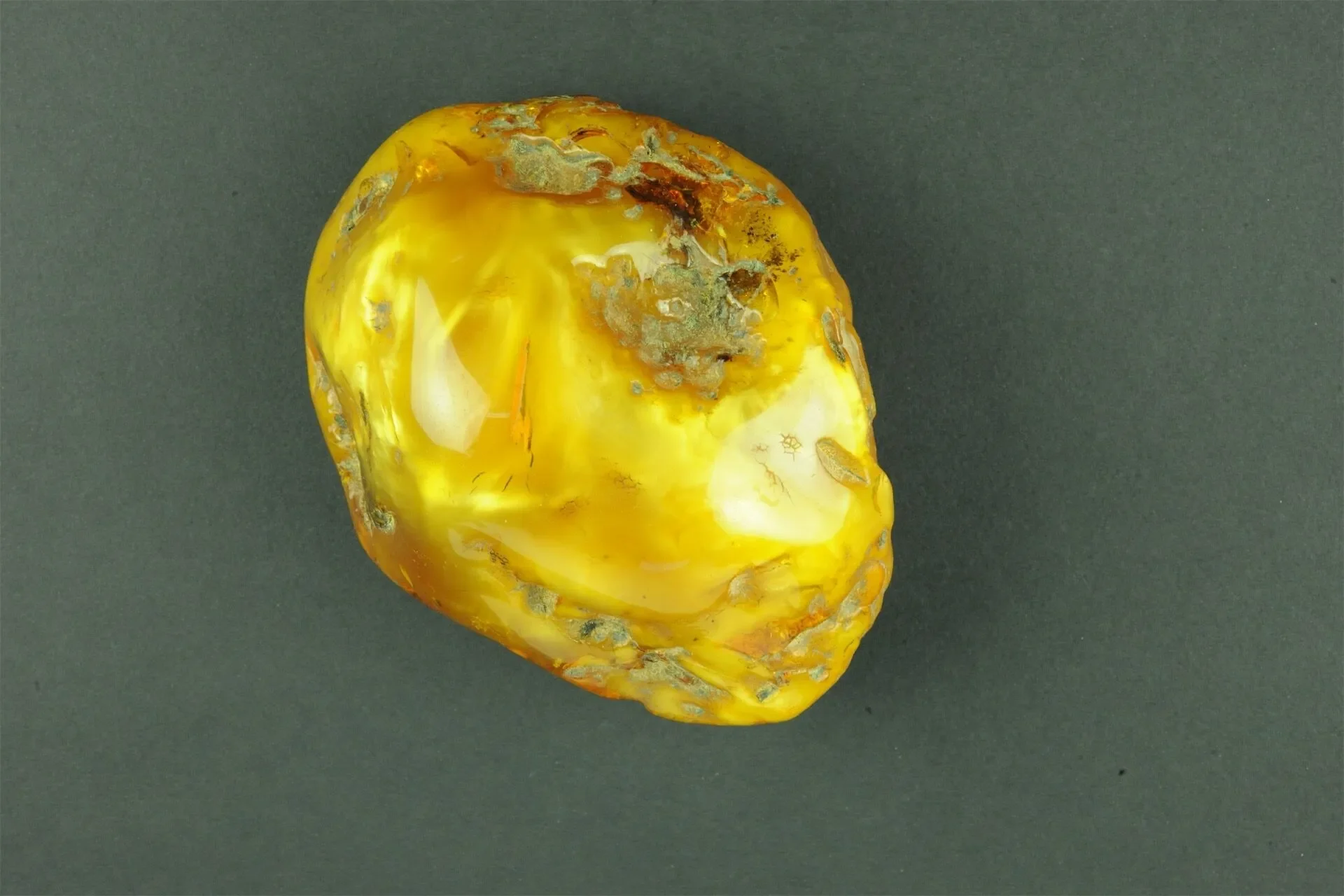
Interest in amber is growing year by year – almost everyone is interested in it. Geologists and geochemists study its chemical composition and the conditions of its formation, archaeologists and historians study ornaments and works of art made from amber for millennia, for ordinary people it constitutes a holiday souvenir or a sophisticated ornament, and for palaeontologists it is a mine of knowledge about extinct flora and fauna. Inclusions preserved in Baltic amber make it possible to understand the natural environment of the Eocene, and by comparing species preserved in amber with those living alongside us today, we learn at what rate the evolution of certain groups of animals and plants took place. Therefore, a new exhibition scenario has been created (by Wiesław Krzemiński and Krystyna Nykiel), the aim of which is to show the beauty of the natural treasure that Baltic amber is, to explain its impact on the development of culture, art, jewellery-making, science and medicine in Europe and the world, and to present it as a product promoting Poland. Currently, final preparations necessary for the implementation of the exhibition are underway; groups of specialists from various fields of science – archaeologists, art historians, biologists, dendrologists, metallurgists – are preparing and, where possible, dating the exhibits acquired for the exhibition. The exhibition will be made available to the public in autumn 2007. At that time, the publication of the catalogue of the amber collection located in the museum is also planned.
PAS Natural History Museum in Kraków
9 św. Sebastiana Street, 31-049 Kraków
tel/fax +48 12 422 89 37
www.isez.pan.krakow.pl
photo: Archive of the Subcarpathian Museum in Krosno