
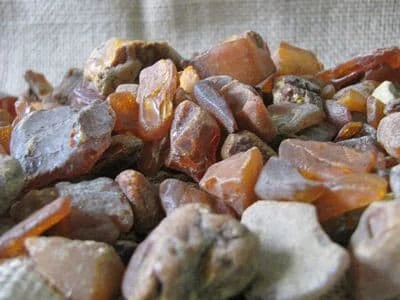
The Gold Silver Time trade fair enters its second decade with a message full of optimism: let's love amber! Amber, which occurs naturally in Poland in greater quantities than any other decorative stone.
At the first exhibition in this series, entitled “The Oldest Amber Migrations”, the Museum of the Earth of the Polish Academy of Sciences will show in a few display cases how amber deposits were formed. The interested viewer will find a reconstruction of an amber forest, the oldest route taken by the hardened resin—which was not yet fully ready to be called amber—to the deposit on the Sambia Peninsula, which is still exploited today. They will also learn that before man began to extract amber, the Pleistocene ice sheet did so earlier and „generously” scattered the precious raw material across vast areas of Poland. They will also find out why the Baltic Sea washes its „northern gold” onto the beach. Finally, we will see the „Baltic gold” that Neolithic man marvelled at in Niedźwiedziówka, and the way in which he processed it en masse and exchanged it along trade routes.
For 10 years, exhibitions of amber exhibits from the Warsaw Amber Collections as part of the „Museums at Fairs” series have provided a substantive background for all amber companies that chose these Warsaw fairs to present their modern products. Fair guests have hitherto been able to view single-theme exhibitions dedicated to, among other things, amber drops as a natural phenomenon, varieties of Baltic amber, amber plants, and animal inclusions in jewellery. And manufacturers of amber jewellery can draw inspiration from the achievements of their predecessors.
The full text of the article previewing the exhibition is available in Gold Silver Time Magazine 2010.