
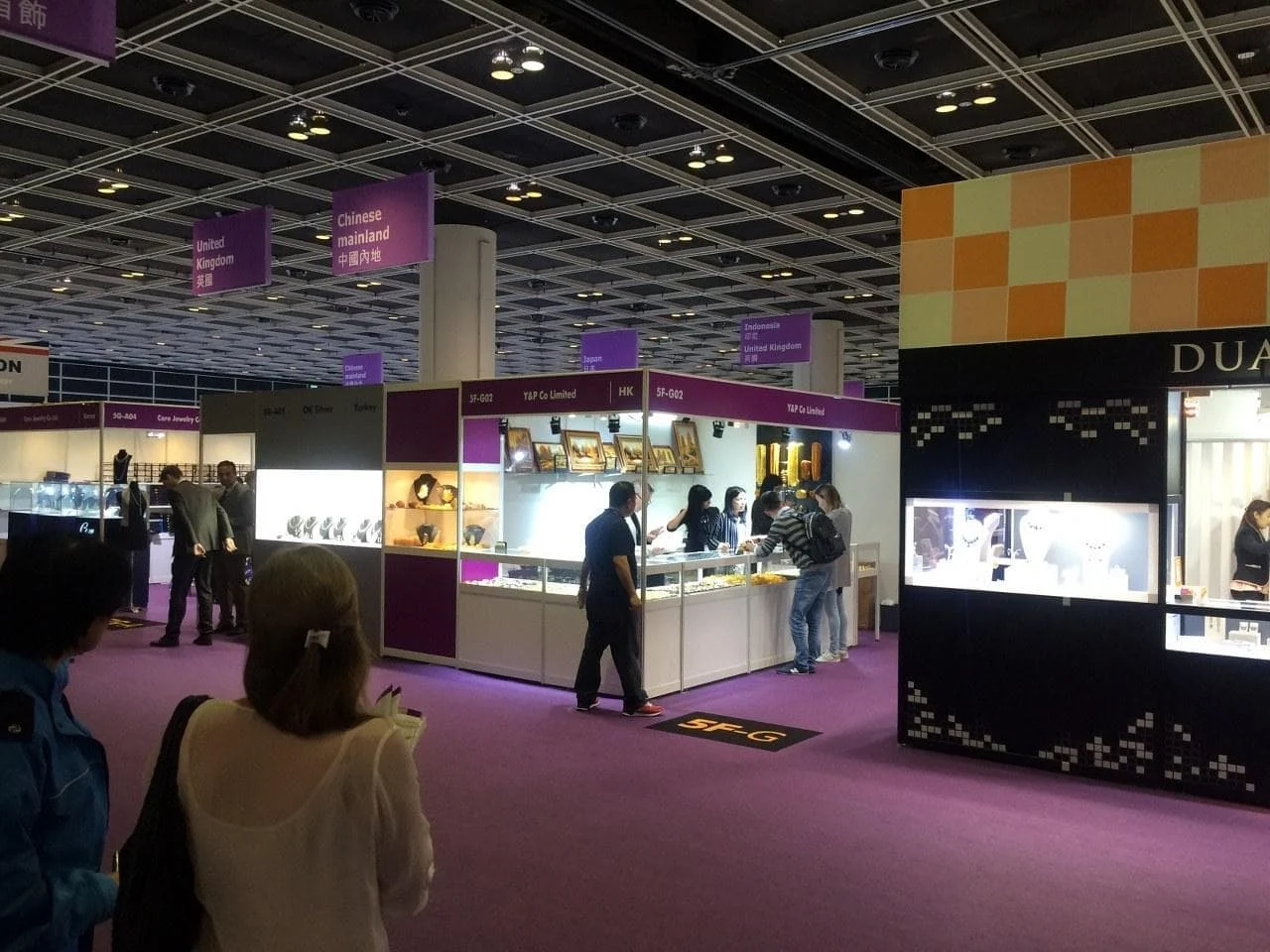
„Despite the various economic turbulence in the global market, our trade shows are invariably attractive to buyers from China and abroad,” said Benjamin Chau, Deputy Executive Director of the HKTDC, organizer of both events. „This demonstrates the role of these two shows, which significantly shape the world’s largest jewelry market and strengthen Hong Kong’s position as a proven supply hub for the global industry.” This year, both events attracted more than 4,380 exhibitors from 54 countries and more than 80,000 buyers from 147 countries (5.4% more than last year). The largest increase was recorded among traders from mainland China, India, the Philippines, Vietnam, the United Kingdom, and Malaysia.
The market
The HKTDC commissioned independent online surveys during both events: over 1,200 buyers and exhibitors were questioned about their assessment of the market, products, and market trends. The surveys showed that almost half (47%) of the respondents expect a stagnation in wholesale sales this year, while only 15% expect an increase, and indeed 38% a decrease. As for retail sales, 64% respondents expect prices to remain stable. Respondents were more optimistic regarding the market in Mainland China, as well as in North America and Western Europe.
„The crisis was clearly felt. The long-standing exhibitors I spoke with reported a 30-percent drop in orders this year, and some even a 50-percent drop. The merchants, however, spoke of a program introduced by the Chinese government to help businesses, which is intended to stimulate the economy anew” – reports Ewa Szyszko from Eva Stone, this year’s exhibitor. She is satisfied with her participation in the fair; next year she plans to exhibit there again, because – as she claims – this market is still doing well.
Trends
Regarding trends in the jewelry world, half of the respondents expect white gold to be a hit, as well as pink (38%) and yellow (31%) colors. Diamonds will dominate among gemstones (54%), while pearls (17%) and rubies (15%) rank in the next positions. In the product categories, respondents were very optimistic primarily about fashion jewelry, precious stones, and wedding and special occasion jewelry.
The survey also showed that the majority of buyers and suppliers value Hong Kong’s position in the global jewelry market. 73% respondents see Hong Kong as the ideal place to source suitable suppliers. Buyers are also satisfied with Hong Kong suppliers, with 90 percent satisfied with quality, design, technology (83%), variety (82%), craftsmanship (79%), and service (78%).
Polish companies at the trade fair
For Polish companies, especially those in the amber business, the trade fairs in China are an opportunity to expand their customer base. However, the market is becoming increasingly difficult: the saturation of amber products is increasing, and the share of Chinese companies in the raw material sector, more sophisticated in design jewelry, and coral is also growing. The lack of new customers and apparently less activity from existing ones is also becoming increasingly noticeable (this negative trend was also evident at the Ambertrip trade fair in Vilnius held a few days later; while the trade fair in HK will in no way feel the changes in demand in the amber jewelry sector, for those in Vilnius it is already a question of either being there or not – with the unfortunate implication that it is not to be). The satisfaction of exhibitors from Poland (and Lithuania) was therefore directly proportional to the situation… The movement was visible on the stands of the companies most active in participating in foreign trade fairs.
The fact is that to a large extent, this situation is caused by the exhibitors themselves from the amber sector. By undercutting the sales prices at trade fairs in Hong Kong (in general: China), they „cut out” the middlemen from the market, often putting them in a difficult situation with their local customers (what margin do they have to make when Poles sell so cheaply? Nobody assumes that Polish producers can afford to sell at the same or, more often than not, even lower prices with such high costs of participating in trade fairs).