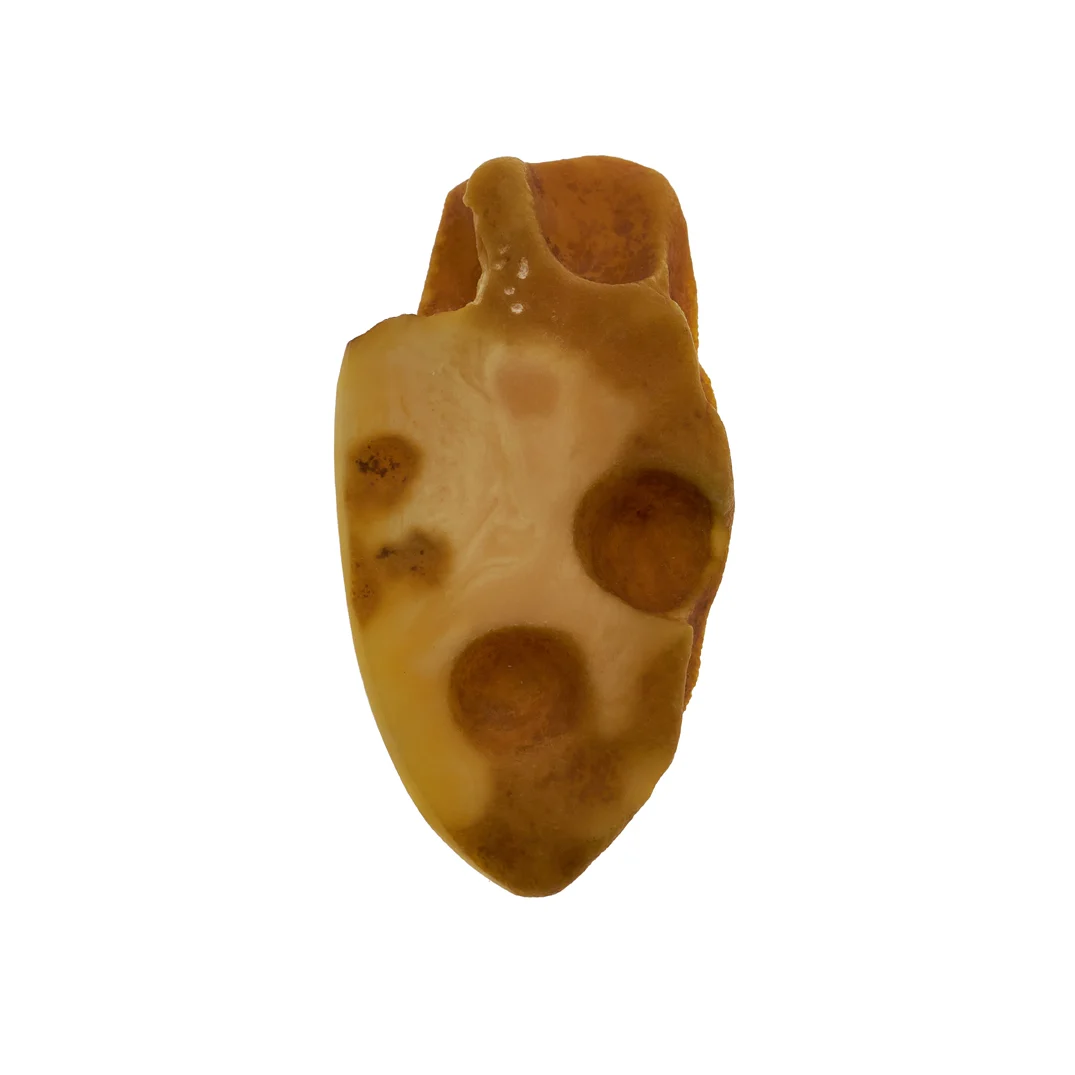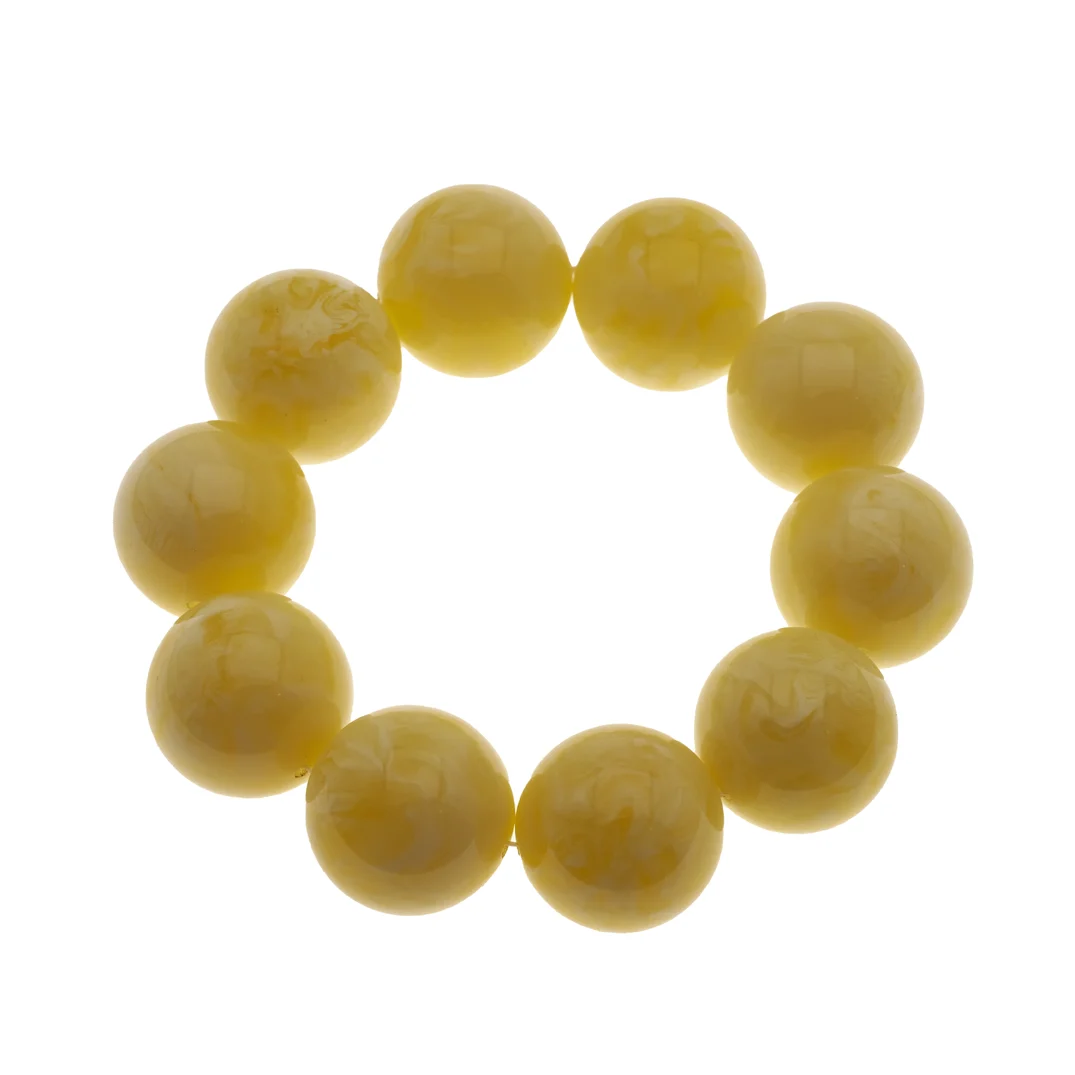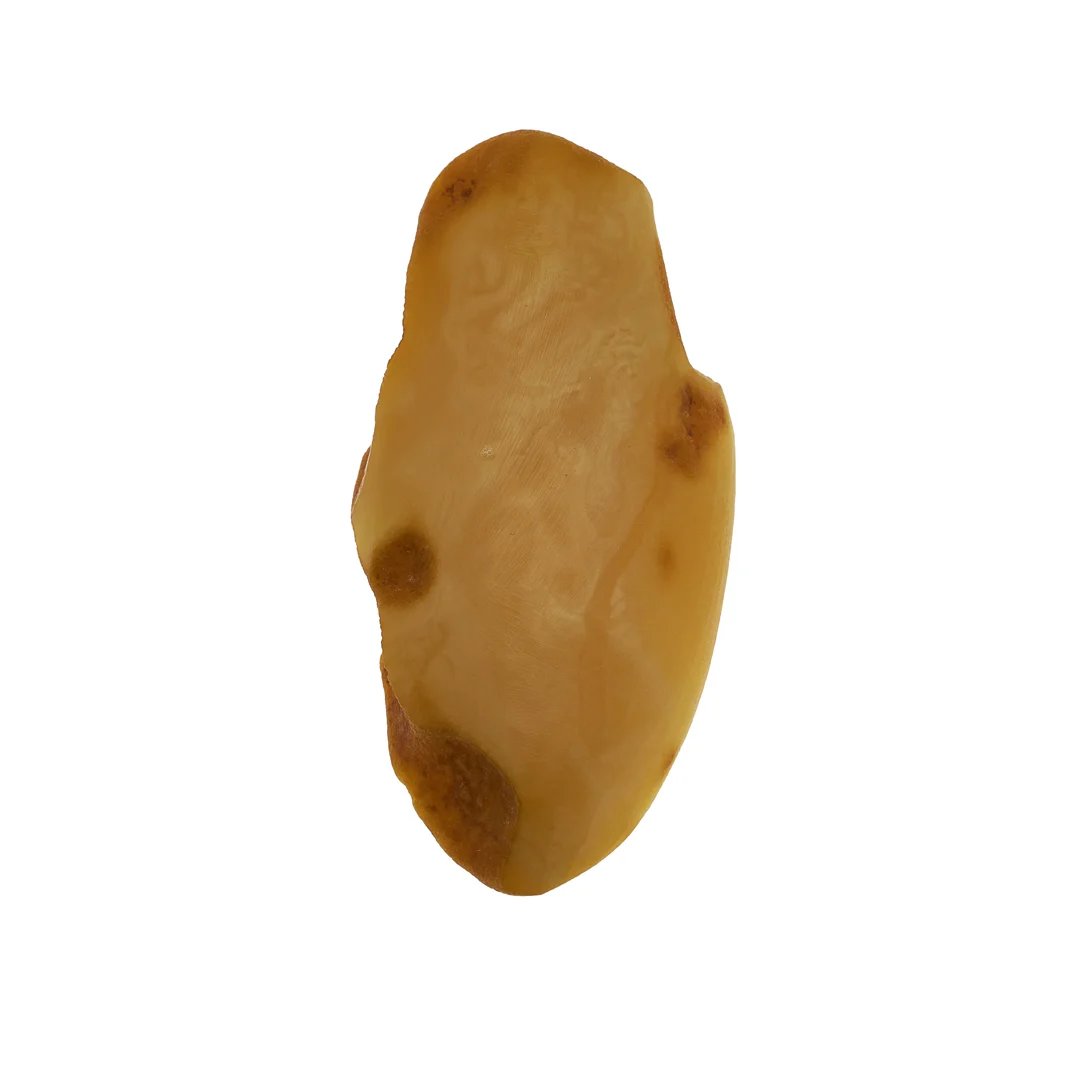
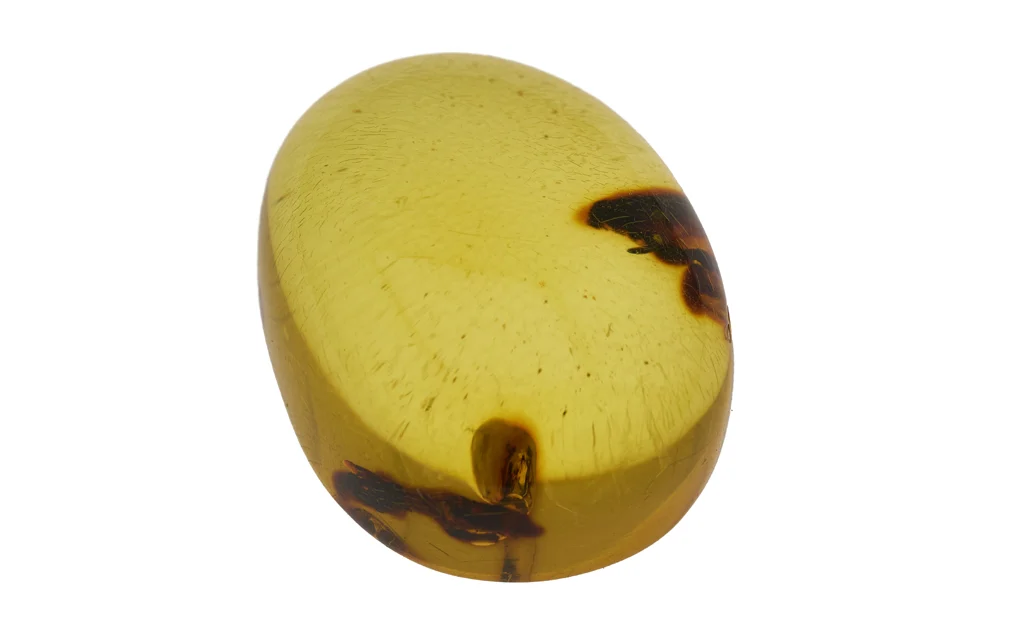
The International Amber Association has organised the third instalment of the exhibition, in which it presents a further selection of imitations and pieces of amber from various corners of the world, drawn from the collection the organisation has been building up for many years. Presented at the MSB Gallery under the title „Amber and its Imitations: Nuggets and Cabochons”, it is a continuation of the 2020 exhibition.
Baltic amber (succinite) is fossilised coniferous resin from the Late Eocene period, over 40 million years old. It is found only in a relatively small area of Central Europe – mainly on the Baltic coast, in the Kaliningrad Oblast, which is home to the world's largest amber mine, and in glacial deposits that carried it inland into Poland. The same type of fossil resin is also found in Ukraine and in Germany's Saxony. It is a rare and relatively expensive commodity – explained Małgorzata Siudak from the MSB office.
The uniqueness, high price, and desire to own amber are the main reasons for seeking amber substitutes and replacing it with cheaper and more readily available imitations: natural young modified resins and synthetic resins. The oldest known imitations of amber are imitations made of coloured glass. However, this method is now much more difficult to produce and has been displaced by imitations made of synthetic resins.
At the beginning of the 20th century, synthetic resins such as Bakelite, Resol, and Novolak were used on a massive scale as imitations of amber. In the first half of the century, the demand for amber was high, and society was poor, which is why these imitations gained enormous popularity and today often appear on the collector's market as amber. Currently, the most common imitations of amber are imitations made from synthetic resins, including epoxy resin, polyester resin, and others – reported Małgorzata Siudak.
Nowadays, imitations – things that mimic other things, made from a substitute, usually cheaper material – often become fakes, i.e. they are offered as originals. This also applies to Baltic amber. How to check if our amber is amber? With regard to modern imitations, methods such as rubbing it against woollen material and checking if the amber attracts small objects, e.g. pieces of paper, will no longer suffice. Fortunately, there are more advanced methods such as macro and microscopic examination in visible and ultraviolet light, and infrared spectroscopy (FTIR).
„Amber and its imitations. Rough and cabochon forms”
International Amber Association Gallery, Gdańsk
18.10 – 20.12.2024