Baltic amber has been accompanying humans for almost as long as humanity has existed. Artists and designers extract what is most beautiful from this extraordinary resin. However, our perception of art can be incomplete if we don't fully understand the uniqueness of the material being used. That's why a significant part of this publication is a look at amber through the expert eyes of a geologist, chemist, and biologist," explained Ryszard Uliński, Chairman of the International Amber Association.
The album is published by International Amber Association – an organisation that brings together amber enthusiasts, including scientists, producers, artists, and those involved in retail. Among the more important statutory objectives of the MSB is ensuring Baltic amber holds a high rank in Poland and on the world market, which is achieved, among other things, through cooperation with top amber specialists. And it is they who are the authors of the popular science texts, which bring amber closer to us in the following chapters of the album:
- The formation and depositional concentration of amber
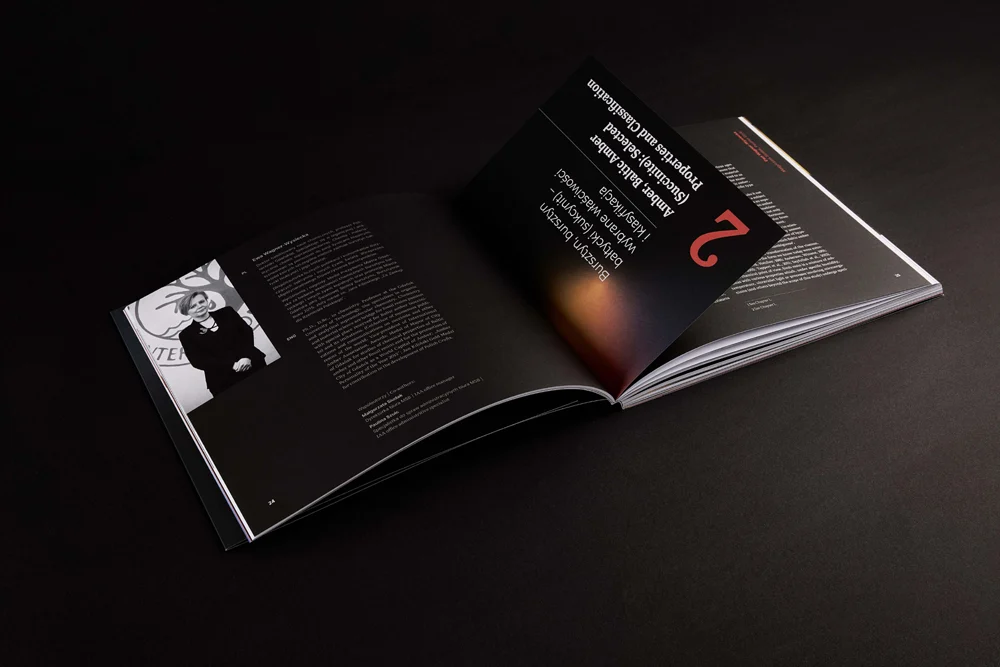
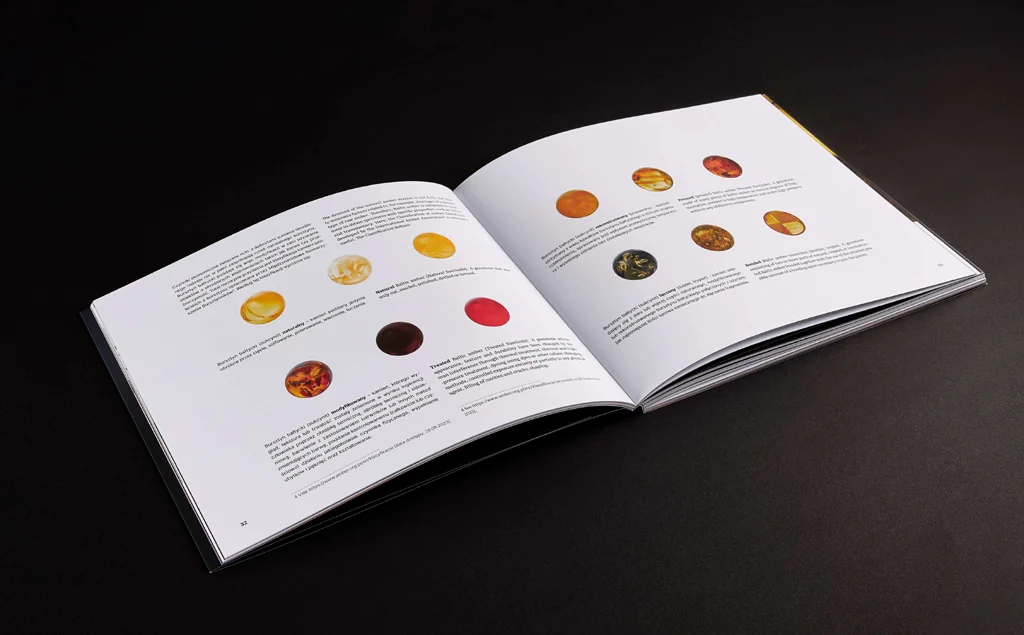
- Amber, Baltic amber (succinite) – selected properties, classification
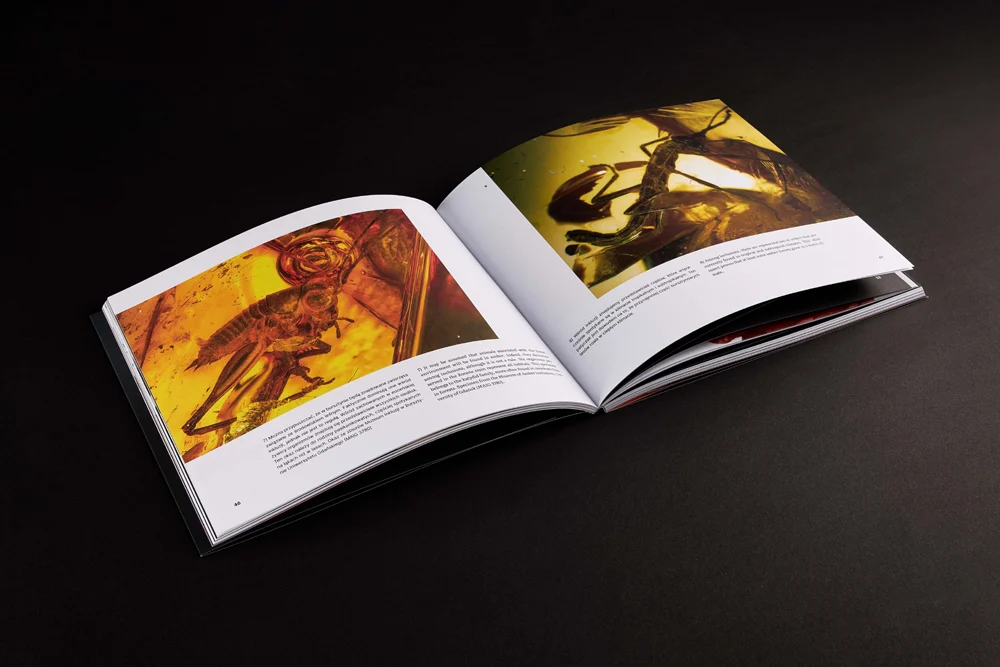
- The mysterious world of inclusion
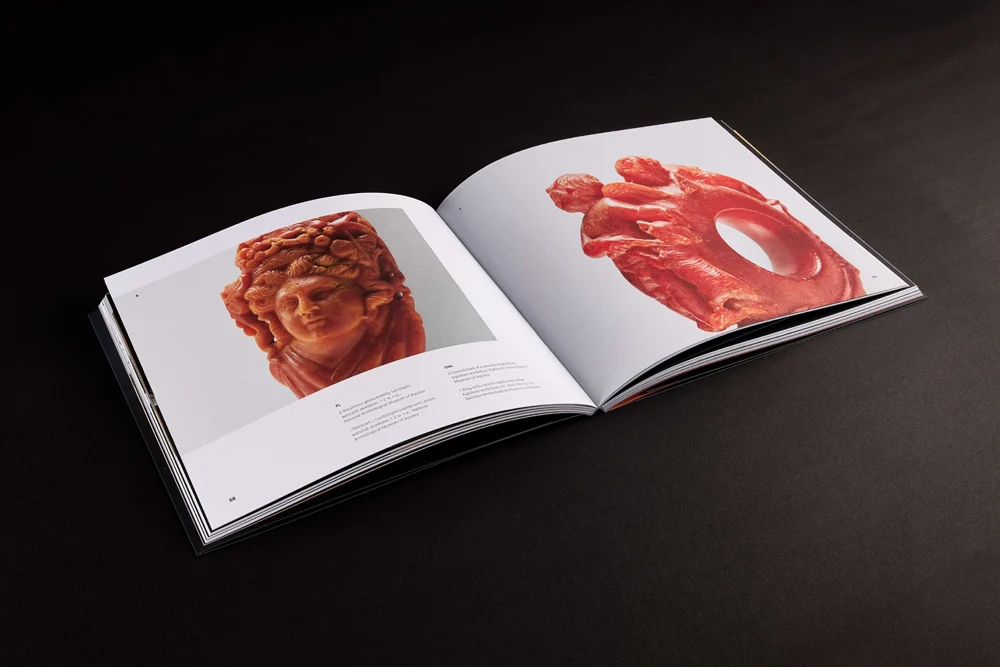
- Artistic embodiments of amber
- Amber in contemporary art
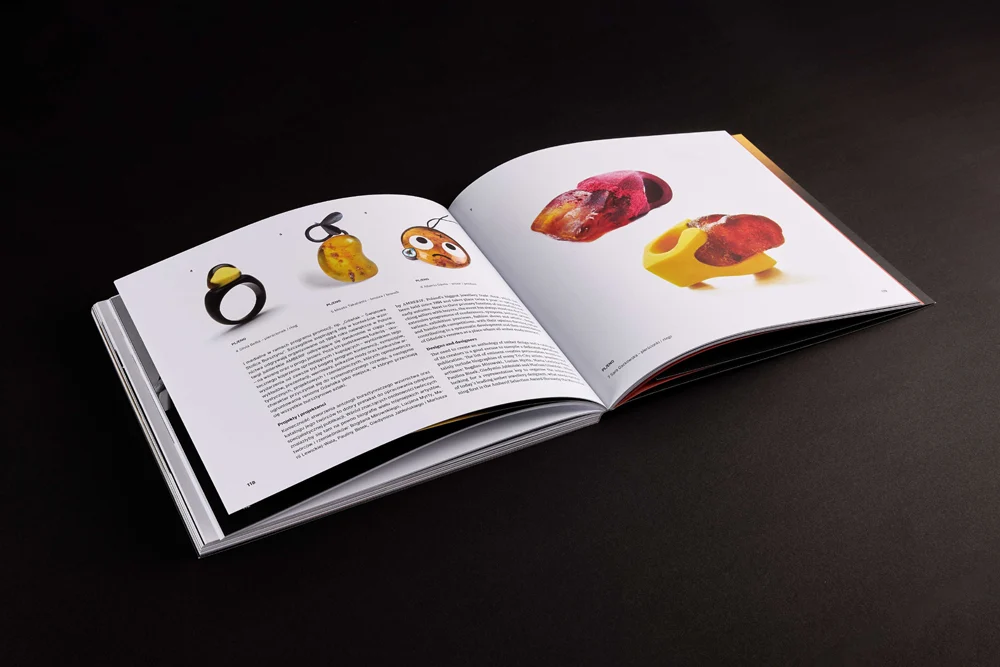
- Design
These are the most important aspects related to amber, which will allow for an understanding of why it has become a research passion for many scientists and an object of admiration for enthusiasts worldwide. Most importantly, however, they will allow for a better understanding of this mineral and a systematisation of knowledge about it, as well as dispelling many assumptions that have accumulated over the years. For instance, the one about the design of contemporary amber jewellery – Prof. Sławomir Fijałkowski, a professor at the Academy of Fine Arts in Gdańsk and a jewellery designer, selected the most interesting examples, guided by the reputation of industry awards and distinctions, craftsmanship perfection, surprising stylistic interpretation, technological innovation, and recognisable authorship characterising individual creators, design studios, or companies emphasising design in their development strategies.
The impression of Baltic amber's uniqueness will undoubtedly be deepened by other chapters as well. Artist Giedymin Jabłoński, discussing amber in contemporary art, will introduce the reader to the fascinating world of Polish and international artists, including. Wilhelma Tasso Mattara, Michaela Zobla, Manuela Vilheny, Philippa Sajeta I Petera Skubica, who reached for amber, showing what they discovered in it and where this fascination led them.
Dr Anna Sobecka, an art historian, curator, and lecturer at the University of Gdańsk, guides us through the world of art, showcasing the diverse artistic manifestations of amber. Her focus is particularly on the golden age of amber craftsmanship (17th and 18th centuries), when sophisticated amber objects like sculptures, caskets, and cabinets were created for European rulers. These were commissioned for their private collections, known as "kunstkammer," and also served as diplomatic gifts. Among these works is the renowned Amber Room.
Inclusions – this is a term closely associated with amber. Dr. [...] talks about their formation, as well as invaluable knowledge about life on Earth over 40 million years ago and their artistic merits. Elisabeth Sontag From the Laboratory of Evolutionary Entomology and the Museum of Amber Inclusions, Faculty of Biology, University of Gdańsk.
What properties does Baltic amber have, how can it be modified and how can these modifications be recognised? Answers to these questions will be provided by Dr. Ewa Wagner-Wysiecka, Małgorzata Siudak and Paulina Szulc, who have extensive experience in its study.
If someone thinks that the genesis of Baltic amber is strictly linked to the Baltic Sea, they must start from the beginning, i.e. from the first chapter of the album, where Dr Regina Kramarska, professionally associated with the Polish Geological Institute for many years, talks about heavily resinous trees in the amber forest, climate cooling, and the glacier that transported amber deposits to quite distant areas.
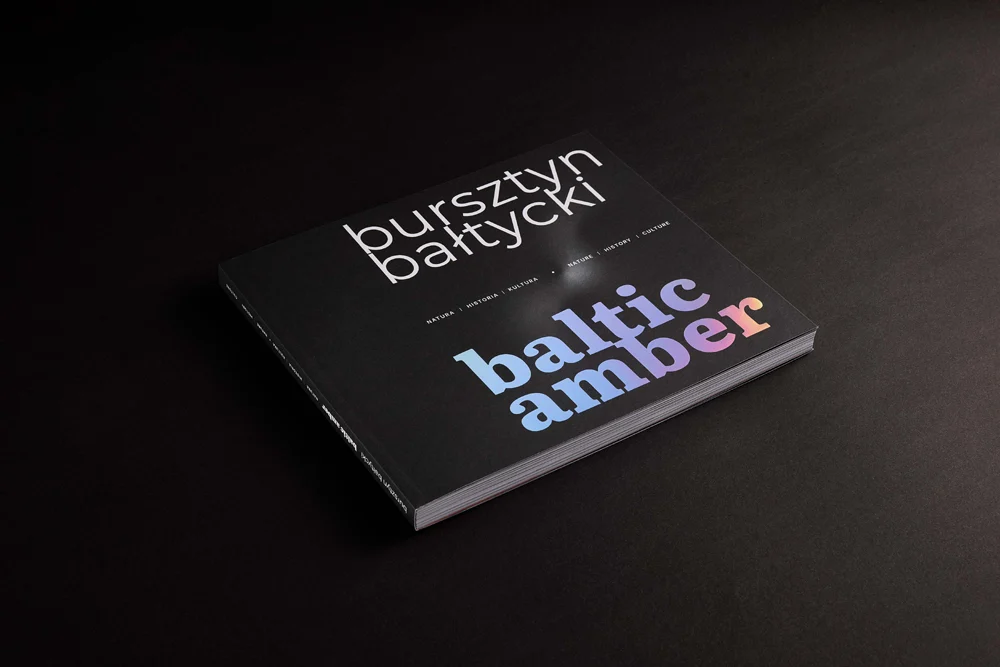
The album „Baltic Amber. Nature. History. Culture”
Publisher: International Amber Association
Concept and Editor-in-Chief: Prof. Sławomir Fijałkowski
Price: 100 PLN
Purchase: in the office International Amber Association