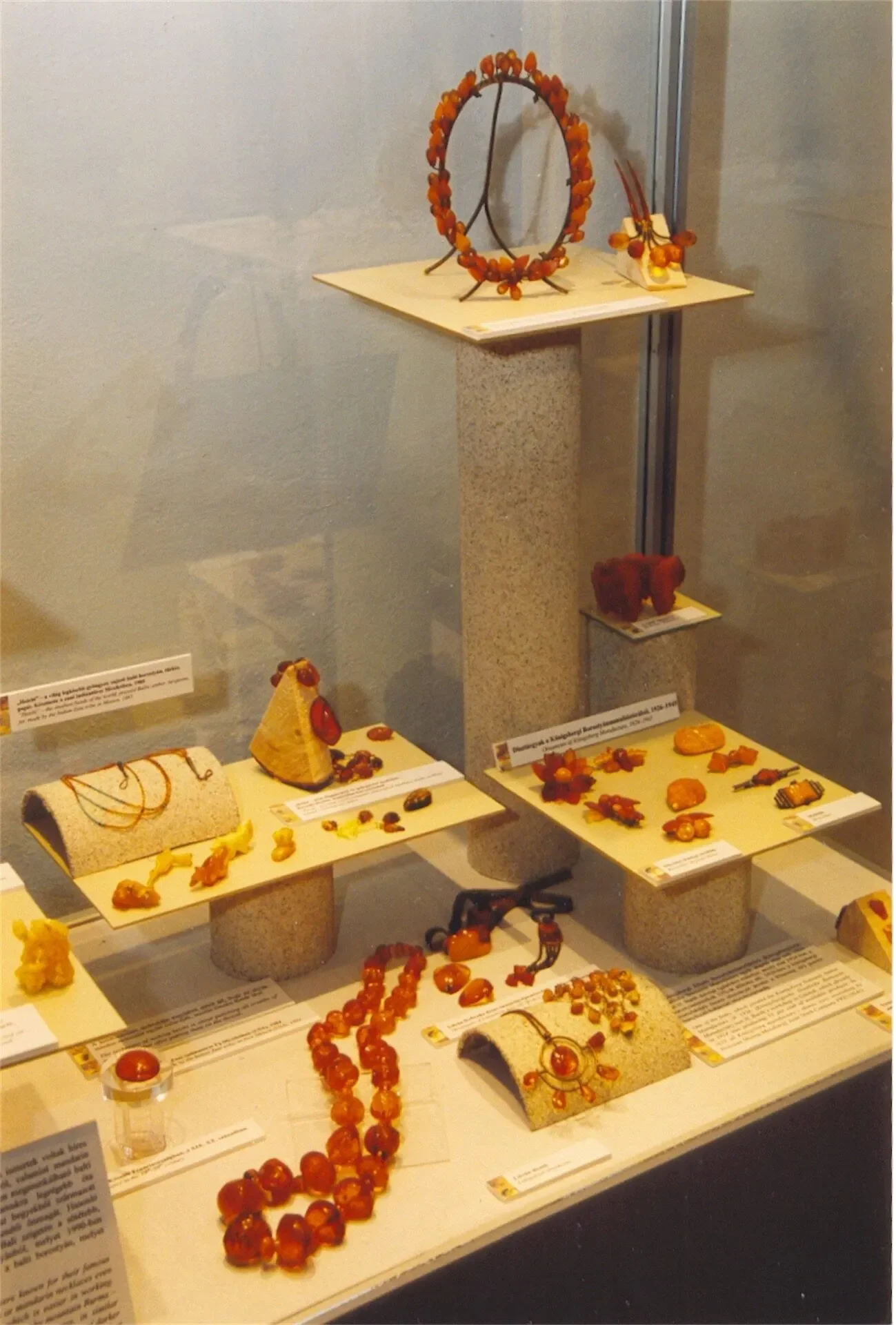
In 1951, ethnographer Adam Chętnik set up the Amber Workshop at the Museum of the Earth, began collecting amber specimens (including Kurpie folk wares), opened the first amber exhibition in Warsaw in his new premises at Aleja Na Skarpie, and organised the first amber conference “On Amber in Poland”. A. Chętnik is also known as the creator of the amber collection in the Museum in Łomża and the founder of the Kurpiowski Skansen in Nowogród Łomżyński. In the years 1958-1973, the head of the Amber Studio, and after its renaming - of the Amber Department, was Zofia Zalewska, a botanist and geographer. Since 1974, the Amber Department of the Museum of the Earth PAS has been headed by geologist Barbara Kosmowska-Ceranowicz.
Specimens were acquired primarily through purchases, in addition to through exchanges with collectors, as well as collecting from accumulations and deposits by staff. A significant proportion of the specimens, especially in recent years, came from donations.
Collections
The Warsaw Amber Collection is now one of the world's largest collections of Baltic amber and other fossil resins. The total number of 26 165 inventory numbers includes collection numbers used up to the 1970s, so the actual number of specimens is much higher. They are stored in the collections of: forms, varieties, regional (Polish and world), plant inclusions, animal inclusions, archaeological and contemporary wares. A collection of amber imitations, a book collection of literature on amber and botanical collections of contemporary comparative material have also been assembled.
Among the plant inclusions are the particularly valuable three holotypes of liverworts, designated by R. Grolle. The collection of animal inclusions - a real treasure trove for palaeoentomologists and arachnologists - includes 120 arthropod holotypes, many of which are donated. To date, an illustrated monograph, Bursztynowy skarbiec (2001), has been published, cataloguing the author's collection of almost 8,000 organic inclusions in Baltic amber, gathered thanks to zoologist Tadeusz Giecewicz, who in the years 1972-1989 browsed through the raw material excavated from Holocene fossil beaches by the Amber Exploitation Department of the State Enterprise “Jubiler” in Sopot.
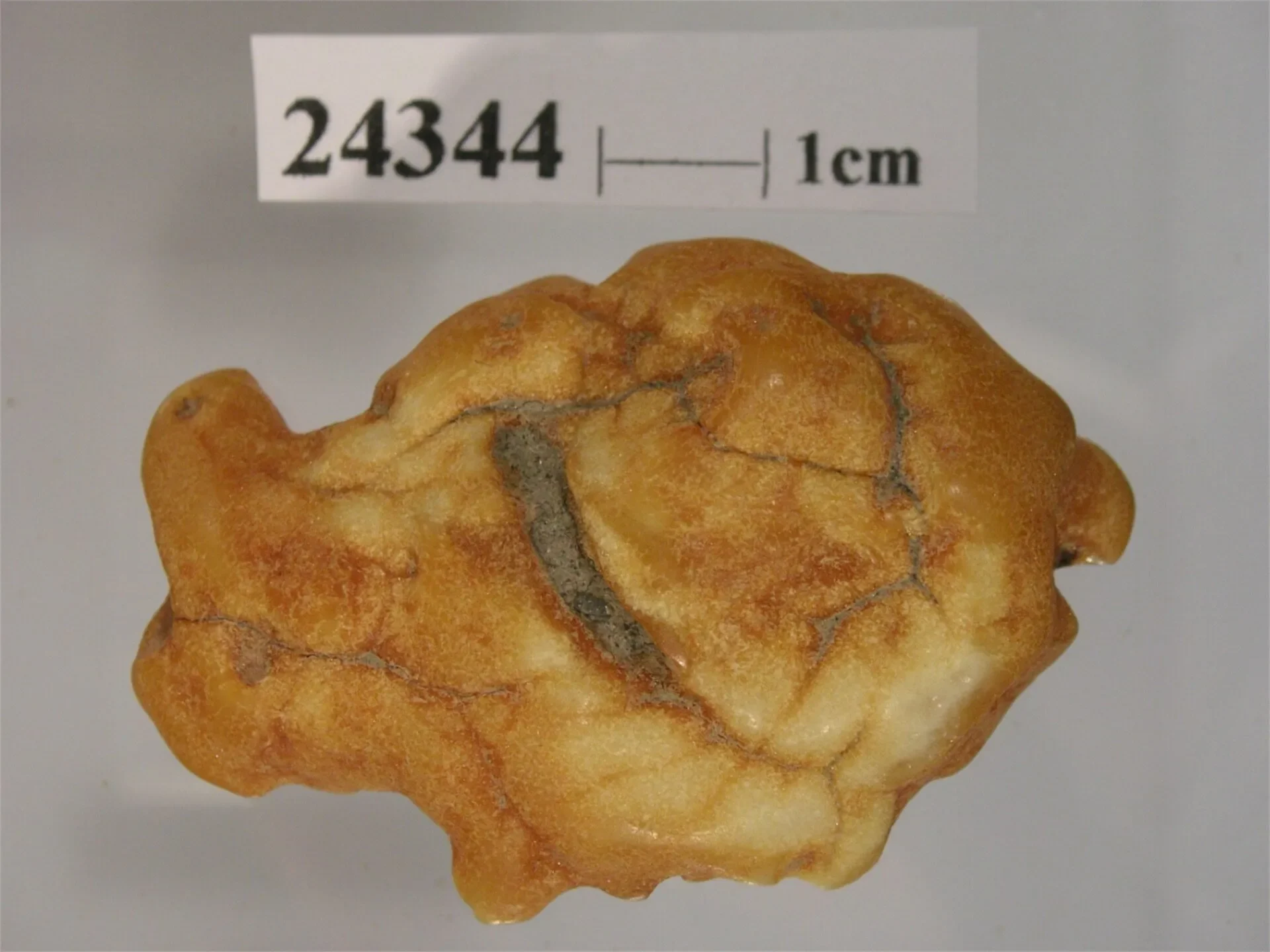
In the collection of natural forms of Baltic amber obtained from the Sambian mines and from post-glacial sediments and beach accumulations from Poland, the collection of amber lumps weighing from 300 to 2050 grams is particularly valuable. Lumps of amber - a phenomenon of nature was presented as a temporary exhibition (2002-2005), accompanied by a catalogue.
The rich collection of fossil resins from dozens of sites around the world not only provides invaluable research material, it is also presented in a wide selection in the current exhibition at the Earth Museum of the Polish Academy of Sciences.
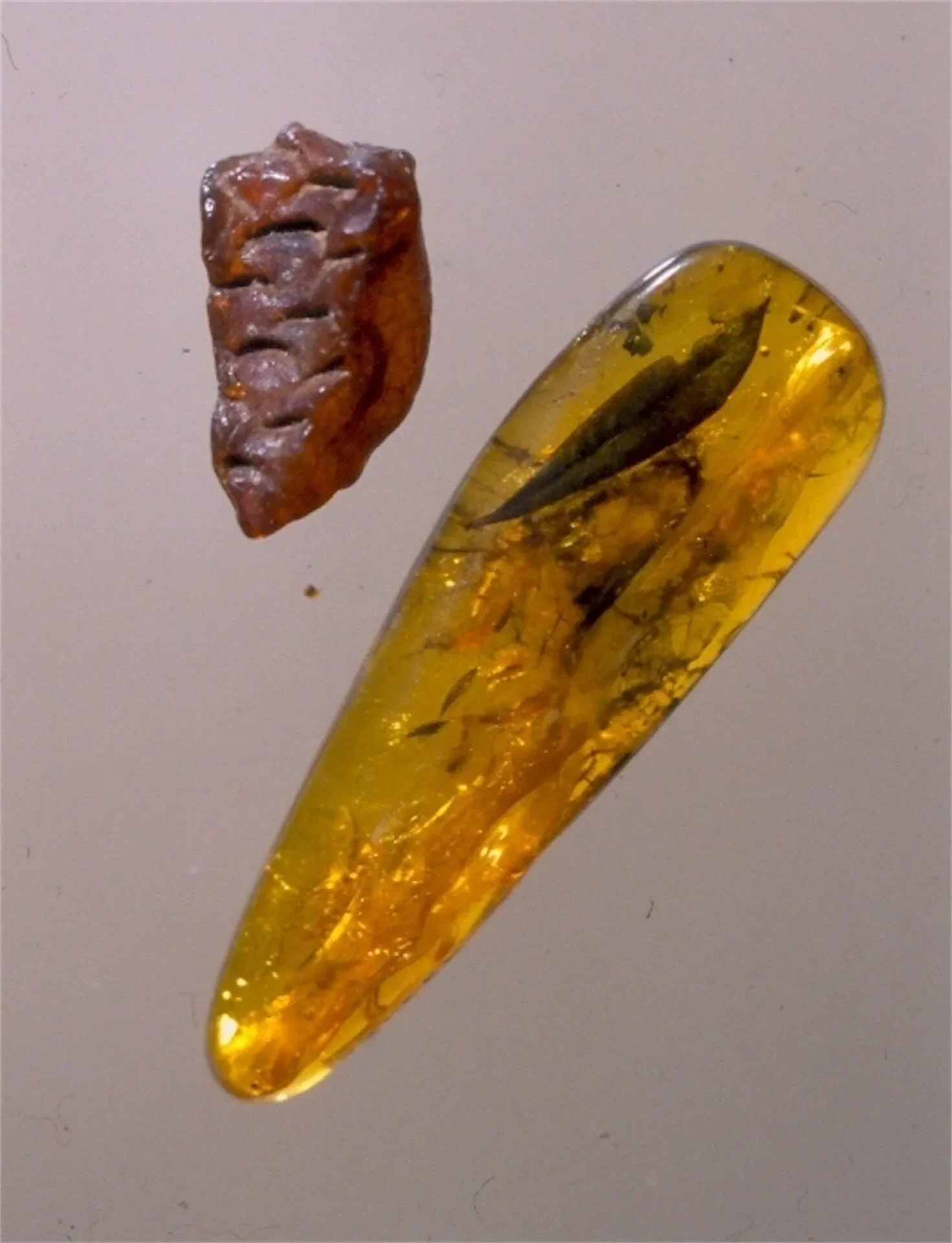
The primary and secondary varieties of Baltic amber serve as material for the study of the variability of the characteristics of individual pieces, for the observation of changes in the properties of the fossil resin due to oxidation, as well as for the development of conservation methods. A comprehensive presentation of the collection of varieties is included in the publication Discovering the Beauty of Amber (2005), illustrated with photographs, which also contains a second study - a catalogue of products from the 17th century to the present day.
The collection of wares documents, in a wide selection, the design used in amber processing from prehistory to the present day, not only in Poland. It was collected with a particular focus on the developing post-war Polish amber industry. From these times, the collection includes mass-produced products, ornaments made by craftsmen, folk artists and works by visual artists. The collection has been carefully compiled and the results have been collated in two catalogues covering the entire collection (1996, 2005).
Imitations of amber are collected in order to recognise the variable range of materials with characteristics imitating amber, available on the market in the past and today, and to study their physico-chemical properties to identify forgeries.
Amber Department of the Museum of the Earth - Polish Academy of Sciences
al. Na Skarpie 20/26, 00-488 Warsaw
tel. +48 22 6297479 w. 113
www.mz-pan.pl