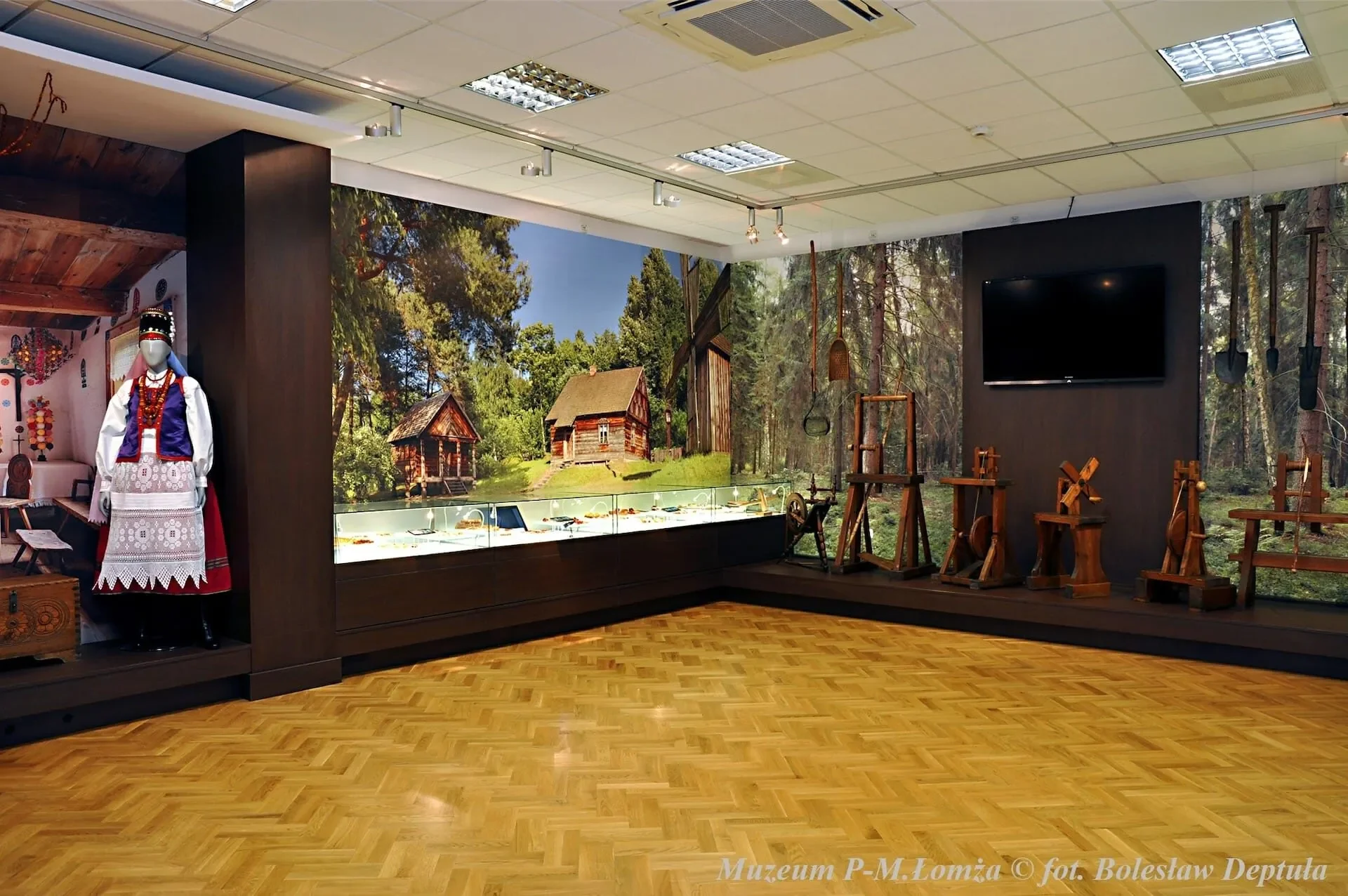
The amber exhibition at the Łomża Museum was open from 10 April to 5 October 1950. It was the first post-war temporary exhibition presenting amber in Poland. In 1958 the permanent exhibition „Jantar - amber in the Middle Narew basin” was presented. In 1980 the Museum moved to a renovated building at 1 Krzywe Koło Street and in the same year the permanent exhibition „Amber of the Middle Narew Basin” was opened to the public. - basically moved from its previous location, with a layout developed in 1958 by Adam Chętnik. It was on display until 2006.
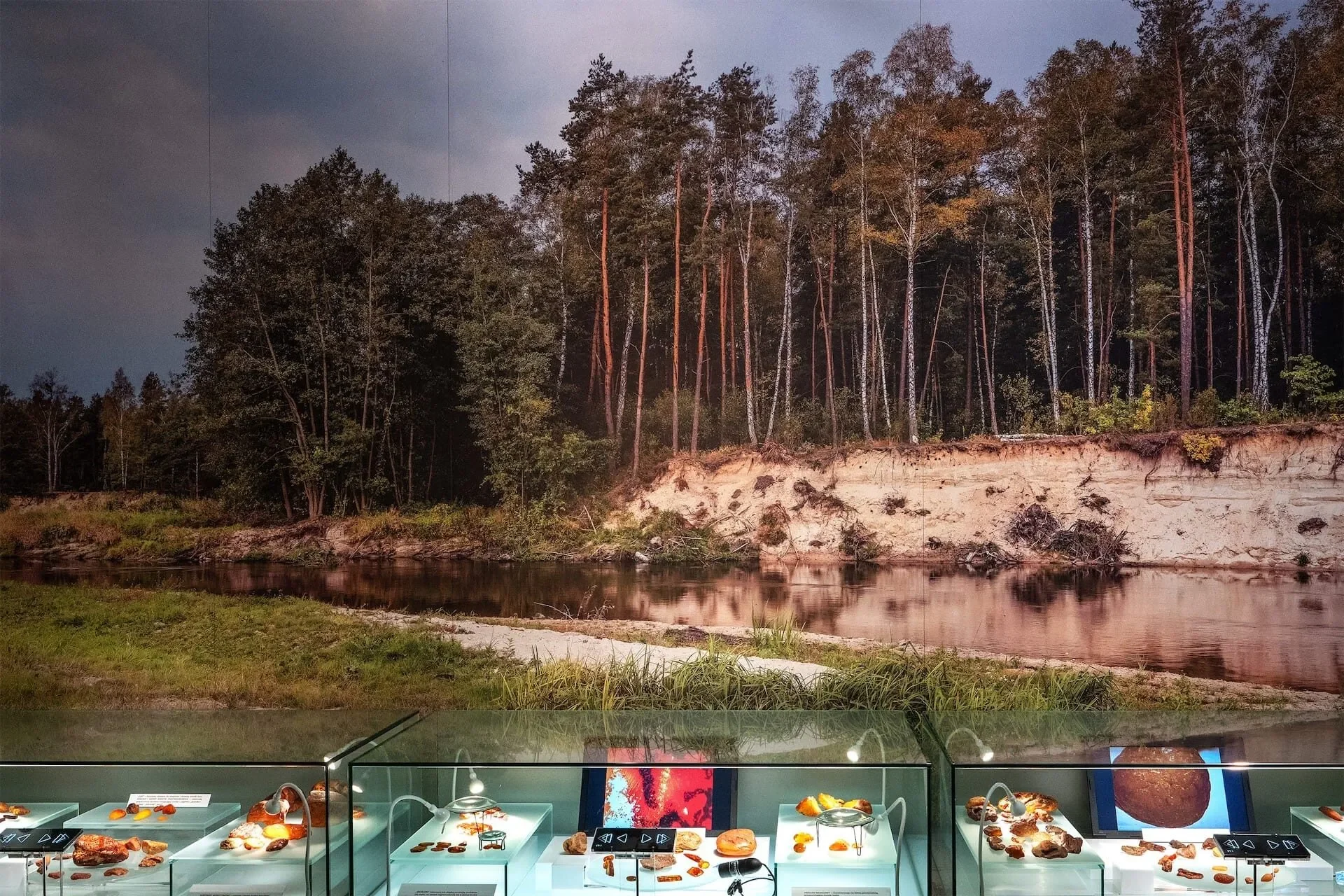
In December 2015, the exhibition „Amber in the Narew Basin” was opened in a new location at 22c Dworna Street and in a new arrangement. It was recognised as the best exhibition in the „Competition for the most interesting museum event of 2015 in the Podlasie region”.
The collections of the amber department consist of:
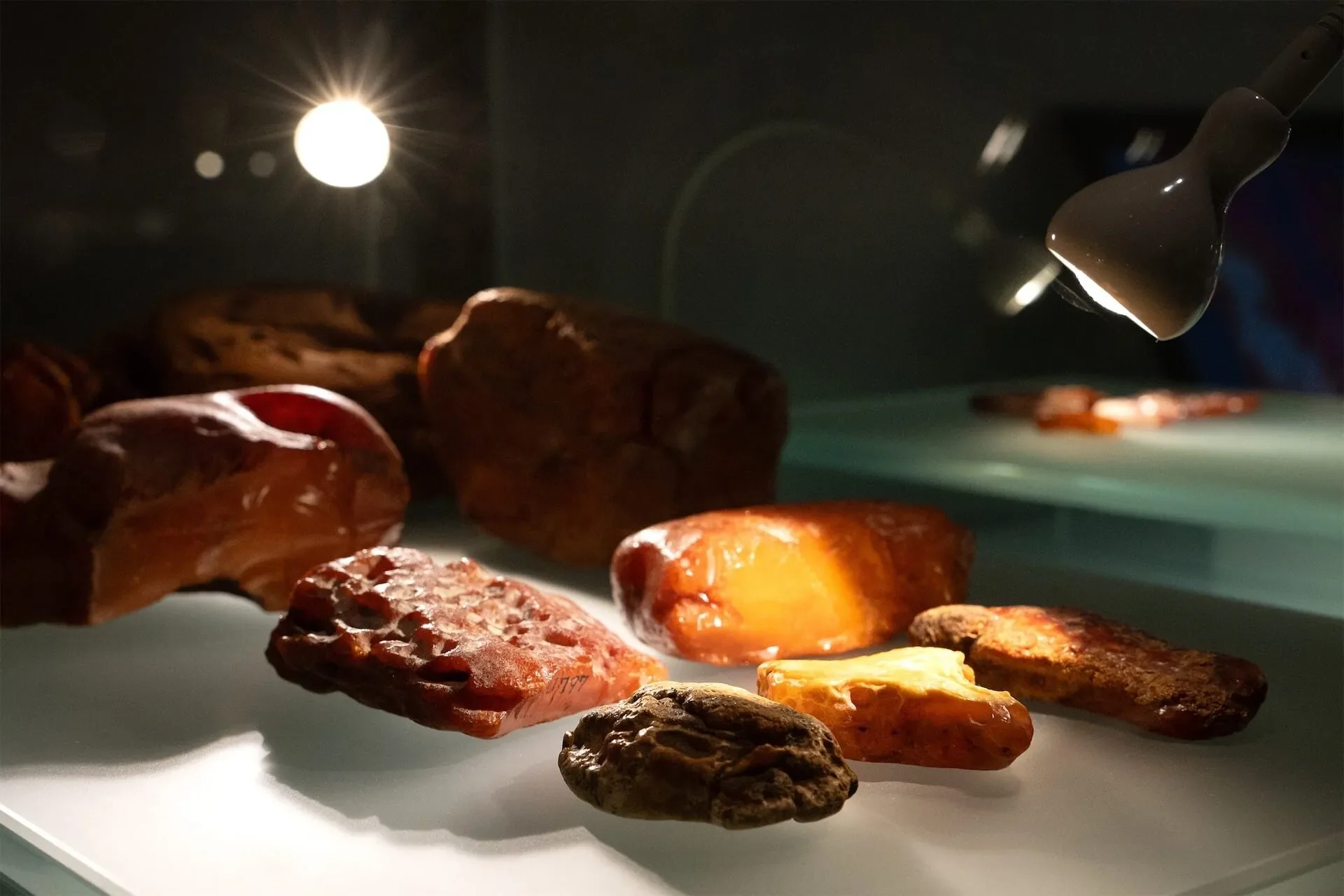
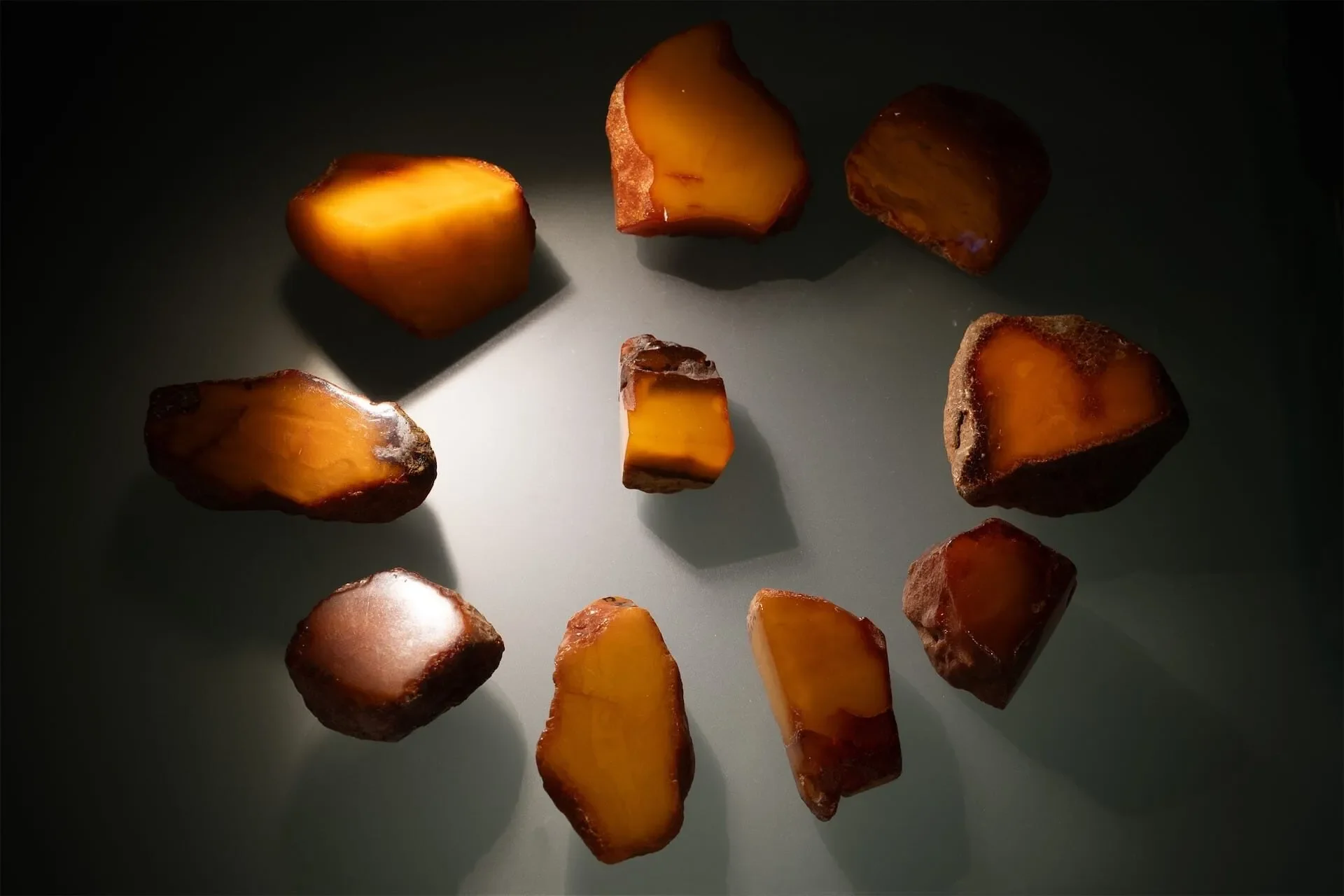
- raw material - natural forms: icicles, drops, infiltrates, nuggets, fillings,
- natural and worked forms presenting varieties of amber: primary and secondary,
- samples of amber soil from the Narew basin,
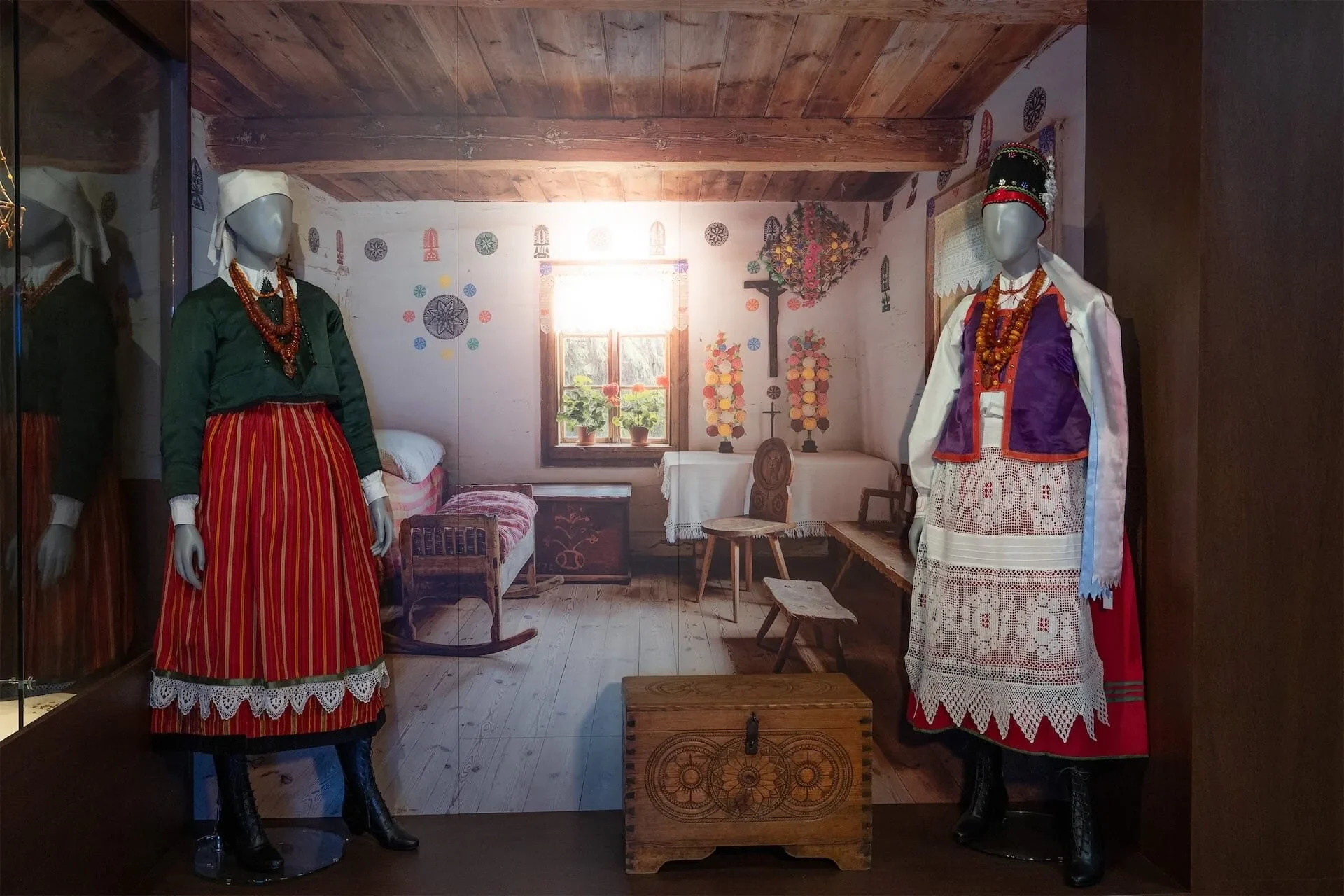
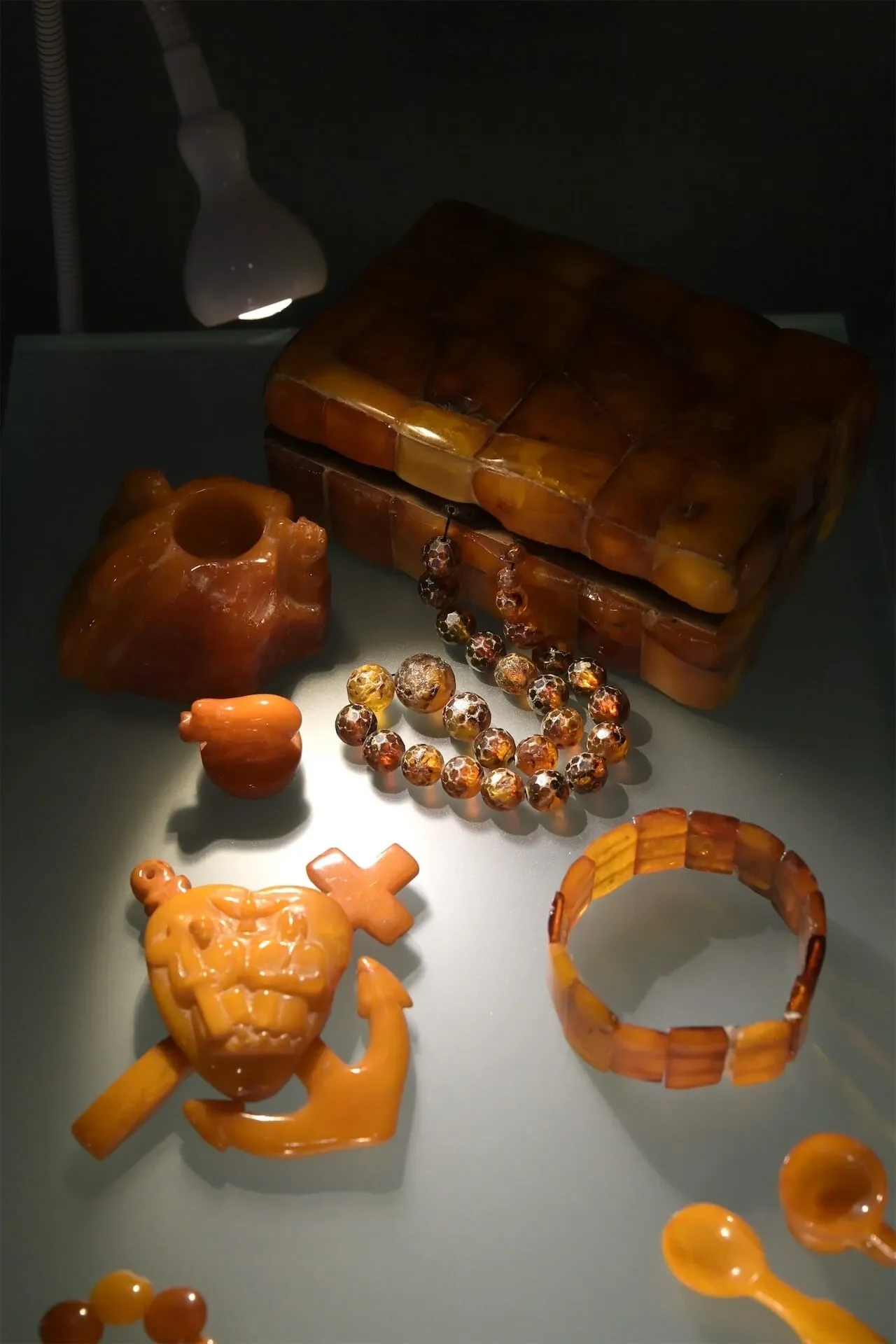
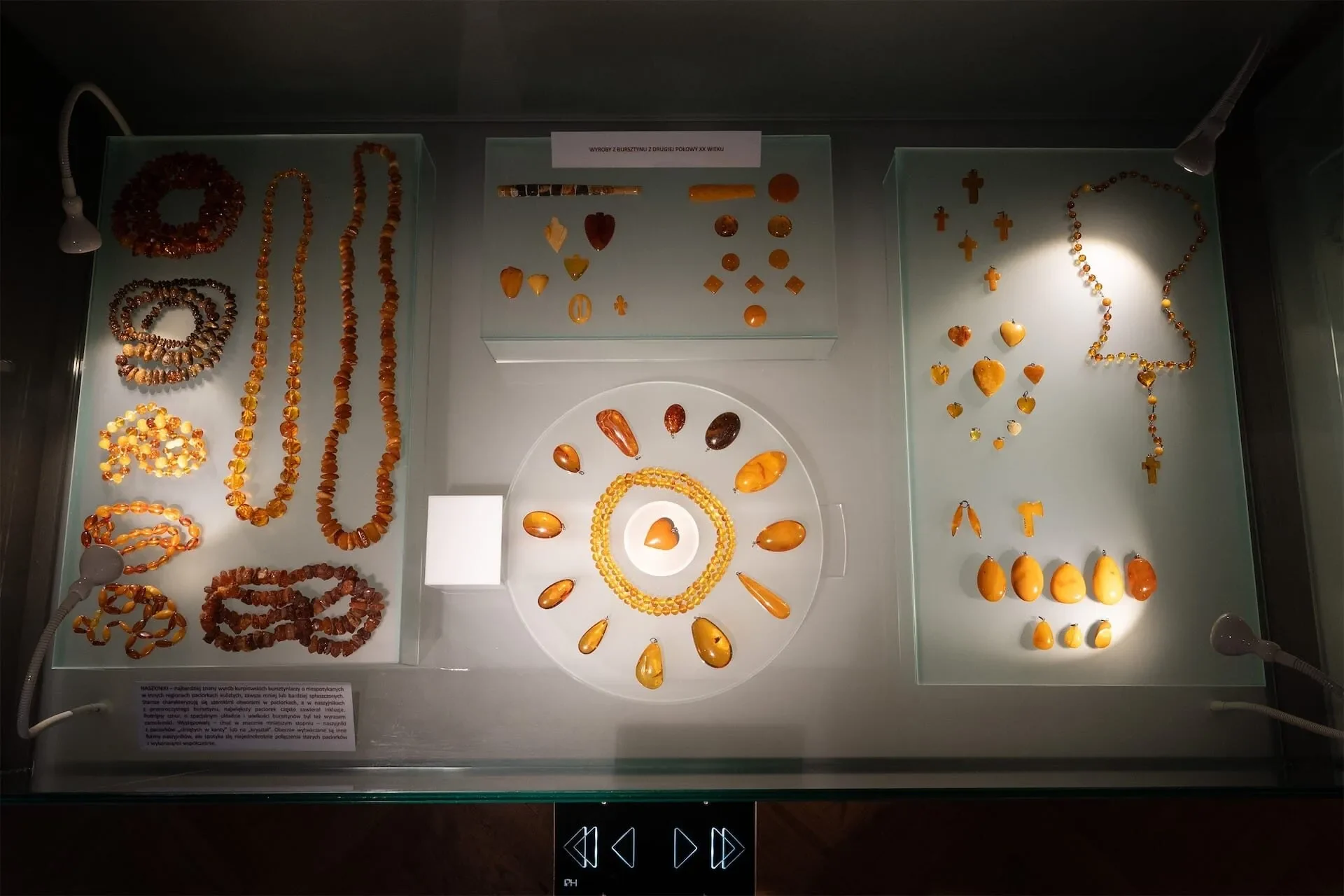
- amber products from the Narew basin - including Kurpie necklaces, medallions, pendants, crosses, rosaries, pendants, pins, bracelets, rings, buttons, buckles, brooches and interior decorations - hearts and spiders,
- tools for prospecting and extracting amber,
- workshops for processing raw amber: lathes and machine tools,
- semi-finished products and auxiliary materials for amber processing,
- raw material and products from outside the Narew area,
- products imitating amber,
- other objects: resins, bark, pine trunks, vessels, furniture, maps, drawings.
The collection of the amber department is a unique regional collection in Poland. It richly documents and illustrates a small fragment of the centuries-long history of amber in the Narew region. As it has been on display as a permanent exhibition for many years, it is amber that is most associated with the collections of our museum. Numerous presentations of the collection in various Polish cities - from Kraków to Gdańsk and from Białystok to Poznań - as well as repeated displays abroad have also contributed to this:
- Germany - Nuremberg, Düsseldorf, Passau, Bielefeld, Constance, Osnabrück, Leipzig, Bochum;
- Italy - Venice (Doge's Palace), Palermo;
- Romania - Bucharest;
- Sweden - Stockholm, as well as at exhibitions and jewellery fairs.
Although the available deposits of northern gold in Kurpie have been exhausted, the clatter of lathes has died down, and the spinning of spinning wheels has ceased, the magic and charm of the „sunny stone” still lives on here. We hope that they will stay with us for a long time - also thanks to the Kurpie amber workers, who continue to process this unique „Kurpie gold”, although no longer under thatched roofs and not on wheels. On 3 February 2022, „Kurpie amber-making from the Puszcza Zielona” was inscribed on the National List of Intangible Cultural Heritage.
Dr Jerzy Jastrzębski
North Masovia Museum
18-400 Łomża, 22c Dworna St.
www.muzeum.lomza.pl
Photos from the exhibition „Amber of the Central Narew Basin”:
photo: Bolesław Deptuła, Joanna Klama
Jerzy Jastrzębski
Since 1988, he has continuously served as director of the District Museum in Łomża. Researcher and populariser of regional history and amber heritage. Author of numerous scientific and popular publications, including monographs devoted to traditions of amber processing in the Kurpie and Narew basin: Amber-making in the Kurpie region (1999), Kurpie amber craft (2002), Amber in the Narew basin (2005) and a work about the Adam Chętnik Kurpiowski Open Air Museum in Nowogród (2007).