I look at this legendarily clean studio and wonder, is this where jewellery is still made? You have rarely appeared on the goldsmithing scene lately.
Nothing has really changed over the years - I invariably do the things that come my way and seem valuable enough to me to complete. I don't plan anything ahead because I don't know what will come my way. In a professional sense, I have been a free electron for many years and I value this comfort very much. I get down to work when I'm challenged or randomly inspired: when I see something interesting, when I'm reminded of something, or when I want to correct some of my badly done work....
...which in your case is probably not possible....
...and yet, such instances have also happened. Generally, I don't feel the need to revisit the past, but sometimes, however, I feel that some earlier ideas are good enough that I would like to return to them. I don't have the need to recreate the ones I've parted with because... I don't part with my work. Not in a physical sense, of course, because I don't collect my works, but in an emotional sense: I remember each one very clearly, I have it in my head and I can recreate it at any time. Forty years ago, yes, I experienced this dilemma strongly: it was pleasant to make a work, unpleasant to part with it. Today, I am happy that my work is somewhere in the world and gives someone pleasure.
In most articles about you, one comes across the fact that you are a mathematician - does a mathematical background influence your thinking about jewellery?
I don't think so... The jewellery is more a result of my perception of reality - I've always been good at science, so I've mastered mathematics at a sufficient level to graduate, and I also have the ability to think logically and see rules in the world around me. In my work as a jeweller, this rigorous thinking helps me sort through ideas: if I have doubts about whether what I'm doing is interesting, I think first and foremost about whether all the elements that make up the item are really necessary. Anything superfluous, I discard. This is how my brain develops projects - they are filtered through my way of seeing reality.
The term „grandmaster of Polish goldsmithing” has stuck to you. - do you have the feeling that in each subsequent job you have to live up to the associated expectations? Or perhaps even raise the bar even higher?
Not at all. I didn't push myself to be a grandmaster. And quite seriously: I try to make things that don't become better just because they are more difficult to make. I invent objects that are sometimes difficult to make because I want them to be attractive - in order to achieve this goal, I sometimes have to use some complicated technique, and there are even times when I have to invent it. But I don't do anything by force, I don't race with anyone, I don't compare with anyone. I do what seems interesting to me at the time. However, there are times when the idea itself seems interesting, but the implementation is already disappointing. But fortunately, this attitude often changes the next day when I look at the finished object from a distance. I have the impression that this disappointment is the result of a certain over-saturation that occurs when I work on one object for up to several dozen hours. For a long time I work only with an image of the object, but with every hour I get closer and closer to knowing the final image. The juxtaposition of imagination and image sometimes turns out to be disappointing. Fortunately, when the fatigue passes, another look from a distance makes it possible, as it were, to rediscover the object and say with relief: it's fine. It also happens sometimes that I take on a subject which, visually, I don't necessarily find attractive, but which, in terms of technique, is a great challenge - just for the opportunity to learn something new. But I have no ambition to get into the Museum of Modern Art in NYC.
To get there, you have to make yourself known: attending goldsmithing events, making friends, courting the media....
I think so. But I don't need to do that... For the last 20 years I've been going with the flow a bit: I don't know what's going to happen along the way or where the flow is going to take me... And I have to admit that I'm fine with it. I used to care more, I worked a lot and it brought tangible results. But then there was also a different world - there was literally a gulf between Poland and Western Europe in terms of jewellery. Bridging the gap between these worlds was quite a challenge, and entering the Western world with jewellery was a real achievement. Now the world has shrunk, the levels have leveled off, the real challenges are missing.
Was amber a challenge for you?
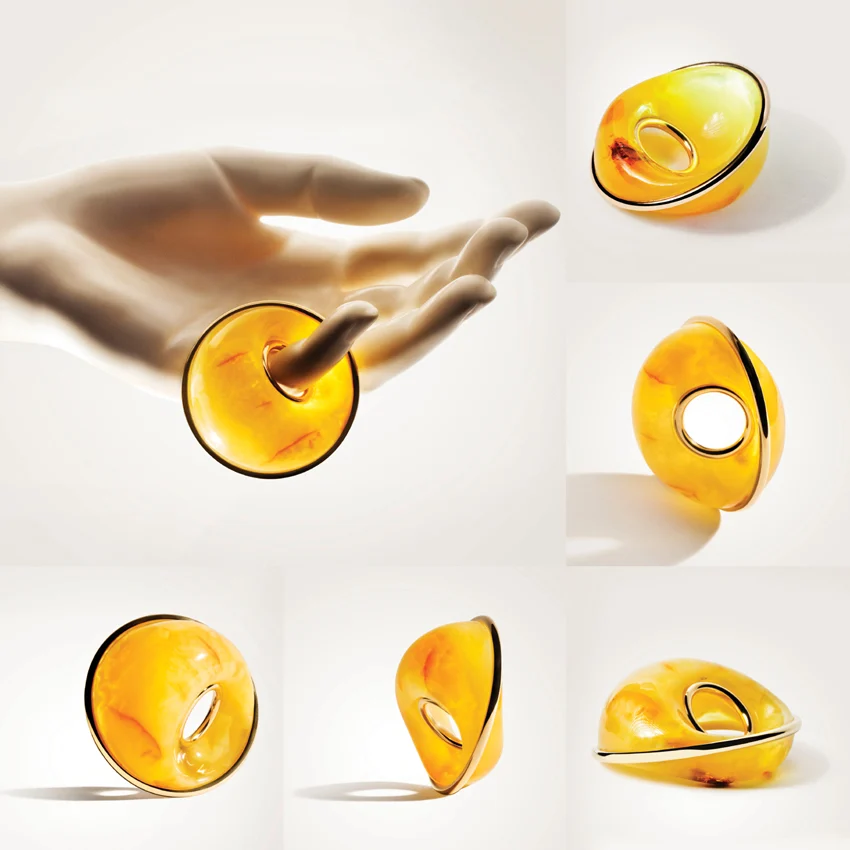
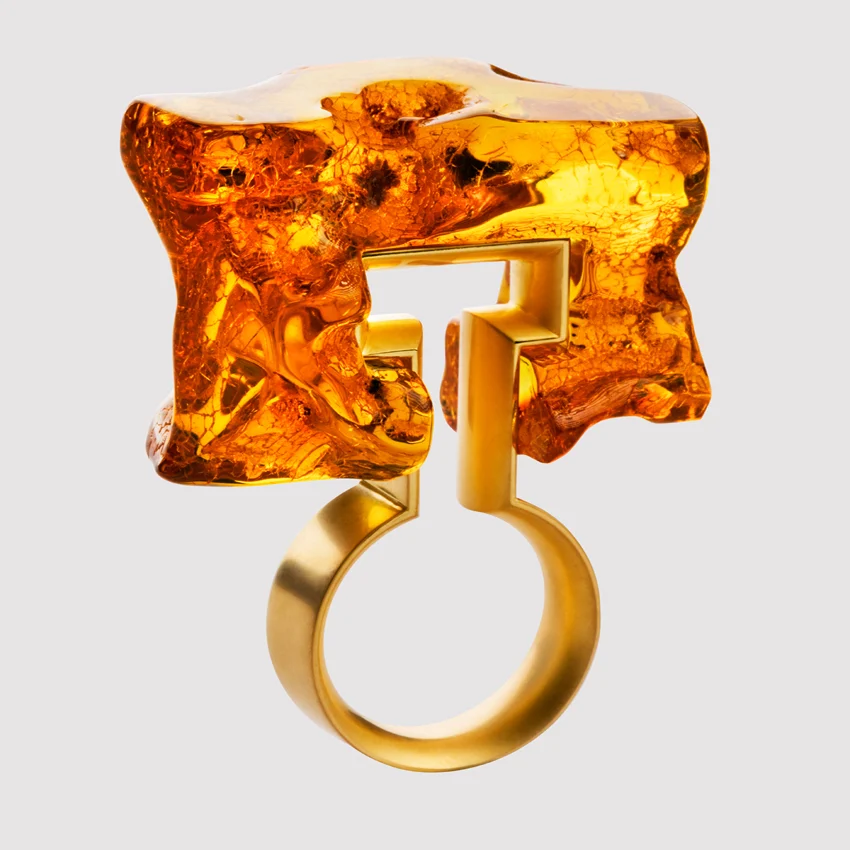
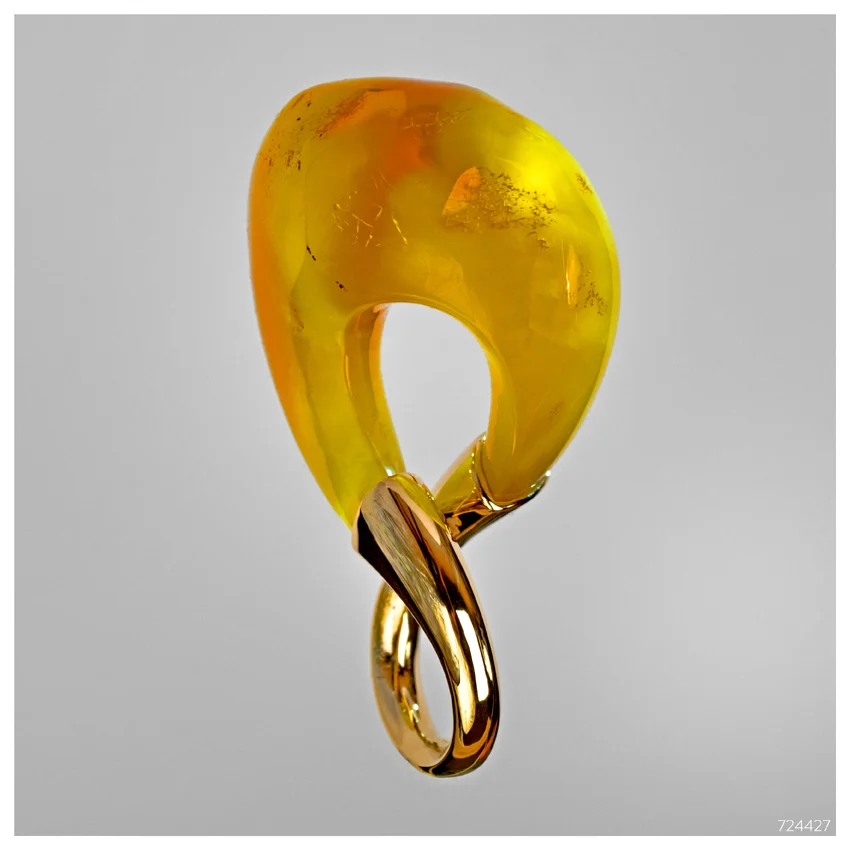
I remember asking a jeweller friend about amber 40 years ago and he said I might as well make something out of a toothbrush. He likened amber to plastic, because that's what the stone was associated with at the time. It hadn't been of interest to me for many years because it's very perishable - and for me it was of great importance because I wanted to do something unusual. Unlike most who only used it as an „eyelet” in a brooch or ring, I had the idea of using it in the structure of an object. I started making objects in which the amber was an element just like the metal - in this way it stopped being a decoration, it started to form the object. What's more, once I used amber, it had to play first fiddle. This is how the first collection of raw nuggets was created, which formed the structure of the object. And it has remained so to this day. Amber is a graceful stone. And it has the simply unbelievable quality of its age. For me, these 40 million years make a huge impression. And sometimes it even paralyses me, especially when I have to make a decision about irreversible interference in a block of exceptional beauty - because I am never sure if the object I am inventing will be attractive enough to justify this action. I have several such beautiful natural nuggets that have been waiting to be framed for years - and I'm still not sure if my idea is good enough. Enough for me means almost 100 per cent certainty - only then do I have the courage to cut them.
You were one of the first artists to combine amber with gold and diamonds.
For me, the age of amber is what makes it special - and that is enough for me to treat it as a base for the objects I create. And since I'm using such a unique material, it has to have a dignified setting - which is why I went for gold and diamonds. When I am emotionally attached to a project, I want to make it with the best materials. I treat it with respect, but there is no over-emphasis. But a certain appreciation of what is being made doesn't bother me at all. If someone disdains amber and it doesn't even reach them that it's an incredibly old material, then no ideology will ever reach such people. Of course, this is not an argument for them to like amber. It is just to make them aware.
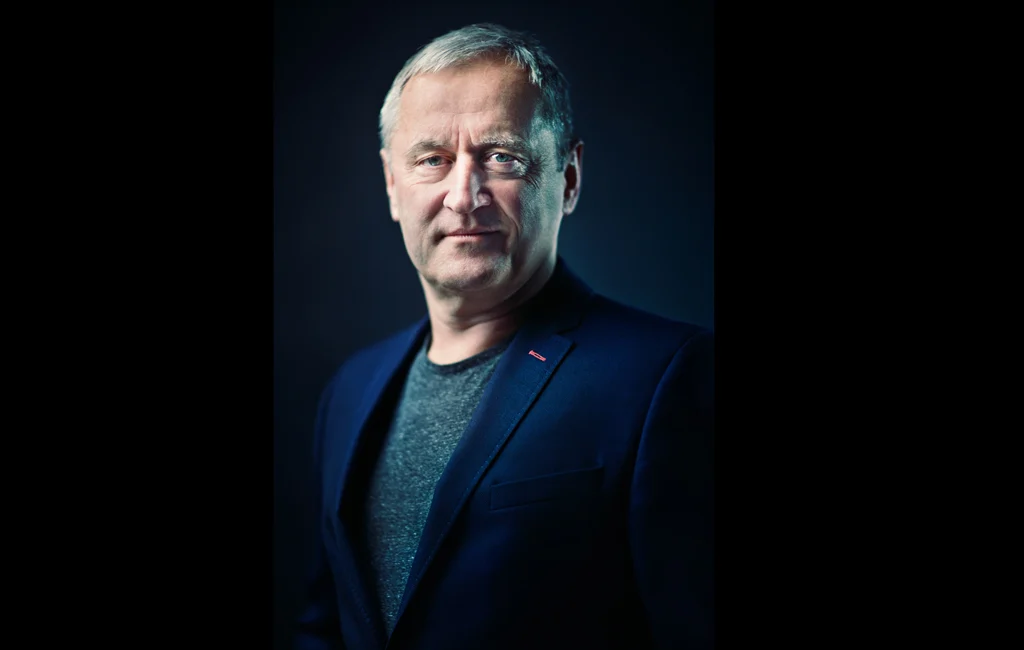
Jaroslaw Westermark - Visual artist, designer of artistic jewellery. In 1979 he was authorised by the Ministry of Culture and Art to practise his profession. Winner of numerous goldsmithing art competitions, including Mercurius Gedanensis 2017 and the SREBRO 2018 International Goldsmithing Art Competition. The most important thing for him is the joy of creation, which „rewards hours of tedious, dirty and hard work, gives satisfaction and motivates him to continue”. Retrospective exhibition of his works organised by the Art Gallery in Legnica on the occasion of his 40th anniversary of artistic work „Materialisations” was presented as part of this year's SILVER Festival 2019.