
(...) Both legal and illegal prospecting and exploration of amber deposits has recently become a significant issue. The intensity of the aforementioned activities is caused in part by the suspension of amber exports from the Kaliningrad Oblast. There is a shortage of raw material on the Pomeranian market, whilst high prices on foreign markets are disrupting the service operations of the entire jewellery industry. The shortage of raw material on the market translates into a sharp revival in the area of deposit prospecting. This gives rise to many problems related to illegal amber prospecting, as well as in the area of legally planned prospecting.
Inaccurate and inconsistent provisions of various acts cause interpretation problems and, consequently, create room for various types of abuse. The situation of uncontrolled prospecting and extraction of amber leads to a reduction in the revenues of the state budget and local government units, and is also a loss for legally operating entrepreneurs who bear all fiscal burdens.
The prospecting, exploration and exploitation of amber deposits are regulated by the Geological and Mining Law Act. This Act has assigned marshals, operating with the assistance of voivodeship geologists as first-instance geological administration bodies, the tasks associated with issuing decisions for the prospecting and exploration of mineral deposits covered by the right to landed property, which amber is, and granting concessions for their extraction. In the Pomeranian Voivodeship, 1 concession for amber extraction is currently issued: Przeróbka SL in Gdańsk. Meanwhile, on the prospecting market, there are currently 100 valid decisions authorising the prospecting of amber deposits.
A separate problem is the illegal prospecting and extraction of amber. While in the case of legal activity the authorities have control tools with sanctioning powers, in the case of illegal amber prospecting the problem of enforcing liability is much more complex. The penalties for such activity usually end up as low criminal fines, which, given the profits from illegally extracted amber, have no deterrent effect. Proving illegal prospecting and extraction of amber encounters interpretative barriers which those engaged in such activities openly exploit.
Such activity is usually interpreted as harmless, causing no damage to the environment, or even justified by arguments based on the freedom to conduct business – in line with the belief „my property, I can do what I like”. Recently, there have even been such absurd situations where prospectors, under the guise of land reclamation, are extracting amber. In such cases, the activity of inspection services should be supported by knowledge of current legal conditions and regulations in this area.
An attempt must be made, despite all the inconsistency or even divergence of the acts, to develop a methodology of procedure. Focus should be placed on:
a) better cooperation between administrative authorities
– inter-authority cooperation during administrative procedures, seeking opinions in situations where this is not even provided for by statutory requirements
– cooperation between authorities (police, border guard) during the inspection of prospecting and mining activities
– the principle of absolute enforcement of legal requirements, even for acts of low social harmfulness
– preparation of information for local authorities, the police and the Border Guard regarding procedures and documents required by a legally operating entrepreneur holding a licence for the prospecting, exploration and extraction of amber deposits
b) legislative changes
– clarification in current legislation of the rules for conducting activities in legally protected areas (elimination of contradictory legal regulations – e.g. the possibility of prospecting for minerals, but not extracting them, as in the case of amber) in protected landscape areas
– the issue of national park and landscape park buffer zones – lack of clear regulations
– spatial development plans – to what extent provisions in local spatial development plans can affect prospecting and exploration work (…)
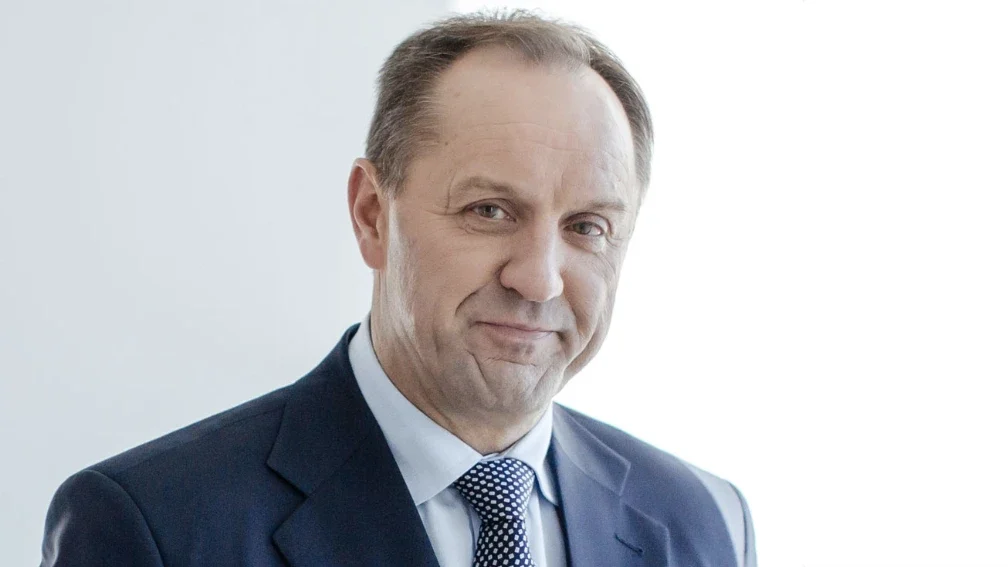
From the speech of the Marshal of the Pomeranian Voivodeship, Mieczysław Struk, during the conference “Issues of prospecting, exploration and exploitation of amber deposits in the Pomeranian Voivodeship”, which took place on 22 June in Gdańsk.