
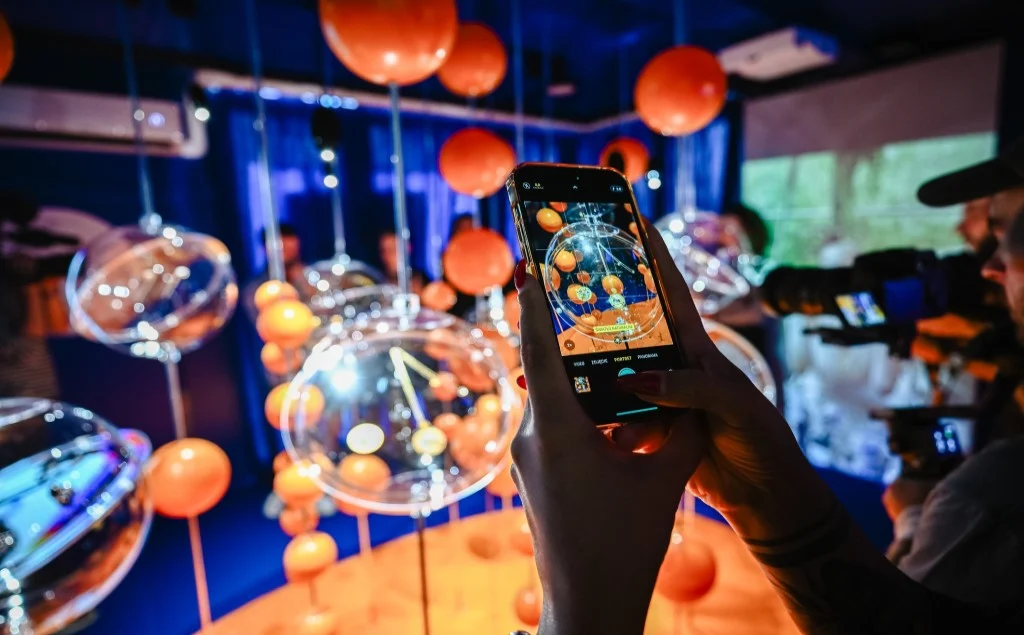
The exhibition „Treasure Box of the Future / Treasure Box of the Future” opened a few days ago. The title suggests a strong opening of amber jewellery to the future.
Once upon a time, Gdańsk decided to develop a strategy to promote the city related to local amber production. This programme was called Gdańsk - World Amber Capital. For many, such a name seems far-fetched. Few people outside of Gdańsk know how many amber artists are active in the city, how long the history of amber and goldsmithing using this raw material is, and whether today's production and work is indeed world class. For the design and manufacturing community and perhaps some Danzigers this is obvious, but for people outside the city this perspective is unknown. Let alone talk about a world perspective. So for me, the theme and goal was clear and straightforward: Gdańsk wants to turn contemporary amber jewellery into a global brand promoting the city. Such a goal requires a clear statement: we are talking about the future, because today this jewellery does not have such a brand.
This is one explanation for being open to the future, and the other is much more prosaic and market-driven: the customer is changing, the generation that lives exclusively in the past and whose expectations are met by traditional jewellery is leaving. Young customers, with their very different lifestyles and beliefs in sustainable luxury, are becoming the purchasing power. The industry must respond to these needs. New designs must therefore emerge that respond to these needs.
Hence the assumption that my exhibition has to speak the language of the future to the customer of the future. A promotional campaign to build a global brand is not done by communicating and showing products. It is not a sales campaign. We first build awareness of amber with a new customer and then focus on the very objects we want to promote. I remind you that the aim is to build the image of a city where unique design tailored to the modern consumer and their lifestyle is available.
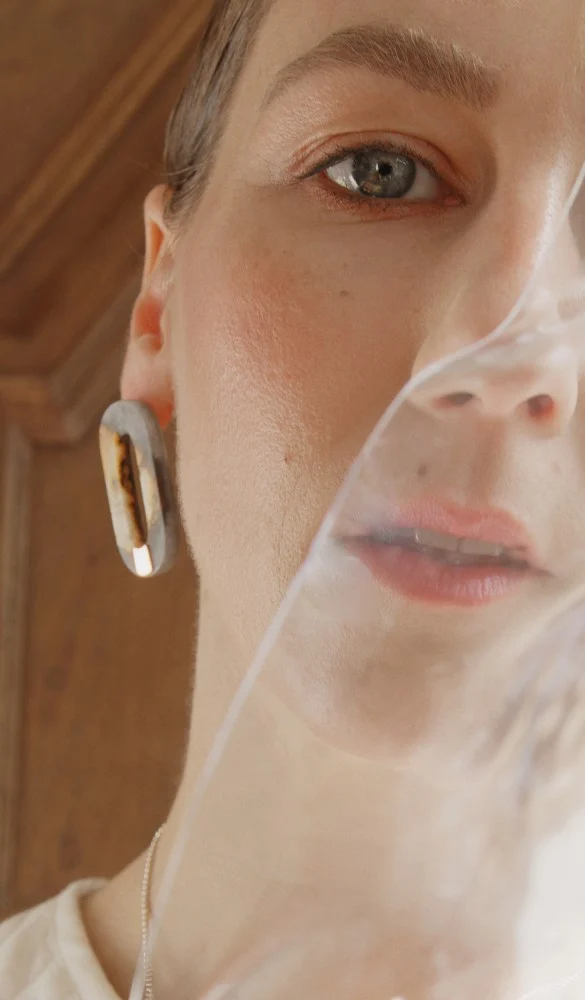
The exhibition is meant to break down traditional thinking about amber. Whenever I hear this slogan, I always wonder what this traditional thinking about amber actually is? The new generation that the exhibition is aimed at is unlikely to have those associations with auntie's beads that we have deeply ingrained. I also wonder if there is a point in evoking old associations as a reference point for the present, rather than showing how things are now, putting the emphasis on good design and good craftsmanship.
The young generation does not so much lack associations as think about amber at all - they do not need it to live. Young people today do not feel the need to own amber jewellery. However, when we ask them about amber, the most common answer we hear is that they associate it „with granny's beads at auntie's on her name day” and it is a synonym for kitsch and drab. I think several phenomena contribute to this perception. One is the flooding of the market with cheap items of low value, or to put it simply: the depreciation of the raw material itself. Even on the famous St. Mary's Street, we see signs saying „wholesale” (sic!), while at the same time there is a lack of well-designed items at an accessible price, corresponding to the expectations of the young customer. On the one hand, too many cheap beads, and on the other, not enough affordable well-designed accessories suitable for everyday use and matching the beliefs of the new consumer, who is more likely to listen to concerts on Spotify in their own headphones than in concert halls. If we want to be modern, we need to come to terms with reality and make our time stylish.
To answer the second part of the question: with its container-like, mobile form, surprising set design, multimedia information and cinematic, digital narrative, the „Future Capsule” exhibition definitely stands apart from the narrative of grandma's jewellery. The selected objects are also examples that meet the requirements of a young audience. The whole, cohesive exhibition is a counter to the way amber has been talked about to date, exploring the objects and crafts themselves - this narrative is not currently adequate. At this stage of building awareness of amber, in the context of the young viewer and client, we have done our best to disassociate ourselves from previous connotations.
So how is amber best shown today to convince the viewer?
For a long time we have been accustomed to a certain way of talking about amber and its presentation. Usually these were so-called „showcase exhibitions”, where our role as viewers was passive and consisted of admiring the craftsmanship. According to surveys of cultural audiences, such presentations are today already anachronistic and described as „boring”. I would like to point out that the exhibition is not aimed at industry specialists or connoisseurs, but at the average, young viewer. Being aware of such reception and expectations of exhibitions, and at the same time the lack of interest in amber itself, we decided that this time we would focus on a narrative built around the young protagonists, whom we showed in 1:1 format in our projected film in the exhibition space. This storytelling about people and their lives, accompanied by amber, definitely „disenchants” the previous perception of amber itself. Everyone who entered our capsule came face to face with the young protagonists and, through the size of the projection, we all became, in a sense, participants in this film about youth, lifestyle, emotions and what is important to us today. We were immersed in their/our world, where amber has its place. I think this kind of impact definitely breaks the „traditional thinking about amber”.
The description reads: „The exhibition is about what, is relevant here and now, it talks about values and the changing notion of luxury. The amber jewellery here does not just symbolise prestige, but beliefs that are important to the protagonists of the exhibition: the feisty activist, the free surfer, the urban powergirl and the sensitive creator. They all represent a new generation that shapes our reality and seeks its forms of expression.” Let's take this description apart, please. What exactly „is relevant in the here and now” and how does this influence the perception / selection of jewellery with amber?
First and foremost, the mega trends that I forecast on a daily basis. They are the ones that clearly indicate that it is important for the younger generation to be involved in socially relevant topics, e.g. environmental and climate protection, our daily well-being understood as a balance between work and rest, individualisation and creativity, and changing social roles for women and men. With such trends relevant to the younger generation, it is hard to imagine that decorative jewellery designed for big outings is still applicable. These particular beliefs and values of the new customer require other forms of expression. They also require a new form of showing them and telling stories about them. Hence the form of the exhibition.
And where does this representation of the new generation come from: the free surfer, the powergirl, the committed activist and the caring creator?
They are, in a sense, avatars and embody these trends. The protagonists - selected representatives of the younger generation that I show in the exhibition - represent precisely the values that are most important to Generation Z today.
We have already established that the new generation does not see amber. Will it be difficult to get them to notice it?
The younger generation does not see amber for amber's sake. They listen to the stories about it and look to see if the emotions behind the design are in line with their beliefs. If it is, they will accept it and wear it. If not, no one and nothing will persuade them to do so. There are thousands of other proposals around that are within reach. The programme we have started is primarily based on showing amber as an important element of contemporary lifestyle. This argument is the most important one. Another is to find and show all possible and interesting examples of jewellery designs that experiment with different materials and ways of showing its beauty. Sławomir Fijałkowski's pendant with a rubber pendant and triticale has gained extraordinary recognition and in this way amber has aroused the interest of many young men. Bold designs characterised at the same time by exceptional workmanship are part of the quality of life in every aspect, and this, as we know, is what young recipients are most interested in. Quality, interesting design, storytelling and an understanding of the recipient's beliefs in terms of the perception of luxury - these are the most important guidelines for the way forward.
In the story of amber associated with the exhibition, there is also a contemporary understanding of luxury, which you describe as re-luxury. How does the new generation view luxury?
I have introduced a new concept of re-luxury along the lines of re-use or re-cycle. I feel that luxury is being reinterpreted. The modern one is about all aspects of our lives, experiences and emotions, not just possessions as in the past. The youngest generation does not accept that „luxury” products are to be available only to the wealthiest customers. Re-luxury is available to everyone, and its manifestations are, for example, our experiences, time for loved ones, travel and experiences, emotions, not just prestige. In this context, amber, with its more than 40-million-year history of natural resin from coniferous trees, is more associated with the climate and the environment, which must be protected, than with an expensive raw material for jewellery. And that is how it should be communicated. Such a story sends a strong message to a modern audience and will be understood by them. Another is individualised jewellery, i.e. coming in many varieties and styles: from minimalist for those who love tranquillity, to combined with other materials - and thus modern and innovative - to spectacular, which builds a distinctive image. One image of jewellery as decorative adornment is becoming a thing of the past.
Nowadays, jewellery has to correspond to young people's beliefs rather than enhance their prestige, because this is not what the young consumer wants today. Instead of buying a „fancy” car to show off their wealth, they prefer a cheap airline flight to the Philippines for the trip of a lifetime, where they will meet interesting new friends. So it is interesting to have jewellery with history in the background, highlighting values that are important to the younger generation. Well, jewellery design and style customisation has become a serious skill. The designer's name alone, no matter how well-known, is not enough.
You chose works by Emilia Kohut, Maciej Rozenberg, Tomasz Kargul, Marcin Giebułtowski, Ireneusz Glaza, Dorota Cenecka, S&A Design Studio and Slawomir Fijałkowski for the exhibition. Why such a selection of artists and works?
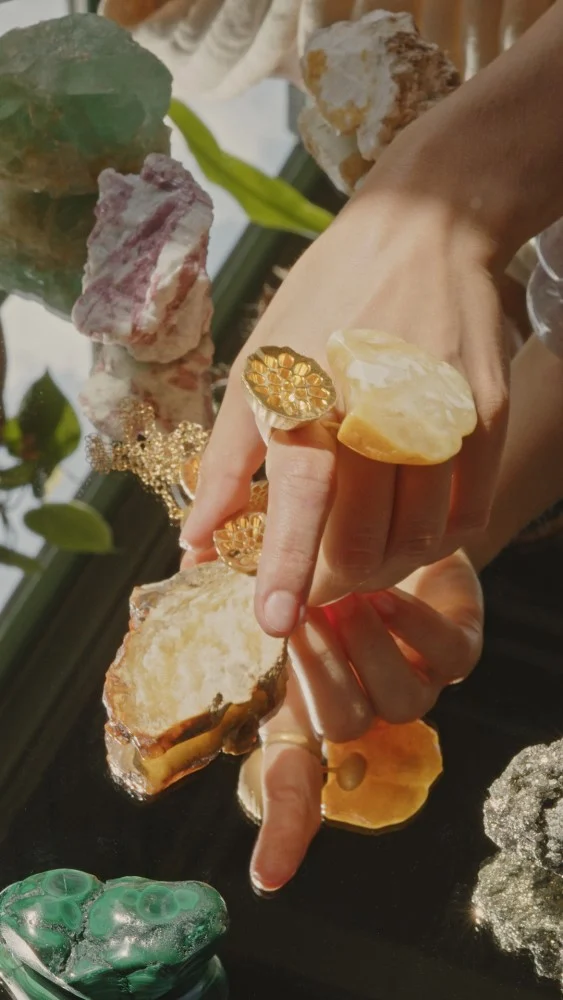
I have chosen works not so much by specific artists, but precisely those that can show all those themes that are close and important to the younger generation. I myself am less interested in decorative displays and more in understanding today's aesthetic needs and craftsmanship tailored to a particular style. Minimalism Emilia Kohut and her experimentation with two resins surrendering to a form she herself invented, captures a spirit of freedom and independence. References to the history and threads of our culture Maciej Rozenberg, working hundreds of hours on individual work, resonate with our wellbeing and sense of belonging to a particular cultural circle. Powerful, decorative yet simplistic jewellery S&A Design Studio is ideal for the strong, contemporary woman who wears jewellery like symbolic armour. A personalised proposal for men's jewellery Dorota Cenecka, which, thanks to its modular design, can be a bracelet, brooch or pendant, fits perfectly with the new image of masculinity and creativity. Made from polypropylene waste and amber, Marcin Giebułtowski's necklace, created for musicians and stage artists, carries the idea more than it decorates. Colourful, joyful and simple in its expression, the necklace made of the innovative material plastric, suitable for everyday, comfortable clothing by Tomasz Kargul is great for breaking the traditional drawer of amber. The sizable necklace and ring by Ireneusz Glaza, with its shape referring directly to plants and nature, perfectly demonstrates the longing for our intact and precious natural environment. And Sławomir Fijałkowski's large pendant with a rubber pendant, connected by a simple triptych, has become a symbol of contemporary power enclosing natural resources, while exaggerated signet rings in several forms ideal in their form are simple, strong decoration for creative and open-minded men. All of these examples are interesting, I would say contemporary and fitting to the modern lifestyle. Since our everyday surroundings have changed - interior design, clothing style, the technology that accompanies us at every turn - then jewellery has to change too. And this can be seen in our exhibition.
And how do you view amber jewellery? Looking from a distance at amber design - what do you see?
I am an art historian and collector, my husband and I have a collection of over 1,800 objects of good design from behind the Iron Curtain, which we have made available to our Bochinski Foundation for use in programmes to disseminate good Polish design thought. I have managed the implementation of hundreds of products in business and developed a proprietary method of forecasting style trends that is applied globally, so for me amber was another interesting subject, industry and stylistic unknown. If I didn't believe it was possible to build a global city brand based on it, I wouldn't have taken on the project. For me, amber jewellery has layers of natural history, cultural references to the place where it was created, but most importantly, great artistic and design potential. It doesn't require a lot of money and can be legible and interesting to a contemporary viewer - what is needed, just and until, are good designs, not forging stones into random or endlessly repeated, same forms. We also need good, digitally told stories about a generation living in the here and now. From the perspective of the very positive reception of the exhibition by the first 4,000 visitors and that only in the first 6 days, we already know that both the innovative, digitally narrative preparation of the exhibition and the mere display of jewellery in a surprising setting that breaks the „showcase exhibitions” have answered the need of a new young audience. It is gratifying to see that the media are already talking about „a new luxury and a revolution in the approach to showing amber with extremely intervening multimedia telling the story of young people who identify with modern jewellery”. What more could an exhibition curator want? In my collection I have a ring designed in the 1970s with interesting amber by the famous brand ORNO, which I received from my mother. Its design and workmanship have not aged a bit, that's what good design is all about. A contemporary design has not yet been chosen by me, but I am searching intensely for my form of expression for sustainable luxury.
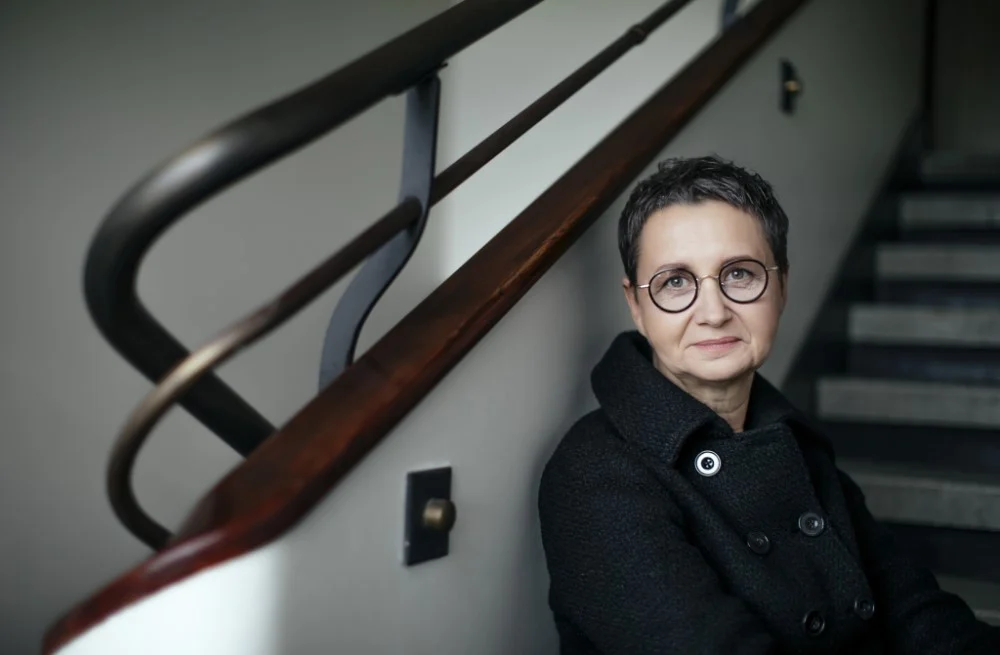
Beata Bochińska - Founder and president of the Bochinski Foundation. Art historian, Vogue columnist, Kościuszko Foundation scholarship holder in New York, specialist in design and new product development management, cooperating with leading brands of manufacturers and distributors, president of the Institute of Industrial Design in 2006-2011. Author of trend forecasting methodology using stylistic profiles of customers. Lecturer in design criticism at the University of Warsaw and in new product development management at the Warsaw School of Economics. Author of the bestselling guide for collectors „Start loving design. How to collect Polish applied art”.
Photographs of the works: Emilia Kohut, Irenusz Glaza, Maciej Rozenberg