
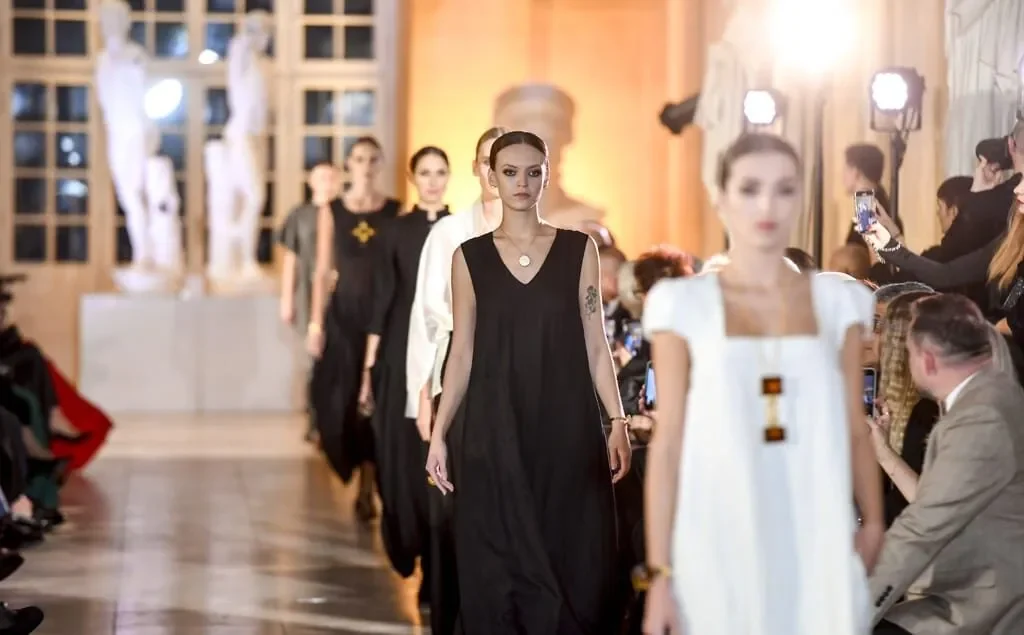
Amber played the main role - but not as a homogeneous motif-decoration. Dobkowski presented jewellery treated like small sculptures: pendants with complex textures, rings with massive inclusions and earrings in which the colour of amber was composed with other natural materials - sterling silver, often gold-plated, and black oak wood, characteristic of the brand. This mix of austerity and refined finishing allowed the designs to find a common language with Kasia Bohaczyk's clothing collection - her natural fabrics were given a counterpoint in the jewellery in the form of heavier, geometric forms.
The technique used to make the jewellery was evident „up close”: hand-framing, polished and satin-finished surfaces, the use of mosaic compositions made from smaller lumps of amber and combining raw amber with metal so as to bring out its light and transparency. The jewellery not only complemented the silhouettes, but often redefined them - eye-catching necklaces created centres of gravity, while form-impressive earrings introduced punctuated tension into the calm line of the clothes.
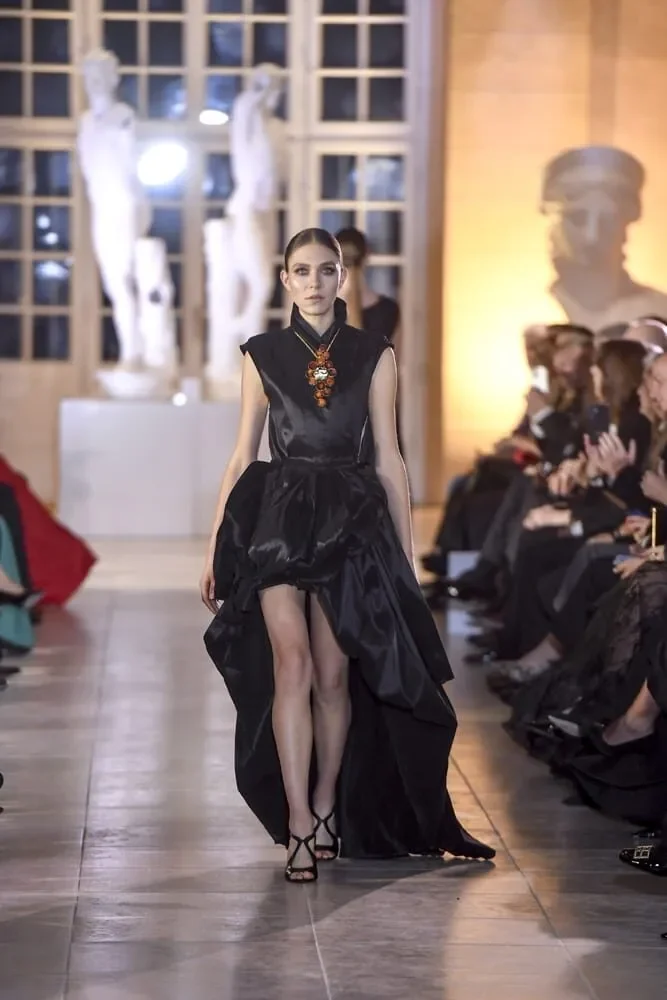
Tadeusz Dobkowski's Amber Gallery is an atelier with a long tradition - creating original jewellery with amber since 1997. This history of craftsmanship was evident in the details - in the conscious use of natural inclusions or in the choice of non-accidental “imperfections of nature” as an aesthetic element. As a result, each ornament had an individual character and the whole show came off like an exhibition - the stage models became moving showcases.
The royal, classical setting of the Old Orangery was the perfect aesthetic complement to the show, adding to its character. Tradition met modernity here, and Polish fashion and Polish craftsmanship created a story of quality, identity and modern luxury.
Photo AKPA