Rosenborg Castle was built in the late Renaissance style in the early 17th century and was the royal residence for nearly a century. When Frederick IV moved to the newly built Frederiksberg Palace north of Copenhagen in 1710, Danish national treasures were placed in Rosenborg: regalia and family collections including collections of furniture, paintings, arts and crafts and jewels. In 1833, by decision of King Frederick VI, Rosenborg Castle became a museum open to the public. Its collections were arranged chronologically and supplemented by works from the royal Kunstkamera. The place thus became the richest museum in Denmark. Nothing has been changed to it since then and it is still owned by the Crown.
Origins of the collection
The Danish kings' collection of amber wares began when, in 1585, King Frederick II received a gift of 18 silver platters with amber bottoms from his niece Sophia, Margravine of Brandenburg. This service was the joint work of two Königsberg masters: the goldsmith Andreas Knieffel and the ambersmith Stentzel Schmitt. In the following years, many members of the royal family collected amber objects in their own private art collections. It was these collections that formed the basis of the Danish Kings' Collection at Rosenberg Castle. The largest collection, with more than two hundred objects, was held by Queen Sophia Magdalena, wife of Christian VI.
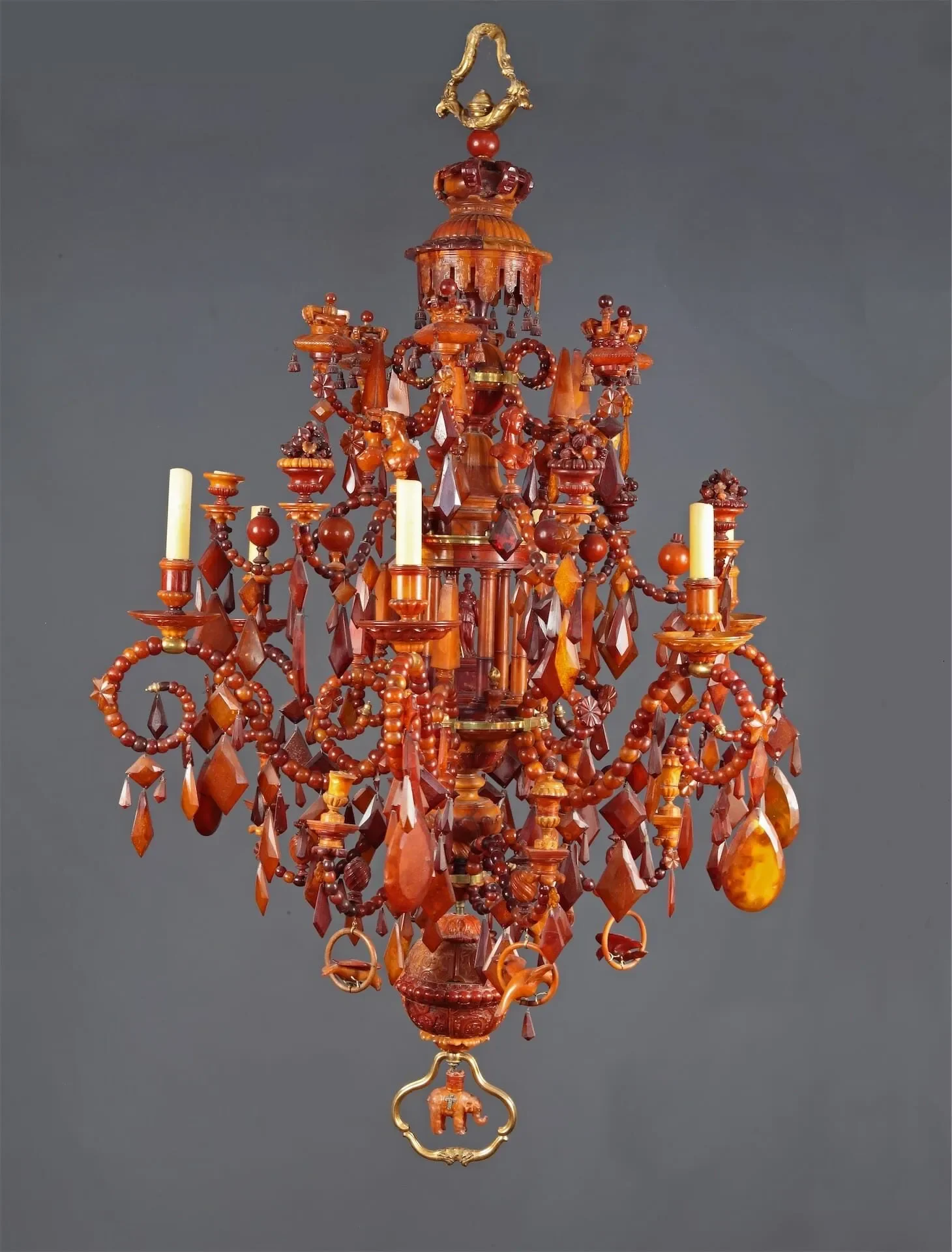
The earlier amber wares collected at Rosenborg Castle mostly come from purchases or gifts and are generally of Danzig or Königsberg provenance. These objects include a 16-arm chandelier with a central amber ball decorated with ivory figures, given to Frederick III in 1653 by Friedrich Wilhelm of Brandenburg, a tankard in a gilded silver frame from the mid-17th century or two crucifixes placed on decorative pedestals.
Creators of amber works
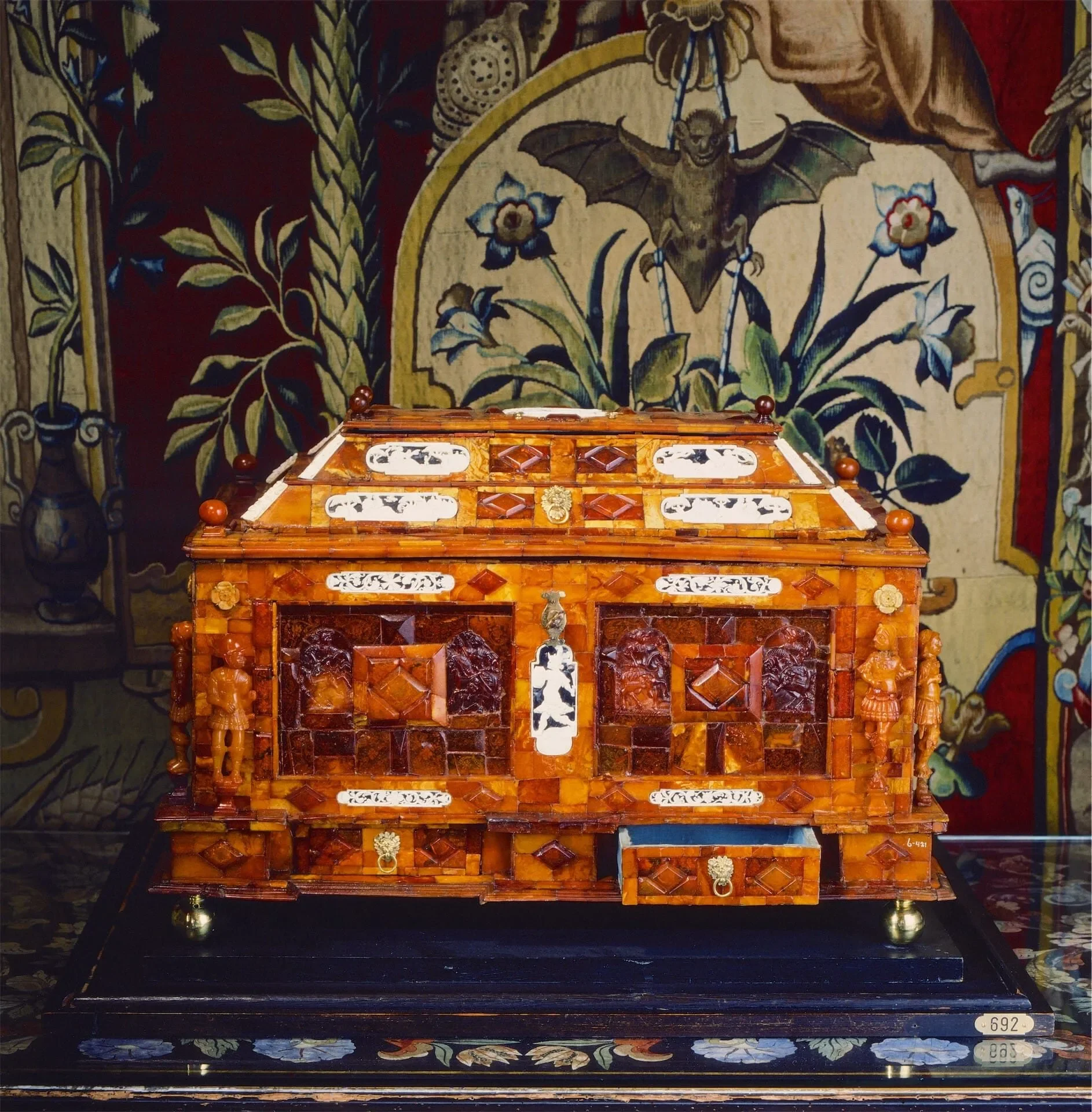
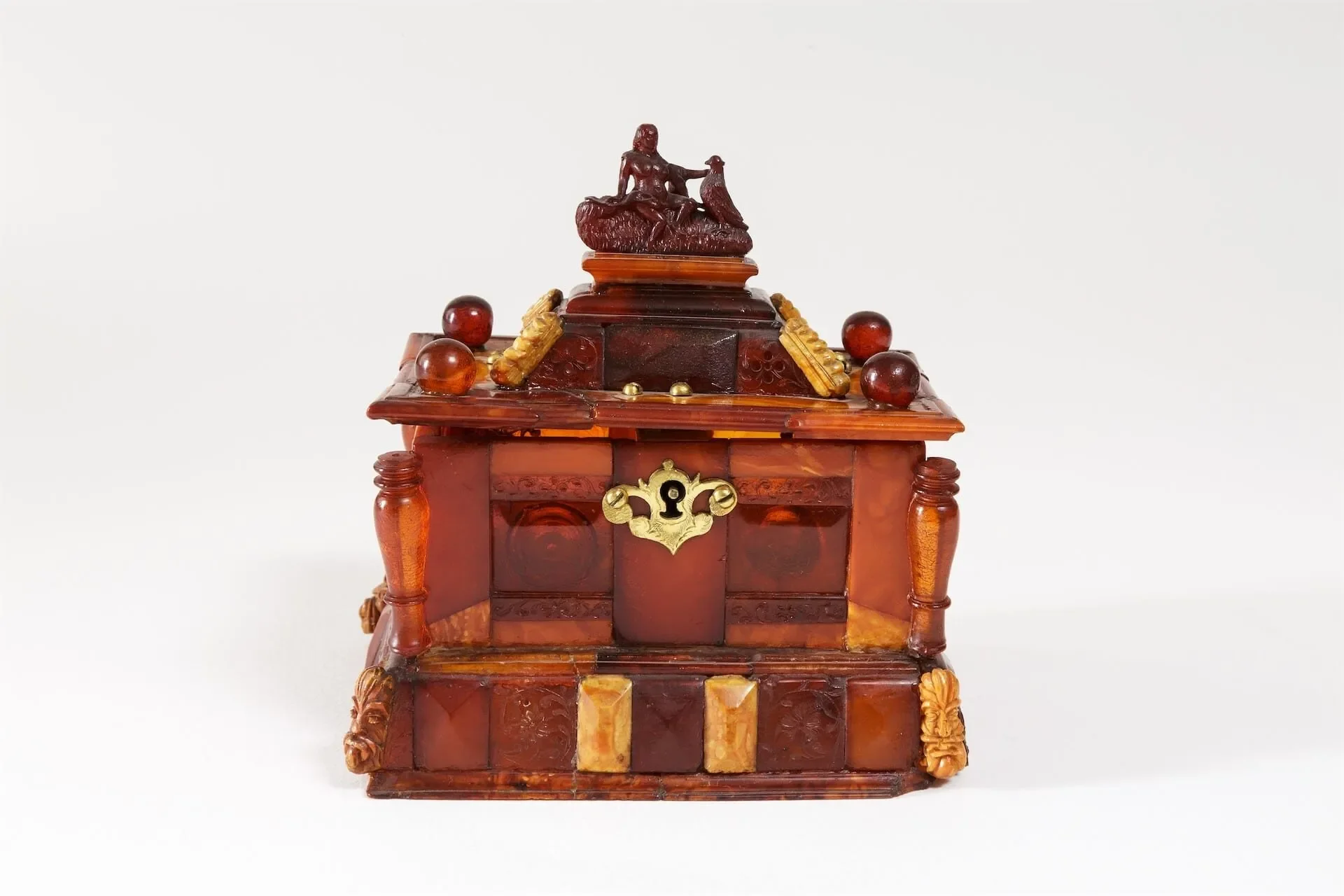
A characteristic feature of amber collecting at the Danish court in later years was the creation of further works on site; and they were made by artists specially employed for this purpose. The first of these was Gottfried Wolfram, trained in the workshop of the well-known Danzig amber maker Nicolaus Turau. He had already been in the service of Queen Charlotte Amalia, a passionate collector, since 1683. In 1691 he became court turner and worked in this position until1699, until the death of King Christian V. He made several amber objects at the king's request during this period; he is credited, among other things, with the authorship of a couple of caskets, including one large, masterfully crafted one, decorated with ivory reliefs and figures of Roman warriors on the corners, as well as a magnificent mirror frame, richly decorated with engravings and carvings. Wolfram is more widely known as the first executor of the design for the amber cabinet of King Frederick I of Prussia. He was employed in Berlin between 1701 and 1707 to realise this design, which eventually became the famous Amber Room.
In parallel with Wolfram, there were several other craftsmen working for the Danish court - bone carvers who also did work in amber, as confirmed by accounts and royal archives. One of these may have been Wilhelm Heinrich Wessel, who specialised precisely in ivory work.
Booming amber industry in Copenhagen
In the 18th century, ambering at the Copenhagen court, unlike in other European centres, was booming. New contractors were employed to work amber, although their specialities were usually other crafts. They were: Diderich de Thurah, Niels Nielsen and three artists from Germany - the sculptors Lorenz Natter and Lorenz Spengler and the draughtsman and painter Marcus Tuscher. Thurah's work includes an amber model of the warship ”Anna Sophie” and a set of writing instruments made of amber and tortoiseshell. He also designed the lathes with which both the young heir to the throne and King Christian VI himself created works in amber and ivory. The monarch's authorship includes, for example, the lid of a gilded box carved from amber in the shape of rose petals. Artists from Germany played a significant role at the royal court. The king repeatedly posed for Natter, who made a number of images of the monarch in gemstones (intaglio and cameo). The only known amber work by the artist is also the bust of Christian VI, a small full-length sculpture on a pedestal. The most notable works in amber were made by Lorenz Spengler according to designs by Marcus Tuscher. Spengler arrived in Copenhagen in 1743 and just two years later was given the well-paid position of court turner. Being an ivory carver by training, he quickly mastered the arcana of working in amber, as this was the kind of work his wealthy patrons ordered. In 1748, he opened his own workshop in the city, where he employed many assistants; the most famous of these was the Swede J. E. Bauert. Spengler taught his craft to many members of the royal family. The most talented were Queen Louisa (Louise of Hanover) herself and her nephews, the Dukes of Hessen, Wilhelm, Carl and Friedrich of Kassel, who came to the Copenhagen court for an education.
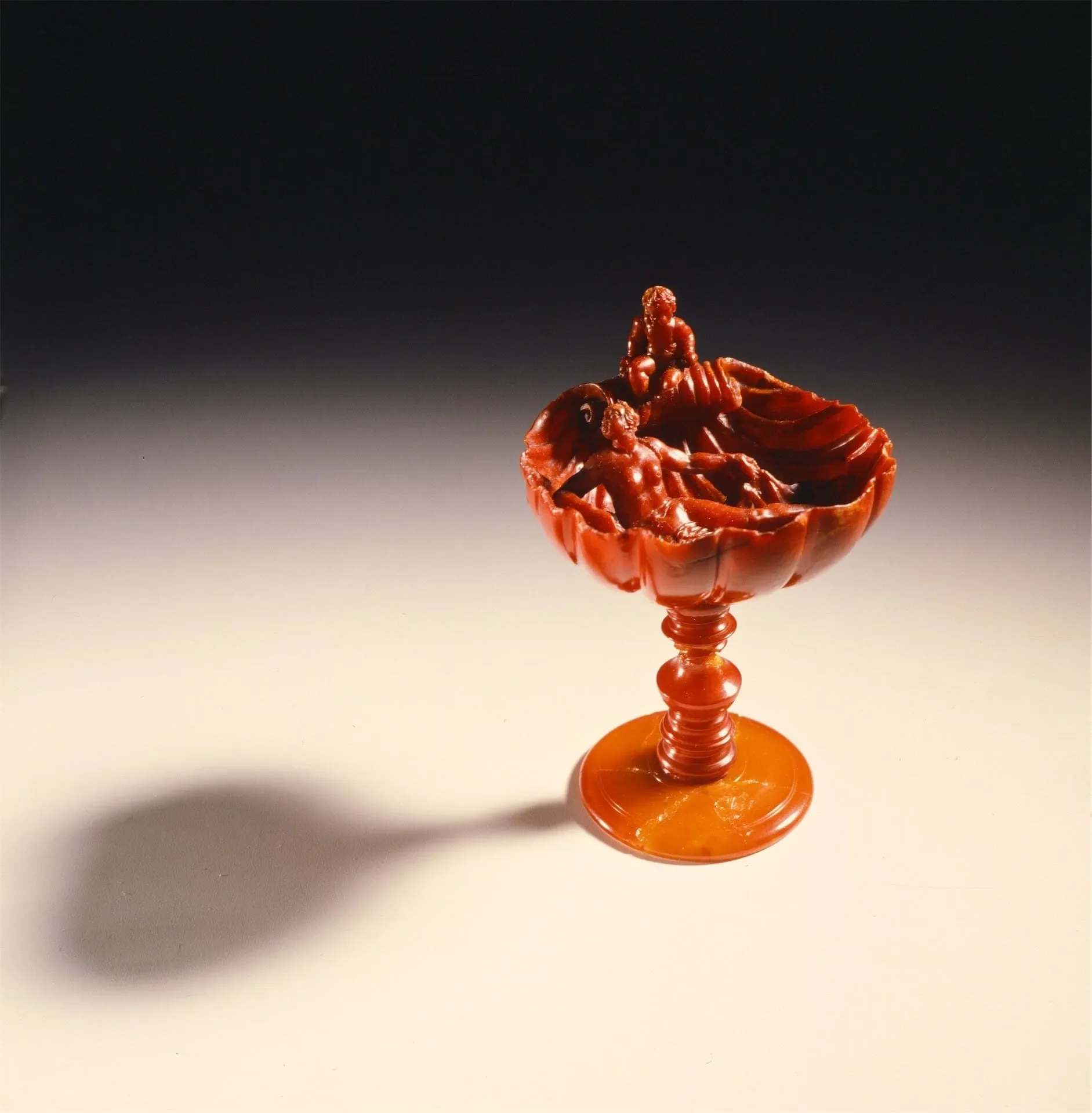
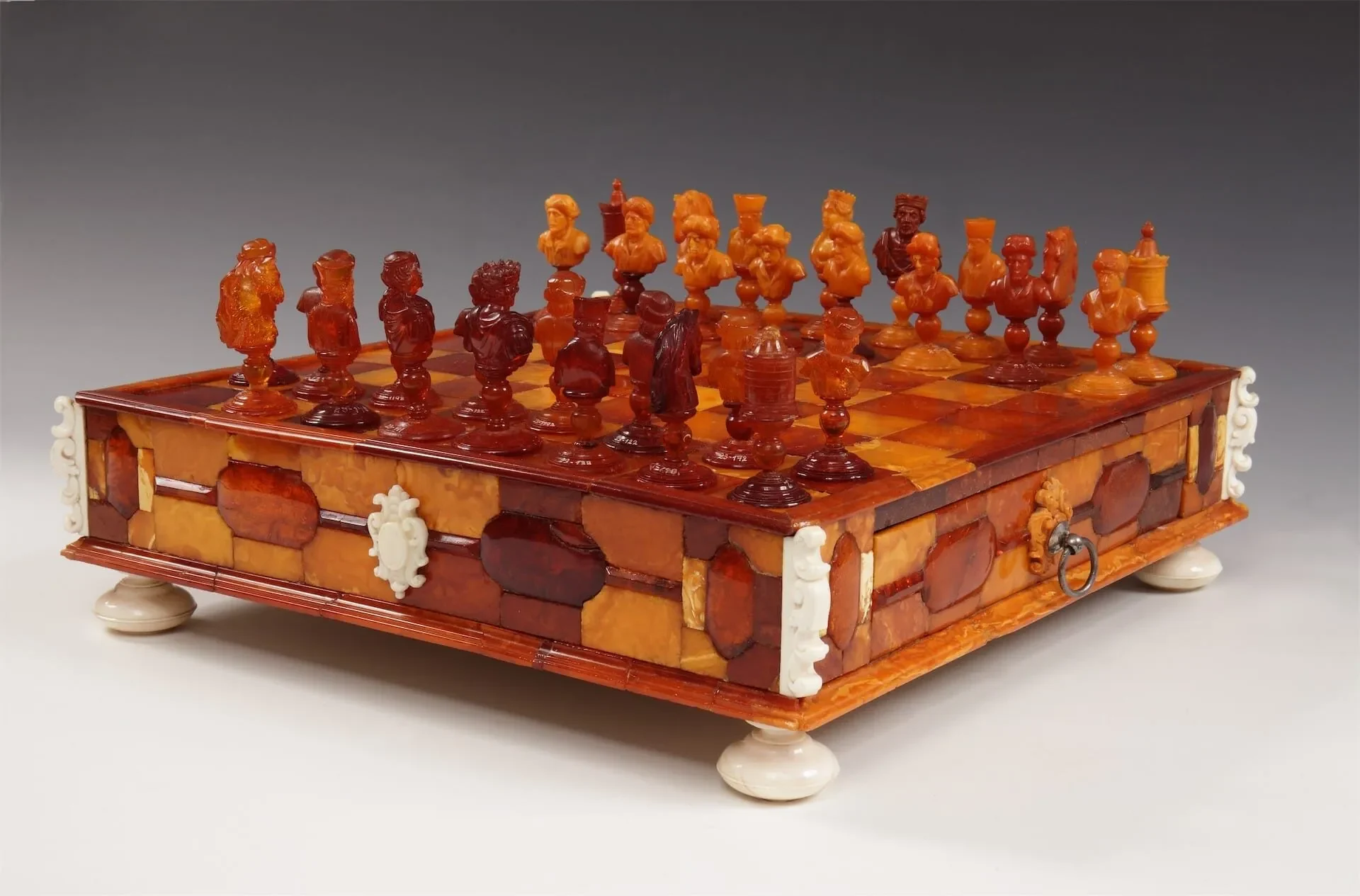
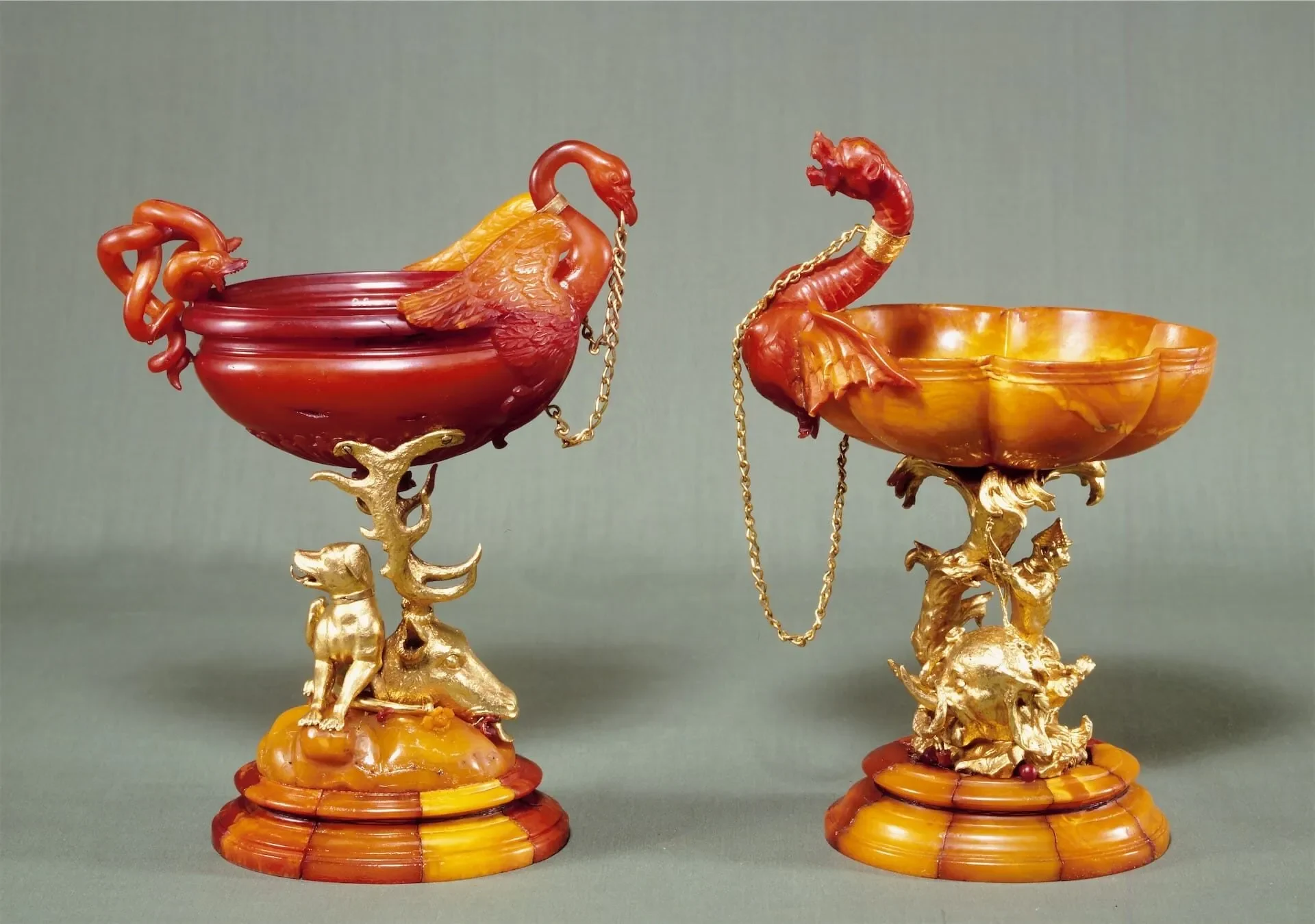
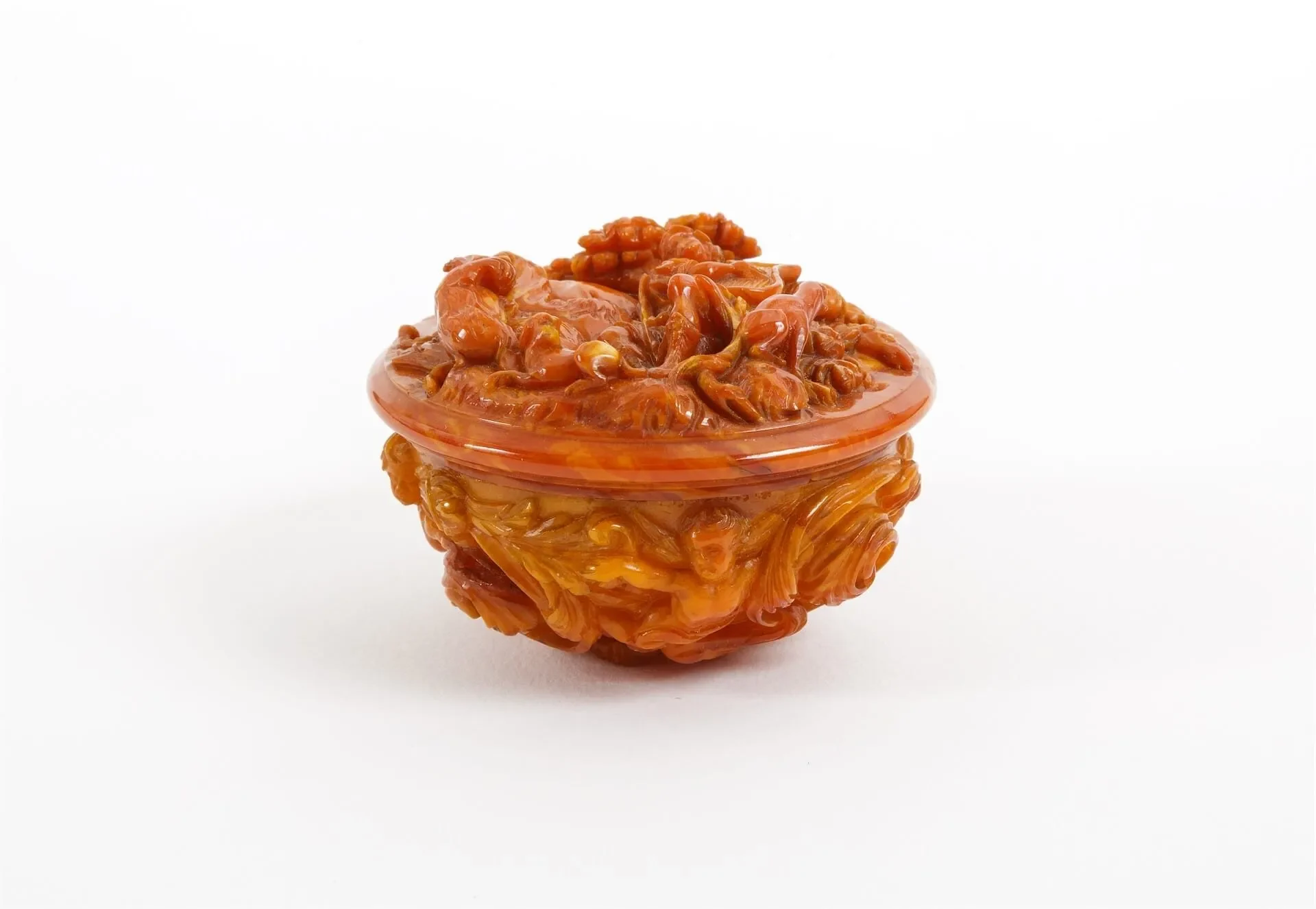
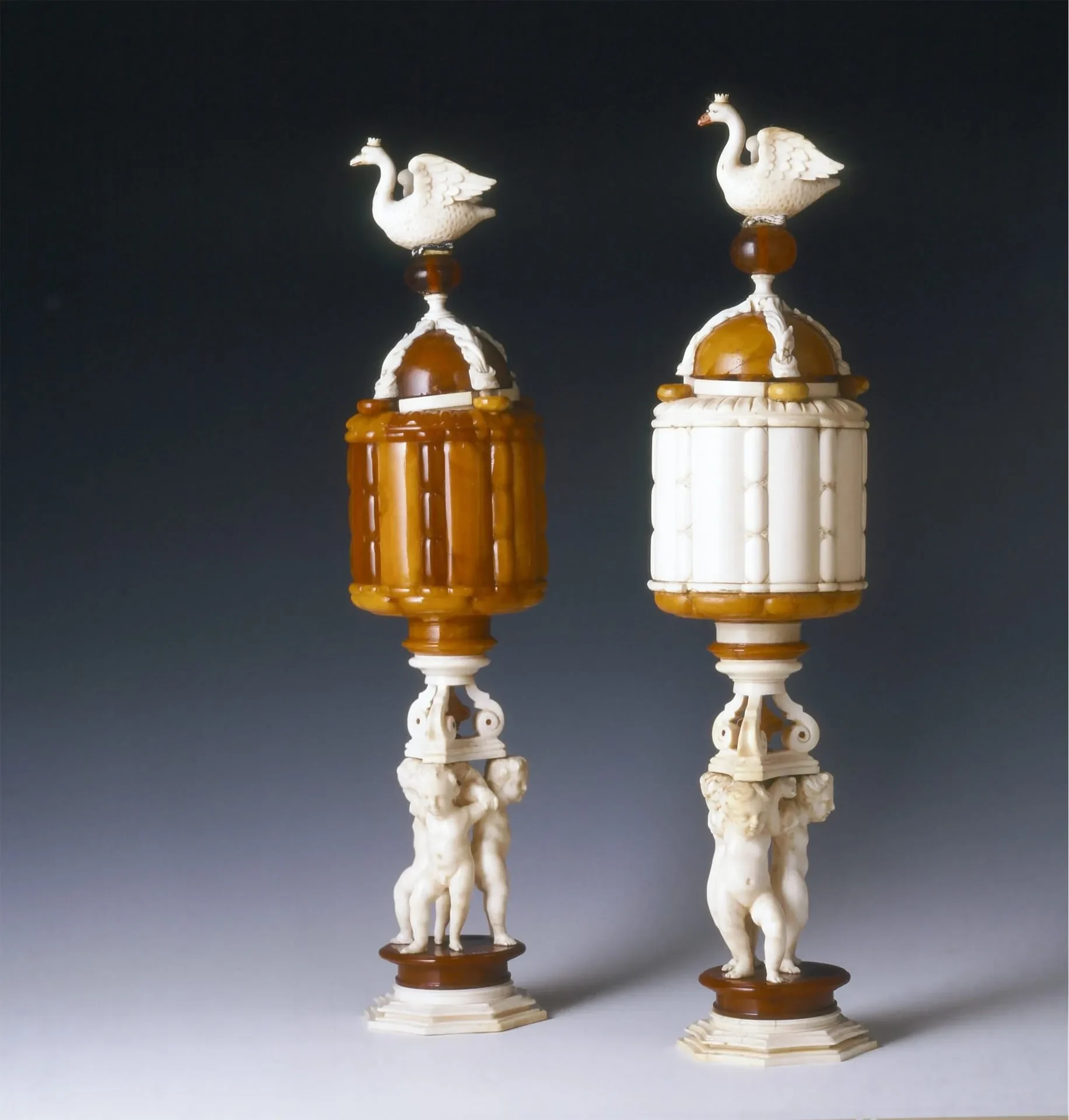
The authorship of amber objects is confirmed by invoices in the court archives in Spengler's name. His most important works include, above all, various types of vessels of fanciful shapes and Rococo ornamentation: flacons, goblets, sorcerers and bottles, two cupids on pedestals of green-painted ivory symbolising strength and wisdom, a medallion with a portrait of Christian VI, a large chandelier made of amber and gilded bronze for Frederick V and Queen Louise, and a magnificent chess set. All of these high-end pieces can be admired in the chambers of Rosenborg Castle, displayed among other treasures of the Danish royal collection.
A distinctive feature of Copenhagen's amber collection is that many of its most attractive objects were created in the 1850s, a period when the fashion for amber had passed, amber collecting had ceased and the amber guilds in the Baltic cities were in decline. Thanks to the Danish royal family's fondness for the mineral and the hiring of court artists to process it, works of art unheard of in other collections were created - Rococo-style wares, with soft, fanciful, asymmetrical lines, decorated in relief with typical Rococo ornamentation.
Another peculiarity of the Rosenborg amber collection is that all these objects come from the collection of the royal family - they were purchased or received as gifts by its members, commissioned by court artists or are even works of royal hands. The amber pieces collected in Copenhagen form one of the finest collections of its kind in the world's museums.
Elżbieta Mierzwińska
(1953-2010) was for many years the senior curator of amber collections in the Castle Museum in Malbork and an active populariser of knowledge about amber. She was the author of several books and albums, including the well-known „History of Amber” and the richly illustrated „Big Book of Amber”, presenting the history of amber and the Malbork collections. She has organised and curated numerous exhibitions both in Poland and in Europe, and has appeared at Amberif trade fair seminars, sharing her passion for amber.