In the collection of the Museum of Goldsmithing Art, a branch of the Nadwiślańskie Museum in Kazimierz Dolny, there is quite a large and interesting collection of works with amber. For the most part, they are not grouped within a single ensemble, but scattered among the author's works, they form an integral part of a rich collection of contemporary goldsmithing forms. Only works made by design as a gift to the Museum, for the exhibition „Goldsmith's Etude and Illustration: silver and amber”, are an isolated group.
In pursuit of the goal of showing in this, the only museum in Poland exclusively devoted to goldsmithing, as complete a picture as possible of Polish goldsmithing, one of the largest and most representative collections of contemporary goldsmithing in the country has been assembled, apart from the historical collections. This collection, like the entire Polish post-war goldsmithing, consists mainly of jewellery. By way of purchase, and mainly thanks to donations and author's deposits of the leading Polish designers, the Museum came into possession of unique, non-commercial contemporary goldsmiths' pieces, providing an interesting overview of achievements in this field of art over the past sixty years. The collection, comprising nearly 800 exhibits, documents the changes that took place in Polish goldsmithery as a result of the search for new means of expression in terms of forms, techniques and materials. Works with amber occupy a prominent place in the collection. They are characterised by great diversity, both in terms of stylistic qualities, technique of execution and the artistic value of individual objects.
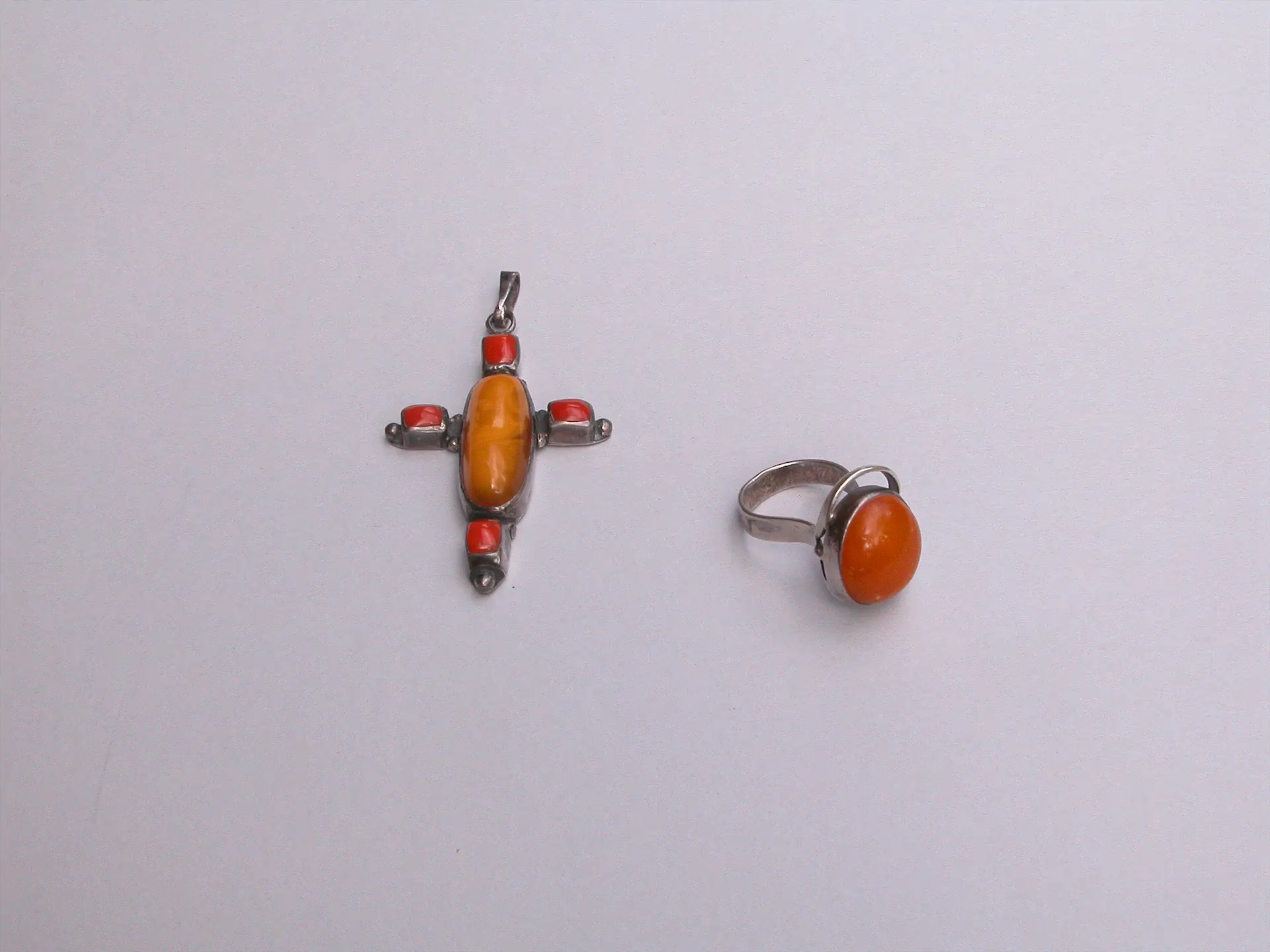
Among the works of authors who were at the forefront of Polish artistic goldsmithing in the 1960s and the first half of the 1970s, several objects with amber by Olgierd Vetesco, a painter and graphic artist by training, who was also active in the field of jewellery for 20 years, stand out in the collection of the Museum of Goldsmithing Art. They are characterised by the artist's typical clarity of drawing, sophisticated composition and subtle, discreet elegance. In the ring from the 1960s with honey amber - one of the works created at the beginning of the artist's goldsmithing path - one can see the foreshadowing of spatial-sculptural solutions in his work. In the complete absence of ornamentation, the decisive role is played by the construction, which is characterised by clearances. The very discreet, economical and seemingly simple setting exposes the beauty of the smooth, amber cabochon all the more clearly. The fact that this way of thinking about emphasising the beauty of the stones with minimalist settings remained close to the artist throughout his life - despite the variety of artistic solutions and techniques used - is evidenced by the cross created at the end of his life, in 1983. The centrally exposed, elongated, honey-milk amber, juxtaposed with the four small beads forming the arms, gives the piece a well-thought-out structure, distinguished and simple in form and expression.
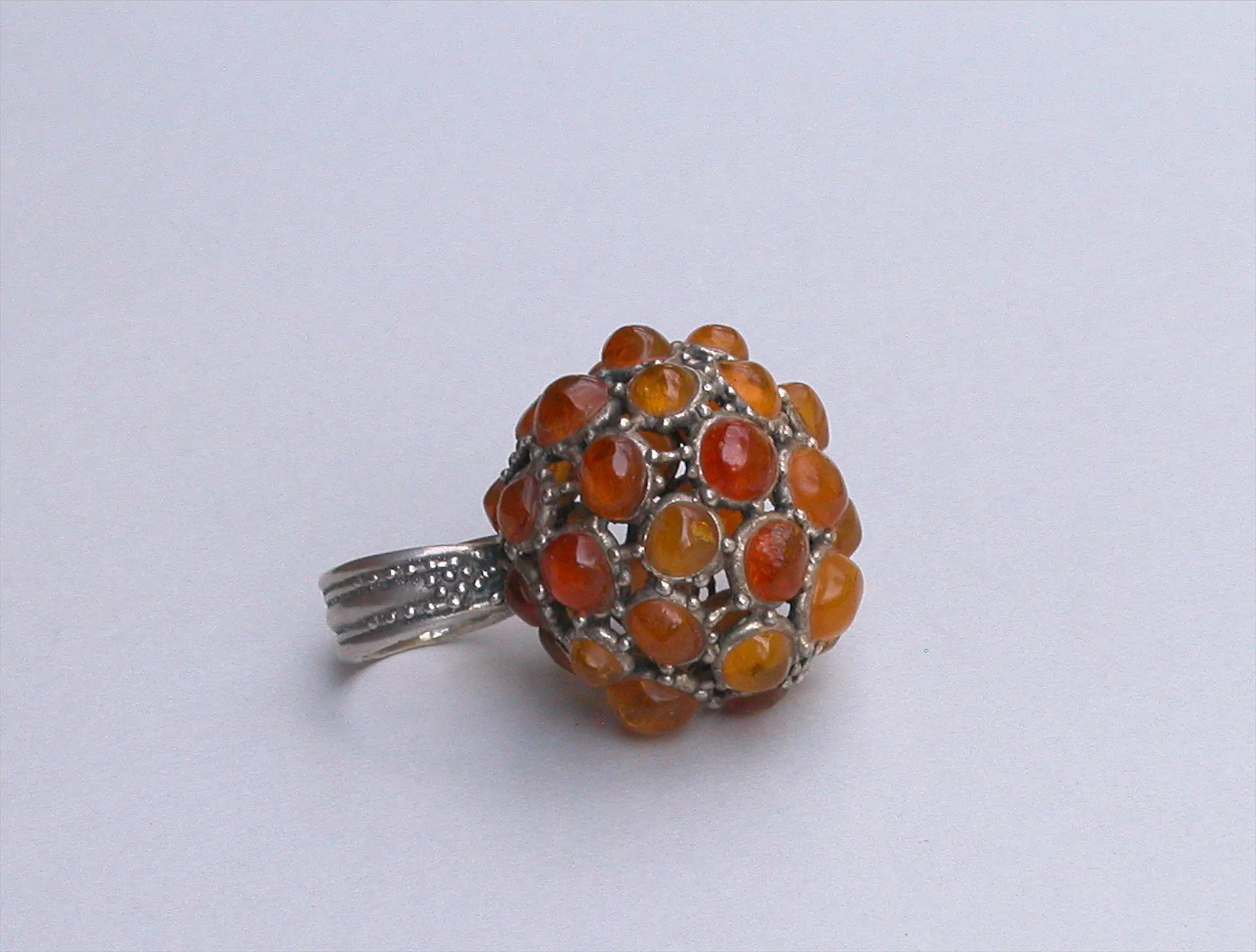
A completely different understanding of the way artistic jewellery is created is shown in the work of one of the most interesting creative individualities of the second half of the 20th century. Jolanta Ołdachowska-Ryba. The word jewel seems to be the most adequate to describe her works, which are extremely ornate, with elaborate forms, richly camouflaged, and at the same time delicate, fine, almost lacy. She has achieved interesting effects using the lost-wax casting technique, known since antiquity, thanks to which the precise silver ornament with its tiny beads provides an openwork setting for the camerawork. Alongside turquoise, coral, garnets, amethysts or mother-of-pearl, the artist liked to use amber in her works. It was most often juxtaposed with an open-work setting, thanks to which light became a significant element in shaping the shape of the object. The Museum of Goldsmithing has in its collection an unusual ring from 1974, in which a sizeable (4.2 cm in diameter) open-work spherical lump, decorated with more than thirty oval polished ambers of varying degrees of colour saturation, from yellow-gold to brown-gold, is set on a rail decorated with the above-mentioned type of granulation. The ring with this lace ball, emanating the warmth of illuminated, transparent amber, was provided by the author with the very apt title „Sunshine”.
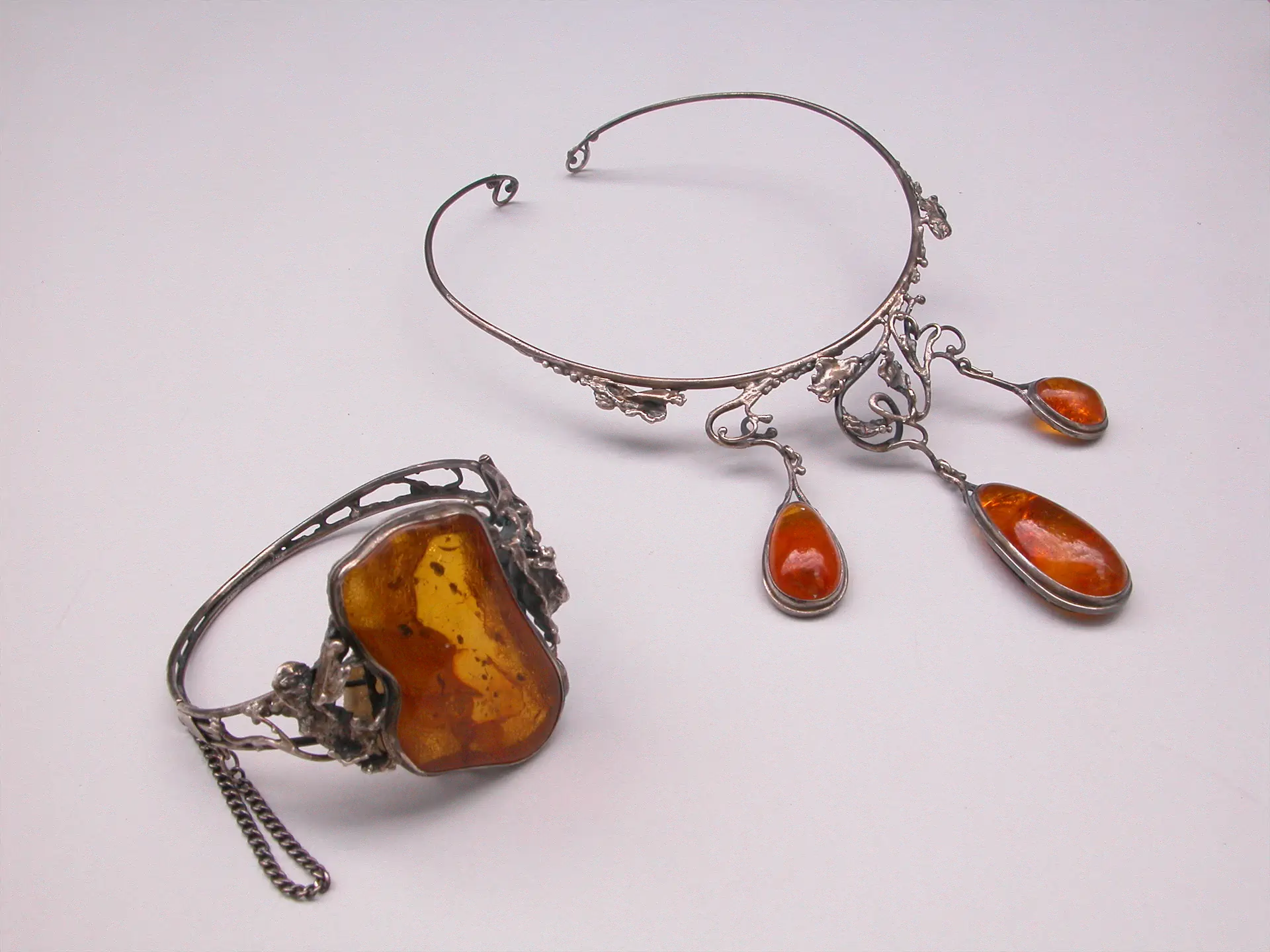
The work of Maria and Paweł Fietkiewicz had an important influence on the direction of the search for jewellery with amber in the reality of the 1960s, especially in northern Poland. Not succumbing to the tendency to produce shoddy mass-produced items, they began to create jewellery items that were not very expensive - both in view of the small silver allotments and the poor pockets of the recipients - but artistically ambitious jewellery items with silver-framed amber. Always with unique forms, treated individually each time, often taking into account the specific tastes of the client. There are echoes of the techniques of the old masters in their work, especially in Paweł Fietkiewicz's original method of multi-layered silver setting, known as the multiplied carga technique. In order to emphasise the qualities of amber, to bring out its form, colour and clarity each time, they also used another of their own original techniques of setting amber in silver - the „from fire” method. This thermal technique, which offered a wide range of possibilities for exposing the qualities and at the same time hiding any deficiencies of the amber nuggets, later found very numerous, unfortunately often inept, imitators, which resulted in a certain depreciation of amber. However, the Fietkiewicz family - whose unquestionable merit is to popularise the treatment of amber jewellery as a work of art - could no longer influence this. Among the works by Maria and Paweł Fietkiewicz collected at the Museum of Goldsmithing Art, two of them, dating back to the 1980s, were made using thermal techniques. These are a collar „with three pendants” and a bracelet resembling the appearance of a large ring with a large (6.5 cm), flat, polished, transparent amber of irregular shape.
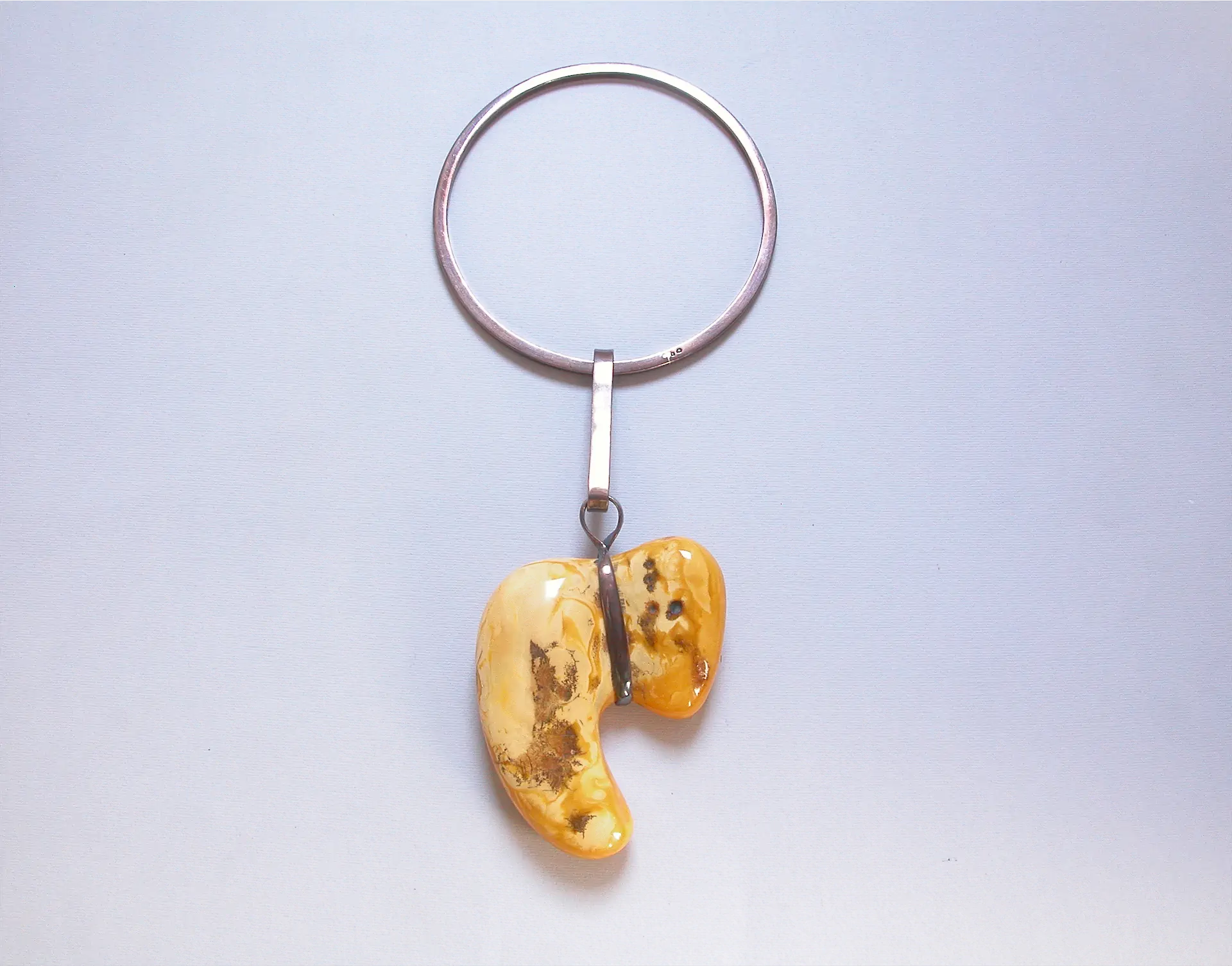
The widening opportunities for Polish artists to use an ever-increasing range of unusual varieties of amber, not only native, but also imported from Russian, Ukrainian or German mines, encouraged artists to turn to displaying its natural beauty. To show the diversity and natural beauty of the shapes and colours, often rare and unique varieties, created by nature. At the same time, efforts were made to reduce the elements of setting to a necessary minimum. The lightness of amber also made it possible to use large, massive pieces in necklaces, often almost untreated, without exposing the wearer to strain on the neck vertebrae. Maria Lewicka-Wala was one of the first artists to pursue this direction. An example is the amulet exhibited in the Kazimiersk museum, with a large lump of opaque, polished amber, irregularly shaped and of milky-gold colour, with local brown and black tints, enclosed in a narrow silver band, by which it is suspended from a circular massive collar.
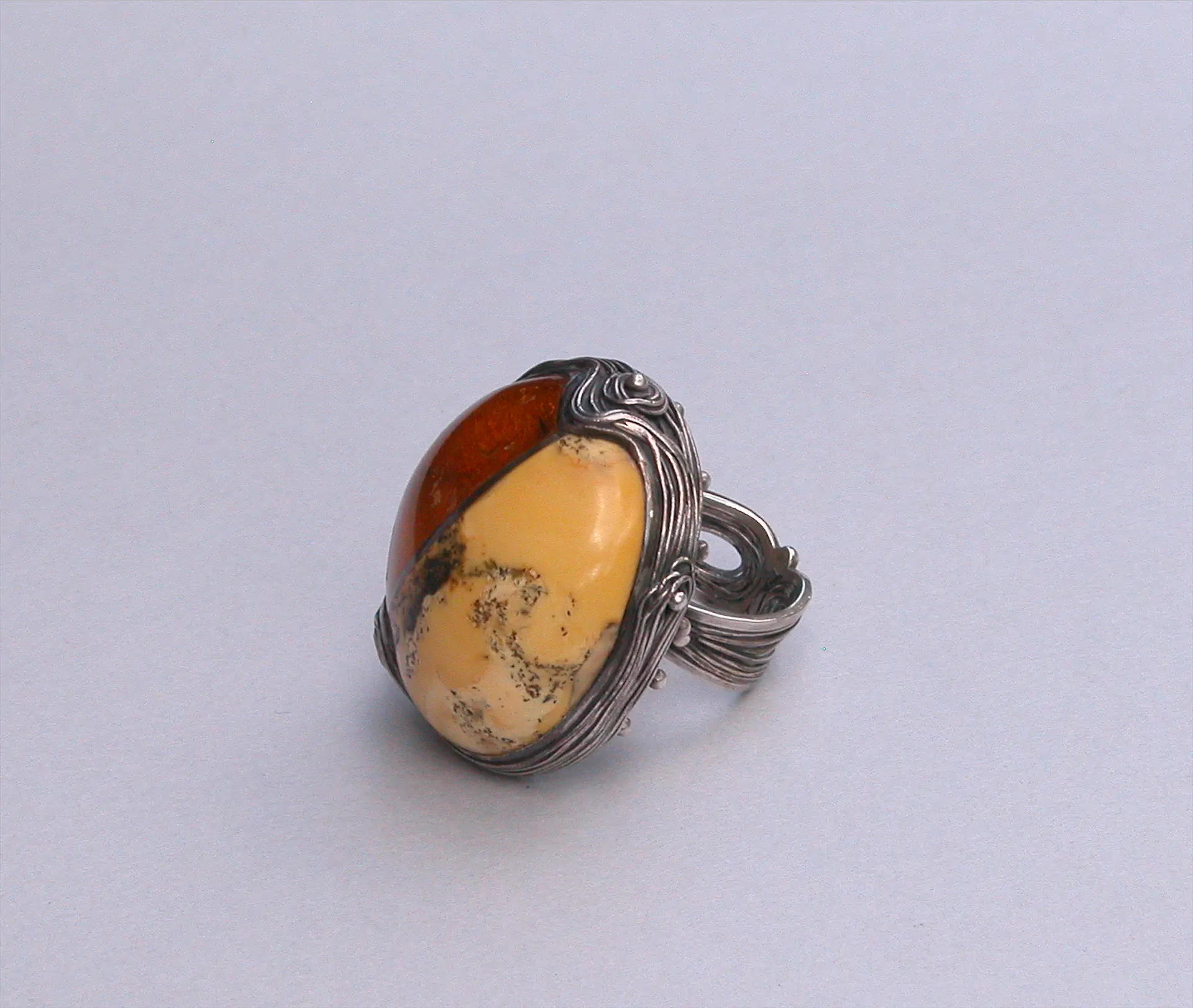
In 2001, Danuta Kobielska - an artist whose creative originality places her among the most prominent among post-war jewellery makers - donated to the Museum of Goldsmithing Art a collection of nearly 50 objects of silver jewellery, mainly from the 1960s and 1970s, by Danuta and Szczęsny Kobielski. Although there are only a few works with amber among them, they form an important and valuable part of this collection, well illustrating such a distinctive style, developed as a result of a thorough search for their own individual language of expression. Its characteristic feature is the creation of unique forms from a thin, winding silver wire, which the artist uses like a line in a drawing. This has its origins in her experiences as a student (she is an architect by training), and especially in the way she learned in her drawing classes to give shape to objects by means of superimposing fluid lines. In this workshop-perfect jewellery, the jewellery stones are entwined with silver wire, most often laid in strands of soft, wavy lines, serving both a structural and decorative function, as in the ring with two lumps of milky yellow and honey amber joined together. These works evoke associations with the world of underwater flora, especially when strands, like sea algae, wind around shells, pearls, coral or, precisely, amber, which the artist likes to use. A frequent element enriching this type of contemporary filigree is the granulation in the form of irregularly scattered silver balls, which, like bubbles of underwater air, crouch between swirling, flowing underwater lianas.
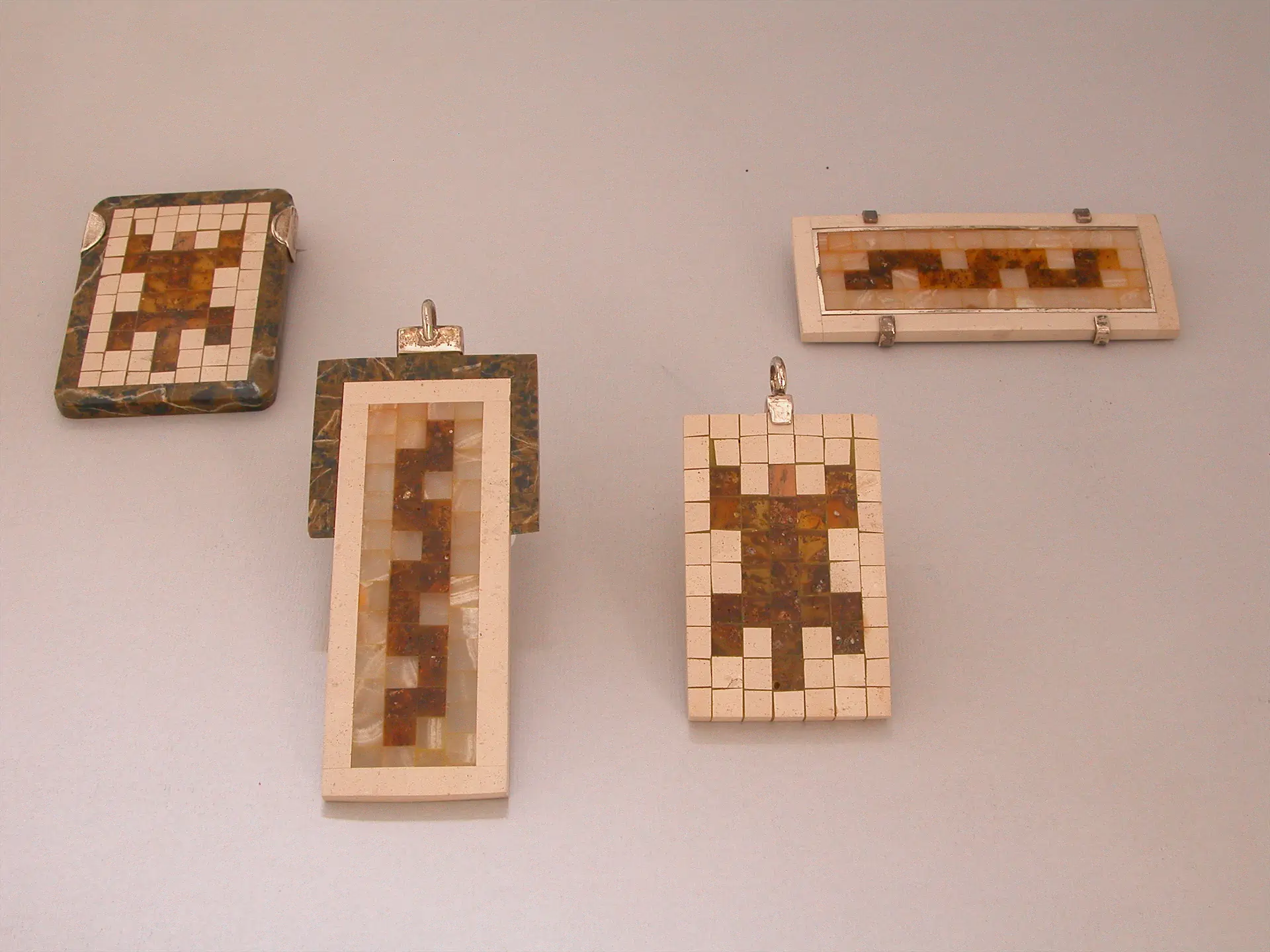
In the same year, 2001, Jędrzej Jaworski - the initiator, co-founder and donor (in 1978) of the 500 body silver that formed the nucleus of the collection of the Museum of Goldsmiths„ Art - obtained approximately 100 kg of amber from the Zulawy and Vistula Spit areas. He donated it to artists from the coast and from the Association of Goldsmiths, with which the Museum has cooperated for many years, in order to add their silver and their creative invention to make gold objects which were an illustration of a selected literary work or a three-part etude. More than 300 works came out of the hands of 70 artists (including, in addition to the aforementioned Association, the ”Narbutta Basin„, the Zaremski ”Clan', non-associated artists and craftsmen), which, after being presented at the exhibition, were donated to the Kazimierz Museum, with an appeal to continue the interrupted reconstruction of the original premises of the Museum of Goldsmithing Art at the Kazimierz Market Square.
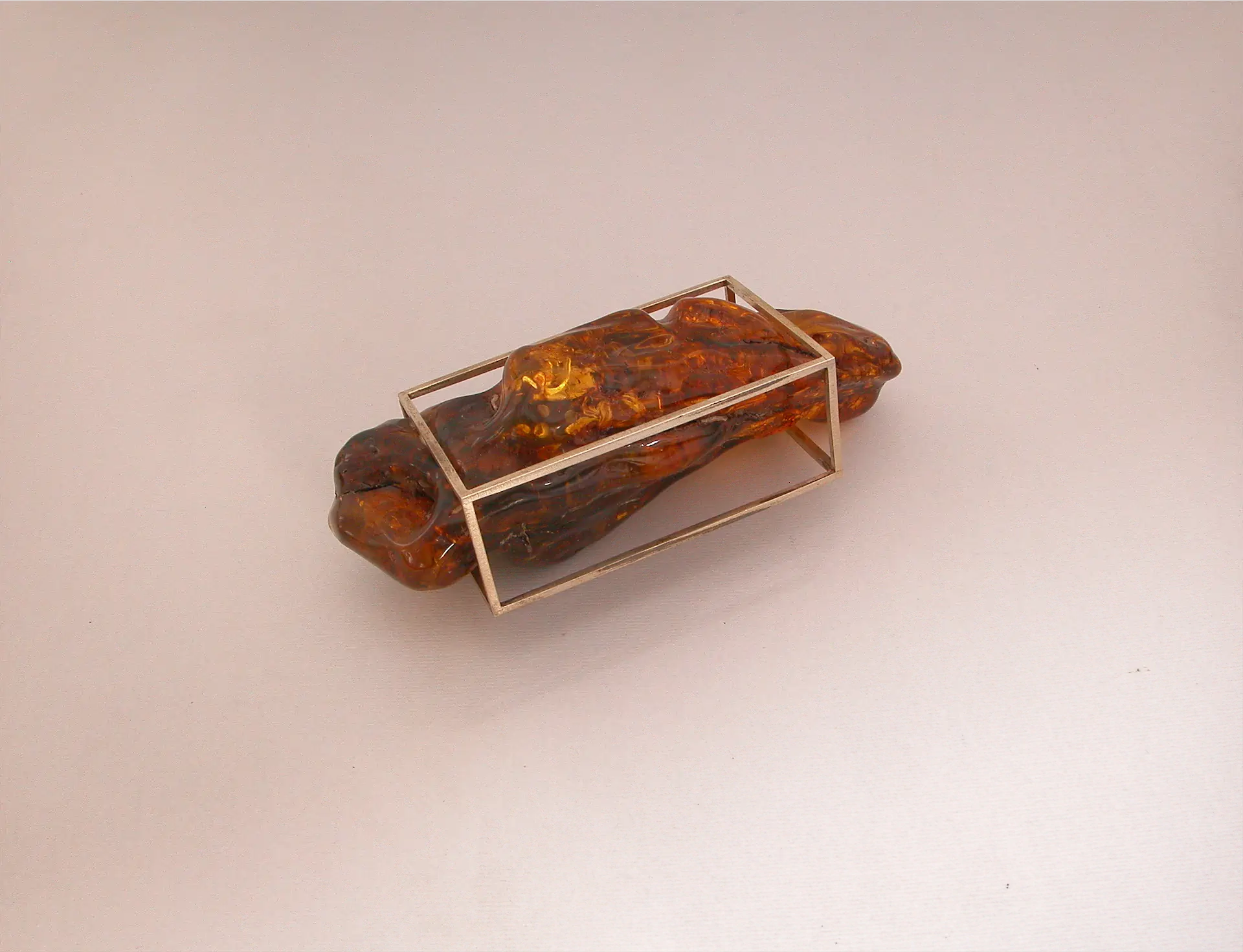
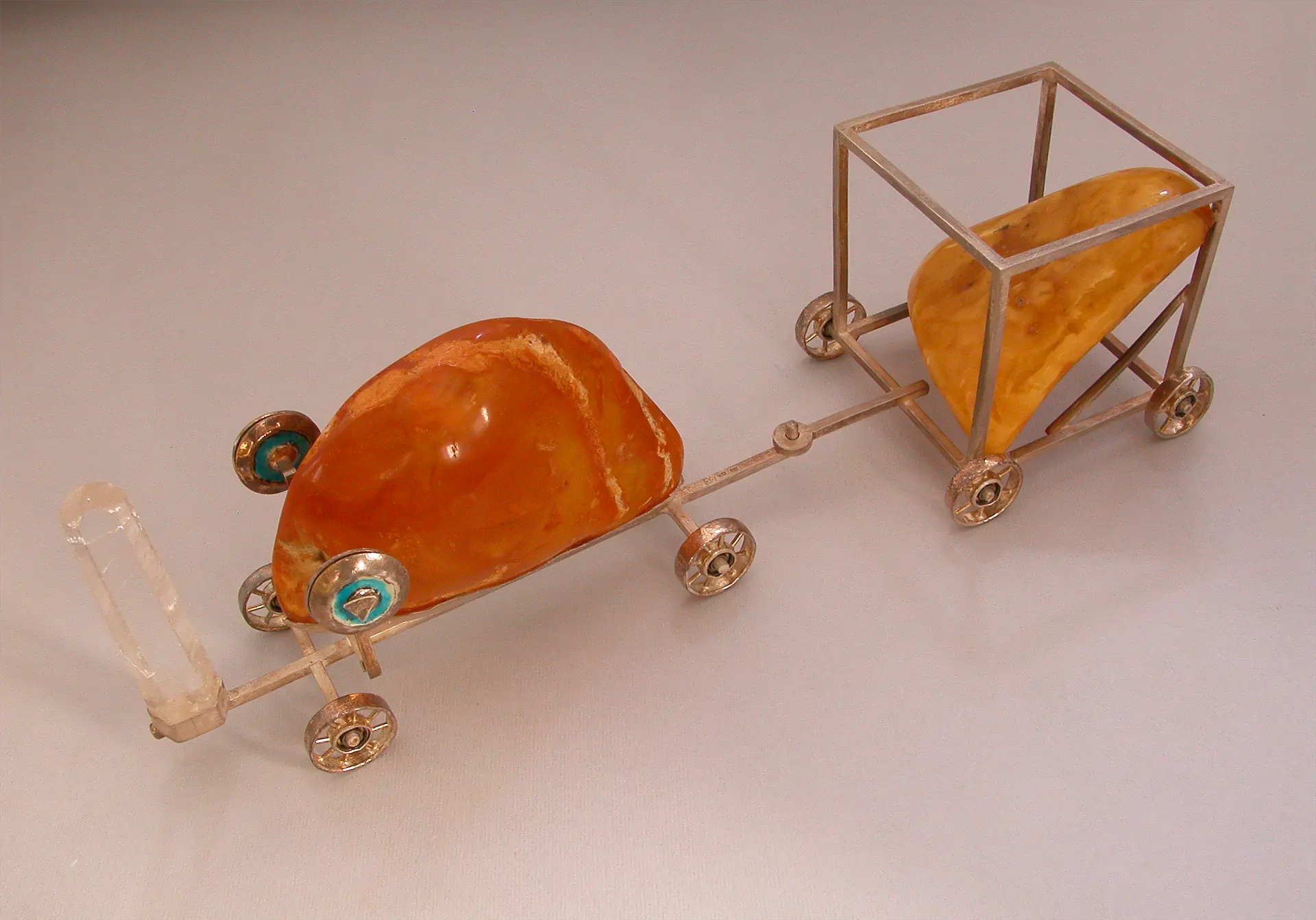
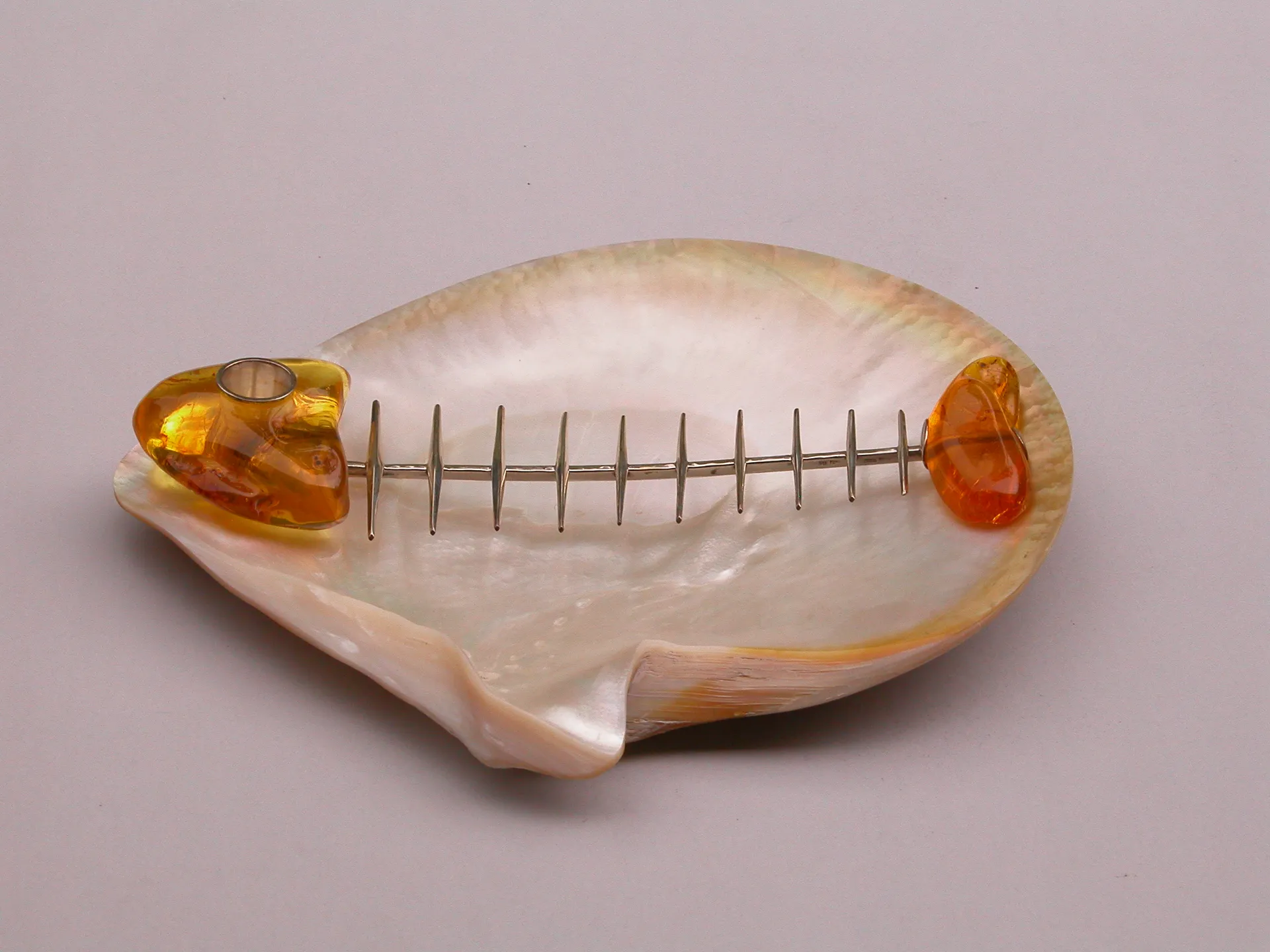
These works are both pieces of jewellery and those that, still without an apt Polish name, are commonly referred to as objects. The artists, having complete freedom in choosing the type, shape, size, degree of transparency and colour of amber, approached the subject in a variety of ways, from leaving lumps framed in silver in various ways in an almost untouched state, as, for example, in the works „Worm” by Jarosław Westermark, „Form” by Jarosław Westermark, and „Form” by Jarosław Westermark. The artists approached the subject in many different ways, from leaving lumps framed in silver in various ways almost intact, as in the works „Worm” by Jarosław Westermark, „Form - how did it get there” by Jacek Byczewski, „Truss” by Joanna and Tadeusz Jaworski, „Angel” by Ewa and Łukasz Zaremski or „Harness without the middle part” by Tomasz Zaremski, to processed amber, adjusted and strictly subordinated to the shapes of the frame determined by the artist's idea, as in the etude "Studium Studium" by Ewa and Łukasz Zaremski.These range from processed amber, fitted and strictly subordinated to the shapes of the framework defined by the artist's idea, as in the etude "Study of Light" by Jacek Hohensee, or "For Two Inverted Bracelets" by Jacek Baron, or the etude "Stop the Time" by Marek Huculak.
In terms of subject matter, too, some of the works, especially those illustrating children's fairy tales, themes from the Bible or mythology, treat the message more or less literally, sometimes creating whole anecdotes, genre scenes or fairy-tale worlds of real or fantastic creatures, while others, especially those from the etude series, fascinate with purely abstract forms which the artist's imagination has brought into being and to which the author's title only gives meaning.
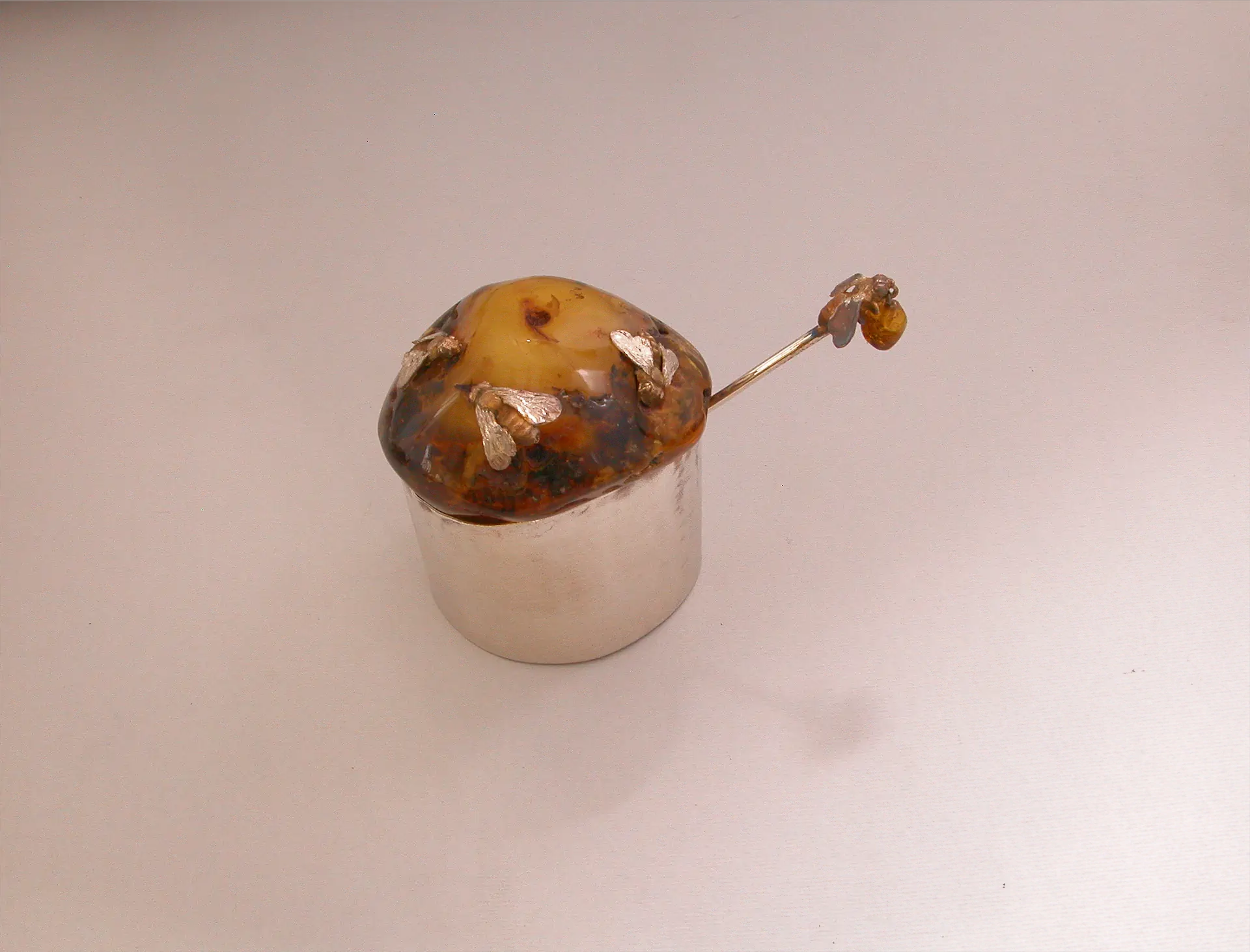
The frequent comparison of amber to honey finds its expression in Kamilla Rohn's poetically charming work etude „For a bowl and honey”. - a vessel whose cover is an appetising lump of honeyed amber on which silver bees have perched. The works in this group illustrate the way in which contemporary goldsmiths think about amber, which is far removed from what was commonly understood for decades as „jewellery with amber”. Some of these objects are currently on display at the Amber Museum, a branch of the Gdańsk History Museum, to which they have been temporarily loaned as part of the cooperation between our museums.
The Kazimierz museum will soon be able to present its amber treasures to a much wider audience, as finishing work is already underway at the Museum of Goldsmithing's headquarters at 19 Rynek Street, which has been rebuilt on the basis of EU subsidies.
Aniela Zinkiewicz-Ryndziewicz is the head of the Museum of Goldsmiths' Art Branch of the Nadwiślańskie Museum in Kazimierz Dolny.
Article appeared in the book „Bursztyn nie tylko nad Bałtykiem” edited by Barbara Kosmowska-Ceranowicz and Wanda Gontarska