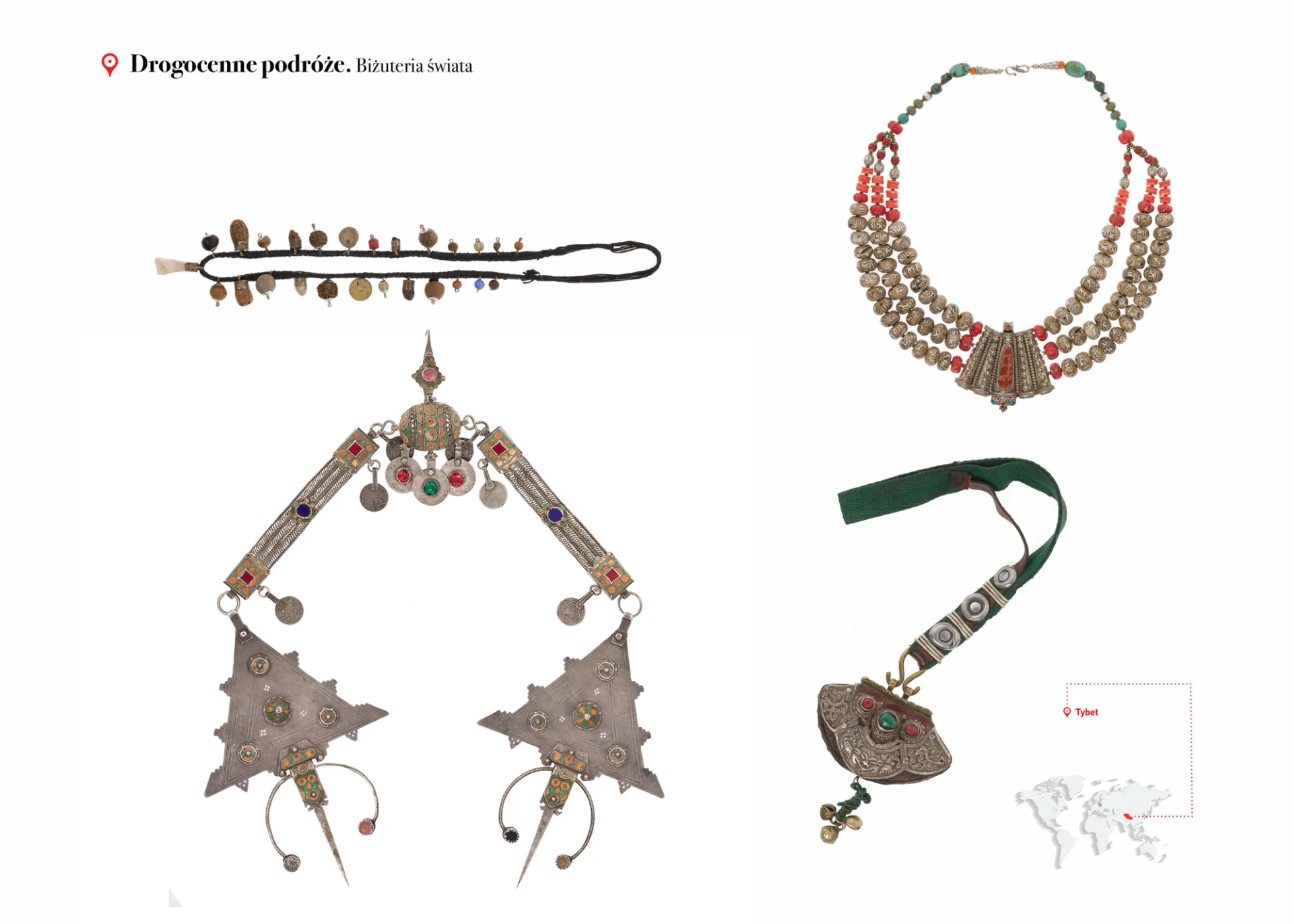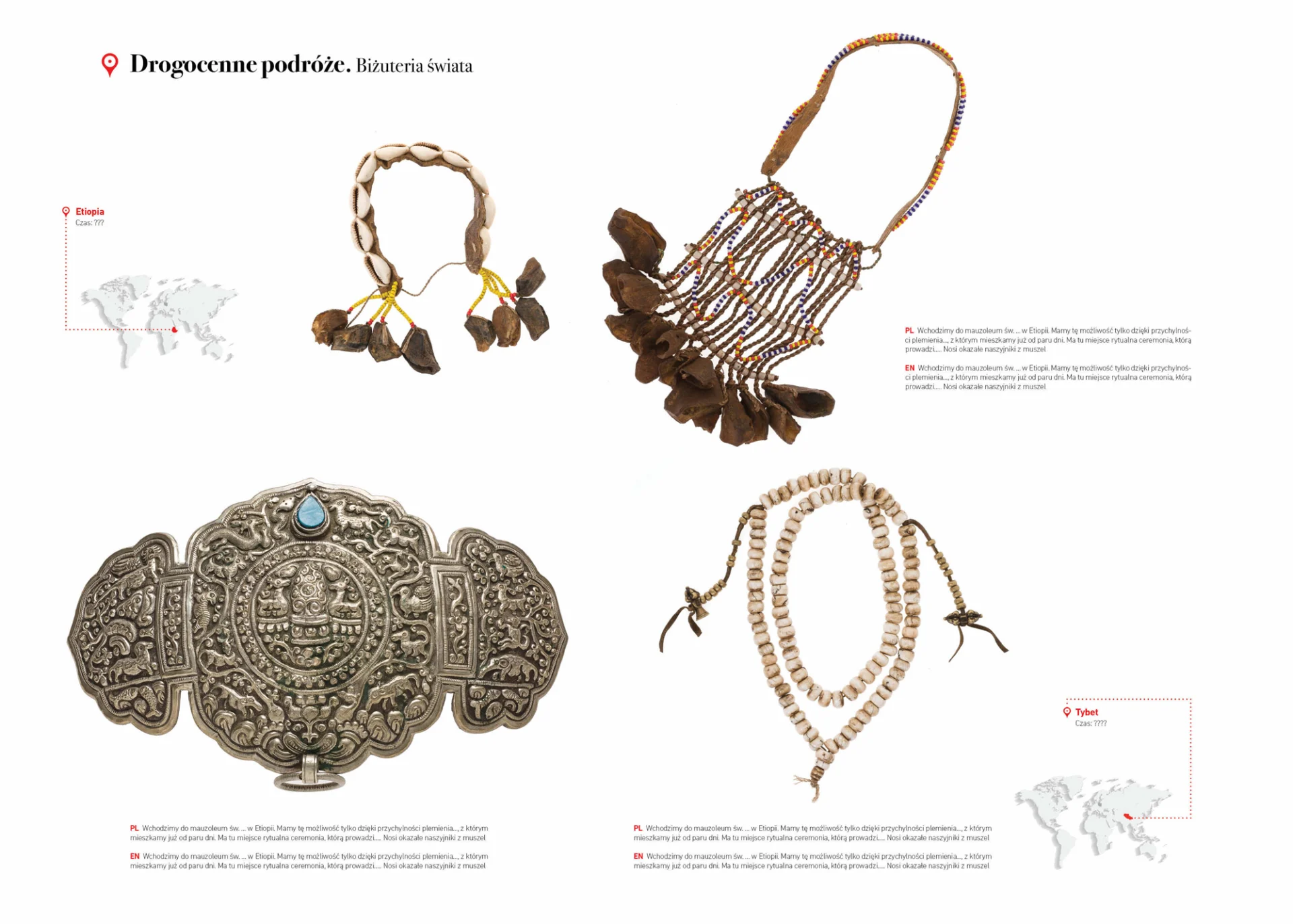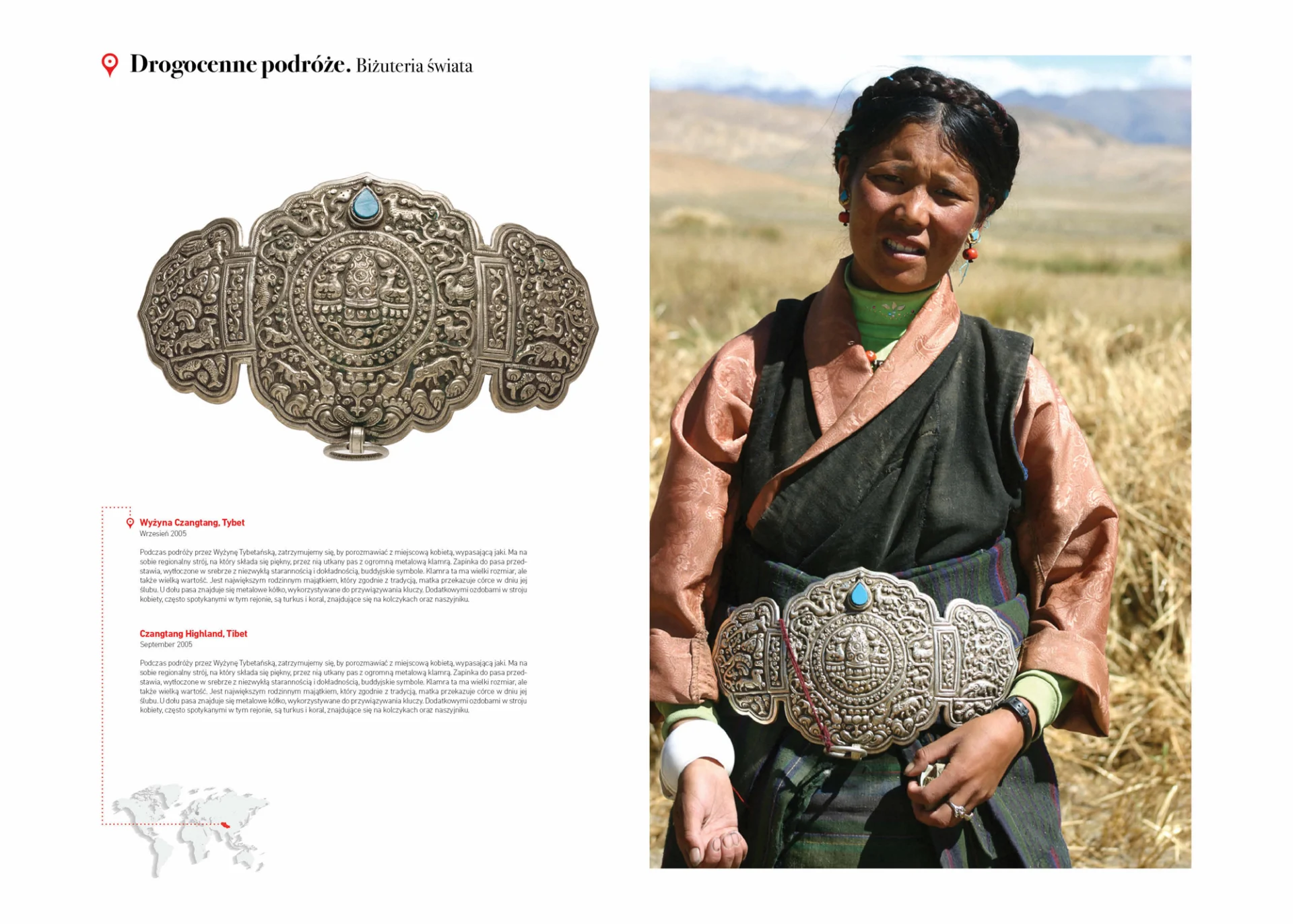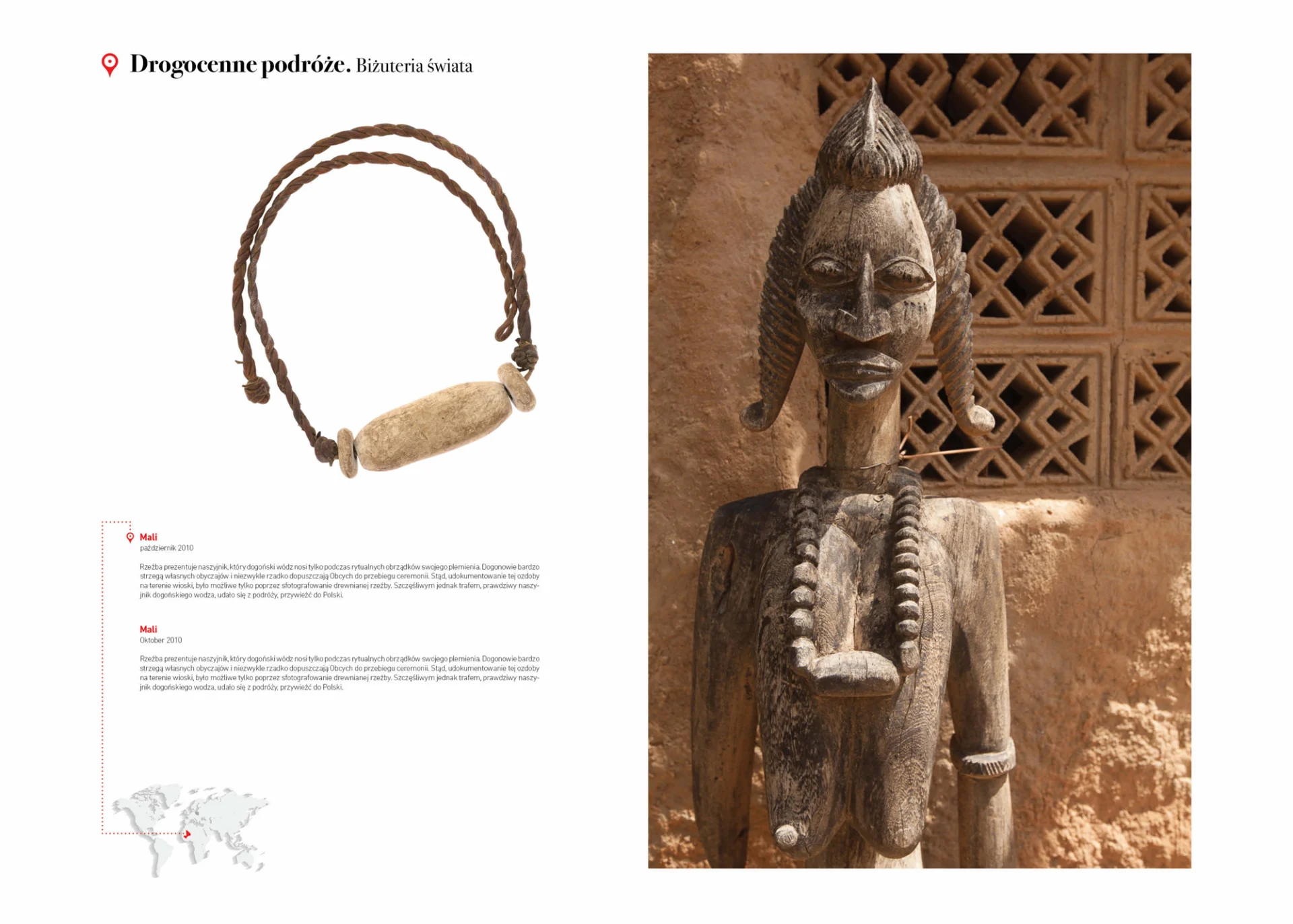
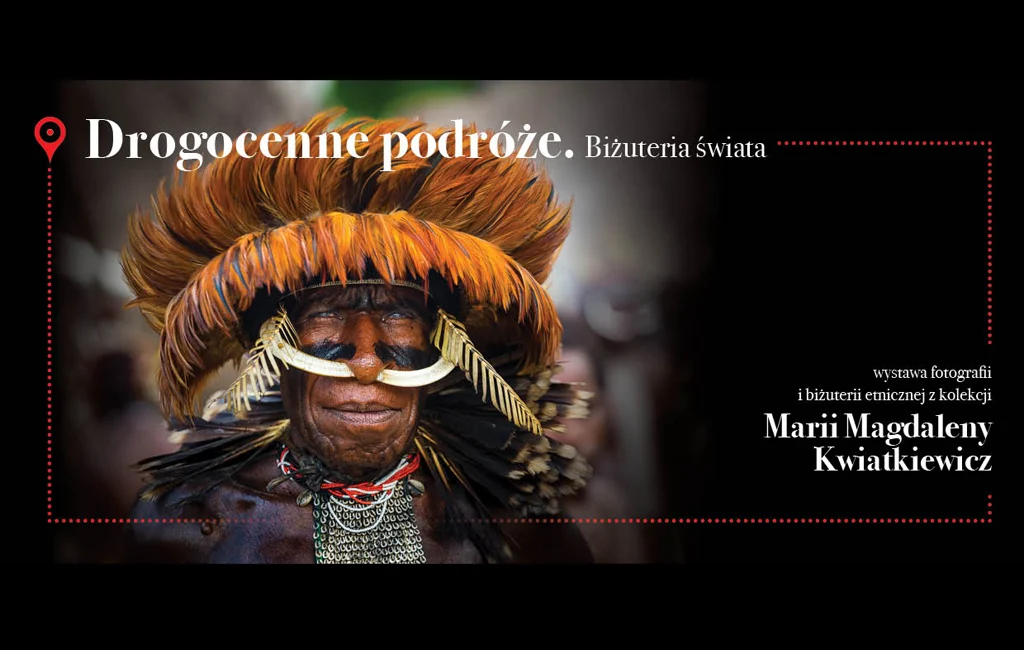
What is jewellery today? We treat it first and foremost as an element of fashion, but it actually has many more functions that we are very often unaware of. What are they? The answer to this question is to be found in the exhibition of ethnic jewellery and photographs from Asia and Africa „Precious Journeys” at the Museum of Contemporary Jewellery at the Centre Prague Koneser in Warsaw.
„W Museum of Contemporary Jewellery we present jewellery by European artists - with, of course, a huge preponderance of artistic achievements by artists from Poland - but our aim is to show a much broader spectrum of goldsmithing art. Hence the idea of an exhibition of ethnic jewellery, which is an excellent opportunity to remind people that jewellery has a variety of functions. Nowadays, the mass imagination has been captured by popular fashion jewellery, whose functions are strongly limited to the decorative, but it is worth remembering that generally jewellery ‘sends’ many messages about us, testifying among other things to our social or economic status,” explains Monika Szpatowicz, co-founder of the Museum.
India, Nepal, Papua, Cambodia, Ethiopia, China, Tibet - among others, these countries are the source of the collections of ethnic jewellery that will be on show at the Museum of Contemporary Jewellery in August. „The objects presented in the ‘Precious Journeys’ exhibition are, to a large extent, an essential code for a given tribe, a non-verbal message informing about the origin, the owner's intentions or the position held in the environment,” - informs Ilona Rosiak, creative director at the YES Gallery in Poznań, which prepared the exhibition.
Such meanings include African necklaces, commonly referred to as passports across deserts, made of string and metal. „Thanks to the particular form of the pendant and the engravings on it, they read out which area the traveller hails from. This is because each oasis has a different, distinctive cross shape, indicating elements of the landscape close to it such as the surrounding hills and even the number of wells. The owner of the ornament is therefore not anonymous to the Saharan people, and is thus more likely to be given shelter,” explains Ilona Rosiak.
The exhibits come from the collection of Maria Magdalena Kwiatkiewicz - co-founder of YES, traveller, jewellery lover and collector. Her collection currently numbers over 1,200 objects and is the largest of its kind in Poland. The collector realises her passion for beauty and design by, among other things, promoting Polish goldsmith's art at the YES Gallery in Poznań, which has been operating for over 20 years. She is also the originator of the book published this year entitled „Artyści złotnicy. Rozmowy o polskiej biżuterii”, published this year, which documents the past and present of contemporary Polish goldsmithing in the form of interviews with artists.
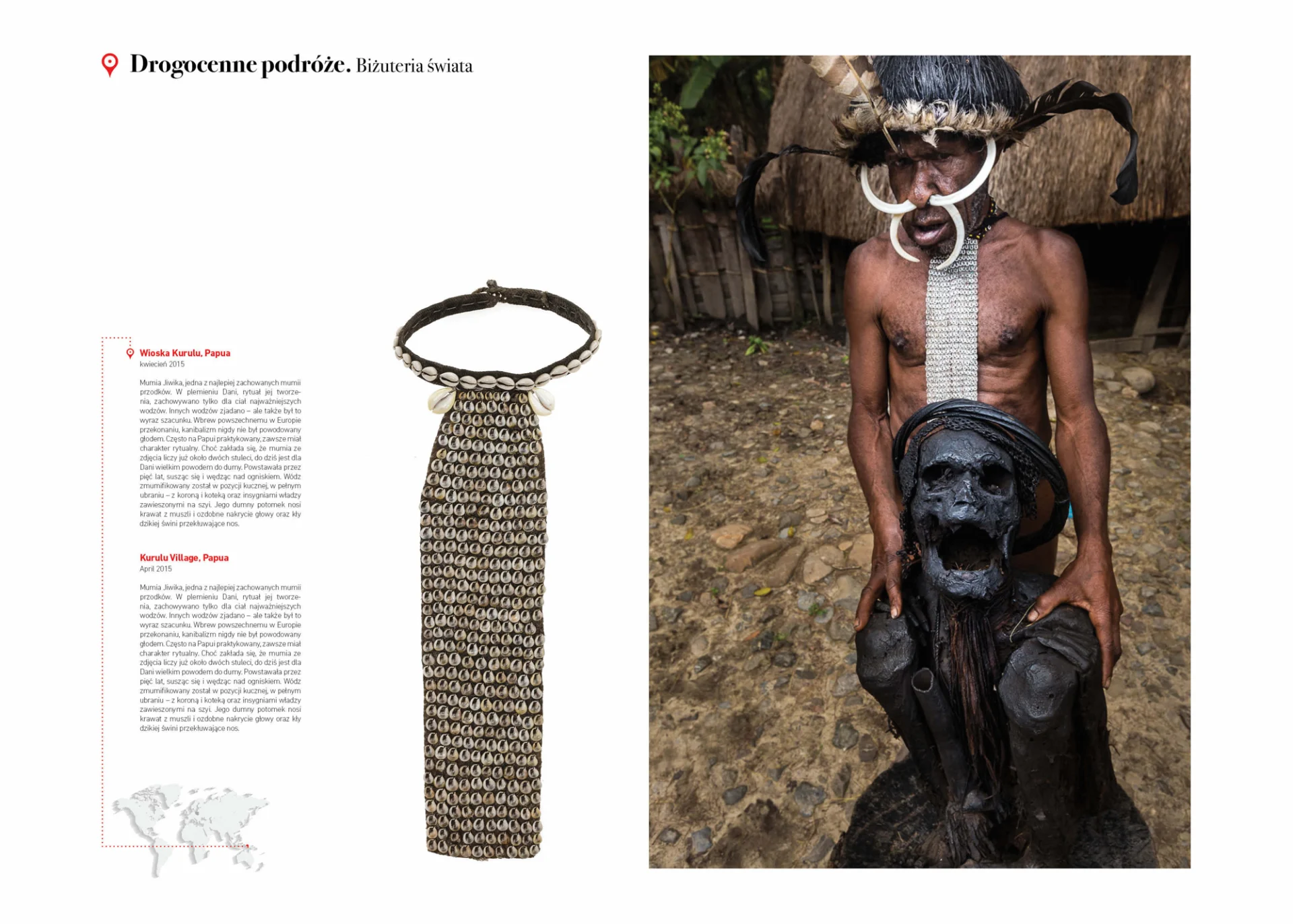
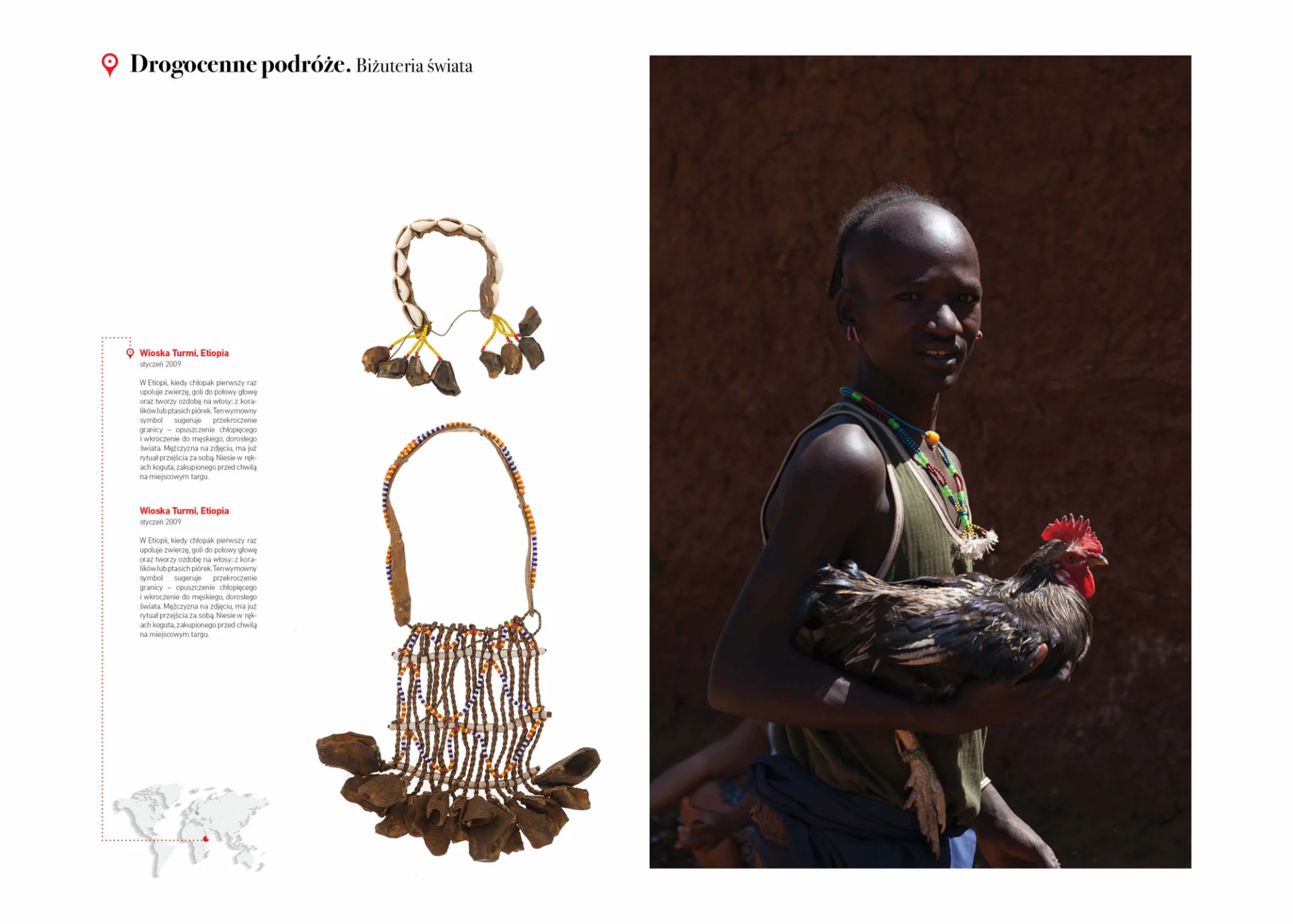
The exhibition is complemented by photographs by Maria Magdalena Kwiatkiewicz presented in the form of an open-air exhibition in the courtyard of the Koneser Centre - expanding the cultural context from which the objects adorning the protagonists of the paintings were taken. Objects whose function goes far beyond the decorative...
Exhibition „Precious Journeys”
Museum of Contemporary Jewellery (Centre Prague Koneser, Warsaw)
02 - 30 August 2019
Opening: 2 August 2019, 7pm
Recommended:
Discovering the world through jewellery - interview with Maria Magdalena Kwiatkiewicz